


No categories found for this post.
What Is Stem Cell Research and Why Is It Ethically Controversial?
Embryonic stem cells (also known as pluripotent stem cells) are immature, undifferentiated human cells that have the capacity to develop into almost any type of cell (e.g. nerve cell, bone […]
Embryonic stem cells (also known as pluripotent stem cells) are immature, undifferentiated human cells that have the capacity to develop into almost any type of cell (e.g. nerve cell, bone marrow cell, pancreas cell, muscle cell). They also have the unique ability to reproduce almost indefinitely, even after long periods of inactivity, both in the body and in the lab.
According to the National Institutes of Health, one of the main goals of stem cell research is to study how undifferentiated embryonic stem cells differentiate into cells that form tissues and organs. Understanding this process is key to finding the answers to many different diseases, including those caused by errors in cell division, such as cancer.
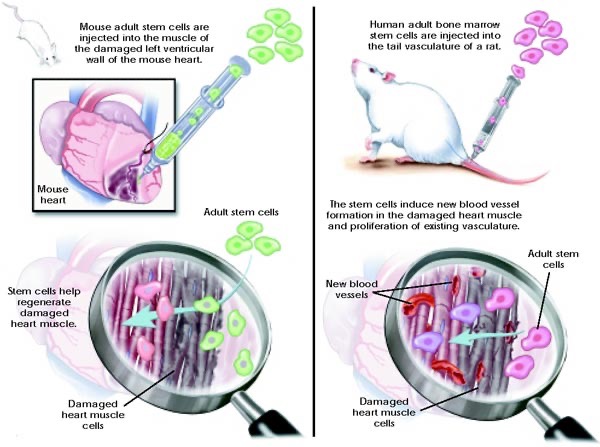
Another goal of stem cell research is to develop cell-based therapies, in which stem cells are induced to develop into a specific kind of cell. The stem cells are then injected into an ailing organ (such as a damaged spinal cord or failing heart) to stimulate the growth of healthy cells. These types of therapies have the potential to treat and possibly cure many different conditions, including diabetes, heart disease, macular degeneration, spinal cord injuries, burns, arthritis, and ALS, to name just a few. (See graphic below)
The main ethical dilemma surrounding stem cell research is the fact that the pluripotent stem cells are derived from human embryos, which are destroyed in the process of extracting the cells. These embryos are extraordinarily immature, 100-cell blastocysts that are typically about 3-4 days old. They have no neural tissue, that is, no spinal cord or brain (these do not develop until the embryo is 14 days old). Nevertheless, some opponents of stem cell research believe that, because they could develop into a fetus if implanted in a uterus, destroying them is tantamount to destroying a human life.
Since its inception in the 1990s, embryonic stem cell research has been the subject of a great deal of legal wrangling, legislation, and policy-making by the Executive Branch. However, after years of steady controversy, in 2013, the legality of stem cell research was decided by the Supreme Court. In a landmark decision, the court ruled that a 1995 law prohibiting the use of federal funds for research that involves the creation or destruction of human embryos (the Wicker-Dickey Amendment) does not apply to research performed using stem cells harvested by private institutions and later obtained by the NIH or its grantees.
Sources
“Introduction to Stem Cells.” National Institutes of Health. https://stemcells.nih.gov/info/basics
“Stem Cell Policy Timeline”. Research America. https://www.researchamerica.org/wp-content/uploads/2023/02/U.S.-Stem-Cell-Policy-Timeline-Through-2020.png
“Supreme Court allows federal stem cell research to continue”. https://www.cnn.com/2013/01/07/justice/stem-cell-appeal/index.html