


“Worth”A film about the creation of the September 11th Victim Compensation Fund dives into the moral complexity of assigning monetary value to human loss
Worth,” a 2021 drama starring Michael Keaton, is centered on the question of how much a human life is worth. Based on true events, the film follows attorney Kenneth Feinberg as he is appointed special master of the September 11th Victim Compensation Fund. The fund was created to provide billions of dollars to the families…

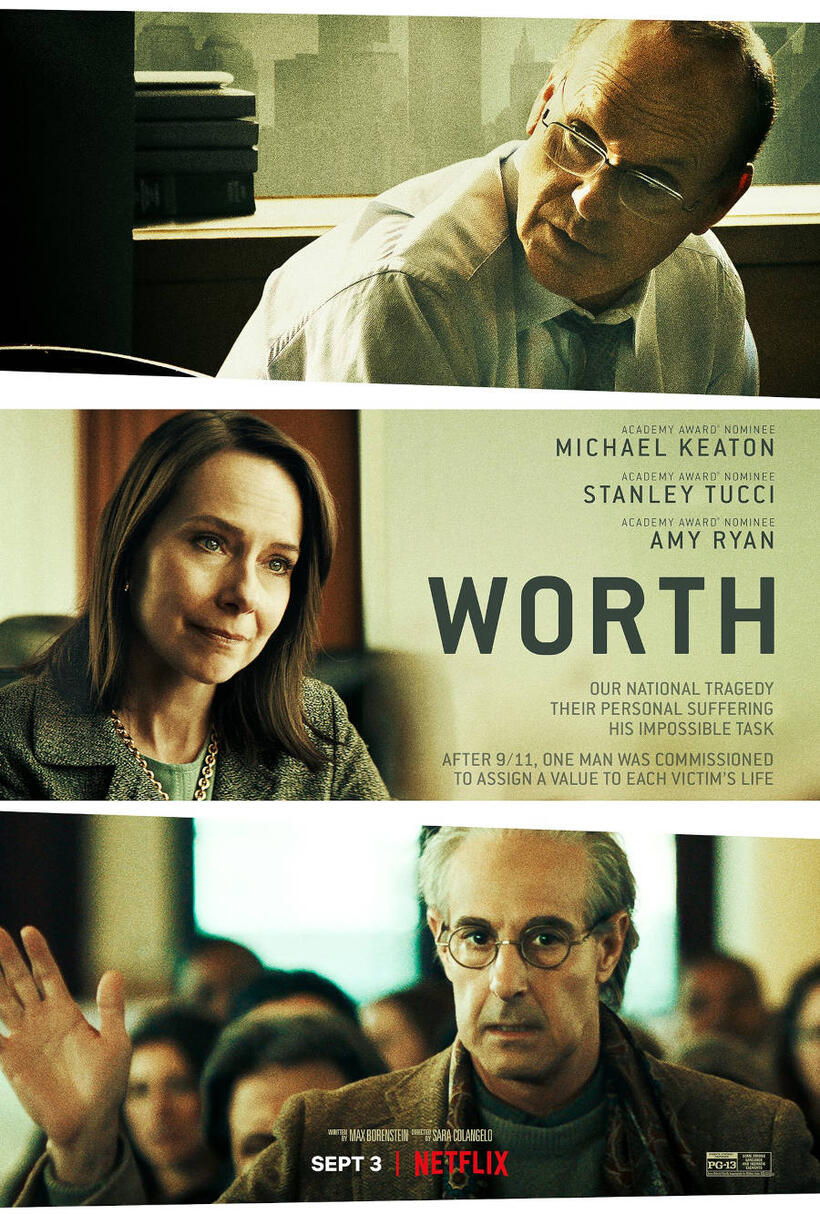
Worth,” a 2021 drama starring Michael Keaton, is centered on the question of how much a human life is worth. Based on true events, the film follows attorney Kenneth Feinberg as he is appointed special master of the September 11th Victim Compensation Fund. The fund was created to provide billions of dollars to the families of those killed in the attacks, andFeinberg and his team were tasked with determining how much each family would receive.
The Background of “Worth”
The film was adapted from Feinberg’s memoir, “What Is Life Worth?” where he detailed the emotional and logistical burden of everything that went into administering the fund.
Director Sara Colangelo spoke about the “moral conundrum” of the film’s premise: the very task of itemizing grief and weighing one’s financial worth based on one’s career is not just daunting, but as the film shows, practically impossible.
The Story of “Worth”
Michael Keaton plays Feinberg, depicted early in the film as a man with rigorous processes and routines. He seems to be convinced that a good legal formula can resolve any problem—including attributing a monetary value to the September 11th victims.
Initially, he planned to award the victims’ families based on the victims’ incomes; the fund would pay out more to higher earners and less to lower wage levels, which reflected standard tort law. While that approach is defensible in court, it’s not so easy to explain to a room full of grieving families, as Feinberg soon found out.
The central conflict of the film is brought forth through Stanley Tucci’s portrayal of Charles Wolf. Wolf was a real-life widower who lost his wife in the attacks and became one of the fund’s loudest critics. He starts a grassroots campaign called “Fix the Fund,” arguing that Feinberg’s formula reduces humans to economic data points and is unjust. As Wolf and Feinberg get to know each other, Feinberg begins to understand where the families are coming from and empathize with them, allowing him to adjust the rigid formula he created to accommodate more families.
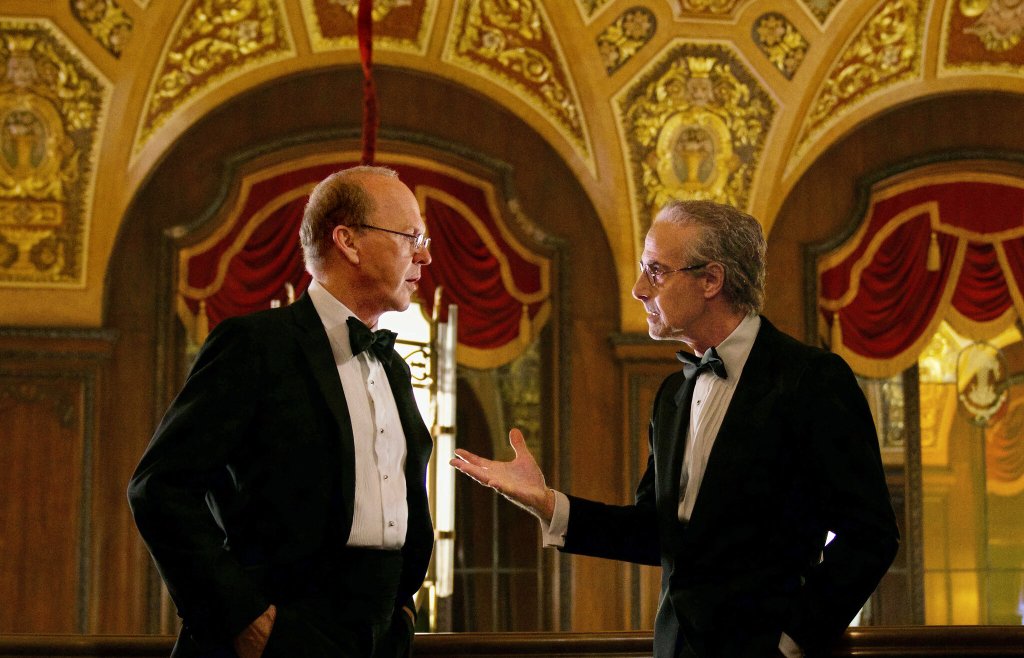
A noteworthy aspect of the film is how it draws attention to the individuals the fund left behind. Some domestic arrangements or partnerships didn’t fit into neat legal categories at the time, such as same-sex partners who had no recognized legal status under New York’s early 2000s laws, or undocumented workers whose families could not claim compensation. Legal support for these cases is often minimal, as the film illustrates in a tearjerking moment where a member of Feinberg’s team has to tell the same-sex partner of one of the victims that there is nothing they could legally do for him.
The Value of “Worth”
The film also offers a fairly unique vantage point. Most storytelling about grief, especially regarding major disasters like this, centers solely on those who are mourning or those who were actively on the scene (a first responder, for example). In “Worth,” the viewer spends a lot of time with those whose job it is to respond to grief objectively and institutionally, and to make decisions that often feel inadequate to those in mourning.
Feinberg’s character arc in the film is also worth mentioning; it’s a meaningful study in what happens when someone trained in objectivity is confronted with loss and grief on such a large scale. He begins by approaching the fund as a legal problem to be solved, but ends up as someone who ultimately understands that the families needed to be seen and heard as individuals, not just numbers on a legal form.
While the film has a satisfying ending, it does wrap up the problem with a neat bow that may perhaps be a little too tidy. Certain moral and ethical problems the film presents aren’t addressed as thoroughly as they could have been, and the historical record reflects a bit more conflict than the film’s ending implies. Still, it earns its place as a meaningful portrait of the relationship between institutional systems and grief.
As a Grieving Tool
For those in mourning who are looking to catch a glimpse into the other side of the legal table during estate tort and estate cases, “Worth” does an excellent job of portraying this while still honoring the victims and their families. For those drawn to the ethics and complexity of end-of-life work, the film serves to show how we as a society address loss is incredibly important in how we connect and support each other.
If you have lost someone due to a similar tragedy, or are wrapped up in legal estate or tort complications as a result, this film, while educational and insightful, may hit a bit too close to home.
May We Suggest:
 Beyond the Five Stages: Grief Theories in the Modern Age
 Survivors Are Breaking the Taboos Around Disenfranchised Grief
 What Does an Estate Plan Cover and How Do You Make One? (Interview)
-

Worth reminds us that while systems may be built to calculate compensation, they can never fully measure the value of a human life. Grief deserves to be acknowledged with both fairness and humanity.
-
That’s what stayed with me most about this story. Even when institutions have to create systems and formulas, the people behind every claim are living with a loss that can never truly be quantified. Being heard and treated with compassion matters just as much as the outcome.
-








Leave a Reply