

Choosing Human Composting? Soil Scientist John Paul Shares the Questions You Need to Ask (Interview)Inside the science of Natural Organic Reduction (NOR) and how families can evaluate transparency, facility standards, and hands-on participation when considering human composting
John Paul is a soil scientist who has decades of experience in soil microbiology and biochemistry. He created the Natural Organic Reduction (NOR) system for Return Home, a Seattle-based green funeral home specializing in terramation, or “human composting;” a gentle process that returns loved ones to the earth as nutrient-rich soil. He has worked as…

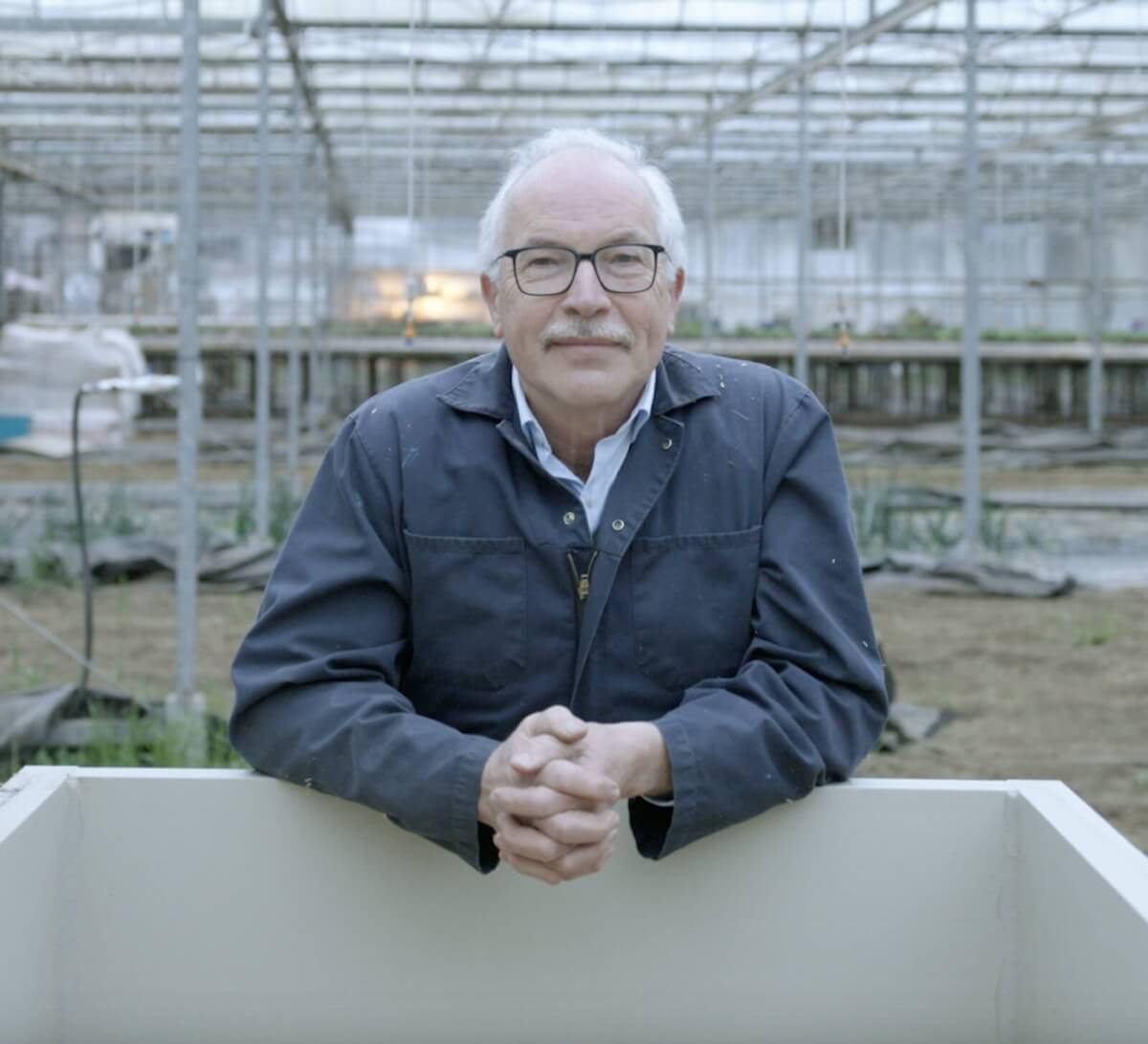
John Paul is a soil scientist who has decades of experience in soil microbiology and biochemistry. He created the Natural Organic Reduction (NOR) system for Return Home, a Seattle-based green funeral home specializing in terramation, or “human composting;” a gentle process that returns loved ones to the earth as nutrient-rich soil. He has worked as a waste management scientist and founded Transform Compost Systems, a consultation and design firm for cost-effective composting. He is also a professional agrologist, using his knowledge of environmental science to investigate and support the development of agricultural resources. He is registered with both the British Columbia Institute of Agrologists and the Alberta Institute of Agrologists.
Editor’s Note (Updated Nov. 24, 2026): This interview has been updated with additional information about John Paul’s background. Before giving consumers advice on human composting, Paul was paid as a contractor to design the composting system for Return Home, and he owns stock in the company.
This interview has been edited for length and clarity.
What is the story of how you started working on Natural Organic Reduction?
When the legislation for NOR started in Washington State, I told my family that it was an interesting process, but I let my family know, “You can count on it that I’m not going to get involved in this process.”
God has a sense of humor, though, and a gentleman by the name of Micah Truman, the founder and CEO of Return Home, called me up in 2019. We had lunch together, and he asked me, “Do you think it’s possible to compost a human body in an enclosed vessel?”
My response was “Yes, it’s possible.”
He asked, “Well, can it be done in 30 days?”
I told him with serious manipulation, maybe — but number one: I’m not interested in doing this process, particularly if it’s 30 days. And there’s so much emotion tied with the passing of a loved one. I’m a scientist, so I’m sorry, I don’t need to get involved with that.
Micah is a bit persistent, so he said, “Well, think about it.”
I thought, well, I’m not the best scientist in the world, but I do have some experience. And some of the stories that I hear, I think the public deserves a little bit more transparency. Secondly, unfortunately, we have considerable experience with the passing of loved ones, so we knew about the need for respecting the human body and the importance of including loved ones in the process.
That started our journey with Return Home.
Let’s start with the language surrounding this process. There are a few different terms to refer to similar things — human composting, natural organic reduction, terramation, etc. — what is the difference between all of these?
There is technically no difference between these terms. However, human composting can trigger interesting responses from people, so “natural organic reduction” tends to be a better term because it is more neutral. Scientifically, they all refer to the same process.
Can you break down the science behind that process (NOR) for the average audience?
The quick answer would be that a body is placed in a vessel and magically turns to compost in a number of days as it goes through an aerobic compost process. However, I believe the public deserves a little more information than that. When we developed the process for Return Home, the whole idea of transparency and the science behind the process was extremely important to us.
The human body is full of microbial cells — even more than “regular” cells. One can say, “It’s the microbes in our body that actually do the composting,” but that’s actually incorrect. The microorganisms that we have inside our body are largely anaerobic microbes; they produce odorous compounds and they live without oxygen. Composting is an aerobic process, so we’re trying to allow the microbes the oxygen to flourish. When we do that, the odor issues that are sometimes associated with composting in general or with dead bodies is reduced.
The way I describe it is there are actually two microbial cultural revolutions that happen: The first is when we take our last breath. That’s when our bodies are completely open to consumption, if you will, by the microbes that largely live in our intestines. Our bodies have the amazing ability — when we’re alive — to protect ourselves from these microbes through our cell walls, immune system and the acids in our stomach that prevent them from backwashing into our esophagus. When we die, that changes completely. Something called the clostridium effect happens, where the anaerobic bacteria now have free reign over the body.
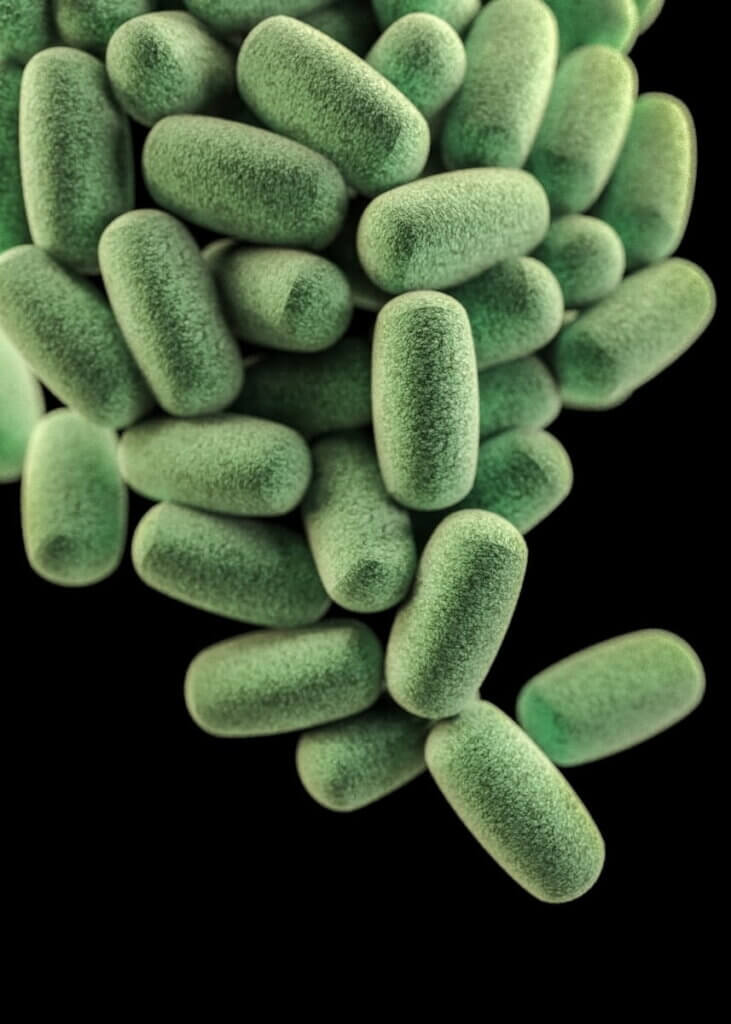
The second revolution is when we start composting because these anaerobic microbes are not the ones we want to encourage in the process, for two reasons: they produce smelly compounds and also have an upper temperature limit of around 50 degrees Celsius. During the compost process, we are encouraging a microbial process that is more around 55 to 65 degrees, so it’s a completely different population.
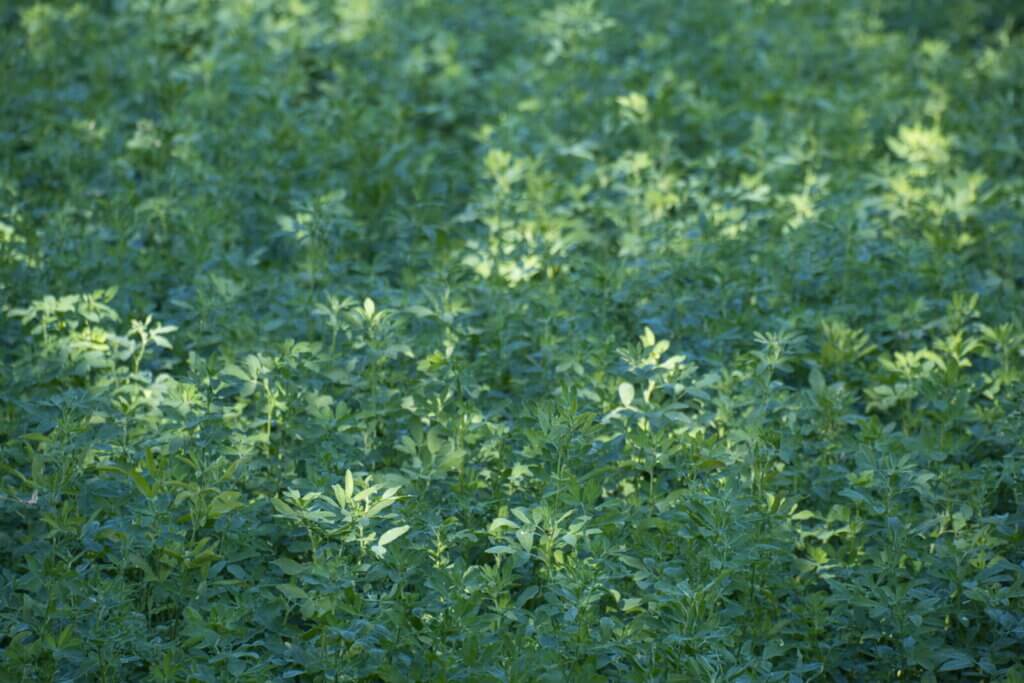
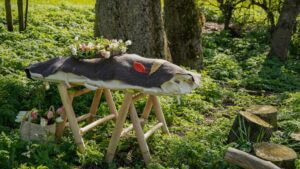
We don’t just throw the body in the vessel all by itself. We place it in a bed of alfalfa and provide a physical and microbial environment where this can all occur. There’s no heat added during the process; composting starts effectively all on its own. The microbes generate the heat and depending on the vessel used, how the oxygen is supplied can be different depending on who is doing the process. For example, at Return Home, it’s essentially a passive process where the heat from the microbes absorbs moisture from the air that is warmer. Air that is warmer and wetter is actually lighter than cold, dry air, causing it to move upwards and out of the vessel. In doing so, it’s pulling cool air into the bottom of the vessel, providing more oxygen for the microbes to keep the process moving.
It’s quite a fascinating microbial, physical and empirical process that is occurring in these vessels.
Do different companies do different processes? Is there an important difference that allows for the body to be fully reduced?
I can only describe what happens at Return Home and why we want to do it that way. The primary phase-one process for Return Home is what we call the “rest in peace” principle, where the body just lays inside the alfalfa. There’s an ethical reason for doing that as well as a couple of scientific reasons.
The ethical reason for this is that we want to respect the dignity of the human body and allow it to decompose naturally without any additional manipulation. That process allows loved ones to effectively sit with them, which is, in my opinion, a critical and important part of the grieving process for each one of us.
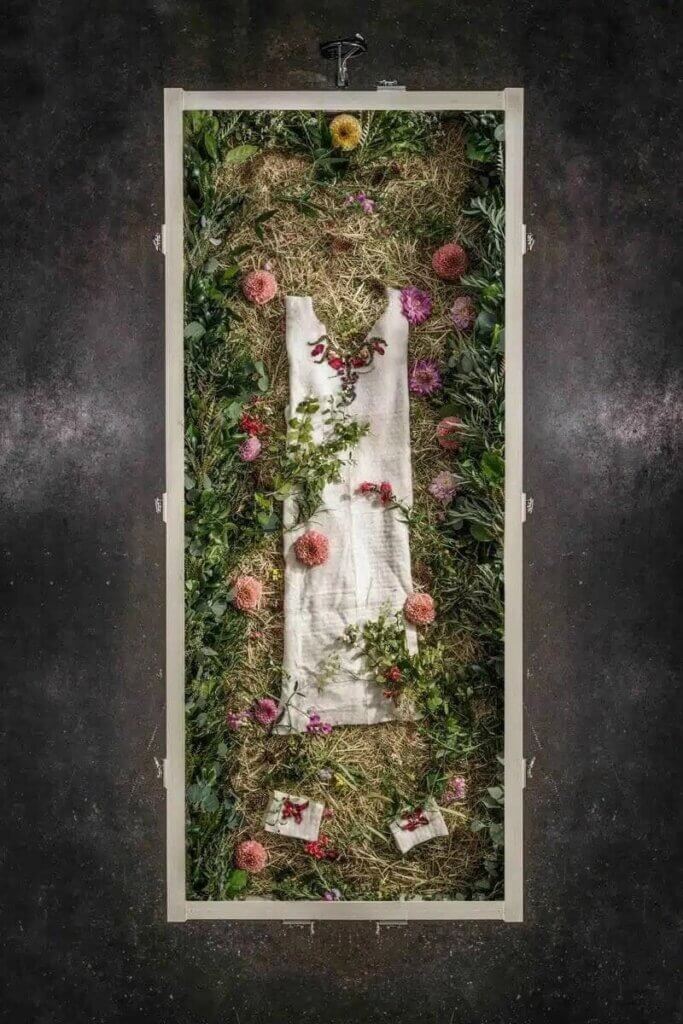
The scientific reasoning why we do this process without manipulation is that it reduces odor. When the anaerobic microbes begin their decomposition, they produce odor compounds that the bedding material absorbs for energy. This drastically reduces or eliminates the odor coming out of the vessel.
Another scientific reasoning is if we rotated or manipulated the body, some of the body parts may end up closer to the edge of the vessel, typically causing the temperature at the edge of the vessel to drop, which affects the quality of the composting process. This is not to be more graphic than that at this moment.
After a number of weeks, we rotate the vessel because with passive airflow comes a separation of moisture inside it. Rotation equalizes the moisture and allows further processing to happen, typically after four to eight weeks, depending on the conditions and size of the body. The bones won’t disappear during the primary process, so they are size reduced and placed back into what we call a secondary bin, starting a second-phase process for further composting. Depending on the amount of fat tissue, or adipose tissue, they may need further composting than the primary process provides, which is why the secondary process exists. It’s just as important as the primary process.
The secondary process is naturally aerated and turned every week for usually about four weeks. After that, any of that bone and tissue is gone.
What tips can you suggest someone ask when choosing a NOR facility for themselves or a loved one?
That will depend on someone’s objectives. I think for many of us, we want to understand physically what’s happening to our loved ones — or ourselves. For those of us who do want to understand, it’s helpful to ask specifically about the process. The other part of the question is to ask if they can get involved in the process:
- Can I be there when the body is laid in?
- Can I add things to the vessel?
- Can I participate by coming back in the next few weeks, having a glass of wine next to my loved one?
- Can I bring my children so that they understand a little bit more about the physical process?
Ask about what is important to you.
Are you aware of how many locations or companies have the NOR capabilities in the US?
I know of at least four or five, but I don’t specifically keep track.
How do families get their loved one to the NOR facility? Would there be a cost added for transportation services?
The folks at Return Home could probably give a better answer to this, but as I understand it, they work with funeral homes across the country, and they can assist with the transportation aspect. The cost would depend on which funeral home you would be working with.
We understand the Cremation Association of North America included NOR as part of its certification. Who else is certifying, and how does this process take place?
Nobody that I have involvement or knowledge thereof. I have seen that the training course that the Cremation Association of North America has put together and let’s just say that would be the very minimal requirement for somebody who’s going to be operating a NOR facility. I’m adamant that those who do this process need to get adequately trained. They need to understand the process very well, not only because it has the potential to be distressing for the families, but also for everyone involved.
Is there anything you’d want to add or include when it comes to a loved one choosing Natural Organic Reduction? What should they know going forward?
I think the idea of human body composting is often brought up in terms of an alternative burial method that is better for the climate. We’re limited in space where we can put bodies in many places, and many need to be encased in concrete due to groundwater pollution concerns, or some may want to limit cremation because of the fuel that is used. The composting process does have some initial traction there in my mind as an eco-friendly alternative. But the reality is, you know, if my loved one passed, the impact on the climate is not going to be my first concern.

A documentary called “The Life We Leave” by J.J. Gerber demonstrates how this process helps families and loved ones in their grief journey. Personally, I think it’s a real opportunity to explain to young children who lose siblings or family members to understand what the human body is and how the process works. The body decomposes, but the human remains. The person that we know and love is with us. And depending on your faith’s perspective, that can come out in different ways. Regardless of one’s religious or faith leanings, to lose a loved one can be really difficult. These people remain in our memories forever. Understanding that their physical body decomposes, but who they are doesn’t change — I think NOR allows that.
We who are interested in NOR respect that different people will choose different ways, and this is just one more disposition method. However, we think it allows a good interaction between loved ones and those who die, which is helpful for the grieving process, particularly for children. We think of children as resilient — and to some extent, they are. When a child loses a parent or sibling, we often focus on the adults, and write off the children, as they’ll be okay. This process allows children to be involved and ask questions.
Top photo of John Paul: Pushing Daisies, LLC
May We Suggest:
 Composting Bodies Is Now Legal in 14 States
 Composting Bodies Is Now Legal in 14 States
 The New Immortality: Shifting Attitudes About Death, Our Bodies and the Environment
-

What stands out about human composting is not only its environmental benefits but also the opportunity for families to actively participate in saying goodbye, creating meaningful moments that may bring comfort during the grieving process.




Leave a Reply