


What is Complicated Grief? (Interview)An interview with Dr. Katherine Shear, Founder of Center for Complicated Grief at Columbia School of Social Work
An internist and psychiatrist, Dr. Kathy Shear is widely recognized for her work in bereavement studies. She has developed a targeted psychotherapy, Complicated Grief Treatment which has proved to be efficacious in three different trials. Editor’s note: This interview has been edited for length and clarity. Melissa Gouty: Thanks, Dr. Shear, for talking with me…

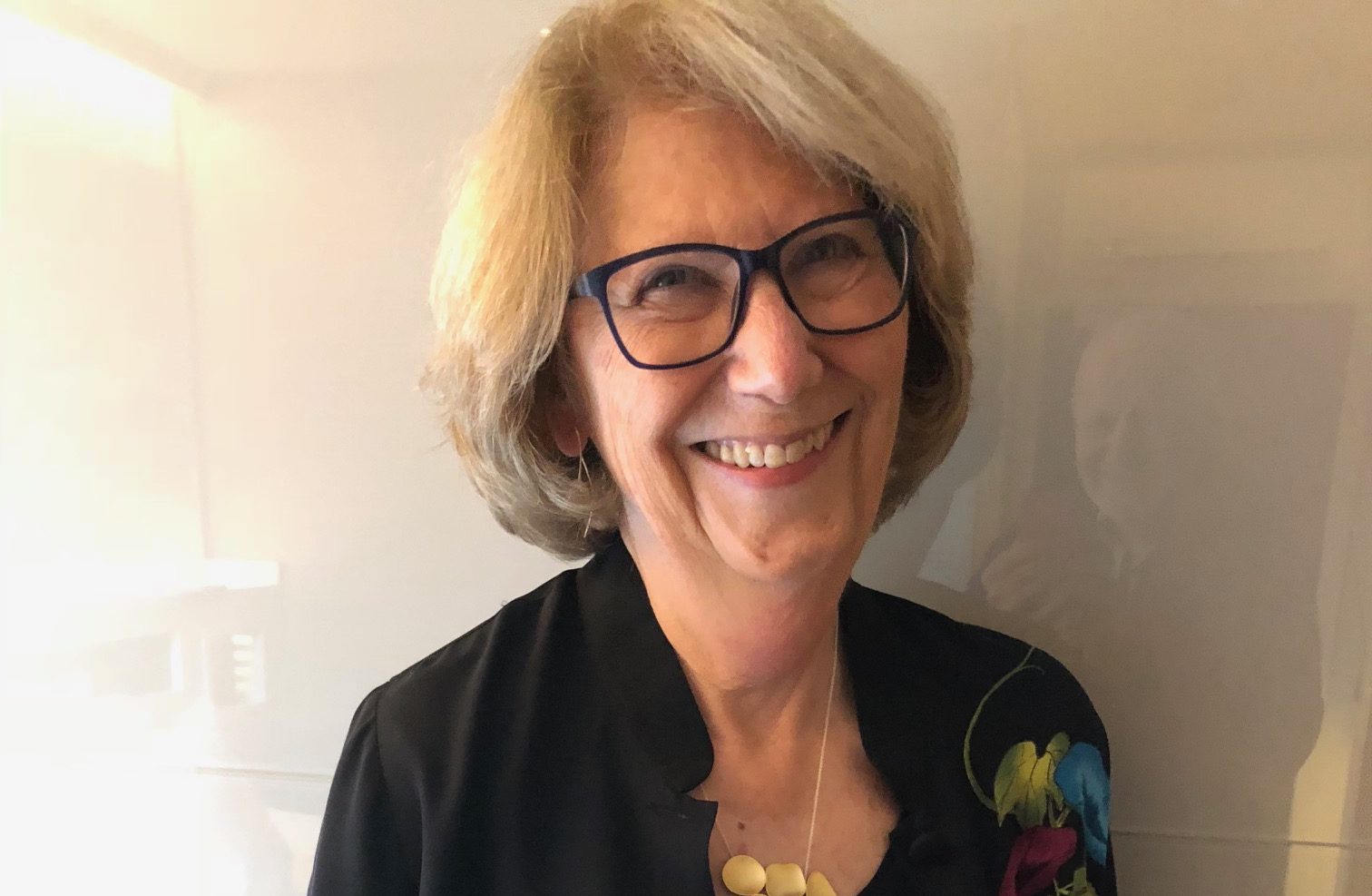
An internist and psychiatrist, Dr. Kathy Shear is widely recognized for her work in bereavement studies. She has developed a targeted psychotherapy, Complicated Grief Treatment which has proved to be efficacious in three different trials.
Editor’s note: This interview has been edited for length and clarity.
Melissa Gouty: Thanks, Dr. Shear, for talking with me today. First of all, when did complicated grief become a condition in and of itself?
Dr. Katherine Shear: It was first proposed sometime in the 1980s by Mary Horowitz, and the condition is now included in the International Classification of Diseases, which is the World Health’s Organization’s manual that describes conditions that require treatment. The ICD covers both physical illnesses and mental disorders. Prolonged Grief Disorder, which is the same as complicated grief, is now listed.
Most people do think that there is some form of grief that is problematic. When grief becomes so prolonged that a person is impaired, that they can’t adapt, that’s complicated grief. We all, of course, grieve in our own way, and we adapt in our own ways too. It takes us varying amounts of time to adapt, and it doesn’t happen quickly for most people. But if it’s more than a year, and the griever is still experiencing really pervasive yearning, longing, sadness, and difficulty with pre-occupying thoughts of the person who died along with other evidence of emotional pain, then it’s probably complicated grief.
Melissa: So people who cannot heal, cannot move on, cannot regain stability in their life for an extended period of time after a loss have complicated grief? How is that different from depression?
Dr. Shear: I just want to say one thing about what you just said. We usually talk about moving forward instead of moving on. There’s sensitivity in some people to the idea of moving on. Moving forward seems to be more comfortable, just to be clear about that.
Melissa: Okay.
Dr. Shear: The reason you’re asking about depression is that grief and depression do share some common features. People who are experiencing either one have sad feelings. They often have changes in bodily functions like sleep and appetite. There can be increased physical pain involved, which may be associated with guilt or anger or anxiety. These are all very common in depression and grief.
But there are some really marked differences too. The main one is that the heart of grief is the loss, and the feeling state is primarily one of yearning and longing. Even in the sadness, the quality of the sadness that we feel in grief has a strong yearning quality, a longing for a reunion. We want that person back. We long to have them back with us.

In depression, on the other hand, the sadness has a quality of more gloominess and despair, disappointment and pessimism. It’s not focused on any one particular thing. In grief, we are very, very focused on either missing the person so much or caring about them so much. For example, grieving people may have a change in appetite or weight loss because they don’t want to eat dinner because it’s a reminder that the person they love isn’t there. It’s always connected in some way with the person who died.
Whereas in depression, it’s more about the loss of the ability to care about anything. It’s more about a feeling of emptiness, or worthlessness, or despair. The despair is more global.
Melissa: I see. So depression is lack of interest in everything, while grief is sadness about the person who has died and the changes that death has brought about.
Dr. Shear: Two more small things that I want to mention.
We know from a lot of the research into depression that a big difference is that the heart of depression is an impairment in the ability to experience positive, pleasant emotions. In grief that capacity is preserved.
When I visit people who have lost someone, not infrequently, the bereaved people have periods of time where you can distract them, or someone else will distract them, and you will actually even see them smiling or laughing. They might be telling you a funny story about someone, or they might be getting distracted by a completely unrelated topic. They can do it. Then something reminds them about the situation and their minds come back to the present and the loss, and they become very, very sad again. But they can experience positive emotions. That’s very different from depression, where people have a lot of trouble. They actually have an impairment that prevents them from experiencing positive emotions.
And the other thing is that we’ve done three different studies, and in each one of them, we compared a grief treatment to a very good, proven, effective, evidence-based treatment for depression. And the depression treatments don’t help grief symptoms. They just don’t help. You really need a grief treatment.
Melissa: That’s very interesting. The word “impairment” helps me to understand the difference between grief and depression.
Dr. Shear: Good. Okay.
Melissa: Tell me about the Center for Complicated Grief.
Dr. Shear: The Center for Complicated Grief was established after we completed these studies because our dean at the School of Social Work said, “It’s great that you did this, but how are people going to know about this?” I wish it were a treatment center, but it isn’t. For a variety of reasons, we are not able to actually see people and treat them at the Center for Complicated Grief. Basically, our Center’s mission is to improve the lives of people with Complicated Grief, but we do that through the education of professionals.
What you’re doing at SevenPonds is so in line with our mission. We really want to get the information that we’ve learned out into the world. We want to reach all the people who are suffering, people who are grieving intensely, as well as the public at large.
Melissa: In addition to educating people about complicated grief, what else does the Center do?
Dr. Shear: We also do continued research at the Center for Complicated Grief.
Melissa: And how many on staff there? Is it just you, or do you have other people who are working to educate and help people?
Dr. Shear: We have a full-time staff of five to six people, and then we also have other people who work with us either as colleagues or people who work on specific projects. So we’re somewhere between half a dozen people and a dozen at any given time. We’re a small group, but it’s not just me.
Melissa: What caused you to get into the area of complicated grief? How did your work evolve to move you to study this?
Dr. Shear: To be honest, it evolved serendipitously. Someone knocked on my door and said, “I’m working in an older adults’ depression unit.” She was interested in grief and had identified this syndrome, and she noticed that the depression treatments weren’t helping very much. I was doing anxiety treatments, and she thought maybe I would be able to help. She literally knocked on my door and said, “Do you think you can help?” And I said, “I’ll try.”
And then I got very caught up in it. I had a long-standing interest in attachment relationships. I had done some research after I finished my psychiatry residency and had worked in a laboratory that studied maternal-infant attachment. I didn’t really like laboratory work. I basically am much more interested in helping people, but I kept that interest in close relationships and attachment.
Then also, it became so gratifying to work with people who were struggling with grief. For a lot of reasons, it’s extremely satisfying kind of work to do. I think almost everyone who works in this field feels that way.
Melissa: So the most gratifying part of your work is seeing that you’ve helped people suffering from extended grief?
Dr. Shear: Absolutely. I was thinking about that because I haven’t really been asked that question before. I would say that what’s really most gratifying is that I’ve been able to provide a treatment approach that a lot of therapists find accessible. Therapists from all different backgrounds have found this quite easy to understand. At the heart of our treatment is the fact that we can mentor clinicians to treat patients and really help them.
I hope you will discuss the treatment you developed specifically for complicated grief. You said it’s a very different protocol from depression treatment.
Dr. Katherine Shear: First, let me tell you some of the basics about the treatment, and then I’ll give you more of the details. The first basic is that Complicated Grief treatment is not about grief. It’s about adapting to loss.
There are these two basic principles.
One is that we help people adapt to their loss. We don’t try to change their grief. We believe that grief is the form that love takes when someone we love dies. It’s painful, and certainly very difficult. And if it remains and is pervasive, then it becomes complicated grief. But having grief in our lives is not problematic. One of the things that we really need to do is to understand that. So we don’t try to lower grief or directly address grief. We address adapting to the loss.
The second basic principle is that while this treatment is structured and sequenced and there are some very some specific things we do, it is also administered in a way that is personalized for every client we treat. It’s not a robotic or cook-booky kind of approach. We personalize it.
Basically, this is a treatment that is focused on helping people adapt to loss.
Melissa: And what does that entail?
Dr. Shear: We have to accept the permanence of the loss, its finality, and also the changes that a loss brings. That’s one of the things that makes loss so hard. But losing someone we love brings about so many other changes. Changes within ourselves, and changes in the world around us. But we can adapt.
That’s the good news. Living things adapt to change. We do expect people to do that naturally, but what they have to do naturally is to accept the reality of the loss. That loss means a change in the relationship with the person who died. So we don’t lose our relationship, really, because much of our relationship with our loved ones actually exists within us already.
That’s the way our minds work. We’re biologically built to take in this information and hold onto it, and it doesn’t go away just because the person dies. We don’t stop loving someone when they die, and we don’t stop having a relationship with them either because those relationships go on internally. But the relationship changes dramatically. What we have to accept is that change and to adapt to a very new kind of relationship with the person who died.

won the National Association of Social Workers
Media Prize in 2014
Credit: social work.columbia.edu
Maybe you lose a romantic partner or spouse. Maybe they were the person who always mowed the lawn or cooked the food, and you have to learn to do that. So that’s a change in your role, a change in your skill set. There are a myriad of things like that come with a loss, and we have to accept those. That’s part of adapting,
The other part of adapting is restoring our own sense of well-being. Because when someone first dies, we often feel undermined, sad and very, very emotional. Our thoughts and a lot of what we do are centered around the person and what we do to remember them. We do things to feel close to them. We do things to honor them. Especially in the beginning.
In the beginning, our lives are dominated by grief. But over time, we need to restore our own well-being and the promise and possibility of the future — finding joy and satisfaction and happiness in the world in which our loved one is absent.
Right after someone dies, some of the things we think, feel, and do are a kind of support adaptation. Other things that we think, feel, or do can get in the way. In particular, one of those things is the strong desire to redo the death event. In other words, to rewrite it so that it doesn’t happen…You know, if only such and such had happened and the person had not died. I think everyone thinks that at least once, right?
Melissa: Right.
Dr. Shear: If that kind of thinking gets a foothold … if it gets very frequent and insistent in a person’s mind, that can interfere in a person’s process of accepting the finality of the loss.
Melissa: I see.
Dr. Shear: Those are the kinds of things that we look for and try to help people with. Those parts of the early grief response that get a foothold and then are impediments to adaptation are what we try to resolve.

YouTube.com
Credit: YouTube Center for Complicated Grief
Melissa: Were you the one who pioneered this Complicated Grief Treatment that is so different from treatment for depression?
Dr. Shear: Yes, but I didn’t do it alone. I work in teams. A lot of this has developed in discussion with other people, with other therapists, with colleagues at the University of Pittsburgh, and elsewhere. I don’t want to say this is just mine.
Melissa: How do you get the treatment protocol that you’ve developed with your team out to the practicing clinicians?
Dr. Shear: We publish a lot. Our group together has published over 100 articles in the professional literature. However, it turns out that that’s not a very good way to disseminate information because there are too many journals.
But there are other ways. I am publishing a book. We do workshops. We have information on our website that people can access. We run monthly webinars that are free of charge. We’ve also developed two mobile apps. One is called Grief Steps, and the other one is called Grief Steps for Parents. This particular app has a lot of the principles and suggested action steps that we discuss in Complicated Grief Therapy for parents. It also includes information about parenting when you’re bereaved, and some information about what children experience.
Melissa: What’s the address of your website where people can get this literature?
Dr. Shear: It’s ComplicatedGrief.org.
Melissa: What’s the most difficult thing about working in this field?
Dr. Shear: I would say that the single most difficult thing is that there are people working in the field who are very negative about the idea of any new protocol, and they worry that we are pathologizing or medicalizing grief. And that is really so far from the way that anyone I work with thinks about grief or the way that we work with people. It is unfortunate that there’s some resistance to Complicated Grief Treatment because there are people who can be helped, and they can be helped very quickly.
I agree that we should not pathologize grief. But it is hard to have people who are in the helping professions so negative about something we know can help.
Melissa: Dr. Shear, I appreciate your time and insight. I’m sure our discussion will be helpful to people who are grieving and for those dealing with complicated grief.
Dr. Shear: It’s been my pleasure. Thank you for sharing this information.
May We Suggest:
 Survivors Are Breaking the Taboos Around Disenfranchised Grief
 How Has Hospice Social Work Changed Over the Years? (Interview)What Does a Hospice Social Worker Do? (Interview)
-

I think I suffer from complicated grief. I don’t know where to begin. Over 4 years ago I lost t+ he one person who made me feel love and a reason to believe I had an identity and that I was loved for me. Quite complicated. It was sudden. He was hit by a car while walking for exercise. 75 years old, what I am now. We were first loves and last loves. I have 2 sons who are developmentally disabled. I’m sorry, I don’t know how to tell you. It would take too long to explain, but he came back into my life after 50+ years. I never stopped loving him, but knew I had nothing to offer. Then one day he was gone.
-
Grief is not something we simply “move on” from. Learning to adapt to the loss while continuing to carry our love and connection forward can be an important part of healing.








Leave a Reply