No categories found for this post.
What Is a Bier?
Because natural burial grounds eschew gasoline-powered engines and heavy machinery, most green burial grounds transport the casket or shrouded body to the gravesite on a platform or cart known as […]
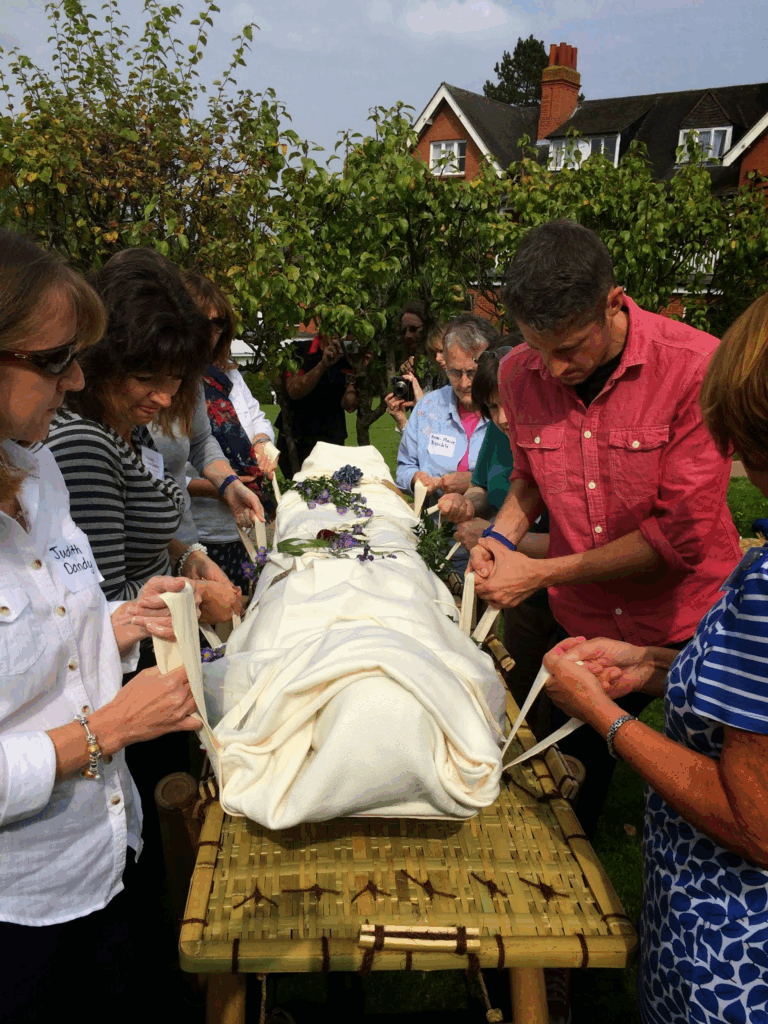
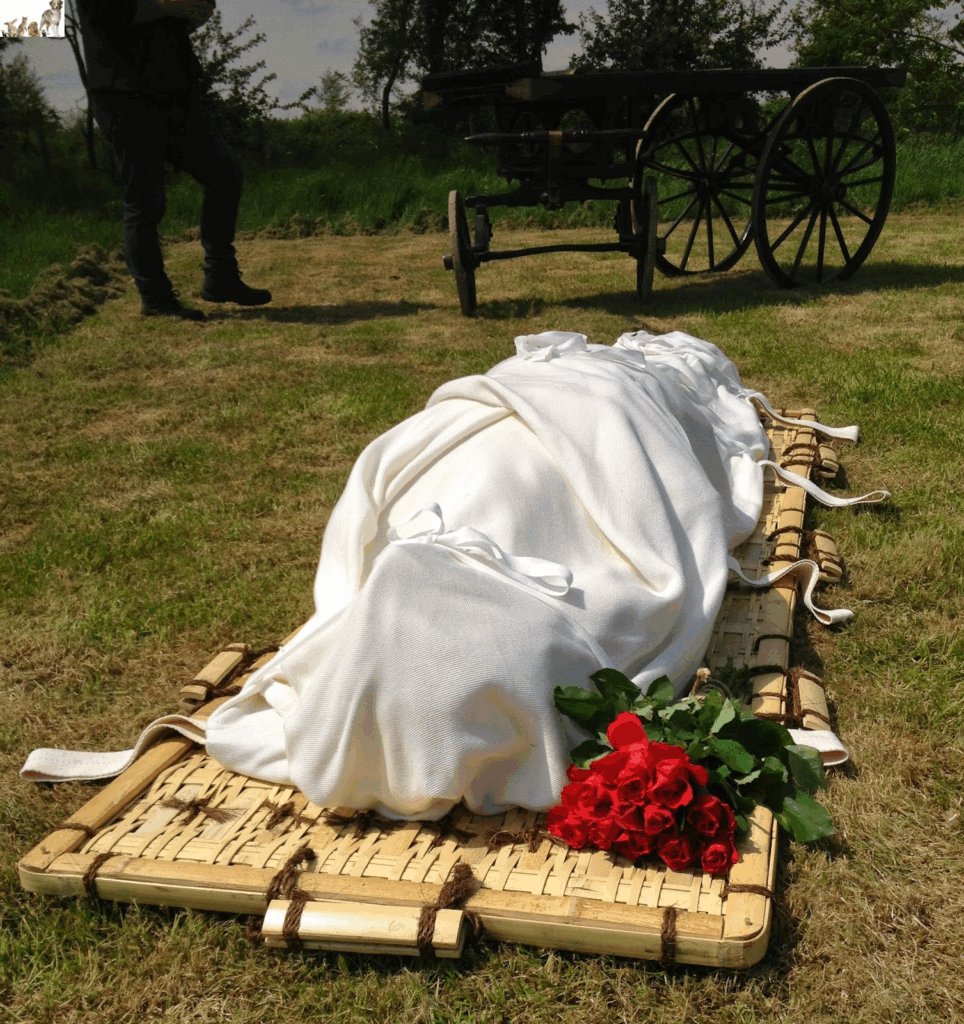
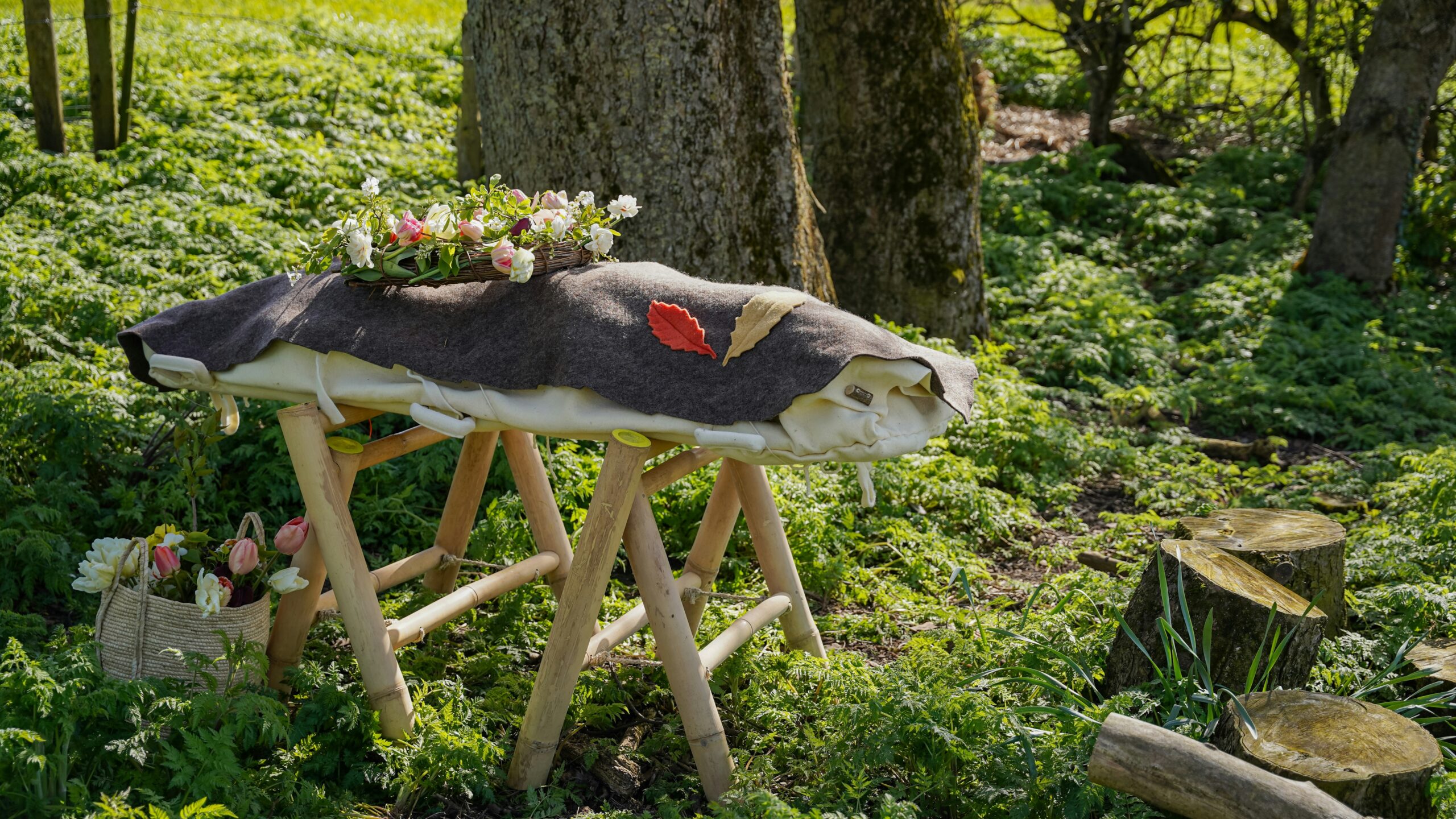
Because natural burial grounds eschew gasoline-powered engines and heavy machinery, most green burial grounds transport the casket or shrouded body to the gravesite on a platform or cart known as a bier. (See photos below)
In green burials, transporting and lowering a shrouded body can be a deeply personal and participatory part of the ceremony. Many cemeteries use simple, wheeled vehicles—such as retrofitted golf carts, wagons, or trailers—to carry both shrouded and casketed bodies to the gravesite. Some families prefer a more hands-on approach, choosing a processional with pallbearers who carry the casket on their shoulders or use a shrouding board with built-in handles to carry the body to the grave.
Lowering the body varies by cemetery and depends on the equipment available and the level of family involvement. While some cemeteries use machinery, such as hydraulic lifts or excavators, others hand-dig graves and offer families the opportunity to lower the body themselves using ropes, straps, or a shrouding board. In some cases, families may even request to dig the grave themselves. Because green burial encourages meaningful family participation, operators should be ready to support this with appropriate tools and clear guidance.
To manage safety and liability, cemeteries typically provide guidelines and require families to sign waivers if they wish to assist in digging or lowering the body. These measures help ensure a respectful, safe, and empowering experience for all involved.