


How Can Palliative Care Be Implemented in the ICU? (Interview)An interview with Jessica Nutik-Zitter, M.D.
Today SevenPonds is speaking with Dr. Jessica Nutik-Zitter, M.D. Dr. Zitter is a board certified specialist in both critical care and hospice and palliative medicine and an attending physician in the intensive care unit at Highland Hospital in Oakland, California. She was featured in the award-winning Netflix documentary “Extremis” and is the author of the…

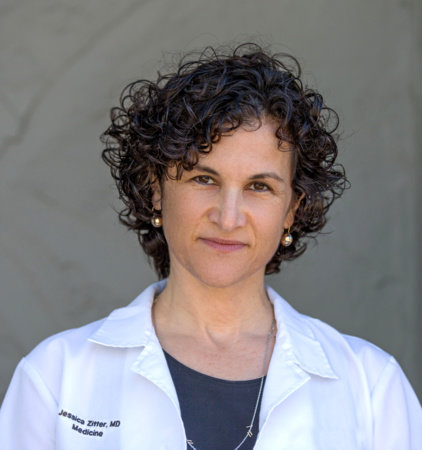
Today SevenPonds is speaking with Dr. Jessica Nutik-Zitter, M.D. Dr. Zitter is a board certified specialist in both critical care and hospice and palliative medicine and an attending physician in the intensive care unit at Highland Hospital in Oakland, California. She was featured in the award-winning Netflix documentary “Extremis” and is the author of the recently released book “Extreme Measures: Finding a Better Path to the End of Life.”
Kathleen: Thanks so much for speaking with me today, Dr. Zitter. I’m very excited to hear about your work.
Dr. Nutik-Zitter: My pleasure, Kathleen.
Kathleen: Can you start out by telling me a little bit about your dual role at Highland Hospital?
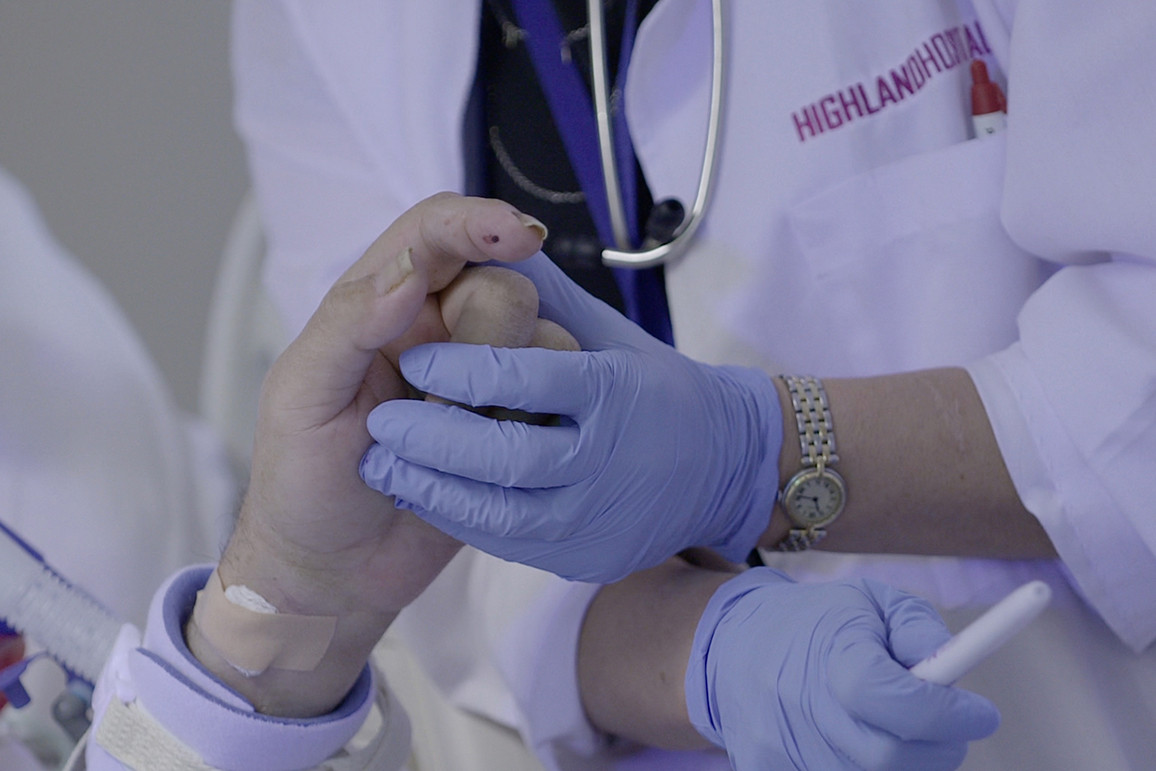
Dr. Zitter: Certainly. I work both as an attending physician in the Intensive Care Unit and as an attending physician on the palliative care team. When I am attending the ICU, I direct the care of all of the patients in the ICU. At other times, I function primarily as a palliative care consultant. For instance, I may be asked to help the ICU team manage a patient’s pain, or address goals of care with a patient who is not doing well despite aggressive efforts to save his or her life.
Kathleen: Some people might see critical care and palliative care as somewhat contradictory specialties. How would you respond to this?
Dr. Zitter: My goal is to help people see that these are not at all disparate roles but part of the continuum of patient-centered care. When a patient first presents in the Emergency Room or Intensive Care Unit, it’s appropriate, in most cases, to make every effort to stabilize them in the hopes of restoring them to their former state of health and quality of life. But for many patients, continuing aggressive intervention when it doesn’t appear to be helping and may actually be harming them is not in their best interests. At that point, it’s equally as appropriate to take a different approach.
Kathleen: Can you tell me what you mean by the “end-of-life conveyor belt?”
Dr. Zitter: Sure. The end-of-life conveyor belt refers to the use of ICU tools and technologies for patients who will not benefit from them or for whom the potential benefits don’t outweigh potential harms. Unfortunately, most people who land in the ICU receive all of these aggressive therapies by default, even when they are clearly not doing any good.
Kathleen: How does this “conveyor belt” get started?
Dr. Zitter: That’s a good question! I believe it starts with our cultural denial of death. We are all chasing the mutual fantasy that we can stay alive forever. And the advances in medicine and technology over the last 50 or so years created a perfect storm that allows us to keep that fantasy going. As long as there’s another medicine or another intervention to try, we can pretend death isn’t inevitable even when it clearly is.

Kathleen: Is there a way to stop it? Once a patient is admitted to the Intensive Care Unit and doctors have started interventions like breathing tubes, ventilators and blood pressure support, how can you scale back?
Dr. Zitter: I believe that the answer to that is communication. For doctors, that means being willing to break bad news — to tell the patient and/or his family that the things we are doing are not working, and it’s time to reassess goals of care. For patients and their loved ones, it means being open to the truth. That can be very hard, especially after many days or even weeks of a “full court press.” But these conversations are essential. We need to talk about the kind of care the patient wants (or his family believes he would want) as he approaches the end of life.
Kathleen: Do you think it’s possible to prepare for these kinds of situations in advance? For example, if a patient has a terminal illness, are there steps they can take to avoid the ICU?
Dr. Zitter: Again, this is where communication is key. We should all be talking to our loved ones about how we want to live at the end of our lives and how we want to die. This is especially important for people who have a life-limiting illness. The time to have the conversation about preferences is not when the person arrives at the hospital in acute distress. At that point, the conversation gets hijacked by the urgency of the situation, and care may be initiated that the patient really doesn’t want.
Kathleen: Do you believe that physicians have an obligation to offer every life-saving option to every patient, regardless of whether the patient will benefit or not? In other words, should the decision to pursue extreme measures be in the hands of patients and families or should doctors decide?
Dr. Nutik-Zitter: I don’t believe that patients should be put in the position of making medical decisions, no. They should be part of the decision making process, but we doctors went to medical school. We’re the experts, at least in the patient’s disease. But the patients are the experts on their lives and their values and what’s important to them.
The way to bring those pieces of the puzzle together is to have open conversations about expectations, preferences and goals of care. That means doctors must be open and honest about the potential benefits and harms of any proposed treatment, and patients and their surrogates must be willing to hear the truth. It means looking at the disease trajectory and knowing when the time has come to shift gears. I find that treatment decisions become easier when they’re approached in this way.
Kathleen: So, it really is about having hard conversations.
Dr. Zitter: Yes, and also acknowledging that they are hard. We tend to see these discussions through the patient’s eyes, which is certainly appropriate. The patient should be the focus in all care decisions. But these discussions are incredibly stressful for doctors, too. Physicians are not taught anywhere in their education how to talk to patients about end-of-life goals.
Kathleen: Do you think the medical education system shortchanges doctors by avoiding this subject?
Dr. Zitter: Of course it does. But until the system changes, I believe there are things we can do to help doctors approach the subject of end of life and goals of care. For example, I am part of an initiative called “Vital Talk,” a nonprofit that’s working to help doctors develop these essential communication skills.
Kathleen: What else can we do as a culture and a society?
Dr. Zitter: We need to talk about death much more often than we do now. I and a colleague of mine teach sex education at my daughter’s high school, and we recently asked the administration if we could hold a “death education” class. Fortunately it’s a very progressive school, and they said, “Sure.” So we had a class and talked with high school kids about death.
Kathleen: Wow! What was that like?
Dr. Zitter: It was amazing. The kids were open and curious and very willing to talk about how they felt. They asked insightful questions and listened carefully to what we had to say. It was really eye-opening to see how curious they were. Death is the final frontier in a way…the last taboo. Kids are hungry for information, and we need to offer it.
Kathleen: I have often thought that confronting our own mortality is the only way that we can live a truly authentic life — that it’s impossible to truly value life if we haven’t confronted death. Do you agree?
Dr. Zitter: Absolutely. I attended a conference a while back that was led by Mitchell Levy, called “Mindfulness in the ICU.” Mitchell is an ICU physician and a long-time practitioner of Buddhism who is also working to help change our attitudes and approach to end of life.
He began the session by asking the audience to close our eyes and imagine our own death in detail — how would we be dying; who would be there; how we would feel; how our loved ones would feel. It was a deeply moving experience. I was sitting there with tears pouring down my face.
So, yes. I believe that until we accept death as part of the continuum, until we truly accept that this life we are living will one day end, we can’t really know what we value, or act in a way that’s consistent with what’s most important to us at the end of life.
Kathleen: That’s a wonderful goal. But how do we get there? Do you have any advice for our readers about what steps they can take?
Dr. Zitter: Yes, I do. There are three steps I think each of us needs to take if we want to avoid the end-of-life conveyor belt and have the opportunity for a good death. I call them the three “C’s.”
No. 1: Confront death. Accept that you are not immortal, and that life is not infinite. Let go of the fantasy that you can live forever. You can’t.
No. 2: Communicate your preferences and values to your doctors and your loved ones, who may be making decisions for you if you can’t speak for yourself. Make it clear what you want and do not want if you are seriously ill and approaching the end of life. At the same time, be open to hearing bad news. You can’t plan for a good death if you don’t know you’re dying.
No. 3: Collaborate. Patients, families and doctors must work together as a team to define goals of care. This collaboration should be ongoing and fluid. The time to begin the discussion is not in the ICU.
Kathleen: Thanks so much, Dr. Zitter! It’s been a pleasure speaking with you.
Dr. Zitter: You’re very welcome.
May We Suggest:
 New Rituals Lessen Trauma of Code Blue Deaths for Clinicians
 What Is the California State University Institute for Palliative Care? (Interview)
 How Can We Raise Awareness About Palliative Care? (Interview)
-

This is so timely: I’ve been contacted by an ICU doctor (from one of the largest health centers in Canada). His idea was to bring seniors into the ICU and have a convo after. My recommendation: show Extremis in Retirement/Seniors Residences .. and have a convo after. 🙂
-
Great idea!!
-









Leave a Reply