


What Happens to Metal in a Body After Cremation? (Interview)The metal parts inside a body are recycled after cremation. Resable metals are kept out of landfills. Pacemakers are refurbished and donated.
Kevin McKay is the manager of the cremation division of Cremation Recycling, a part of Mid-States Recycling & Refining that specializes in precious metal refinery services for funeral homes throughout the United States. Involved in the precious metals recycling industry since 2001, McKay has been with Mid-States, located just outside Chicago, since 2016. We spoke…

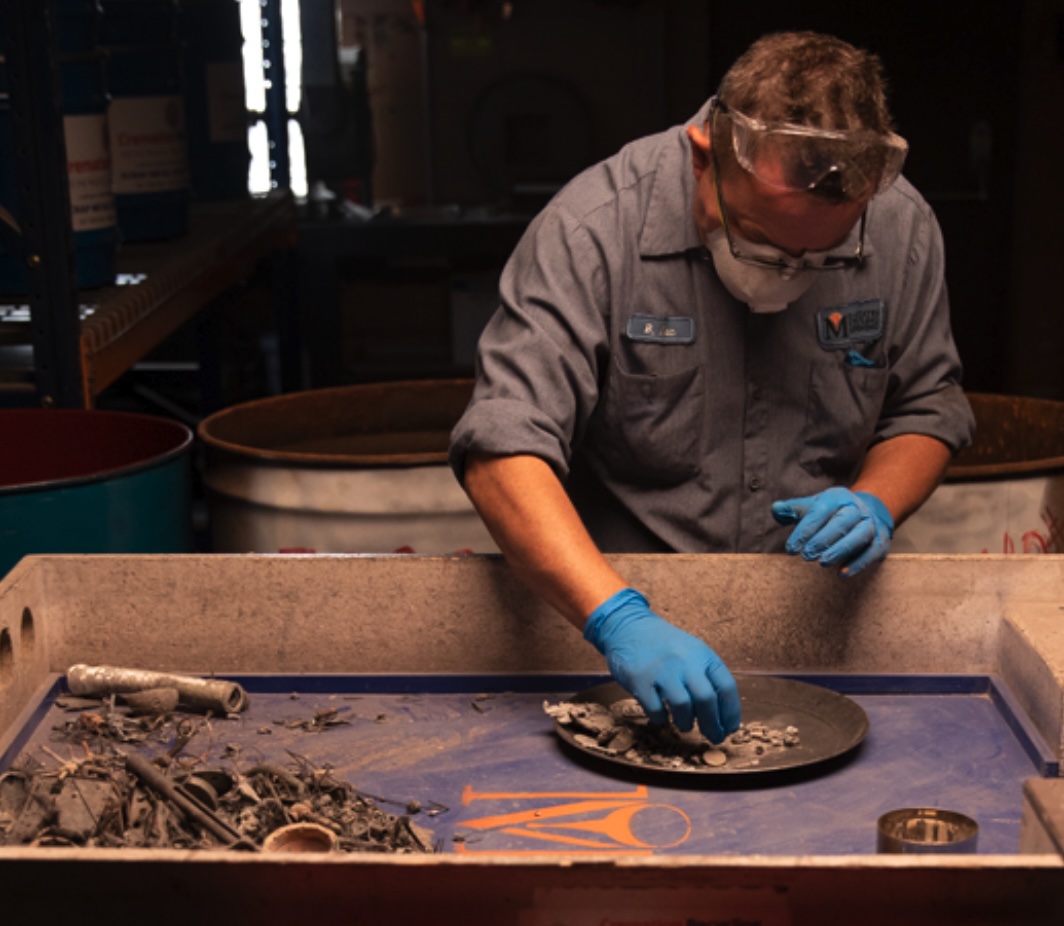
Kevin McKay is the manager of the cremation division of Cremation Recycling, a part of Mid-States Recycling & Refining that specializes in precious metal refinery services for funeral homes throughout the United States. Involved in the precious metals recycling industry since 2001, McKay has been with Mid-States, located just outside Chicago, since 2016. We spoke with McKay about the process and the benefits of recycling metal from cremated bodies.
As he explained, his company deals with funeral homes, not the general public. And as his website says, recycling makes sense: “The fewer resources we need to mine from the earth, the better. These heavy metals don’t decompose or breakdown quickly, so recycling them for immediate repurposing is a much better solution.” And often the funeral homes donate the value of what they collect to charities.
This interview has been edited for length and clarity.
What kinds of metal can be in a body at cremation?
Artificial joints, orthopedic hardware, dental prosthetics, and incidental metal from clothing. Pacemakers also contain metal, but they are processed separately.
How are pacemakers separately processed?
Pacemakers are salvaged by the funeral home and go to a program called My Heart Your Heart at the University of Michigan. They refurbish as many as they can, and they go to underprivileged countries. The funeral home has to remove that before cremation because it will blow up in the crematorium.
What happens to the metal in a body after cremation?
Your funeral home is mandated on a federal level by the Environmental Protection Agency to recycle all this metal. Part of the process after cremation is to separate out any large pieces like hips and knees, the tips from steel-toed boots, and process the remains into a finer powder. In that process, small bits like dental prosthetics, screws, snaps and zippers are all removed. The funeral home doesn’t want to return remains containing unsightly debris. This is one more step added to their processing protocol that’s required by law. There’s special equipment for that, and the maintenance of that equipment adds to their costs.
How are cremation metals recycled?
We smelt [liquefy by heat] the metals into a homogenous bar. We perform an assay to determine the exact composition of the bar. Based on the percentage of each metal in the bar, we reimburse the customer at market value. Then the bar goes through a chemical separation process to be repurposed in any number of applications that are widely used in everyday life.
How many funeral homes recycle metal from cremation?
Ten years ago, about 80 percent did not, but now over 95 percent use a service like ours. It’s become mainstream.
How much metal is recycled in a year?
We recycle 70 to 100 tons of heavy metal a year that comes out of cremated remains, and that’s just us. We’re not the only company that provides this service. Hundreds and hundreds of tons of metal each year are kept out of landfills by recycling, and all those metals become other things.
Why recycle metal from cremation?
These metals are very useful. There are only a few companies that make the alloys used in artificial joints. For example, when we talk to companies that make a special alloy called F75, they know that anything we get that’s made of that alloy is 100% F75. That metal goes back to the alloy makers; they remelt it and send it to be fabricated again, into new joints.
What industries buy recycled metals?
There are numerous medical, industrial and technical applications for precious and nonprecious metals.
How does your company make money?
We charge the funeral home a 10% processing fee, and we buy and sell tons and tons of metal a year. Only at that massive level does it become profitable.

Credit: cremationrecycling.com
Who gets the money from the sale of the recycled metals?
Recycling on this level is a service we provide to the funeral home industry. We don’t deal with the general public. We furnish the funeral home with a reusable 11 gallon drum, they put all those pieces in there and send it back to us when it’s full. There’s no way for the funeral home to determine the potential value of metal in an individual body, so they can’t take an amount off your bill. Attempting to recover potentially valuable metals on an individual basis would add another level of difficulty to the funeral home’s process, and that would make their services more expensive.
What do the funeral homes do with that money?
By and large, we see the funeral homes we work with donate the money. If they’re supporting local causes like Little League teams, food pantries, now they are able to donate at a level they never thought possible. In some cases, we cut the checks directly to the charities. We tell the funeral homes to be very public, [to say], “Here’s how much we gave and who we gave it to.”
What are the benefits of recycling cremation metals?
On a spiritual or personal level, families can consider it part of the circle of life – all those pieces from loved ones are going to become something new. There are really only two options: recycle, or just throw it away and have it wind up in a landfill, leaching out into the groundwater. Without recycling it, all that metal would have to be mined. This is a savings of energy and resources.
May We Suggest:
 Are Funeral Homes a Dying Breed?
 Everything You Need to Know About Legally Scattering Cremation Ashes in the United States
 Why is Death Midwifery Important? (Interview)
-

I had no idea. I’m shocked and yet happy to learn this. Thank you for bringing this to my attention.






Leave a Reply