


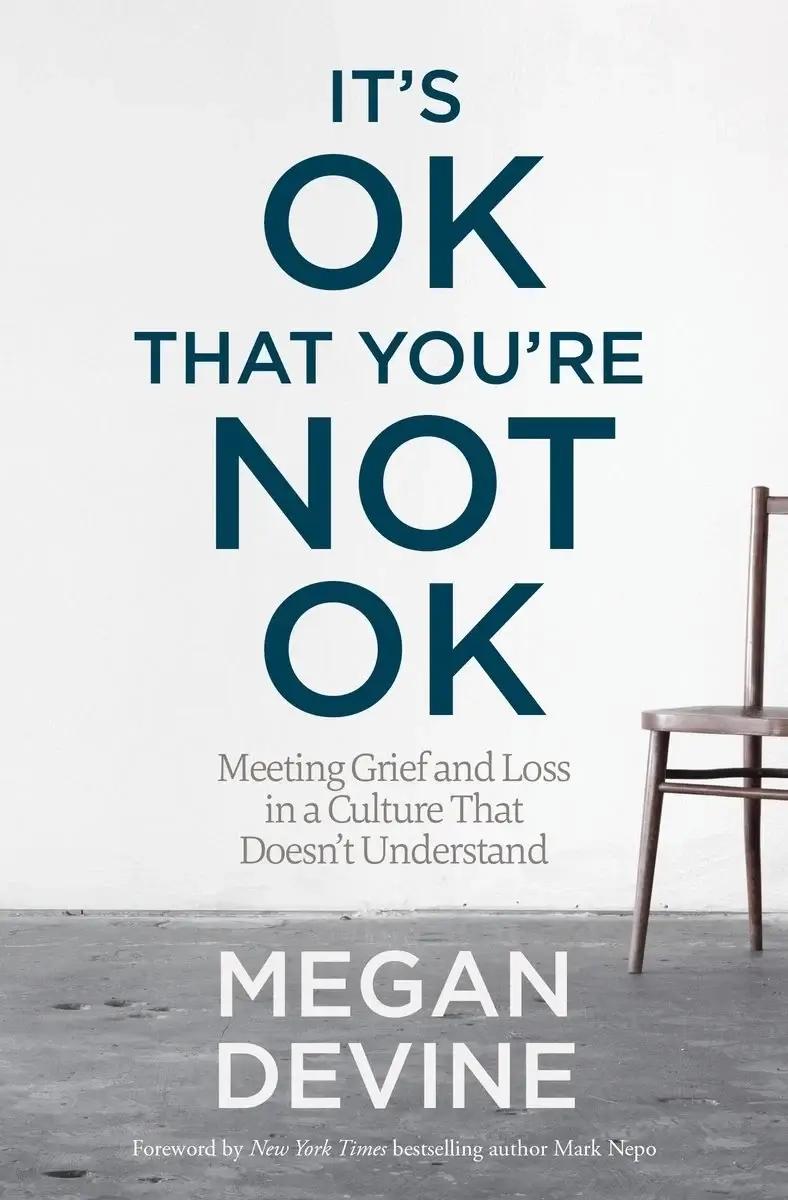
“It’s Ok That You’re Not OK”In this book, psychotherapist Megan Devine invites readers to rethink their relationship to grief
It’s Ok That You’re Not OK: Meeting Grief and Loss in a Culture that Doesn’t Understand is psychotherapist and grief advocate Megan Devine’s offering to the world of grief literature. In it she draws from her experiences as a therapist and a grieving person who had the tragic experience of witnessing her partner accidentally drown.…


It’s Ok That You’re Not OK: Meeting Grief and Loss in a Culture that Doesn’t Understand is psychotherapist and grief advocate Megan Devine’s offering to the world of grief literature. In it she draws from her experiences as a therapist and a grieving person who had the tragic experience of witnessing her partner accidentally drown.
Devine had been a psychotherapist prior to her partner’s death. She was invested in her work and had a meaningful career. Everything changed for her on a summer day in 2009, when her partner Matt died by accidental drowning. The loss of her partner tore Devine apart, and her grief made her professional experiences feel meaningless. On the day Matt died, Devine quit her practice. Going to talk therapy as a patient greatly helped her process and move through her grief, but Devine was dismayed at the lack of other resources she’d found. The dearth of material she saw compelled her to write “It’s Ok That You’re Not Ok.”
With her mix of personal and professional insight and a healthy dose of compassion, Devine encourages her readers to reframe their relationship to love, loss, and mourning. She observes that a lot of grief literature frames grief as an illness needing treatment. She rebukes this notion, writing, “Grief no more needs a solution that love needs a solution.” Devine debunks the idea that the grieving person’s goal should be to simply move past grief to return to a normal, “happy life.” Instead, she invites us to recognize that grief will accompany us as we build the next chapter of our lives— that it’s not so much something to overcome, as something to work with. She writes:

“The reality of grief is far different from what others see from the outside. There is pain in this world that you can’t be cheered out of. You don’t need solutions. You don’t need to move on from your grief. You need someone to see your grief, to acknowledge it. You need someone to hold your hands while you stand there in blinking horror, staring at the hole that was your life. Some things cannot be fixed. They can only be carried.”
“It’s OK That You’re Not Ok” weaves anecdotes, research, practical tips, creative and mindfulness-based practices to help guide the reader through grief, without focusing on “fixing” it. Whether you are grieving yourself or are looking for advice in comforting someone else who is grieving, I’d recommend this book. The author’s insight, both professionally and personally, add a special depth to this guide.
Buy This Book
Support indie book stores or buy from Amazon. We earn a small commission at no cost to you.
As an Amazon Associate, we earn from qualifying purchases.
May We Suggest:
 Beyond the Five Stages: Grief Theories in the Modern Age
 Survivors Are Breaking the Taboos Around Disenfranchised Grief
 “Things I’ve learned About Loss”






Leave a Reply