


The AI Battle Over Your Digital Legacy After Death (Interview)Author Elaine Kasket explains why our online data, digital likenesses and personal identities can remain vulnerable after death, and how AI is making those risks even harder to ignore
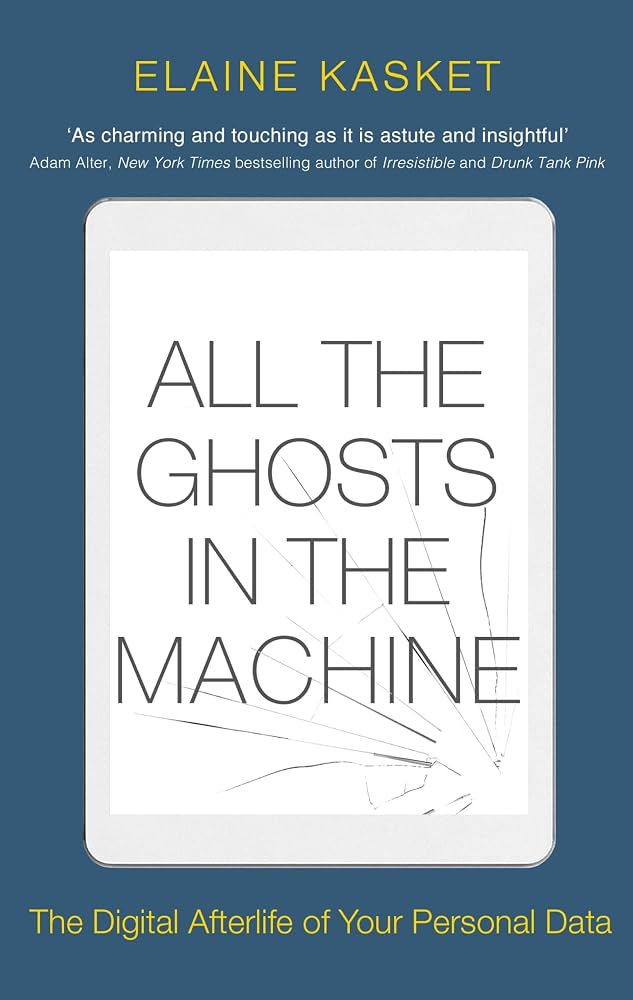
In her 2019 book “All the Ghosts in the Machine: The Digital Afterlife of Your Personal Data” author Elaine Kasket argues that what happens to our online data when we die is the perfect lens for understanding the true power big tech wields over our information and our digital legacy after death. Kasket is a…

In her 2019 book “All the Ghosts in the Machine: The Digital Afterlife of Your Personal Data” author Elaine Kasket argues that what happens to our online data when we die is the perfect lens for understanding the true power big tech wields over our information and our digital legacy after death.
Kasket is a renowned speaker, author and “cyberpsychologist,” a psychotherapist who specializes in exploring how technology shapes well-being, relationships, work, and identity. In particular, she has studied the juxtaposition of death and the digital realm since 2006, making her one of the world’s foremost authorities on the subject.
In “All the Ghosts in the Machine,” her first book geared towards the general public, she uses her skill as a storyteller to raise the alarm about our societal naiveté regarding digital assets and who truly owns them. In the years since its publication, the onslaught of technological advances has made some of the themes she discusses more pressing than ever before.
I spoke with Kasket from her home in London about grief bots, and how AI-enhanced technologies are further quelching our ability to not only control how our online lives are used, but rob us of dignity after death.
This interview has been edited for length and clarity.
Your book should be required reading for anyone with a social media account. Not many people have given a lot of thought to what happens to our online data when we die, and there isn’t a lot of easily accessible guidance on the matter. But technology has advanced so fast in the last few years. What has changed the most since you wrote “All the Ghosts?”
A huge amount. This is one of the reasons why I think that I need to do a new book rather than a second edition of the book, because I think that “All The Ghosts in the Machine” was definitely a book for the social media era, whereas now we’re very much in the AI/generative AI era — and that has made a huge difference. It’s really exponentially expanded and sharpened some of the issues that I talk about in “All The Ghosts in the Machine.”
I think that all the same themes are there: around privacy, around cybersecurity, around dignity, around who has the right to tell whose stories, over how do we define personhood, when does a person cease to be a legal person, how far should the rights extend and who should be the guardians of that. You know, all those questions are in “All The Ghosts in the Machine,” but they’ve only intensified because of the inexpensive, accessible, easy way that you can utilize generative AI platforms — like ChatGPT, Claude or Gemini — as well as more bespoke death- or grief bot-focused services. Either way, anybody can build a grief bot and anybody can be a grief bot. And in many ways, grief bots can then become indistinguishable from a really sophisticated deep fake that could have audio and visual components that could, for example, be sophisticated enough to fool the voice recognition software at someone’s bank or something along those lines.
When you start looking for it — of course I’m in a particular algorithmic slipstream, and I get fed all sorts of stories about this all the time — the number of digital afterlife news stories that are out there now are very visible examples of this. After Ozzy Osbourne died, there were tons of TikTok videos showing him with all these other rock-and-rollers who are gone, up there in heaven with a selfie stick. Or the posthumously audio deep-faked speech from Charlie Kirk that was played in mega-churches after his shooting. That was not anything that Charlie Kirk ever said, but it was audio built from his voice.
How manipulative!
Oh, yeah. You even get people who have died in, for example, road traffic accidents or road rage incidents testifying or giving impact statements through avatars in court. Or Joaquin Oliver, who was killed in the Parkland shooting, was “interviewed” by Jim Acosta about gun control many years after his death, sort of weighing in on political social issues. You get dead politicians campaigning in places like India. There’s so many examples; it’s kind of a different world but all the same themes are there.
All the same themes are there, but maybe blown up and exacerbated, because whereas in the book you talk about accessing Facebook photos after someone’s death, and now that’s just part of the fodder they’re using with AI-generated versions of people.
Exactly. And then of course the other thing that’s worth underscoring is the idea of building a death bot or grief bot. Because not all perpetuations or resurrections or recreations of the dead using AI are for grief or mourning purposes. Some of them are for other purposes, whether it’s entertainment, whether it’s business, whether it’s a CEO wanting to hang on to a role as advisor even after they’re dead. Or it could be for falsely impersonating someone’s identity. So it’s not just grief bots, it’s just also dead bots writ large.
There’s a dangerous normalization of the idea of people being continued or resurrected through AI. There’s this thinking of, ‘Oh, well, we should use technology to avoid all sorts of difficult human experiences, and so let’s solve grief through technology.” There are certain founders, there is a particular founder I’m thinking of who has said this! “Oh, we’ll solve grief within 10 years.” Well, solving grief is not a problem to be solved. I think it’s disgusting.
The thing is: Under our current climate, our environmental situation, we should be very carefully interrogating every single case or proposed use case for AI. We should be asking, all the time, “Just because we can, do we have to? Should we? Does it add more than it takes away? Is it pro-social? Does it help the human race? Does it help all the human race, not just some people?” And normalizing the idea of death bots or grief bots or for whatever purpose is just a stupid use case of AI.
Now, I say that sometimes, and then I’m very quick to counter my own self, because I’m a huge champion of the research that supports the idea that all bereavements are unique. All grief is idiosyncratic. Your grief is your grief, and nobody should tell you anything about what you are feeling and how you should process that grief. So I don’t mean to say that an individual mourner’s desire or inspiration to make a grief bot of a lost loved one, that there’s something wrong with that. What I do have a problem with is the digital afterlife industry taking advantage of those people; pushing the idea that grief is a problem that should have a technological solution which is, by the way, extremely environmentally costly.
Because I, for one, don’t want to be drinking the water of the living after I’m gone.
I’ve actually put that as a not-yet-legally-enforceable rider on my will. I have a statement that says I don’t want my data to be used to form a digital representation after I’m dead. I’ve essentially made a statement of wishes for my digital afterlife.
But as of right now, that isn’t legally binding? Even though it’s officially in your will?
No, no it’s not. Now, the European Law Institute, the ELI, has recently approved a model law for member states to adopt or not adopt, and the UK has supported the idea that digital things are now technically potentially executable in a will even though they don’t have tangibility and traditional kinds of value. But the UK hasn’t yet spelled out a mechanism for what you can control and what you can’t.
Because of course, as we know [from reading the book], the fact that we don’t have any say-so over a lot of our digital material when we’re dead is connected to the fact that we don’t actually have a lot of control or ownership over it when we’re alive, because of the terms and conditions that we sign. You can’t decide what happens to something that isn’t really yours, that you’ve given over to somebody else. The problem is that we don’t currently have — I don’t think in any jurisdiction in the world, unless you’re an actor and a member of the SAG-AFTRA — certain rights.
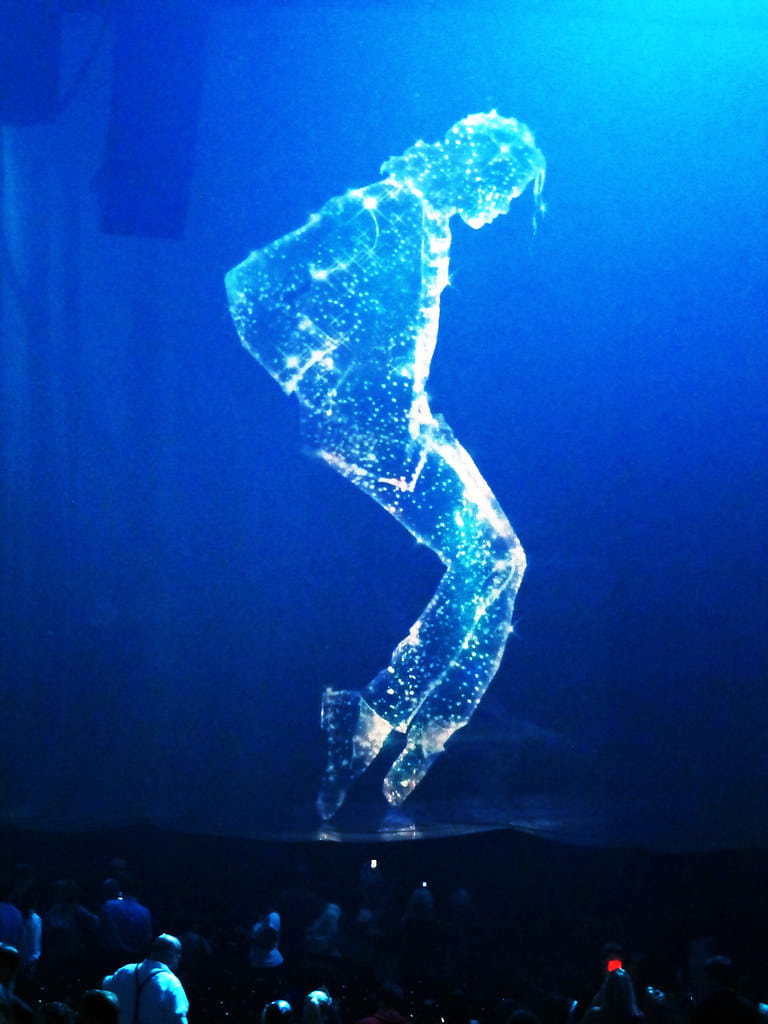
Remember the SAG-AFTRA strike, a few years ago? Part of what was being talked about were the actors’ concerns that their persona, their craft, their appearances, could be carried on after they were dead. Like, if somebody wanted to make a sequel and put them in it (like the Star Wars franchise did with Carrie Fisher’s likeness). The result of those discussions was that in California you have to give explicit permission for your image to be used after you’re gone. And there’s similar laws in New York and Nevada. There’s something called the Elvis Law in Tennessee that covers music and musicians, because there’s been new music from dead musicians built by people using AI that has popped up on Spotify without the knowledge or permission of the estate, for example. Or those hologram tours that get mounted. So celebrities — actors, musicians — are gradually starting to have a certain amount of rights or say-so about what happens to their digital remains in a way that the average person who didn’t make their living like that doesn’t have. I just do not understand that at all.
So, just because we didn’t have monetary value assigned to our likeness, we can’t protect it.
Correct. Because we also don’t have the automatic right to dignity after death. The idea that your digital remains can just be used for whatever by whomever — including potentially for nefarious purposes or criminal purposes that can hurt the fortunes of your estate — it doesn’t make sense.
Under the General Data Protection Regulation in Europe, when you’re alive, you have to opt in to your data being used in certain ways. But the issue is that after you’re dead, you’re not considered to have any legal personhood, so it’s like there’s nobody there to opt in or opt out. So it’s a big problem. Part of the impact of this new model law by the European Law Institute might be that there is something like that for regular citizens. But it just came out a few weeks ago when I was on holiday, and I haven’t had the chance to delve into the deeper implications of it.
Even in the United States, the Revised Uniform Fiduciary Access to Digital Access Act, the RUFADAA, gives a person fairly limited powers. It’s primarily concerned with tying up an estate, and accessing certain kinds of things to be able to manage or tie things up after someone dies. But I don’t think that it necessarily gives that person forever powers to prevent somebody from building a likeness of you after you’re gone.
In the book, there’s two areas your research focuses on (to generalize things a bit). There are the legal aspects — which are shocking and scary — but there’s also the psychosocial aspects. Have you done any research on the impact grief bots have on people, psychologically?
The grief process is so idiosyncratic, so it’s hard to come down on whether grief bots have been more helpful or harmful.
Morna O’Conner did some research on this, where she did a longitudinal study looking at five sets of digital remains and interviewed people who were connected to these digital remains. So she explored how the different people connected to this person experienced the digital remains, as well as which parts were or weren’t important, and how it all changed over time. And, to paraphrase the grief researcher George Bonanno, it’s “spectacularly variable.” There is no one way to grieve, or experience this aspect of grief.
What I think is harmful societally and then trickling down to the level of the individual is the normalization of the idea that grief is a disease or a problem that needs some sort of technological intervention or solution. It’s so problematic to suggest that there’s a technological solution to any emotional issues, like anxiety, annoyance or inconvenience.
Or loneliness.
Loneliness, oh, for sure. I think there’s a lot of overlap at the moment between thinking about AI companions and thinking about death- or grief-bots. There’s a lot of cross-fertilization happening there. But one of the things that does unite them is that idea that there is a technological solution for something that is difficult for humans to experience. And that, rather than experiencing that, or working through it by finding community, instead the primary response to the feeling is to suppress it; by staving the feeling off. Artificially making it seem as though the person was never gone allows someone to avoid working through what it is like to live without that person’s presence. Things that are predicated on that kind of emotional avoidance strategy are not going to render people psychologically flexible.

And it’s really interesting to watch some of the advertising for these bots. There was this video making the rounds a few months ago by [social media platform] 2WAI that was showing generations of this family, with a grandson who never met the grandmother but was talking to her [AI generated] bot about the baby that he was expecting, and it’s just perpetuating this fantasy of immortality. That’s a really interesting maneuver in terms of our relationship to life and death.
Our society is built on the shoulders of the dead, whether we understand it or not. We are embodiments of previous generations in ways that are in our consciousness and in ways we aren’t conscious of, and that’s been the case without having to have any of this technology to assist us. That’s the way it’s always been, whether we’re talking about memory, intergenerational legacy, epigenetics, genetics … we embody our history.
These AI-generated bots are an easy way of giving in to the temptation to re-design the past and what really happened, or what someone was really like, in a way that doesn’t necessarily reflect reality. We have that problem all the time, already, with how the news is manipulated or how current or historical events are presented. So using this kind of technology to curate, rewrite, sanctify, sanitize or demonize the dead is only making things worse.
To take it one step further, compare it to if someone built a relationship bot, an AI girlfriend for example, out of the digital material of a woman who broke up with him, but is still living. Say they build this entity on Character AI that uses this woman’s data, and then carry on a relationship with that bot. I think a lot of people would have issues with that.
Part of that “ick,” and only part of it, is about the fact that the person is still living and has certain rights to their identity. The bot circumvents her ability to have any agency. But there is this huge question of whether it’s actually technically illegal for that person to use data that she provided him with, like in messages, or via information that may be broadly available in the public domain on social media. If someone has built a bot of someone else — not with the intent to commit identity theft to steal money, or revenge porn, or other already illegal purposes — if someone is building it for their own personal use, I think a lot of people would still agree that there’s something morally and ethically wrong about it. It violates a person’s dignity and autonomy.
By the same token, a dead person has almost zero rights over their digital legacy unless the estate has certain rights because they were a professional performer, or they were a historical figure involved in matters that were kept from the general public. But for most people: once you’re dead, your rights amount to nothing. Now you belong to everybody.
There was an article in The Verge recently that pointed out it’s easier to protect the identities of fictional characters from being used with generative AI than it is for an actual person. For example, if you’re a novelist who has created popular fictional characters, it’s easier for you to deny others from using their likenesses because they count as intellectual property. But if your daughter committed suicide twenty years ago, and then somebody builds an AI bot of her for whatever reason on Character AI — which has happened — that grieving family had fewer rights, less power to have that taken down on Character AI than J.K. Rowling would have over someone doing something related to Harry Potter.
This is the current state of affairs because the notion of intellectual property and copyright is so much more embedded and ingrained in our code of law. There’s very strong jurisprudence of intellectual property (IP); there are various tests of what constitutes intellectual property and what doesn’t. Our online posts or messages don’t qualify for protections under IP laws, for the most part, so there’s nothing to protect us once we’re gone.
So circling back to grief bots: On the one hand, I am 100% sympathetic with the notion that everyone’s grief is uniquely their own. If it’s helpful to you, the individual mourner, in your grief, to use a grief bot, then okay. Most of the early grief bots, like the one built by the founder of Replica based on her friend, was just a verbal chat bot. Back in the day, these bots weren’t going to fool anybody, or be able to stand in for living persons, so you had an argument for the fact that they could be useful for that person in their grief. But now I have a greater level of discomfort with it, on security grounds, and ethical grounds, because I think personality rights should be extended — for everyone, not just celebrities and fictional characters — beyond death.
There’s also the problem regarding AI’s struggles with authenticity and issues like “hallucinations.” How does anyone know if the AI-generated character is pulling from the right data? And will it be able to account for the fact that people grow and change as they get older? Like, how could we guarantee that the grandma bot in the 2WAI ad would respond in the same way the real grandma would have? If we can’t, it has the potential to be incredibly damaging.
I think that’s where a lot of the “ick” comes from for everybody. It violates our idea of personhood, and clearly illustrates what can happen when our rights to personhood end. Because you would know that a grief bot based on you isn’t really you. But some people have this technologically utopian kind of thinking, or they may really desperately fear the idea of not being there, worrying about their loved ones and that they won’t be there to console them.
And they might have that idea or that conceit, but that doesn’t mean that they actually have any capability whatsoever to know how that is actually going to land, which is why those chatbot services aren’t that popular anymore. Or, at least, we don’t hear about them as much anymore, the services that would store up messages to dole out and send at intervals or on special occasions, like, “here’s the video that was prerecorded for your wedding,” because those make so many assumptions about other people’s needs and grief, and how they will experience them in the future.
“All the Ghosts in the Machine” also raised the question of stewardship; the fact that ultimately someone would have to be designated in charge of those posthumous messages.
Right, and if they don’t actually welcome that role, it can get very complicated. I think these grief bots are an expression of people’s fears about their own demise, and the unimaginability of not being there. So they’re thinking, “Oh my gosh, how can my family go on with me?” Or there are corporate bigwigs who can’t conceive of their company going on without them, so they’re pursuing this idea of “mind uploading,” so there would be an AI version of them to consult with or speak at board meetings.
I actually designed an activity as part of a master class on digital legacy, where I survey the people in the room about their opinions on the different ways their digital assets could be used after their death. Like, would they want their information used by their organization to make decisions after their death, guided by what the data would predict their intentions were? Would they be comfortable having their digital persona deliver public service messages, or give interviews after their death? What about their information being used to document and preserve their community’s culture? And ultimately, while the group said they were comfortable with some of the ways their digital legacy could be used, the vast majority admitted that after hearing arguments for and against, they had no idea how to act on many of the scenarios that are currently available using AI. But in the end, what is scary is that their wishes don’t matter; they have no actual control over how it could be used, at all.
That really drives home how helpless we are, as individuals, to protect our digital legacies after our death. Even experts, like yourself, are unable to ensure that your digital legacy wouldn’t be used in ways that would make you uncomfortable.
And we never could! That’s the thing — that part isn’t new. The technology, and the fact that we have it has given us the fantasy that we ought to be able to control a lot of these things. But we’re in the same boat as we always were. Death is the ultimate loss of control.
Legislation or regulation for our systems need to be set up in such a way that there are more protections, not just for the individual, but on the societal and familial levels as well. There are all sorts of implications for misuse, and a lot needs to change.
May We Suggest:
 Are We Ready to See, Hear and Chat With Deceased Loved Ones Virtually Forever?
 Beyond the Five Stages: Grief Theories in the Modern Age
 Why is Death Midwifery Important? (Interview)




Leave a Reply