


“The Art of Grieving”A grief counselor with a background in improv performance boldly draws on culture and experience to assert that art is how we overcome loss
Within her book, “The Art of Grieving” author Sheila K. Collins asserts that making and experiencing art are some of the most effective tools we have to mourn losses in life. Collins, a psychologist, grief consultant and improvisation performer, argues that the arts provide an outlet to express loss that talk alone often cannot fully…

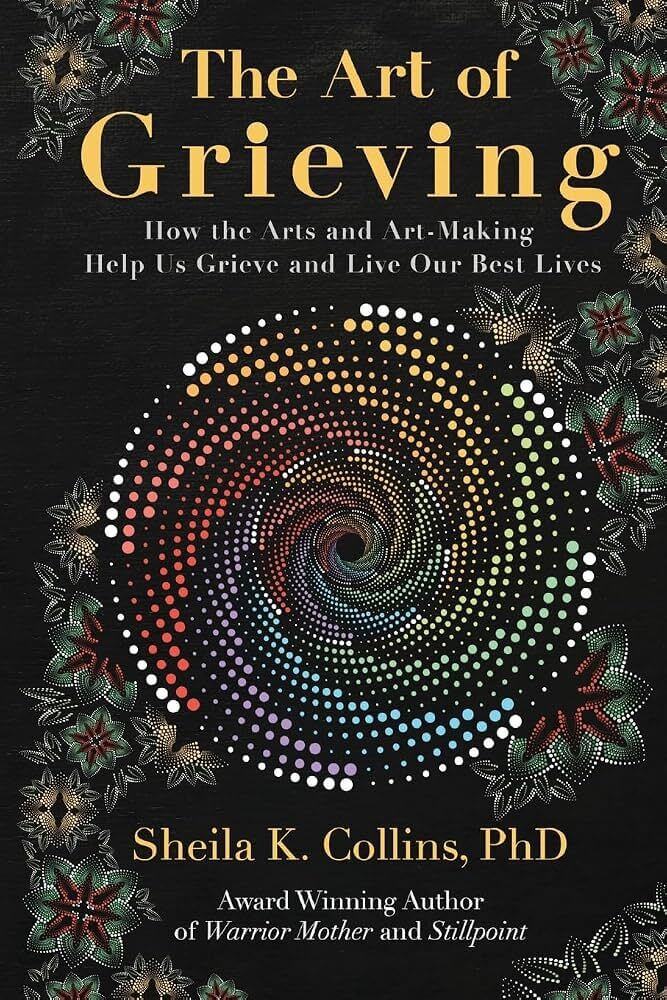
Within her book, “The Art of Grieving” author Sheila K. Collins asserts that making and experiencing art are some of the most effective tools we have to mourn losses in life. Collins, a psychologist, grief consultant and improvisation performer, argues that the arts provide an outlet to express loss that talk alone often cannot fully satisfy.
Collins draws on scientific and psychological research to support this claim, but some of her most effective arguments come from her own history in the book. After losing a son to AIDS and a daughter to breast cancer, “The Art of Grieving” builds on what she learned from those difficult experiences, including that creative expression helped her digest grief more than conventional approaches. She notes that grief is not a set of stages to move through in a specific order but instead a “spiral” that circles back on itself over time. Because grief rarely presents in a tidy, linear way, readers may find solace in this reframing.
The Strengths of “The Art of Grieving”
A noteworthy strength of Collins’s “The Art of Grieving” stems from its inclusion of many different types of loss; grief is not limited to bereavement. Collins devotes meaningful attention to losses — job loss, divorce and chronic illness — which alter lives but rarely receive social permission to be mourned in similar ways to death. In a culture that downplays such hardships, especially when it comes to formal grieving, the book serves as a useful reprieve. Just as helpful is her willingness to include bereavements like pet loss or miscarriage, which are also often minimized or passed over.
The inclusion of different forms and interpretations of the art of mourning across cultures is also refreshing. Collins moves through visual art, music, writing, architecture and dance to avoid limiting her argument to a single medium. The inclusion of scientific research on how creative expression affects the grieving brain and body is also insightful. As Collins weaves in memories and personal experiences throughout, drawing on her own losses, her argument is both strengthened and humanized.

Another asset of “The Art of Grieving” is its range of cultural perspectives to showcase how art has historically served as a unique tool for mourning. While Collins is upfront about the limits of her own vantage point and the mostly American perspective, she does make room for perspectives from different cultures and compares the differences in grieving rituals informatively.
Where “The Art of Grieving” Has Its Limits
While other cultures are included in “The Art of Grieving,” there is still an imbalance of cultural material. If the work included more engagement with non-Western mourning art and ritual, it would have been even more enriching. The inclusion of different cultural perspectives and art could lend more shape to Collins’ argument and provide broader insight into how art shapes the grieving experience.
The visual material could have been further expanded as well. “The Art of Grieving” does include many examples of the different types of art to ground the discussions of its contribution to expressing grief, but given how central art is to the book’s core, image inclusion felt limited. A closer look at architectural and cultural art pieces within those sections would have provided more insight.
A Grief Resource
Ultimately, Sheila K. Collins’s “The Art of Grieving” succeeds where it matters by treating grief as a universal experience, honoring losses that are often overlooked and backing her arguments with care. The understanding of how others grieve differently makes this a worthwhile read for anyone looking to understand loss and how we as a society express it.
The book serves as a solid healing tool. As Collins’ work covers many types of loss and art mediums, it offers actionable and creative steps that many readers can adapt to their own situations. A lack of a one-size-fits-all approach makes it a safe and refreshing resource.
Newly bereaved readers, particularly after traumatic loss, may need to take some time to engage in “The Art of Grieving,” as the breadth of the material may feel too broad to be helpful following so closely behind such losses.
Buy This Book
Support indie book stores or buy from Amazon. We earn a small commission at no cost to you.
As an Amazon Associate, we earn from qualifying purchases.
May We Suggest:
 Beyond the Five Stages: Grief Theories in the Modern Age
 Survivors Are Breaking the Taboos Around Disenfranchised Grief
 Disenfranchised Grief: The Five Types and Reactions Explained (Interview)
-

Art can give grief a voice when words alone are not enough. Whether through writing, music, painting, or another creative outlet, expressing what we carry can become a meaningful way to honor both our loss and our love.
-
Absolutely. Creative expression can give shape to emotions that are often impossible to put into words, allowing us to carry both our grief and our love in meaningful ways.
-








Leave a Reply