


Grief Raves Are Helping People Process Loss Through Communal DanceGrief has always been a deeply personal experience
Grief has always been a deeply personal experience, but a growing movement is proving that healing doesn’t have to happen in silence or solitude. Blending the energy of a dance party with the catharsis of shared mourning, events called grief raves create a safe space to express feelings that words can’t always capture. What Is…

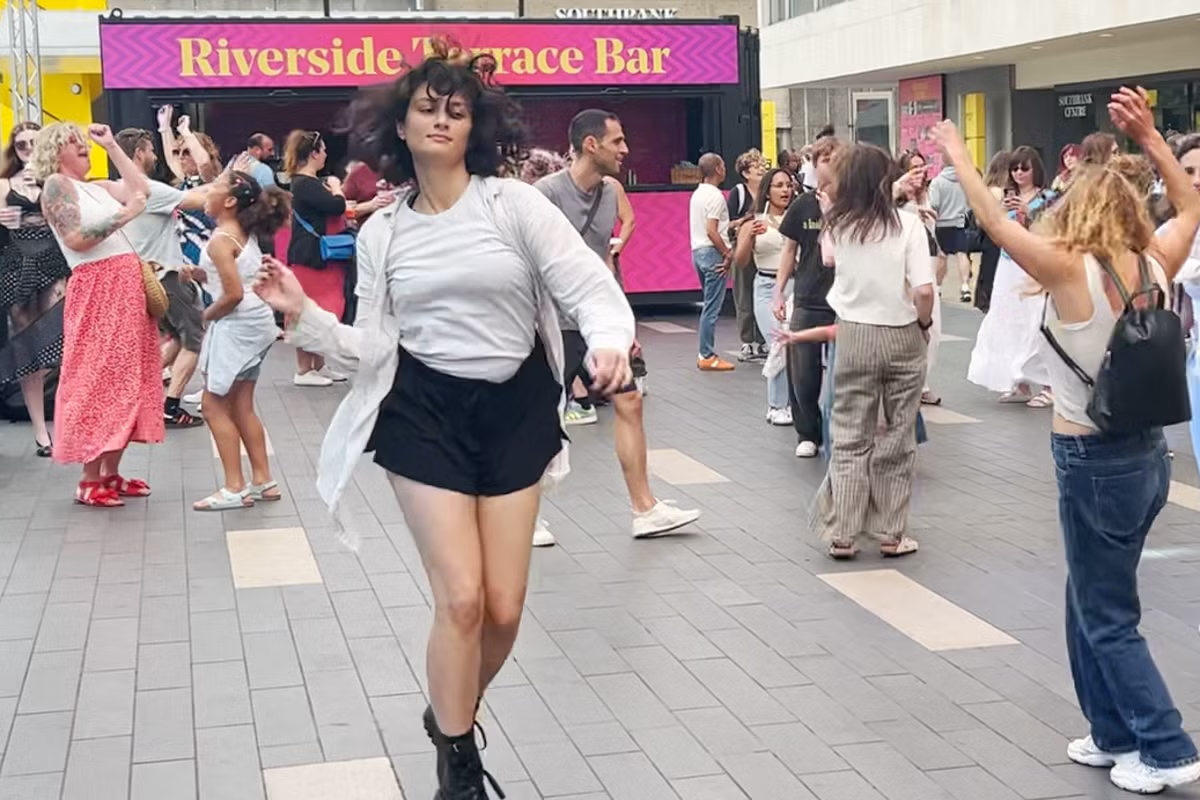
Grief has always been a deeply personal experience, but a growing movement is proving that healing doesn’t have to happen in silence or solitude. Blending the energy of a dance party with the catharsis of shared mourning, events called grief raves create a safe space to express feelings that words can’t always capture.
What Is a Grief Rave?
An invitation for a grief rave held at Southbank Centre — the UK’s largest arts center — a few years ago said, “The Grief Rave invites anyone and everyone to shake out their day, to dedicate a song to someone or something they may be missing — from a personal bereavement to a breakup or a few minutes of releasing some political rage, pain, or fury in these ever complex times.”
The concept was conceived by Annie Frost Nicholson and Carly Attridge of the London-based Loss Project in 2022 as part of an ongoing, collaborative community arts installation, designed to be a powerful, cathartic event where people gather to dance, release emotion and reconnect with life after loss.
Frost Nicholson was inspired to create the grief rave events by her late sister, who died in an accident.
“We had this real bond over music and dancing,” she told The Independent in an article published this summer. “There’s that sort of direct line to a person through music, because you can play something and it just brings you back to that time together — it transports you to a time and place.”
Over the course of the last few years, Frost Nicholson and Attridge have thrown eight official grief raves, but they aren’t the only ones hosting them. In a 2023 article published in The iPaper, a newspaper in the UK, Frost Nicholson estimated that about 500,000 people had attended grief raves across the world that year, including New York and London. Each grief rave is different: Some have been large events with a DJ taking requests and curating the songs, while others are smaller, more like a silent disco, where every participant can listen to their own songs on wireless headphones. Moods in the crowd can fluctuate from jubilant to poignant, often quickly and dependent on song choice, but the overarching feeling is one of much-needed release.
The Artists Behind the Grief Raves
Frost Nicholson lost her mother, sister, and her sister’s partner in an accident in 2011. Then in 2016, her father died of terminal cancer. In the aftermath of those losses, Frost Nicholson began to create public art works as her alter ego, The Fandangoe Kid.
One of the first iterations of her collaborative work with The Loss Project was The Fandangoe Discoteca, a small soundproof pod where visitors can be alone, choose a song that reminds them of someone they have lost and grieve however they choose.
“It is such a beautiful and powerful thing,” she told The iPaper. “The dance floor, for many, has long been a space of safety, an alternative zone where you can be with your people, alone in your thoughts but also together. The Discoteca invites people to shake out their grief, and there is a real catharsis in this.”
Since then, there has also been The Fandangoe Whip, an ice cream van for people experiencing post-pandemic grief, and The Fandangoe Skip, a kiosk offering mental health support that received tens of thousands of over 200,000 visitors and inspired a BBC’s Heart and Soul documentary podcast about her practice.
Carly Attridge, Frost Nicholson’s partner in the grief rave endeavor, is the founder and director of The Loss Project, an organization supporting people through grief. Attridge was inspired for the project by a friend she had lost, who was an “old-school nineties raver.” “I remember her every year by dancing to her favorite rave tune,” Attridge told the BBC. With Frost Nicholson, Attridge wanted to “create a space where people can express their own individual grief, but collectively join in and dance together.”
Dance As Therapy
In her film about coping with traumatic loss, “Into Your Light,” Frost Nicholson describes dancing as her own “ritual for survival.” She shares an anecdote about when her father was dying in the hospital, and a friend helped her sneak into a rave, dance wildly by the speakers and then leave.
“I was so grateful for it,” she told the UK’s BuildHollywood. “It really prepared me to go and see my dad in hospital, the last time I saw him. It was a cathartic, necessary shake out. It was like my feet led me there. My body led me there and I’m really glad I listened to it. I really enjoyed the non-verbal release and the physicality of it.”
What Frost Nicholson stumbled upon — dance therapy — is not a new concept. Dance has been used in death rituals around the world, such as Māori, Yoruba and Jamaican cultures, The Guardian pointed out in its 2023 article on grief raves. But until recently, as the article puts it, “cathartic movement doesn’t feature in traditional British approaches to grief.”
Frost Nicholson and Carly Attridge have presented a convincing argument that it should.
May We Suggest:
 How Dance Can Help People With Functional Limitations Become Their Best Selves (Interview)
 Beyond the Five Stages: Grief Theories in the Modern Age
 Survivors Are Breaking the Taboos Around Disenfranchised Grief



Leave a Reply