
-

Sometimes Denial Is a Useful Tool
Devastating news can be a catalyst for learning and growth — or notLearning that you have a serious and possibly fatal illness is a terrible blow. After the initial shock wears off, most people take some time to digest the news, discuss it with loved ones, and decide where to go from there. Typically, they have a million questions. “What will my treatment look like?” “What will…
/
-

-

What Is The Role of A Patient Advocate? (Interview)
An interview with patient advocate Linda Garvin, Part OneToday SevenPonds speaks with Linda Garvin, R.N., M.S.N., a patient advocate with 35 years experience working in healthcare. Linda is the principal of Patient Advocate Bay Area, Inc, located in the San Francisco Bay Area. Through her private health advocacy practice, she assists individuals in managing their illness and navigating the complexities of the healthcare…
/
-

“The Wolf at the Door: Undue Influence and Elder Financial Abuse” by Michael Hackard
Michael Hackard’s book offers a comprehensive look at the dangers of elder financial abuse and the legal steps needed for protection“The Wolf at the Door: Undue Influence and Elder Financial Abuse,”written by California attorney Michael Hackard, tackles a painful and dark aspect of aging — elder financial abuse. His book addresses the population of over 75 million Baby Boomers, who are either close to or already in the midst of retirement. As this sizable population ages,…
/
-

Are You a Family Caregiver? Some States Will Pay You for Your Time
If you give up working outside of the home to care for a relative, you may qualify for a program that will pay youAccording to Caring.com more than 70 million people provide unpaid care for a family member in their home or the patient’s home. This commitment takes enormous time and energy and often adds a financial burden when the family caregiver has cut back on or give up a paying job. If you are in this situation, Carmen Minchoff may have some good news. You may be eligible…
/
-

“Dust in the Wind”
A progressive rock band’s lyrical mediation on the impermanence of lifeAs songs from the late 1970s go, Kansas’ “Dust in the Wind” is a distinct departure from the norm. Released in 1977, the song debuted on the pop charts in April 1978, a year when disco heavily dominated the airwaves. Nonetheless, it was the top-performing song from the group’s album “Point of No Return” and…
/
-

Turning to Social Activism after the Death of a Loved One
Lobbying for change can help ease griefA routine dental procedure turned tragic when 6-year-old Caleb Sears died after receiving anesthesia. Since then, his family has been lobbying the California legislature to enact a law that might keep other children from suffering the same fate. The law would require that two medical professionals instead of one attend to children under the age…
/
-

Chimeras: Our Closest Lost Loved Ones May Be Assimilated Into Our DNA
What immunology can teach us about the grieving processEarly in his remarkable essay “Chimera,” Gerald N. Callahan, a professor of immunology at Colorado State University, grapples with the loss of his wife and the odd occurrence of, what seems to him, her reappearance before his very eyes. Professor Callahan, who has a joint appointment in the university’s Department of English, says he spied his first…
/
-
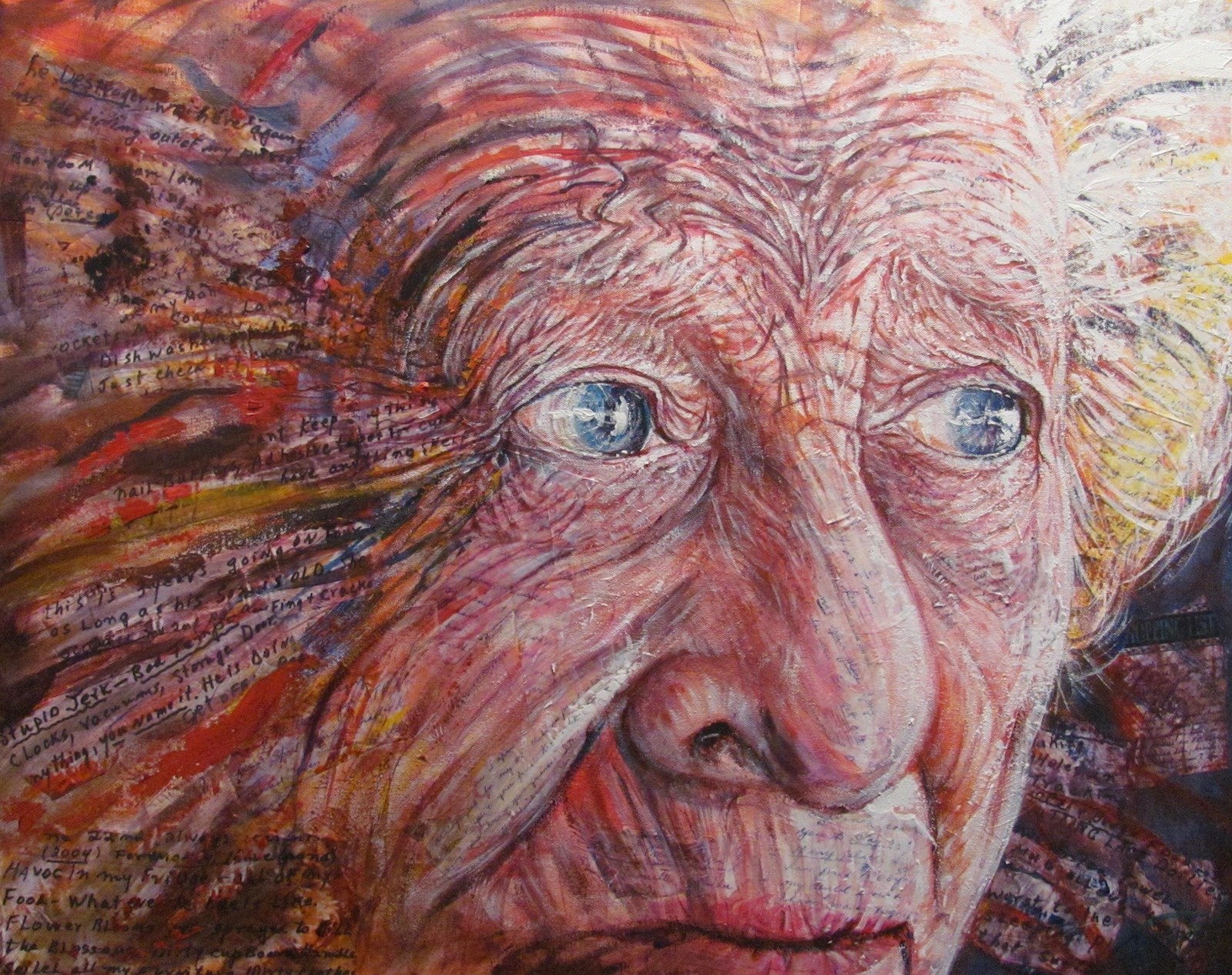
“Journey Through Dementia” Depicts the Terror of Living with a Failing Mind
Faye Hall’s portrait of her mother incorporates her terrified notes to a non-existent intruderCanadian advertising designer turned painter Faye Hall is all too familiar with the ravages of dementia. She watched her mom, Helen Goertzen, battle the disease for years, all the while denying that there was anything wrong. Goertzen would make up elaborate stories to explain away her forgetfulness and odd behavior. And when her daughter would…
/
Want an Easier Way to Plan a Memorial Event? Get our FREE guide
“7 Ways to Create an Amazing Celebration of Life”