


How Can People Overcome the Effects of Trauma in Their Lives? (Interview)
Today SevenPonds speaks with Luna Medina Wolf, a licensed mental health counselor from Boca Raton, Florida. A native of Israel, Luna is the owner of Helping Moon Counseling, where she specializes in treating clients with a history of psychological trauma and individuals struggling with addiction. She is also the president and co-founder of Professionals United…

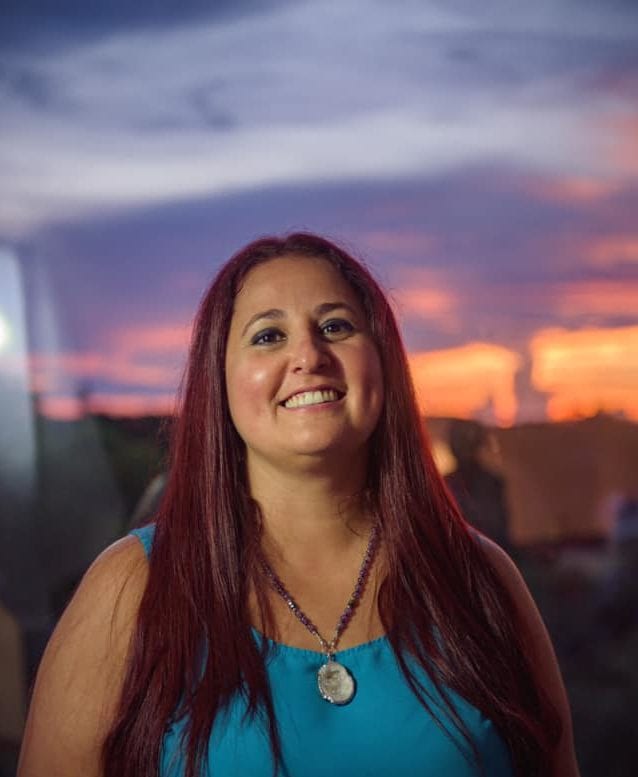
Today SevenPonds speaks with Luna Medina Wolf, a licensed mental health counselor from Boca Raton, Florida. A native of Israel, Luna is the owner of Helping Moon Counseling, where she specializes in treating clients with a history of psychological trauma and individuals struggling with addiction. She is also the president and co-founder of Professionals United for Parkland (PU4P) a nonprofit that provides ongoing counseling and support for the community of Parkland, Florida, where a gunman killed 14 students and three staff members at Marjory Stoneman Douglas High School on Feb. 14, 2018.
Editor’s note: This interview has been edited for length, clarity and readability.
Kathleen Clohessy: Thanks for speaking with me today, Luna. Can we start by talking a little bit about you and your background? What motivated you to choose counseling as a career and to work with victims of trauma?
Luna Medina Wolf: My choice to become a mental health counselor was shaped by a number of factors. First and most important, I grew up in a household where domestic abuse was a common occurrence, and those struggles have defined my journey throughout my life. I have always wanted to help people, and working with victims of domestic abuse was something I was passionate about. I started out as a volunteer at a domestic abuse shelter, and my goal was to continue along that career path. But I wasn’t having a lot of success in finding a job.
Then a position opened up at an addiction treatment center. I was offered the job, and I took it even though I didn’t particularly want to work in that field. But it wasn’t long before I came to realize that 80 to 90 percent of people who suffer from addiction have a history of a traumatic event at some point in their lives. I also began to see that if a person with a substance use disorder doesn’t work on that trauma, their chances of staying sober are almost nonexistent. So, though I kind of fell into it, I developed a passion for addiction counseling too.
Kathleen: I imagine that helping clients resolve old traumas is part of your treatment plan when you work with people with substance use disorders?
Luna: In my practice it definitely is. That said, many addiction treatment facilities teach their counselors that exploring old traumas is taboo. When I first started in addiction counseling, I was told by my superiors that those topics were strictly off-limits. I couldn’t believe it. “How can that be?” I thought. “If someone tells me they were raped when they were a child, how can I not explore that with them?” But I was told I couldn’t go there.
Of course, I did it anyway! I’m not a rule follower by nature. And my commitment is to advocate for people who can’t advocate for themselves. I’m going to use all the tools in my toolbox to help them no matter what a supervisor tells me to do. But there are a lot of counselors who do follow those rules. And their clients lose out.

Kathleen: Why do you think that is?
Luna: Unfortunately there isn’t a lot of research into the connection between trauma and addiction or how unresolved trauma affects recovery/relapse rates. So the evidence isn’t there to support doing trauma work with those clients. One of my goals is to begin to build that evidence base and research the connection when I go back to school for my Ph.D.
Kathleen: In addition to being a licensed mental health counselor and a certified addiction professional, I understand that you’re a certified EMDR therapist. I’ve had personal experience with EMDR and found it to be extremely effective. Can you talk a little bit about what it is and why it works?
Luna: Sure! EMDR stands for Eye Movement Desensitization and Reprocessing, a therapeutic tool that activates the right and left sides of the brain. It’s an evidence-based therapy that has proven remarkably successful for people who have experienced a traumatic event (whether or not they meet the clinical criteria for PTSD).
EMDR works by allowing subconscious memories (which are about 75 to 80 percent of what’s stored in our brain) to come to the surface. Many times people come to counseling because they are experiencing terrible distress — anxiety, depression, an eating disorder, relationship problems — and they have no idea why. Usually, or at least very often, these problems are linked to an old trauma that continues to be re-triggered by day-to-day events. By uncovering and reprocessing that initial trauma, the person is able to stop reacting to those triggers and begin to heal.

Kathleen: Can you give me an example?
Luna: Sure. Here’s an example I use all the time. Let’s say that when you were 6 years old, you experienced a traumatic event while you were eating a hamburger. You don’t consciously remember the event, but snippets of the experience — the sights and smells and all the sensations associated with it — are stored in your brain.
Then one day years later, you’re at a picnic where the hosts are serving hamburgers, and you begin to feel anxious and upset. Below the surface of your awareness, the hamburger is triggering a subconscious memory of the trauma, and you’re becoming hyperaroused. You start sobbing and hyperventilating. To help you calm down, the host offers you a glass of lemonade.
Now your brain makes another connection — this time between the hamburger and the lemonade, which are now linked in your subconscious to both your current state of panic and the initial event.
As this happens over and over throughout your life, you are constantly making new associations that trigger the same type of response — so you’re constantly retraumatized. Over time, this cumulative trauma begins to have a profound effect on your ability to live a happy, emotionally healthy life.
What EMDR does is to help the brain get past those associations and uncover the initial traumatic event. Once you’ve done that, you can begin to perceive the event differently, process it differently, and react to it in a much healthier way.
It sounds very complicated, I know. But it works very quickly. Some people feel better after only a few sessions of EMDR.
Luna: Not really. Although EMDR sometimes includes tapping, the therapy you’re thinking of is called Emotional Freedom Techniques. It uses the same meridians and stimulates the same pressure points used in acupuncture and acupressure. It was pioneered by an Australian researcher, Dr. Peta Stapleton. But Dr. Lori Leyden is probably the world’s leading practitioner of evidence-based EFT. She’s had incredible success using it to help genocide survivors and child orphans in Rwanda. She’s also worked with survivors of the shooting at Sandy Hook Elementary School in Newtown, Connecticut.
Kathleen: Do you use EFT as well?
Luna: I do, although not as often as I use EMDR. I find it most useful for clients who are resistant to EMDR or who can’t talk about their trauma at all. EFT is very effective in helping people verbalize what happened to them.
Kathleen: What other modalities do you use?
Luna: I’m a holistic practitioner, so I use whatever tools will best serve my client’s needs. As a rule, I spend at least two sessions with every client taking them through a guided meditation to help them create a “safe place” they can go to if things become too intense. I also teach them breathing techniques, grounding exercises, and mindfulness meditation, all with the goal of helping them to feel safe. That’s very important when we are doing this kind of work.
Kathleen Clohessy: You’re the President of Professionals United for Parkland (PU4P), an organization that has devoted itself to supporting the Parkland community after the shootings at Marjory Stoneman High School. Can you tell me a little about how the organization came to be?
Luna Medina-Wolf: Sure. I’m from Boca Raton, which is very close to the city of Parkland. So when the shootings happened, I immediately wanted to find out what I could do to help. I reached out to Deb Delvecchio-Scully, who worked with survivors of the September 11 terrorist attacks and was the lead therapist for the Newtown Recovery & Resiliency Team. She has been working with the community of Newtown since the shooting at Sandy Hook Elementary School on Dec. 14, 2012. She told me to reach out to local trauma therapists and try to organize a response, so that’s what I did.
Within a few hours, I was swamped with replies. There were so many people wanting to help I couldn’t keep track. Eventually, I created a shareable spreadsheet in Google Drive so everyone could sign up for the times they would be available to help.
The day after the shooting, the school district invited teachers, families, students — anyone who had been affected by the tragedy — to come to meet with us. But shortly after we got started, an administrator came in and told us we weren’t allowed to be there because we weren’t school-board certified. Apparently, only school counselors were allowed to meet with the students, even though they are not trained in trauma therapy and we were. It was incredibly frustrating, but we had no choice. We had to leave.
Kathleen: Seriously? They rejected your offer of help? That’s absurd.
Luna: It certainly seems so, doesn’t it? Here you have a traumatized community and dozens of trained therapists offering to help and the “rules” get in the way. That said, I can understand their concerns. The school district is legally obligated to protect the students and their privacy, and they can’t do that if they allow just anyone to come in and work with the kids.
Kathleen: So what were your next steps?
We decided we needed to regroup and find another way. I reached out to Les Gordon, who is now the Vice President of PU4P, and we started to figure out how we could connect with local agencies and mount a coordinated response. At that point, there were so many groups organizing events that they were beginning to conflict with each other. So it made sense to try to get everyone on the same page.
There were also a lot of donations coming in, so Les suggested we make our organization an official nonprofit. So we did that and started coordinating and organizing events.

Kathleen: What kind of events did you put together?
Luna: A lot of them! We brought Deb [Delvechhio-Scully] down and she did several workshops for parents and teachers that were great. We also sponsored a mini-retreat for the whole staff at MSD High, which was incredibly healing. For that one, we asked local merchants to donate raffle items and held a raffle. There were enough donations that everyone went home with something, which was nice.
And, of course, we continue to work with the school district to offer individual counseling and support to the faculty and the community as a whole. Most of our therapists offer a few sessions for free and sliding scale for people who can’t afford to pay for ongoing counseling on their own.
Kathleen: How does a tragedy of this magnitude affect the community?
Luna: Something like the Parkland shootings affects everyone, not just those who were directly involved. It’s a communal trauma, and everyone is touched by it in some way. The entire community is under extreme stress, and there is inevitably fracturing of relationships and groups. And there are always new triggers. The one-year anniversary of the shootings retraumatized the whole community — every anniversary will. And there will eventually be a trial since the shooter, in this case, was captured alive.
Kathleen: Those poor people. It will be like living through the whole nightmare all over again!
Luna: Yes. And because there will be a trial, the building where the shooting took place can’t be touched. It still has yellow crime-scene tape around it and everything is exactly as it was the day the shooting occurred. So all those teachers and students have to walk by there and be reminded of it every day of their lives.
Kathleen: That’s so awful.
Luna: It is, and it’s just one example of the kind of retraumatizing situations that perpetuate the pain survivors feel. It’s been six years since Sandy Hook, and a parent of one of the children who was killed recently took his own life. Healing takes a long, long time.
Kathleen: With the frequency of mass shootings in our country increasing all the time, it seems that we need a national organization to help mobilize a response when these tragedies occur. Do you plan to take Professionals United for Parkland nationwide at any point?
Luna: No we don’t. We are really a small group of passionately committed people who are working together to help the community of Parkland, and we just don’t have the resources to do more. All of us are still seeing clients and have families to care for and bills to pay. That said, we do offer some resources on our website that other communities can tap into if they want to try to organize a response team in advance of an event.

Kathleen: Do you have any suggestions as to how communities prepare? Is there anything we can do to be more ready to respond to a tragedy of these proportions or, even more importantly, to prevent one?
Luna: I think the best way a community can prepare for any disaster is to work together to create the infrastructure necessary to respond. Know what resources are currently available and build on them. Most police departments have a crisis response team; that may be a good place to start. Organizers can also tap into their local mental health community to find therapists who are trained in dealing with trauma and get them involved.
In terms of prevention, I think the number one thing anyone can do is to pay attention to the people around them. People who commit these horrific crimes almost always have been sending out signals that something is wrong. But it’s very uncommon to hear that someone took the initiative to intervene.
We need to decrease the stigma around mental health issues and be willing to approach someone who seems to be in distress. Maybe they’re sleeping more or showing up late to work. Maybe they seem angry or sad most of the time. Whatever the behavior change, we shouldn’t be scared to speak up and ask the person “What’s wrong?” It’s not enough to just ask “Are you OK?” We need to dig deeper and ask questions that can’t be answered with yes or no. We could prevent so many tragedies, including many suicides if we would just speak up.
We can talk about strengthening gun laws. We can talk about better mental health care. And those things would certainly help. But what we really need to do is to reach out to people and help them get connected to the services they need.
Kathleen Clohessy: You’re the President of Professionals United for Parkland (PU4P), an organization that has devoted itself to supporting the Parkland community after the shootings at Marjory Stoneman High School. Can you tell me a little about how the organization came to be?
Luna Medina-Wolf: Sure. I’m from Boca Raton, which is very close to the city of Parkland. So when the shootings happened, I immediately wanted to find out what I could do to help. I reached out to Deb Delvecchio-Scully, who worked with survivors of the September 11 terrorist attacks and was the lead therapist for the Newtown Recovery & Resiliency Team. She has been working with the community of Newtown since the shooting at Sandy Hook Elementary School on Dec. 14, 2012. She told me to reach out to local trauma therapists and try to organize a response, so that’s what I did.
Within a few hours, I was swamped with replies. There were so many people wanting to help I couldn’t keep track. Eventually, I created a shareable spreadsheet in Google Drive so everyone could sign up for the times they would be available to help.
The day after the shooting, the school district invited teachers, families, students — anyone who had been affected by the tragedy — to come to meet with us. But shortly after we got started, an administrator came in and told us we weren’t allowed to be there because we weren’t school-board certified. Apparently, only school counselors were allowed to meet with the students, even though they are not trained in trauma therapy and we were. It was incredibly frustrating, but we had no choice. We had to leave.
Kathleen: Seriously? They rejected your offer of help? That’s absurd.
Luna: It certainly seems so, doesn’t it? Here you have a traumatized community and dozens of trained therapists offering to help and the “rules” get in the way. That said, I can understand their concerns. The school district is legally obligated to protect the students and their privacy, and they can’t do that if they allow just anyone to come in and work with the kids.
Kathleen: So what were your next steps?
We decided we needed to regroup and find another way. I reached out to Les Gordon, who is now the Vice President of PU4P, and we started to figure out how we could connect with local agencies and mount a coordinated response. At that point, there were so many groups organizing events that they were beginning to conflict with each other. So it made sense to try to get everyone on the same page.
There were also a lot of donations coming in, so Les suggested we make our organization an official nonprofit. So we did that and started coordinating and organizing events.
Kathleen: What kind of events did you put together?
Luna: A lot of them! We brought Deb [Delvechhio-Scully] down and she did several workshops for parents and teachers that were great. We also sponsored a mini-retreat for the whole staff at MSD High, which was incredibly healing. For that one, we asked local merchants to donate raffle items and held a raffle. There were enough donations that everyone went home with something, which was nice.
And, of course, we continue to work with the school district to offer individual counseling and support to the faculty and the community as a whole. Most of our therapists offer a few sessions for free and sliding scale for people who can’t afford to pay for ongoing counseling on their own.
Kathleen: How does a tragedy of this magnitude affect the community?
Luna: Something like the Parkland shootings affects everyone, not just those who were directly involved. It’s a communal trauma, and everyone is touched by it in some way. The entire community is under extreme stress, and there is inevitably fracturing of relationships and groups. And there are always new triggers. The one-year anniversary of the shootings retraumatized the whole community — every anniversary will. And there will eventually be a trial since the shooter, in this case, was captured alive.
Kathleen: Those poor people. It will be like living through the whole nightmare all over again!
Luna: Yes. And because there will be a trial, the building where the shooting took place can’t be touched. It still has yellow crime-scene tape around it and everything is exactly as it was the day the shooting occurred. So all those teachers and students have to walk by there and be reminded of it every day of their lives.
Kathleen: That’s so awful.
Luna: It is, and it’s just one example of the kind of retraumatizing situations that perpetuate the pain survivors feel. It’s been six years since Sandy Hook, and a parent of one of the children who was killed recently took his own life. Healing takes a long, long time.
Kathleen: With the frequency of mass shootings in our country increasing all the time, it seems that we need a national organization to help mobilize a response when these tragedies occur. Do you plan to take Professionals United for Parkland nationwide at any point?
Luna: No we don’t. We are really a small group of passionately committed people who are working together to help the community of Parkland, and we just don’t have the resources to do more. All of us are still seeing clients and have families to care for and bills to pay. That said, we do offer some resources on our website that other communities can tap into if they want to try to organize a response team in advance of an event.
Kathleen: Do you have any suggestions as to how communities prepare? Is there anything we can do to be more ready to respond to a tragedy of these proportions or, even more importantly, to prevent one?
Luna: I think the best way a community can prepare for any disaster is to work together to create the infrastructure necessary to respond. Know what resources are currently available and build on them. Most police departments have a crisis response team; that may be a good place to start. Organizers can also tap into their local mental health community to find therapists who are trained in dealing with trauma and get them involved.
In terms of prevention, I think the number one thing anyone can do is to pay attention to the people around them. People who commit these horrific crimes almost always have been sending out signals that something is wrong. But it’s very uncommon to hear that someone took the initiative to intervene.
We need to decrease the stigma around mental health issues and be willing to approach someone who seems to be in distress. Maybe they’re sleeping more or showing up late to work. Maybe they seem angry or sad most of the time. Whatever the behavior change, we shouldn’t be scared to speak up and ask the person “What’s wrong?” It’s not enough to just ask “Are you OK?” We need to dig deeper and ask questions that can’t be answered with yes or no. We could prevent so many tragedies, including many suicides if we would just speak up.
We can talk about strengthening gun laws. We can talk about better mental health care. And those things would certainly help. But what we really need to do is to reach out to people and help them get connected to the services they need.
Kathleen: Thanks so much for that wonderful advice, Luna, and for taking the time to speak with me today. You’re providing a wonderful service! I hope this interview will inspire others to get involved in some way.
Editors Note: If you feel that you are in danger of harming yourself or others, please call the National Suicide Prevention Hotline at 1-800-273-8255. Or visit https://suicidepreventionlifeline.org/chat to start an online chat with a counselor who can help.
May We Suggest:
 What are the Effects of Trauma? (Interview)Three Suicides Last Month Connected to School ShootingsHow Do We Respond to Trauma in the Workplace? (Interview)



Leave a Reply