


How Do You Empower Your Loved Ones Before You Die? (Interview)
Editor’s note: This interview has been edited for length and clarity. Colleen Ferguson: Hi Holly, before we dive in can you first talk a little bit about what you do with Last Respects Consulting and end-of-life preparation? Holly Blue Hawkins: I act as part concierge, part chaplain, and part coach. I like to meet people…

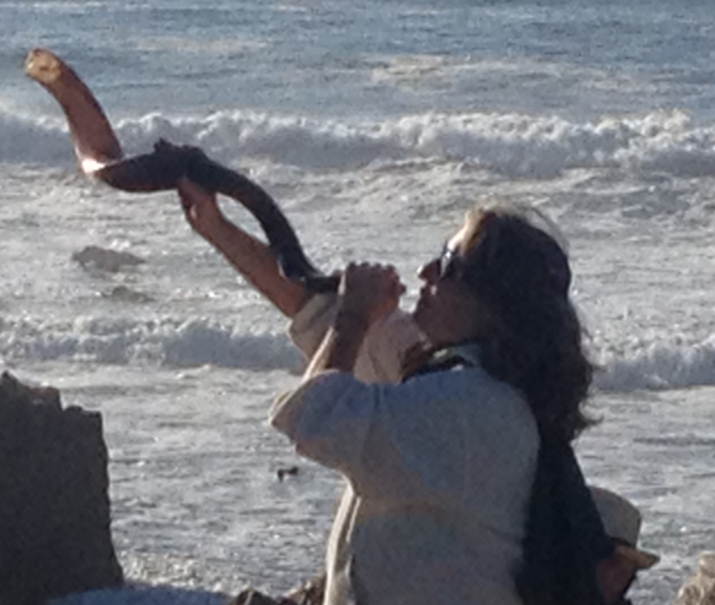
Editor’s note: This interview has been edited for length and clarity.
 Colleen Ferguson: Hi Holly, before we dive in can you first talk a little bit about what you do with Last Respects Consulting and end-of-life preparation?
Holly Blue Hawkins: I act as part concierge, part chaplain, and part coach. I like to meet people as early on in their process as possible — even when they’re feeling fine. I help them get their ducks in a row and get on with their life so they’re not dreading an important “homework assignment” that they haven’t completed. One which usually ends up getting “dumped” into someone’s lap at some point.
Colleen: “Ducks” like filling out their advance care directive?
Holly: Yes, I’ve heard so many people — whether they’re attorneys, hospice folks, or therapists — ask, “Why can’t we get our people to fill out their advance care directive?” So I started examining that question from my own perspective and realized that when most people sit down to do an advance care directive, there’s a lot of other stuff they haven’t sorted out. Too often we drop people into the middle of the process without walking them up to it, by first establishing their values, and then setting goals based on those values, and of course, putting a team together.
Colleen: What would you say is the dream team that one would need to put together?
Holly: Well, with the advance care directive, imagine yourself in a hospital setting and the kind of people you want looking after your affairs. You need “grace under fire.” Your person needs to be someone who really has their feet on the ground, doesn’t get thrown emotionally, and can intellectually make really good, sound decisions. This kind of person is going to prioritize what you specifically told them, i.e. your values over their values. This person is YOUR advocate, right? It needs to be someone who can be able to say, “Well, this isn’t necessarily the way I would want to do it, but this is what she told me, so this is how it is.”
Colleen: What are some of the other qualities your advance care directive advocate should possess?
Holly: You don’t want someone who’s going to hear a couple words and then glaze over. They should be able to understand “Doctor Speak…” I don’t mean they have to understand all the medical language, but they should be able to understand someone who is speaking from that paradigm, and not be afraid to ask questions like, “Hey, I don’t really understand what you mean by that, can you explain it in layman’s terms?”
So, really, your advocate should possess these qualities: Grace under fire, willing to ask questions, and engagement in the process.

Colleen: Which might not always be your spouse or best friend.
Holly: Exactly. Back when I worked as a paralegal and helped clients with their estate plans and advance care directives, I would run into so many couples where one spouse would say, “I want my spouse to be my advocate,” and the other one would say, “Well, I know you’re going to fall apart because of so-and-so, so we need to pick someone else for this.”
This means you don’t necessarily want to pick your firstborn just because they’ll be offended otherwise. Sort it out now and then work it out with them while you still have your wits about you, and the two of you can sit down and you can explain why.
So, really, you need to know your people. You may pick different people to take care of your cat vs. your checkbook. It’s not about trust, it’s about competency. Who’s going to be the best person for this job? So you may pick a very different person for your durable power of attorney than you would pick to do your hospital advocacy.
Colleen: Can you quickly explain the “durable power of attorney?”
Holly: Sure. It’s like paying the bills, running the household, making sure everything is paid. The classic picture I paint is everybody holding hands around the bed singing Kumbaya because they’re in alignment with the process, and then the lights get turned off because no one has paid the electric bill.
Or you get that awful phone call from the insurance company that says, “No, this procedure isn’t going to be paid for because no one paid the premium on time and your insurance has lapsed.”
The durable power of attorney will basically keep your “checkbook” safe and in working order. Maybe that’s the same person who will water your plants and make sure your pets get fed and walked, or maybe it’s not.
So, whether it be the durable power of attorney, the advance care directive, or the HIPPA, you’ve got several steps. If you look at your life and all the different aspects and say, “Who in my circle will be good for handling this bit?” Then, talk to that person, ask if they’re willing to do that for you, and then come up with the legals to empower them to do that.
Here’s something I really encourage people to do. When you give your person that empowering document, you also include with it a transmittal letter from you saying all the things that you want that doesn’t necessarily go in the legal document. So, when needed, they can pull it out and see, “Oh what did she say about this? Here’s the letter: She said I want this, I don’t want that, please make sure this does or doesn’t happen.” So, while they’re not part of the legal document, it can be their reference during times of duress.
Colleen: It seems like it allows everything to progress much more smoothly.
Empowerment is a big word in this whole deal. The point is to empower your people. First, you empower them by getting their agreement to do these things for you, then you empower them by knowing what you really want, and then you empower them with the legal documents they need.
It’s really important to find out how to make it easy for the ones you’re asking this of. You’re asking a huge favor of them, and the way to say “thank you” is to make it as easy as possible. There’s no way to make it EASY, because it inherently is not. But you’re asking a huge favor and it’s important to do everything you can to support your people.
Colleen Ferguson: Before we dive into shrouding and natural burial, can you explain the practice of Taharah?
Holly Blue Hawikins: In the Jewish tradition, Taharah is a Hebrew word that literally means “cleanse.” Every group that practices some form of Taharah has particular nuances to how they do it, but in general it follows a pretty standardized framework.
In ceremonies done in the Jewish tradition, it begins with a practical washing of the body, and then a ceremonial cleansing. Typically, this is done by pouring a fairly decent quantity of water over the body, starting at the head, going to the feet, and then away. Then the body is dressed in simple yet ceremonial attire, wrapped in a shroud, and put in a casket. And then – traditionally – it would be buried. However, in the state of Israel people are typically buried just in the shroud, not in a casket. Casketing bodies is something much more common here.
 And again, within the Jewish tradition, Taharah has a fairly set liturgy. Imagine railroad tracks running side-by-side — one track of Taharah is the hands-on aspect, and the other track is a liturgical track that’s happening simultaneously, that matches and enhances the actions of those who are taking care of the body during the ceremony.
Colleen: And shrouding refers to simply wrapping the body? What’s its role with regards to natural burial?
Holly: From time immemorial, as long as human beings have had a sense of needing to do something special with a body after a person as left it, they’ve been decorating bodies and shrouding them in various ways with leaves, fabric, and skins. Shrouding is as ancient as the consciousness, I would say.
So there’s a very interesting trend now as part of the natural death care movement of choosing shrouding, rather than burying with a casket. For example, in California, it’s legal to do shroud-only burial if you can find a cemetery that will permit you to do that.
I advocate for shroud-only burials because it’s so much more environmentally appropriate.

Colleen: How so?
Holly: First, it doesn’t involve the use of wood. And also, the grave doesn’t have to be as deep or wide, so it really changes the impact of the burial in a lot of ways.

The whole notion of 6 feet under is not really the ideal place to put a body, because there’s not a lot of microbial action going on there. Your body is going to break down and go back to earth much more quickly when the body is at two to four feet deep.
And in California, the regulation is two feet from the tip of the nose to the surface of the ground (if it’s level). Typically when you do a burial, you’ll mound, so that when things collapse, it comes down to level.
Colleen: And for shroud-only burials or natural burials – the body is typically carried with a bier, yes? Is that the correct word?
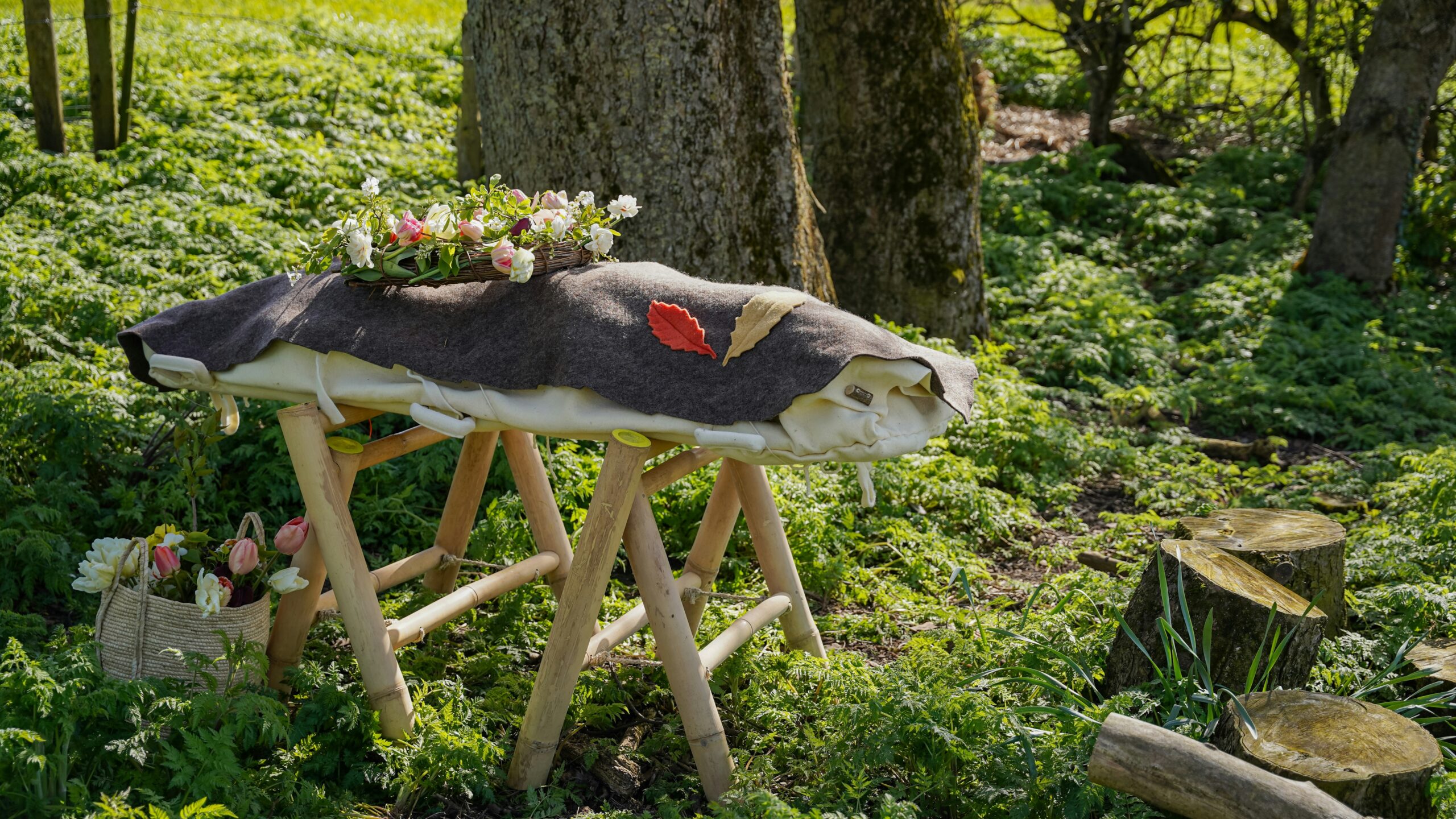
Holly: Yes, the wording can be a little tricky. I always called it a bier, but you say “bier” and people hear “beer.” Jane with Final Footprint has a photograph of a bier on her website, and she calls it “a casket tray.” My friend Kate with Vale Shrouds calls it a trundle, so I started calling it a trundle-bier. This phrasing tends to be easier for people to hear and understand, so that’s what I’m calling it.
I’ve been talking to cemeteries for years about shroud-only burials, and recently I showed up with Janes’ trundle-bier and a gravedigger and owner of a mortuary both said, “Yeah, that’s fine.”

Colleen: Why would they have a problem?
Holly: Well, they are concerned with the undignified handling of someone’s beloved. That could be a traumatic event that cannot be redone. But most trundle-biers have handles and work well, so you can easily slide it in and out of a car; people can carry it and it can be lowered with a rope.
Colleen: If someone is interested in having a home funeral or pursuing a natural burial, what would you recommend?
Holly: For starters, I would encourage people in Northern California to get a hold of Final Passages, and those in SoCal to get a hold of Sacred Crossings. Both are teaching organizations that train people and educate families in how to facilitate or guide home funerals.
And, you know, home funerals aren’t right for everybody. And they’re not right for every situation, nor right for every death.
The intention with a home funeral is to empower the people in that community no matter how micro that community might be. It’s empowering people to take care of their own, because that’s really the point.
May We Suggest:
 What are Burial Shrouds? (Interview)
 The New Immortality: Shifting Attitudes About Death, Our Bodies and the Environment
 What Is The Advance Directive For Dementia? (Interview)



Leave a Reply