


What Is Alkaline Hydrolysis? (Interview)An interview with Philip Olson about a new form of disposition
Today, SevenPonds speaks with Philip Olson, an assistant professor of Science and Technology in Society at Virginia Tech. Olson researches bioethics and environmental ethics, analyzing society’s complex relationship with new technologies. He has a particular interest in the study of alkaline hydrolysis. Over the years, Olson has studied how receptive people are to this new technology. …

Today, SevenPonds speaks with Philip Olson, an assistant professor of Science and Technology in Society at Virginia Tech. Olson researches bioethics and environmental ethics, analyzing society’s complex relationship with new technologies. He has a particular interest in the study of alkaline hydrolysis. Over the years, Olson has studied how receptive people are to this new technology.
Warning: This post contains detailed information about how remains are processed. Reader discretion is advised.
This interview has been edited for length and clarity.
Marissa Abruzzini: What made you want to study alkaline hydrolysis?
Philip Olson: My mom, actually! I was visiting my parents one summer, and my mom told my dad about this article she’d read on alkaline hydrolysis. She said it was about dissolving human bodies and flushing them down the drain. It wasn’t very flattering. I thought, “I gotta see that.” It sounded like something my department would be interested in. I wanted to know how people are responding to this. Do they accept it, or think it’s strange? How is this gonna go over?
I guess I should step back for a moment. The reason why my mom was telling my dad about this article is because my dad is actually a funeral director. He operates a 90-year-old family business in Minnesota. I had no intention of doing that kind of work myself, so it’s funny that I now study funeral technologies.
Marissa: I bet that gives you a different perspective on the industry, too.
Philip: I come at it from an interesting point of view. When I was growing up, the funeral business literally put food on the table.
Marissa: Can you describe the alkaline hydrolysis process? What does it involve exactly?
Philip: First, you have a chamber that’s shaped like a cylinder. It has this wire mesh tray that slides out. The body is placed on this tray, and then the operator slides it into the cylinder and seals the door. The body can’t have anything on except pure leather or silk. These materials will hydrolyze along with the body, but things like polyester won’t. So most funeral directors will wrap the body in a silk body wrap.
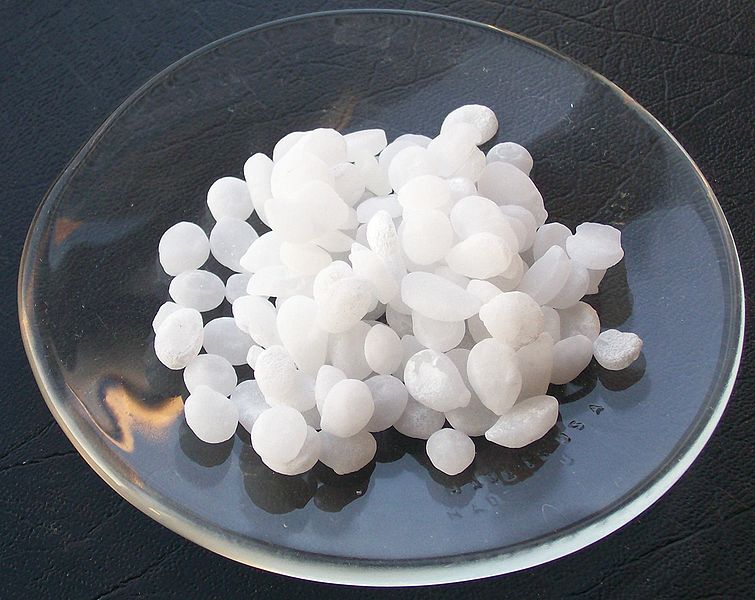
Sodium hydroxide, or lye, is used to dissolve bodies in alkaline hydrolysis.
Marissa: What makes them hydrolyze?
Philip: It’s a mixture of water and alkali. The mixture is 95 percent water and 5 percent alkali (usually hydroxide or sodium hydroxide, AKA “lye”). That’s pumped into the cylinder and then heated.
Marissa: How long does it take to hydrolyze the body?
Philip: It depends on the amount of heat used, and the pressure. You need to get the fluid to heat beyond its boiling point for the process to work quickly. Most of the cylinders are pressurized to keep the water from fully boiling, and this speeds the hydrolysis process up. It only takes about two or three hours. But if the system isn’t pressurized, it can take as long as 12 hours.
One of the high-pressure system manufacturers actually makes submarines for the British Navy. It uses the same kind of high-pressure technology — some alkaline hydrolysis machines use actual submarine doors.
Marissa: Is the high-pressure system more expensive?
Philip: Oh yes. It costs about half a million dollars for the high-pressure machine, and about half that price for a low-pressure system.
Marissa: So what happens after the alkali and water is pumped into the cylinder?
Philip: The body becomes liquefied. It looks a little bit like motor oil. This liquid has a very high pH, so you have to add an acid like carbon dioxide to the remaining liquid in order to make it neutral. They also cool the liquid down so that it can be sent to waste water management.
Marissa: Is it toxic?
Philip: No, it’s not. Part of the controversy about alkaline hydrolysis is that this remaining liquid is processed by the same department that recycles drinking water. But the liquid is completely sterile and inert at this point. Everything is already broken down. There’s no DNA or RNA left because the heat and alkali has destroyed it.
Some experts claim that there aren’t any prions present either, and a few studies have backed this up. Prions are a problem in mad cow disease, and there is a human equivalent of that. Experts claim that the remaining liquid doesn’t have any prions, but I recently talked to a scientist at Virginia Tech who was skeptical. I’ll need to see more studies on that.
Marissa: What happens to the bones? They aren’t hydrolyzed, right?
Philip: Right, you still have bone matter left over after you drain the liquid. The bones are wet, so they need to be dried. These bones are actually more brittle than cremated remains. And as in cremation, you’re not really getting “ashes.” In cremation, you burn the body away, and what you’re left with is bone and bone fragment, which you then grind into a powder. Alkaline hydrolysis is a similar process, except you use liquid instead of flames, and you get 20 percent more remains, on average. So you’ll need a bigger urn.
Marissa: I know that with cremation, your loved one’s remains are often mixed a little bit with others who were cremated in the same spot. Does this happen in alkaline hydrolysis?
Philip: They call that “co-mingling,” yeah. There’s less co-mingling with alkaline hydrolysis. It’s inevitable that there will always be some.
Marissa: So you said that the bones need to be dried before they can go through the grinding process. How does that work?
Philip: How do you think it works? Take a guess!
Marissa: You can’t just leave them out. That’d be inefficient…I have no idea.
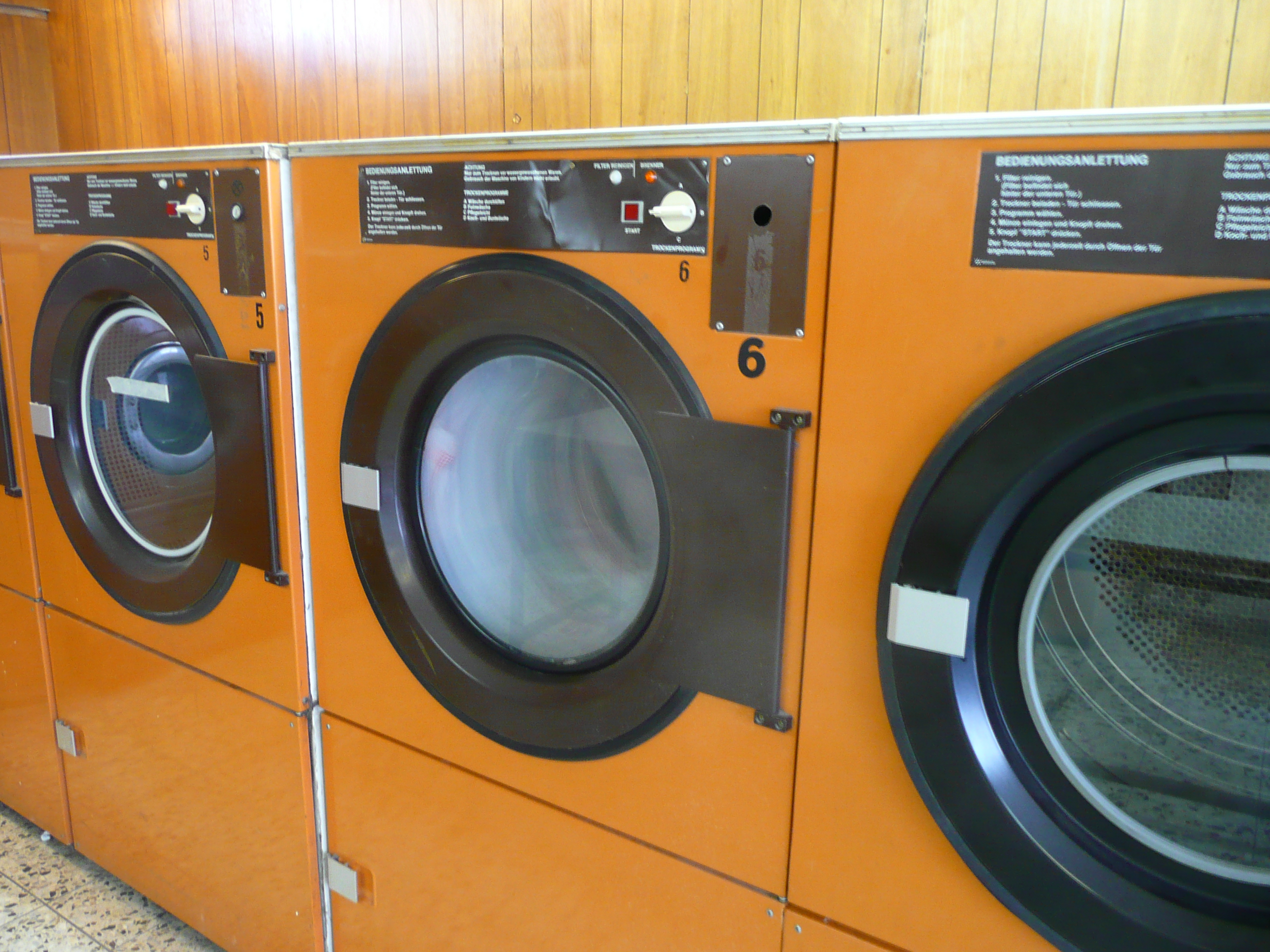
Philip: Clothes dryer.
Marissa: No! Really?
Philip: Yes. They put bones on those shoe trays that you use to keep your sneakers from bouncing around, and they dry them in a regular clothes dryer. They don’t want to use it, but no one’s come up with a better solution yet. It’s fascinating to me, because so many people find this fact disturbing. There’s this boundary between industrial and domestic living spaces, and we try to keep those boundaries intact. And the idea that the same machine that dries your kids’ clothes is also drying bones creeps people out. Maybe it seems too casual? Or offensive to the body itself?
And that’s where people think of alkaline hydrolysis as controversial. We imagine we’re flushing our loved ones down the drain. In reality, nearly every funeral technology has one or two “creepy” aspects.
Marissa Abruzzini: What type of energy does alkaline hydrolysis use?
Philip Olson: You just plug it in. It’s all run on electricity through a hot water heater.
Marissa: Is the energy requirement for alkaline hydrolysis less than that of standard cremation?
Philip: It’s much, much, much less than cremation. Here’s the thing though: Your energy bill will be low, but your water bill will go through the roof. Alkaline hydrolysis uses a lot of water. You have to fill the entire cylinder up with water twice or even three times every day. And if you’re using this in a place like southern California, you’re gonna run into some issues. There’s been a lot of water rationing happening there.
Drinkable water is a serious security issue. Alkaline hydrolysis isn’t this panacea for the funeral industry.
Marissa: Do you personally consider alkaline hydrolysis to be ecologically safe?
Philip: I can’t give a definitive answer for this. I will say that it uses a lot less energy than cremation. But at the same time, alkaline hydrolysis still uses electricity that comes from a coal power plant. You’re using less fossil fuels than you are with a standard cremation, but you’re also using a lot more water. The ecological impact depends on the seriousness of those interests. You have to consider which is the more pressing issue at the moment.
Marissa: On the subject of environmental safety, one of the problems with standard cremation is that dental fillings can burn, and the mercury inside gets released into the air. What happens to dental fillings in alkaline hydrolysis?

You don’t need to remove pacemakers in alkaline hydrolysis.
Philip: Teeth don’t hydrolyze — they’re part of the bone matter that’s left behind. But the fillings inside of the teeth won’t hydrolyze either. Fillings fall off of the teeth because the teeth become very brittle at the end of the process. All of these fillings and implants come out completely clean. You don’t even have to remove pacemakers, which is something you have to do with cremation. At the end of the alkaline hydrolysis process, all of these implants are filtered out before the bones dry.
Marissa: When did alkaline hydrolysis become a legal tool for decomposing human remains? Is this a relatively new process?
Philip: The first time was in Ohio in 2011. A funeral director named Jeff Edwards heard about this process for decomposing animal remains. He noticed that there weren’t any regulations in his state that said he couldn’t use this for human remains. He presented it to the board in his state, and just started doing it. Within a short period of time, he processed 19 bodies with this method. What’s so interesting to me is that he received a ton of interest, even though he only used it for a few months. But, just before he did his 20th round of alkaline hydrolysis, the Ohio Board of Health shut him down.
Marissa: Why do you think they shut him down?
Philip: Some people think alkaline hydrolysis sounds awful. They compare it to Soylent Green.
Marissa: Since alkaline hydrolysis is legal in some states, people are clearly interested in it. Why do people choose this method over cremation?
Philip: The vast majority of people choose this process not because it’s greener than cremation, but because they think it’s more gentle. They get the same end product that cremation produces (the “ashes”) without the fire. Fire for many people conjures up visions of hell. So instead of putting grandma on a fire, grandma is taking a warm bath. I guess they think it’s gentler to soak in caustic alkali.
Marissa: How do you feel about the funeral industry calling this process “flameless cremation?” Is this accurate?

Credit: frazerconsultants.com
Philip: I compare this debate to the debate over whether same-sex marriage is really “marriage.” We assume that cremation means that you need to have flames or fire. In reality, cremation is just a legal definition for processing remains. Like marriage, it’s a socially constructed definition. You end up with the exact same end product in both cremation and alkaline hydrolysis. And you’re not really getting “ashes” in either process. But the important issue for me is how the state chooses to legalize it. If it’s not “cremation,” then will they regulate it differently? That’s the question I care about.
Marissa: Why do some people have a difficult time accepting alkaline hydrolysis, even though they readily accept cremation?
Philip: People get metaphysical about this issue. It reveals a lot about our death care culture. We have this desire to make new technology feel more familiar and more natural. People used to say the same things about cremation that they’re saying now about alkaline hydrolysis. What’s funny is that neither of these things are what actually happens to a body in the ground. There’s nothing “natural” about either of them.
Marissa: Would you consider using this process yourself after you die?
Philip: It interests me, but ideally, I’d like to have a green burial. I see the manipulation of bodies as unnecessary. But if my family really wanted cremation or alkaline hydrolysis, then that’s fine. And I would just ask that they understand the water security issue, and our use of nonrenewable fossil fuels. Alkaline hydrolysis isn’t immune to criticism.
If you’d like to find out whether alkaline hydrolysis is legal and available in your state, you can find more information on Nolo.com.
May We Suggest:
 Everything You Need to Know About Legally Scattering Cremation Ashes in the United States
 Are Funeral Homes a Dying Breed?
 The New Immortality: Shifting Attitudes About Death, Our Bodies and the Environment
-

Hi Marisa,
Very nice article. I’ve met Phil and very much respect his work.
I wanted to provide clarification on the drying of the remains. I’m surprised to hear a clothes dryer mentioned. To my full knowledge, we’ve never had a customer use a clothes dryer and we have ~110 systems (pet and human) in funeral homes and pet crematories (20 of which are human systems). A convection oven is the appropriate device for this, which is a special oven that circulates heated air. Although many residential ovens have a convection setting that would work okay, we find that most of our customers select a commercial convection oven that looks similar to this: https://static.primasupply.com/garland/garland-convection-ovens/sunfire-sco-gs-10s.jpg. This is common practice for the past 10 years.
Now, there is another company that has 3 machines in use, and I had the opportunity to see presentations by the operators of those systems last month. One air-dries (a medical school where fast turnaround time is not crucial), which works great but takes far too long when a family is awaiting the final remains. The second of those three uses a convection oven, and I was honestly under the impression that the third install also used a convection oven – though this is the only one for which I am not absolutely certain. If they don’t, they should! It is the best option at this time.
The price of the units is less than mentioned in the article, but I don’t think your audience much cares about that.
Kindly,
Sam Sieber
-
Hi Sam,
I spoke to Marissa and she reached out again to Philip Olsen. He stated that the two facilities he toured use clothes dryers to dry the bones after having tried several other options that didn’t meet their needs very well. (Sorry I don’t know what those were.) He by no means meant to suggest that all facilities followed the same procedure. It would seem that it is a choice made by the service provider versus something dictated by the process or the manufacturers of the AH machines.
I hope this clears up any confusion we may have inadvertently caused!
Kathleen Clohessy, Editor in Chief, SevenPonds.com
-







Leave a Reply