


Stillbirth and Infant Loss Photography: Support for Families Through Remembrance (Interview)Missy Thomas, executive director of Now I Lay Me Down To Sleep, shares the organization’s mission, and why it is so powerful
In 2005, Cheryl Haggard co-founded Now I Lay Me Down to Sleep (NILMDTS) with photographer Sandy Puc’, embarking on a mission to provide black and white remembrance portraits for parents experiencing the death of a baby. Borne out of painful experience, Haggard knows the power these professional portraits have in helping parents and other family…
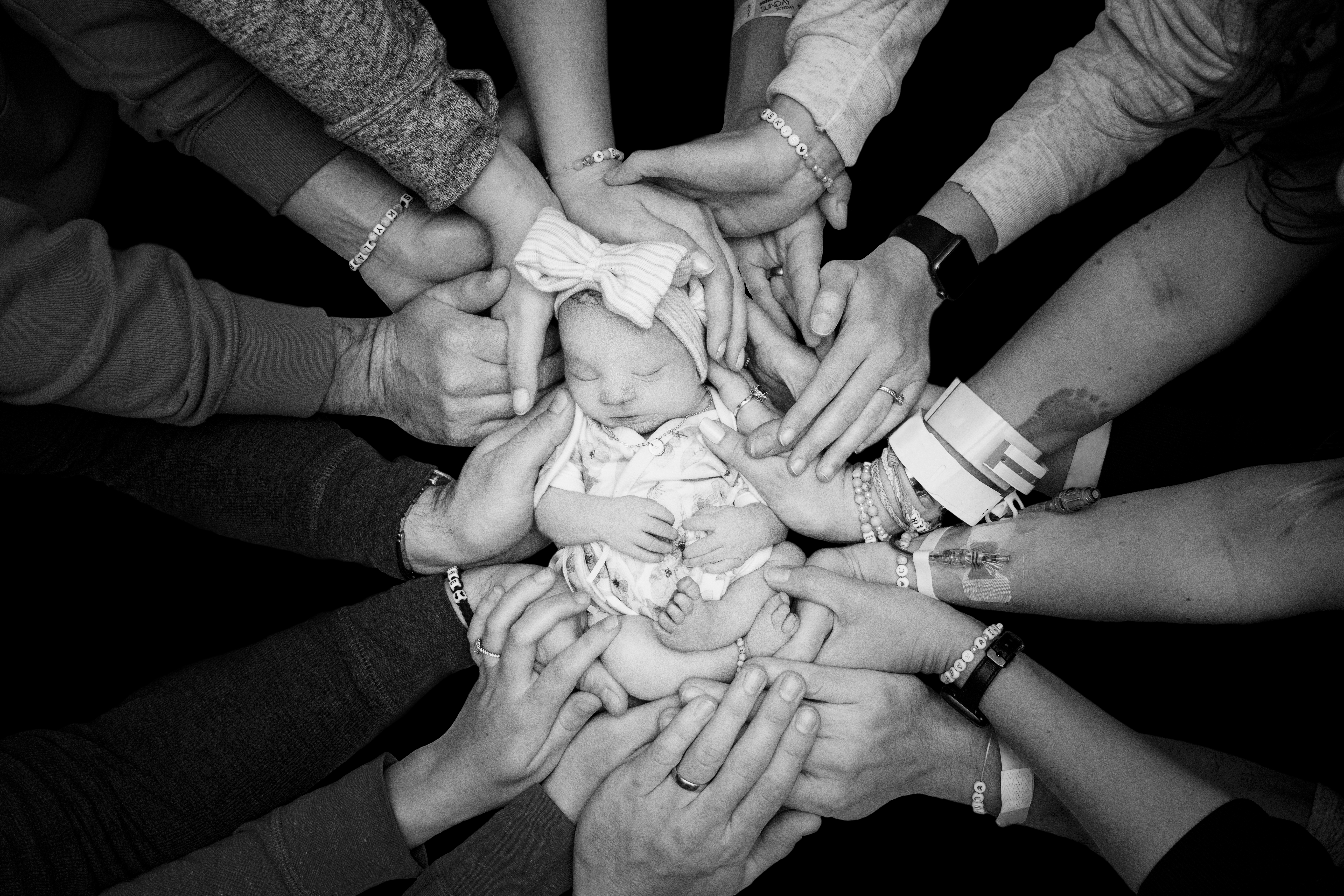
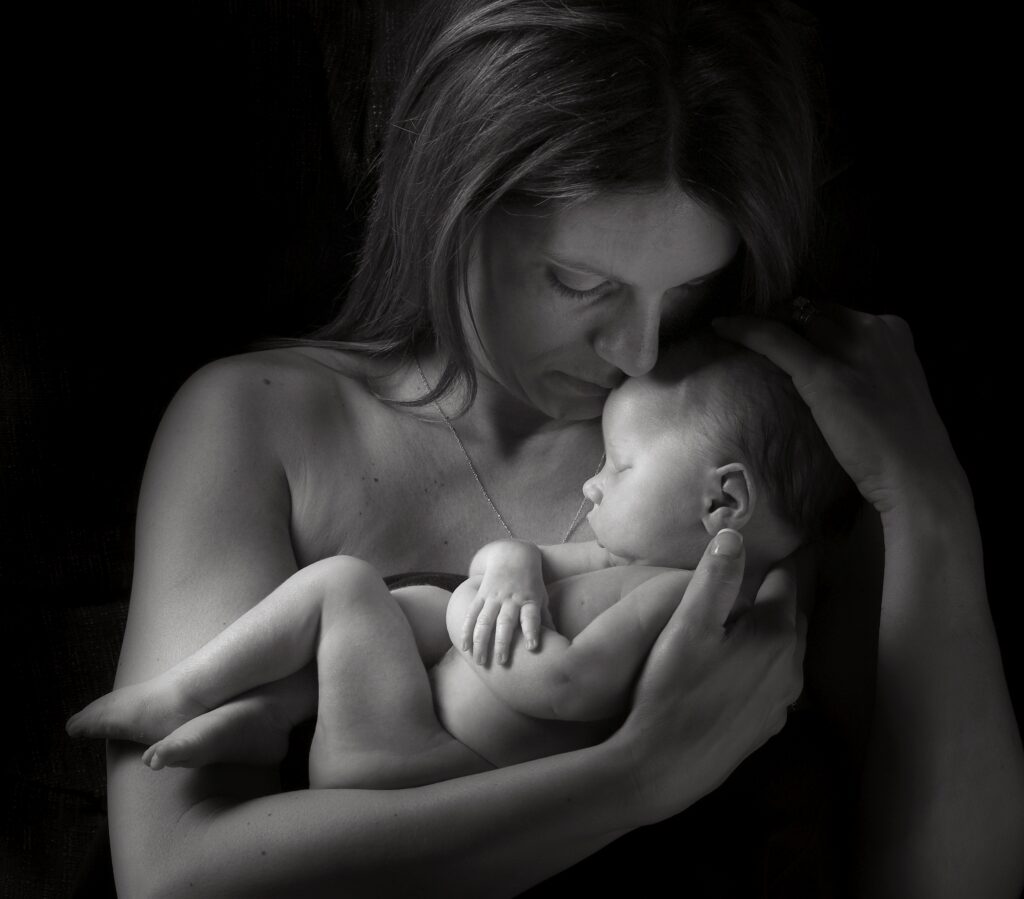
In 2005, Cheryl Haggard co-founded Now I Lay Me Down to Sleep (NILMDTS) with photographer Sandy Puc’, embarking on a mission to provide black and white remembrance portraits for parents experiencing the death of a baby. Borne out of painful experience, Haggard knows the power these professional portraits have in helping parents and other family members grieve.
“That night was the worst night of my life. But when I look at the images, I am not reminded of my worst night. I’m reminded of the beauty and blessings he brought.”
— Cheryl Haggard, Maddux’s mother and NILMDTS Co-Founder
Missy Thomas, the current executive director of NILMDTS, also came to the organization organically, learning about its services after a close friend unexpectedly lost her infant shortly after birth. Over the last decade, her involvement grew from being a volunteer dispatcher (the person who connects potential clients with the group) to her current staff position. But she also finds meaning in conducting photography sessions, herself — although she doesn’t get to as often as she’d like.
In addition to sharing her story, Thomas answered our questions about what one of those sessions would be like and how their services provide invaluable keepsakes for families suffering an unspeakable loss.
This interview has been edited for length and clarity.
Could you walk me through the process of an NILMDTS session?
Our dispatcher will send a text out for our volunteers and just give the basics; we never discuss any sort of personally identifying information in there. But for example, ‘We have a 32-week stillbirth at such-and-such hospital, baby has been born or the mom is still in labor…’ A basic rundown of the situation: ‘We’re thinking a session at this time or a certain timeframe, so is anyone available?’
We work out who is available to do the session, and move ahead. If I’m the one that takes it, for example, I’ll go ahead and I always I’ll get my camera chargers and make sure the batteries are charged, my lights charged and all that. I will get all my gear together – I have a bag that has all my little tools and tricks that we use with these babies. I personally always carry around a few little stuffed bears, for example, that we can use in case they have nothing else.
We get as much info as we can from the dispatcher without going overboard, and then usually make contact with the nurse that’s taking care of the patient.
When I arrive at the hospital, the first order of business is going to find the nurse that’s taking care of them. I talk to her just to kind of assess. (I say “her” because almost 100% of the time I have been in a session it’s been a female nurse, but I do know that there are male labor and delivery nurses out there!) But I’ll talk to her, and just kind of get a read of the room.
I’ve always said – and I tell new volunteers, too – I have never walked into the same room twice. You literally have no idea what might be going on. There’s so many factors, so I like to ask about, ‘What am I gonna walk into?’ I’m prepared for whatever, but, ‘Are we catatonic? Are we in a celebratory sort of feeling? Are they totally checked out? Is there a dad being really resistant? (Is there even a dad present?)’ So I ask all these different things, and we also talk about the condition of the baby too. Sometimes it’s beautiful, and sometimes it is not, and it’s good to know that ahead of time.
Then I’ll have the nurse take me in and introduce me, and then I will go from there as far as conducting the session. I have a set of steps that I go through when I’m in the room, but they are subject to changing based on what I walk into, so I’ll mix it up. But we train our people on what to say and what not to say when we’re with the family.
So we’re in there as long as we need to be, to get what the parents want. We try not to be intrusive, because this is sacred time they have with their babies, and they don’t need us running around meddling with things, taking up that time, but I always want to make sure that we get the shots that they will want.
We help guide them through some of those things as well, because there’s a lot of stuff they don’t think about at the time. So I’ll talk to them, and say, ‘Hey, do you have any outfits that you want to put on the baby?’ Or about props, like some photos of people to put next to them, or their wedding rings, or Grandma‘s necklace, stuff like that. So we guide them through those ideas. And we have a mental checklist of photos we want to make sure that we get. For example, we always try – if conditions are amenable to it – to get a good picture of the baby’s ears, because a lot of the time they have a hat on, and parents forget to look. We photograph the baby’s feet, and things like that, so we have our little mental checklist, and then I wrap up.
I tell them exactly what to expect; they get a copy of the consent form and everything that they need to fill out, and they go home with my contact info so that if they need anything they can reach out to me. We always offer to get a few photos done really quickly, if they have a funeral or memorial service coming up soon, but otherwise what to expect in terms of turnaround.
What are some of the things you’re not supposed to say to the family?
Don’t walk in and say, ‘How are you doing today?’ They’re doing terrible, you know? But everyone is used to meeting people and asking how it’s going. In this situation, don’t ask them – we know the answer. But don’t shy away from the situation. It’s uncomfortable, so we have to acknowledge what it is. Say, ‘I’m so sorry to be meeting you under these circumstances, but I’m going to take some time and get some beautiful photos,’ and things like that.
A lot of people instinctively want to say, ‘Well, the baby is in a better place.’ But everyone has a different belief system, so that may not be the case at all, or even possible according to what they think. Regardless, that’s not what they want to hear right now, because the best place that baby could be at the moment would be safe and healthy in their arms.
We also advise photographers not to say anything like, ‘Maybe you can have more,’ or ‘At least you have other kids.’ And just as importantly, we are taught not to talk about our own stories, if we have them. This moment is not about us – and we have a number of volunteers and some people on staff who have lost children, who do this in honor of them – but we don’t go in and talk about that. We’re not here to tell them what to feel or how to feel, because what’s true for us likely won’t be true for them.
Do you have any phrases that you’ve found to be helpful to say?
More often than not, it’s not really a phrase, but I find it helpful to talk to the baby, and call it by its name. It causes a mood shift; it’s one of my favorite things to watch happen in a terrible situation. I always do everything I can to humanize their baby, by treating it like it was a living newborn, whether I’m dressing the baby, holding the baby… going through those motions. I make sure to call the mom “Mom” and the Dad, “Dad” or the grandma “Grandma,” because especially if it’s their first baby, they might not have ever been called “Mom” before.
This is part of reading the room, but I also try to involve them in whatever I’m doing, whether it’s brushing the baby’s hair or wrapping them up. Things like that make a huge difference, and I feel like a lot of times, by seeing us hold the baby and talk to the baby, it’s less scary for them to do those things. I’ve been asked by family in the room countless times – even parents: ‘Is it OK if I hold them?’ I’m like, ‘Of course it’s OK if you hold them!” I think they’ve just never been in this position, so they don’t know what the rules are.
I mean, of course there aren’t any rules, but sometimes I would literally give parents permission to hold their own baby, so guiding them through that has been very helpful. And then I watch them check out his little feet, and examine their baby, and it’s helpful, because what we do is so much less clinical than what everyone else is doing. It seems to have an impact.
I can’t even think of any situation in which it would’ve been a negative. I have definitely had some dads that are like, ‘No. I can’t do it.” They’re not ready for that, and that’s fine. We still have ways. We can gently encourage a little bit of dad in the photo or something so that he has something of himself later on. I pick on dads, but it’s almost always dads that are a little bit more resistant.
Have you heard from any of the families who have utilized your services? Have you heard whether it’s helped facilitate their healing and grieving process?
As an organization, yes, on a regular basis. We often get letters in the mail, and our admin assistant will always scan them and share them with everybody, if it’s appropriate, so we can see them. We will share it with the volunteers – at least the volunteer that took the photos – so they always know. Some people will reply to emails that we send out, like when we deliver the gallery. On social media, we might post something and people will comment on it saying, ‘Oh you guys did my photos back in 2013 and I can’t tell you how this transformed our lives.’ If appropriate, we will then reach out to thank them for that feedback, maybe ask if they’ll write a blog post for us. Because people want to read stories of other people who’ve been through this.
I can’t say that they’re not out there, but I’ve never heard of any parent that says, ‘I wish I hadn’t done this, this was a waste,’ or ‘I don’t even ever look at these things.’ And I know that there are parents that have never looked at their photos, because we can see on our end what galleries have been accessed or not.
Sometimes there’s a situation where it’s been 12 years and they’ve never looked, and that’s OK. They don’t have to. And that’s what I always tell them when I leave the room. I explain how the gallery is going to be delivered, which is by email. There won’t be any photos in the email, so they don’t have to worry about opening it up and being surprised by something they’re not ready to look at. The gallery is password protected, so it’s there when they’re ready, and if they’re not ready then it’s fine. They know it’ll be there.
There are families that took years and years for them to be ready to look, and once they did they just couldn’t believe it. They become almost obsessed with them. We definitely know that it makes a huge difference, and a lot of people that we hear from have incorporated their memorial photos into things, like by holding them up in family photos. It’s really awesome.
Most hospitals have photographers that offer newborn pictures. How is what NILMDTS does different?
It varies wildly, depending on the company and the hospital, of course. They usually do the normal newborn photos – when you go and have a baby you can get the little generic shots. Some companies will do bereavement photos, but most of them do not do family photos. It’s not part of their policy; the photo is baby-only. And oftentimes, those photographers are kind of thrown into it, and they don’t know how to do bereavement sessions. They’re uncomfortable doing it.
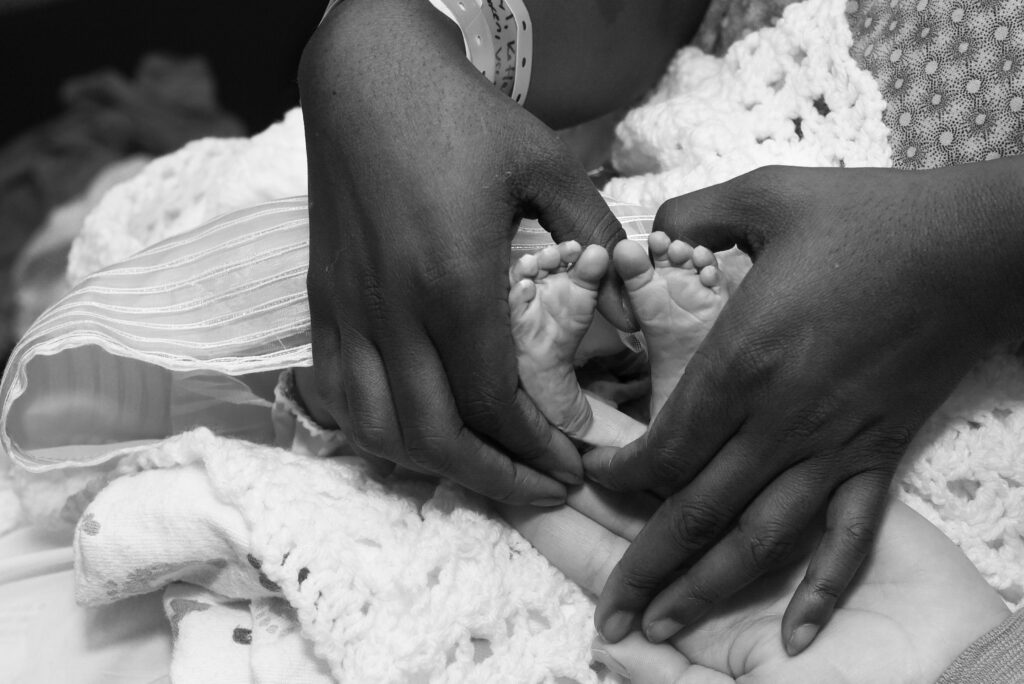
We are different because we’re specifically trained in bereavement photography, and we try to include the family in our photos as much as possible.
There are other benefits to using us, as well. We do retouching – and those companies do not – and that can be a huge part of the healing process, because we take away all the signs of demise that are on the baby. That photo is much more comforting to look at than a standard photo would be. We also give the families a beautiful photo album with all their photos in it, and we don’t charge a thing.
Have you ever had anyone request that you don’t retouch the photos?
We have had a few people ask. But we don’t provide unretouched, color images. Our founders started NILMDTS with a specific policy and mission: to provide black & white photos as heirloom keepsakes. If someone feels strongly about having color photos, we might offer to take some pictures as we go with their cellphone, or something like that, but that’s up to the individual photographer.
Providing unretouched color versions of our professional photos is just not what we do. We aren’t trying to withhold anything from anybody, but editing in color is a very, very different skill set than editing black & white.
Are there any words of advice you can offer to those who are dealing with grief and the loss of a child?
It’s really hard to give advice to a loss parent as a non-loss parent. But to the people in their support networks: Talk about it.
I’ve supported people through these losses. I know that it feels so weird to bring it up. You might be thinking, ‘Well, it looks like they’re having a good day, so I’m not gonna talk about the baby.’ Maybe you don’t want to remind them about what happened and bring them down.
But what we hear from parents, overwhelmingly, is that they’re thinking about their babies every second of every day. You’re not going to hurt them, and you’re not going to remind them of something they’re not already thinking about. But by bringing the baby up, you make it known to them that you’re thinking about their baby, too. I’ve heard that one of the biggest fears of loss-parents is that someone will forget their baby; people will forget it happened because they’re not here anymore.
So don’t shy away from talking about it. It can be as simple as, ‘Hey, just thinking about you and James today. How are you doing?’ That’s all it needs to be. You’ll be supporting them by letting them know that you haven’t forgotten, either.
May We Suggest:
 Why is Death Midwifery Important? (Interview)
 How to Comfort A Dying Loved One (Interview)
 Survivors Are Breaking the Taboos Around Disenfranchised Grief
-

In a 2012 article in The Atlantic Jeffrey Goldberg wrote about how Rick Santorum and his wife brought their stillborn baby home to grieve. There were many opinions regarding their choice to have some time with their stillborn child to process the loss. The author sums up their experience with ‘people who have just suffered the worst possible tragedy known to humankind.’ These photos and others on NILMDTS touch the depth of that grief and give families one of the most beautiful gifts of all.
-
So true. These photographs can become priceless keepsakes, honoring a baby’s life and giving families something tangible to hold onto when their time together was heartbreakingly brief.
-






Leave a Reply