


What Are Indicators of “Aggressive Care” at the End-of-Life? (Interview)An interview with Dr. Paul Duberstein, a public health psychologist and professor at Rutgers University
Today SevenPonds speaks with Dr. Paul Duberstein, a public health psychologist, professor, and Chair of the Department of Health Behavior, Society, and Policy at Rutgers University. Dr. Duberstein’s earlier work centered on identifying risk factors for suicide and depression in older adults as well as intervention studies to improve outcomes among patients with advanced, life-limiting…

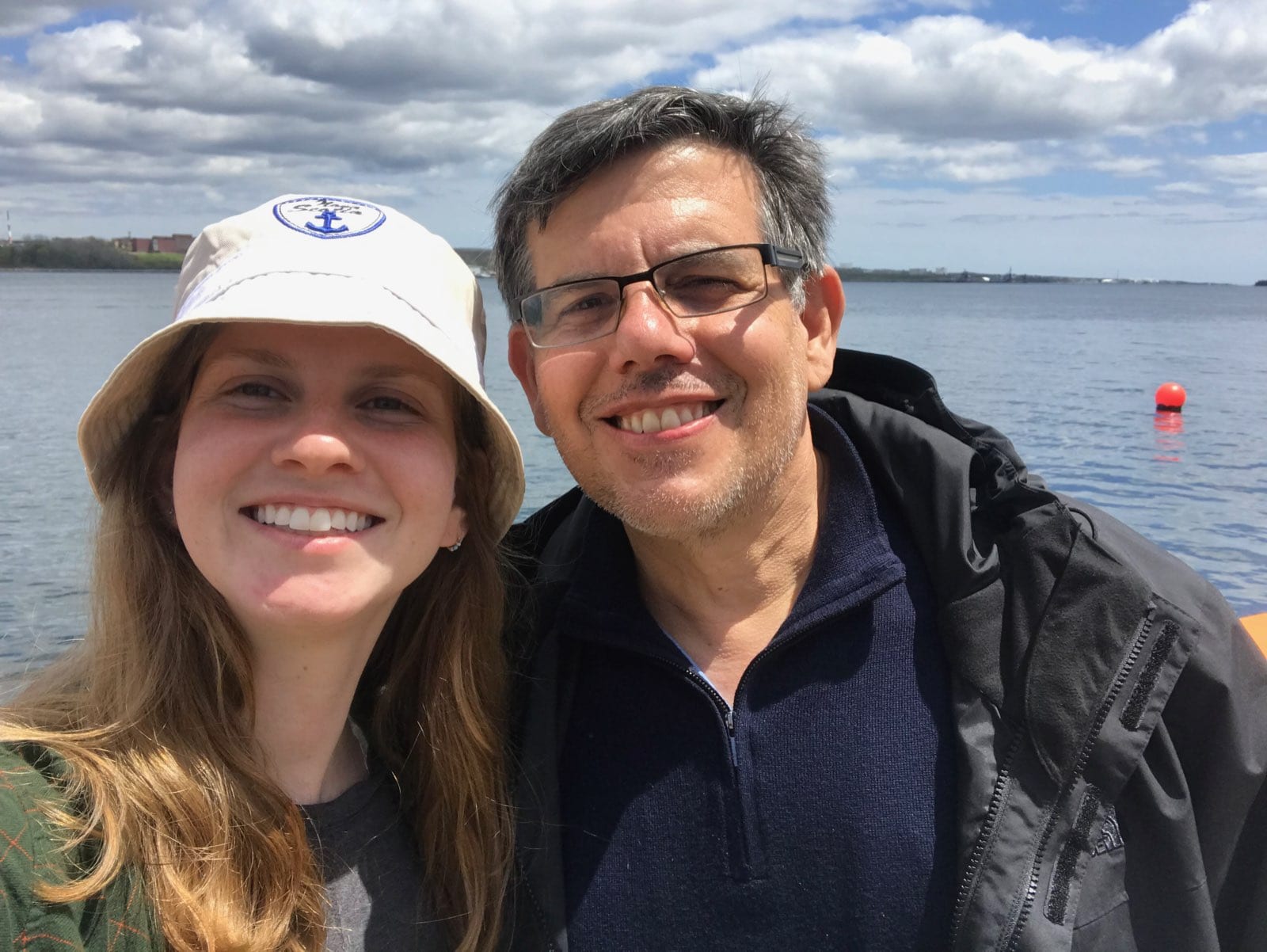
Today SevenPonds speaks with Dr. Paul Duberstein, a public health psychologist, professor, and Chair of the Department of Health Behavior, Society, and Policy at Rutgers University. Dr. Duberstein’s earlier work centered on identifying risk factors for suicide and depression in older adults as well as intervention studies to improve outcomes among patients with advanced, life-limiting diseases and marginalized populations. Most recently, he has been studying the measurement of “aggressive care” at the end-of-life, and has published a research paper, “Physician and Patient Characteristics Associated With More Intensive End-of-Life Care.”
Editor’s note: This interview has been edited for length and readability.
Colleen Ferguson: Hi Dr. Duberstein, thank you for speaking with us. You started your career researching suicide and depression in older adults — how did that progress into end-of-life care?
Dr. Paul Duberstein: There is a long thread that connects my early work with suicide and depression to end-of-life care. It’s difficult to do research with mental health and aging without coming up against death and terminal illness.
While I was doing research on late-age suicide, we found that those who take their own lives often don’t have contact with mental health providers — and there are all kinds of reasons why that happens with older adults. But because of that, the locus of responsibility falls on Primary Care Providers (PCP) as opposed to mental health care providers. We did a study in upstate New York several years ago, and the number of people who had died by suicide and had seen a PCP in the month/week ahead was enough for us to say that PCPs have a significant role in suicide prevention.
And then we were challenged with the question, “What should doctors be doing to be more vigilant?”
And I thought to myself, “Well, I’m not a PCP, and I really don’t know what the nature of their day-to-day work is like.” So I did a one-year sabbatical in primary care in Rochester shadowing PCPs in a broad spectrum of clinics — both poor and affluent, and in seeing what PCPs work lives were like and what they were asked to do, and not asked to do. This is when I became very interested in the communication between doctor and patient.
And from this, I ended up going into cancer communications. One study I was involved in was a clinical trial funded by the National Cancer Institute to improve communication between oncologists and individuals with stage 4 cancer and their family and caregivers.
We followed the people enrolled in the trial all the way to their death. That allowed us to examine the nature of the healthcare provided in the last month of the patient’s life. This included whether or not they received chemotherapy, did they go to the emergency department (ED), when did they go into hospice, if they did at all?
Colleen: Now that we’re talking about the nature of healthcare provided at end-of-life, could you define aggressive care for our readers?
Dr. Duberstein: We recently submitted another article for publication where we ask the question: How does one define aggressive care? What indicators are researchers using? And we found over 100 indicators that people used, and we also found a good dozen words that people have used in place of the word “aggressive.”
While most people have indicated they prefer to die at home, the majority die in hospitals after receiving treatment that is voiced in terms like “potentially avoidable,” “burdensome,” “intensive,” “futile,” “wasteful,” and “aggressive.”
These words are obviously value-laden, so as academics we settled with a more value-neutral term that we use in this paper, called DIAL, which stands for “discretionary intervention at the end-of-life.”
So, there’s a lot packed in there — DIAL can cause more harm than good if underused or overused. For example, the underuse of hospice or palliative could be considered inappropriate or aggressive care.

Colleen: What about ventilation, resuscitation, or chemotherapy in the last 30 days of life?
Dr. Duberstein: Those are some top indicators, along with stays in the ICU. By far and away most people believe that no one should be in the ICU in their last week of life — if you’re going to the emergency department a week before your death, it’s highly unlikely that you’re having a “good” death. That could be considered a premier indicator of bad care. And included in that could be other indicators such as intubation, CPR, feeding tube, overuse and underuse of certain medications, dialysis, and tracheotomy.
Colleen: And your research, “Physician and Patient Characteristics Associated With More Intensive End-of-Life Care” examined what would increase the likelihood of the use of these indicators? These discretionary interventions at the end-of-life?
Dr. Duberstein: We looked at whether a particular physician attribute — what we call comfort with medical paternalism — was independently associated with DIAL or indicators of care that is incompatible with a “good” death.
For this study, we asked physicians a single question — “Overall, how comfortable would you feel if a patient requested that you make a decision using all that is known about the treatments?”
Responses ranged from low scores of “I’m not at all comfortable” to high scores of “I am very comfortable.” Higher scores indicated greater comfort with what we call paternalistic decision-making.
In short, if the patient tells you to make all decisions — how comfortable are you with that? If it’s high, then there’s very little hesitation by those doctors to use discretionary intervention like committing patients to ED or using chemotherapy in the last 30 days of life.
Colleen Ferguson: We discussed how certain physician attributes, like greater comfort with paternalistic decision-making, could result in more discretionary intervention at the end of life (or, as some would call it “aggressive” end-of-life care). How is this approach of examining the physician’s psychological traits different from previous research in end-of-life care?
Dr. Paul Duberstein: A lot of the research in health services is done by economists, health service researchers, and those who are interested in discovering correlates mainly in service utilization and supply. For the most part, they find things that are incredible common sensible.
For example, emergency department use is going to be more common in a place where there are more emergency centers. This is the purely economic approach to thinking about service utilization, i.e. certain interventions will be used when they’re more available or more accessible, and other interventions won’t be used because they’re not available.
But as a psychologist, my view is that there’s another reason why people do or don’t get certain services, treatment, and so on. And a lot of times, we think this comes down to the patient. But what we didn’t know was what are the implications of a physician’s psychology? And that’s what this paper examined.
Colleen: Very interesting. When looking at both the physician and the patient, do you see the more aggressive end-of-life care as something propagated by the medical community, or by the family, who perhaps don’t want to “give up” on their loved one?
Dr. Duberstein: This digs into the dilemma where doctors and their decisions are now rated by patients in the same way people who go to restaurants rate the food on Yelp. “How do you rate the comfort of your new care from 1-10?” This consumerist approach to evaluating the value of a product when it gets applied to medicine may cause physicians to do things that they would not otherwise do.
And there’s a fair amount of evidence — in fact, there’s a paper called “The Cost of Satisfaction” from UCD — where they detail some of the downsides of those decisions. They believe it causes physicians to make decisions that they wouldn’t otherwise make. These are ethical dilemmas that doctors have to deal with — the person isn’t going to live, but the family wants the doctor to do everything.
Colleen: And if they don’t, do they end up in court?
Dr. Duberstein: Doctors are rarely sued for doing too much. If they’re going to be sued it’s going to be for not doing enough. The tort system incentivizes the doctor to do more and that incentive is only amplified by other incentives like a fee for service. I’m not saying that doctors do dialysis or administer chemotherapy for money as the primary motive, but many would agree that there are some perverse incentives baked right into our health care system.
Colleen: What can people do to prevent unwanted, potentially aggressive end-of-life care from happening to them?
Dr. Duberstein: There are a couple of recommendations that have gotten a fair amount of currency recently. First, it’s important to have conversations with family members about preferences and you need documentation. The medical team will ask what the person’s preference is and that’s where documentation will help. At the end of the day, the POLST form is really the most actionable document.
The second recommendation is kind of a big-stroke solution — have a relationship with a primary care provider. This doesn’t get a lot of attention. And unlike the specialist and sub-specialist who provide hospital-based care, the individual that most patients have developed relationships with are the primary care providers. Those relationships are comprehensive and encompass the whole person in an ecological context.
When there is a life-limiting diagnosis or someone gets really sick, usually the cavalry comes in and the specialists start doing their work with the lab and specific parts of the body. But no one is paying attention to the individual. That is, except for the PCP. And patients can have more control by getting their PCP involved. I think if you talk with your PCP about these issues and make sure they’re involved in that care, I think things will go more smoothly at the end.

Colleen: Do you think we need to continue researching different facets of end-of-life care?
Dr. Duberstein: In broad strokes, we need to be thinking in more creative ways about health care utilization. It’s not just the supply of beds — it’s also about patient and caregiver attributes. A lot of times the patients know they’re dying, and it’s their family members who don’t want them to die.
There’s not a lot of empirical research on this. And there should also be more research on physician attributes affecting care, too. There has been some research by a woman at Dartmouth named Amber Barnato whose idea is that local norms drive medical decision-making. We tend to think of those things as rational and algorithmic, but a lot of medical decisions are about norms — i.e. what are we about in this clinical micro-culture?
So, it’s one thing to look at norms from a sociological or anthropological perspective, but as a psychologist, I want to ask — where do those norms come from? If they don’t come from individual psychology, then they certainly affect it. I’m not a psychological reductionist — I believe we have to take everything into account.
Colleen: This has been so interesting. Thank you so much for speaking with me today. I’m sure our readers will find your insights helpful as well.
Dr. Duberstein: You’re very welcome. It’s been a pleasure.
May We Suggest:
 As Life Expectancy Increases, More Seniors Find the Idea of “Rational Suicide” Comforting
 De-Stigmatizing Suicide and Suicide-Loss Survivors’ Grief (Interview)
 New Rituals Lessen Trauma of Code Blue Deaths for Clinicians







Leave a Reply