

Before Death: Advance Healthcare Directives
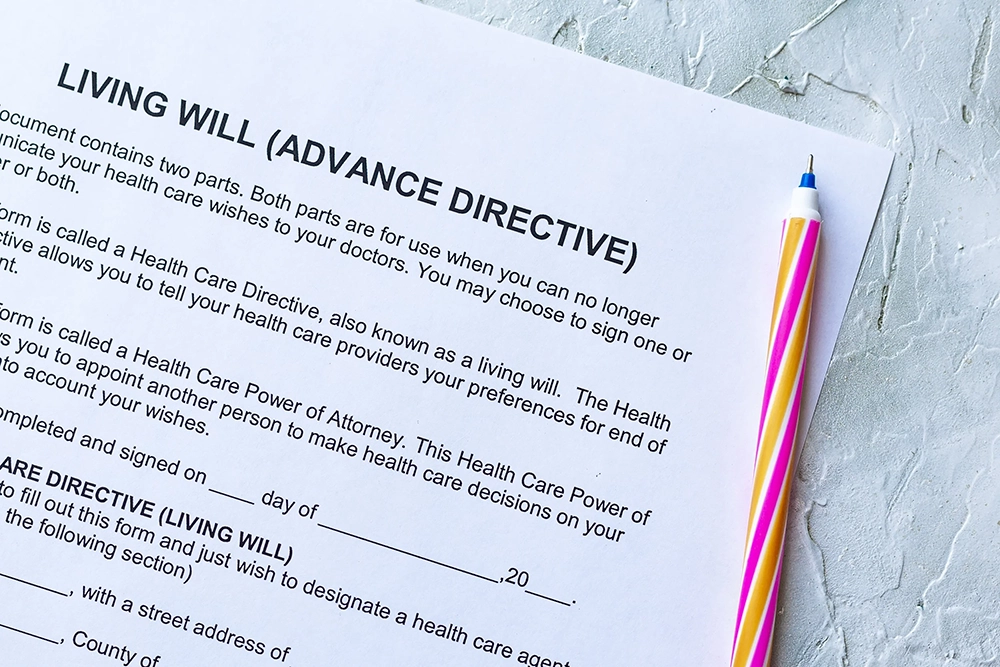
No one can predict the future. Terminal illness or accidents can strike at any moment, rearranging lives, altering priorities, and taxing health care plans. Advance health care directives can help to mitigate the fallout, for yourself and for your loved ones.
What is an advance health care directive? What is a health care proxy? What is a living will? What is a power of attorney for health care? How do you prepare advance health care directives to best aid yourself and your loved ones? This SevenPonds article attempts to answer these questions as well as others that would inevitably arise should the worst happen.
Things to know:
- Living wills, durable power of attorney for health care documents, and do-not-resuscitate orders are all types of advance health care directives (names can vary by state).
- Advance health care directives are not just for the terminally ill or elderly; anyone over the age of 18 may prepare an advance directive.
- Without advance health care directives, your loved ones may not be able to make decisions on your behalf and/or choices made may be contrary to those you would make for yourself.
- Although advance health care directives are legal documents, you are not required to hire an attorney to complete the forms.
- Each U.S. state has specific laws governing advance care directives; the forms required to execute them are free.
What is an advance health care directive?
An advance directive, sometimes called an advance care directive or advance health care directive, is a legal record of your medical care preferences. It provides important information about treatment and about who can make decisions for you should you be unable to do so. For example, if you entered a hospital in a coma, a friend or relative previously entrusted with your advance directive documents could provide the staff with your preferences concerning emergency resuscitation.
If you become permanently unable to communicate, a living will would provide guidelines on treatments you did and did not want. A durable health care power of attorney would name a health care proxy, someone you trust to be your voice, make your health care decisions for you, and give medical consent. In addition to your proxy, your primary care provider and anyone else involved in your care, should have a copy of your advance directive as well.
Who should have advance health care directives?
Because life-threatening accidents and debilitating medical conditions can strike any person at any time, all adults, even the young and healthy, should take the time to prepare advance directives.
The Terri Schiavo case is one especially tragic example of incapacitation without advance directive for health care documents. At the age of 26, an unexpected cardio-respiratory arrest left Schiavo in a severely compromised neurological state. She had no advance directive, and her closest relatives disagreed over her course of treatment. It wasn’t until 2005, 15 years after the event, that Schiavo died after the court-ordered removal of her feeding tube. With advance health care directives, Schiavo’s preferences would have been known, and years of discord among her closest relatives could have been avoided.
Often, young and healthy people like Schiavo have the most to gain from having advance directives. Anyone over the age of 18 may prepare advance directive documents, but adults of all ages, in all kinds of health, could likewise prevent such disputes this way.
How do I prepare advance health care directives?
You can prepare them yourself, or you can hire an attorney to assist you. You should be able to get free advance directive forms online, from your physician, social worker, hospital, or your county or state’s Office on Aging. You can find free, state-specific advance directive forms at Caring Connections.
To help ensure your advance directives are honored by health care providers, your advance directive documents must be in a form that:
1) Satisfies the requirements of your state’s laws
2) Is properly executed
Advance directive requirements, in terms of content, signatures, and documentation are different in each state. Attorneys or concierge physicians will usually prepare legally binding advance directive documents for reasonable fees. No state, however, requires that lawyers prepare your advance directive documents. Some states do not require your advance directive documents to be notarized, but most states require the signatures of witnesses in addition to your own. In most states, the person being named as your proxy and relatives may not sign as witnesses to advance directive documents.
What type of information is typically included in an advance health care directive?
The best advance health care directives are thorough. Your advance directive documents should describe the kind of medical treatment you would want in as many stages of health, presence of mind, and incapacitation as you can think of. Advance directives typically contain some, or all, of the following information:
- The kind of care you would, or would not, want if you had an illness from which you were unlikely to recover. For example, if you were terminally ill with cancer, your advance directive would indicate whether or not you wanted to be resuscitated.
- The kind of care you would, or would not, want if you were in a permanently unconscious, vegetative state. Would you want to be placed on life support? If so, how long would you want life support to be maintained?
- Your designated health care proxy who will make your medical decisions, should you become unable to do so.
- Your preferences for use of dialysis equipment, breathing machines, feeding tubes, and other life-maintaining equipment.
- Your preferences for organ and tissue donation. If you are an organ donor, in addition to registering with your state, be sure to include advance directives related to your preferred organ and tissue donation.
What might happen if I entered a hospital in an unconscious state without advance directives?
If you have no advance directives, and if you are unable to make medical treatment decisions for yourself, a physician will ask your closest relative, such as a spouse, parent, adult child, or your closest friend to help decide on the best course of treatment. However, while your closest relative or friend may well prove to be an excellent advocate, this person may not know what your wishes are; their choices may not be the ones you would have made. Furthermore, your loved ones may disagree over your course of treatment. Such a situation could result in years of litigation among family members, as shown by the Terri Schiavo case. Advance directive documents, stipulating your specific wishes, could spare your loved ones a great deal of uncertainty, stress, and budget-breaking health care costs.
Are my advance directives permanent?
Typically, advance directive documents are permanent, unless you include a date you want the documents to become invalid. You may update and change your advance directives at any time by preparing and distributing new documents. You may revoke your advance directives by destroying all existing copies, including those in the possession of your physician and your lawyer. Before changing or revoking your advance directives, be sure to check the laws of your state.
What is a living will?
A living will is a particular type of advance health care directive. It is a document stipulating your feelings about medical care and treatment intended to sustain life if you are permanently unconscious or terminally ill. A living will does not designate a proxy to make health care decisions for you, and a living will does not document your health care choices in situations where you are only temporarily unconscious.
What is a durable power of attorney for health care?
A durable power of attorney for health care, sometimes called health care power of attorney, is another form of advance health care directive designating your health care proxy, the person you have chosen to make health care decisions for you, in the event of incapacitation. Your proxy and alternate proxy must be over the age of 18. Unlike a living will, the durable power of attorney for health care is not limited to times when you are terminally ill or permanently unconscious. The document becomes effective at any time you are temporarily unconscious or otherwise unable to make medical decisions, such as in cases of decision-affecting diseases like Alzheimer’s. Power of attorney and the extent of authority vary by state, so it is important to be aware of what is applicable in the state where you reside.
Do I need a living will, a durable power of attorney for health care, or both?
Some experts recommend both a durable power of attorney for health care and a living will for the best protection. In that case, you may choose to stipulate in the durable power of attorney for health care for the proxy to follow any directives stated in your living will, limiting your health care proxy’s medical decisions as you see fit.
A durable power of attorney for health care is best if you don’t want to consider certain situations, such as if or how long you should be put on artificial life support in the case of coma or terminal illness, which are addressed in a living will. With a durable power of attorney for health care, when you are temporarily or permanently unconscious, terminally ill, or unable to make medical decisions because of Alzheimer’s disease or other causes of cognitive impairment, decisions are made by your designated proxy.
If you don’t have anyone you trust to act as your health care proxy, you may consider hiring a professional, such as a care manager, fiduciary, or attorney, to serve as your surrogate.
What is a do-not-resuscitate order?
A do-not-resuscitate order, another type of advance directive, is a request not to have cardiopulmonary resuscitation (CPR) if your heart stops or if you stop breathing. Unless instructed otherwise, hospital staff will resuscitate any patient under these circumstances. You can have a do-not-resuscitate advance directive placed in your medical chart, either by completing an advance directive form or by requesting a DNR from your physician. Doctors and hospitals in all states will only honor your DNR if it is signed by your provider. A do-not-resuscitate order may be used in combination with a living will and/or durable health care power of attorney.
To ensure your advance directives are honored:
- Know your state’s requirements for advance directive documents. Your state’s office of attorney general is a good place to find information about your state’s requirements.
- Set up your advance directive documents in a form that satisfies your state’s legal requirements.
- Sign and date your advance directive documents, and meet the witness and notary requirements of your state.
- Bring a copy of your advance directives with you any time you are admitted to a hospital.
- Give a copy of your advance directives to your primary physician and healthcare team.
- Make sure the person named as your decision-making proxy has a copy of your advance directives.
- Discuss your advance health care directives with your loved ones. Make sure your closest relatives and friends either have a copy of your advance health care directives or know where to locate them.
- Before you are ill or hospitalized, discuss your wishes and advance directive decisions with your closest family members and friends.
- If you have a designated proxy, make sure this person completely understands your preferences and has a copy of your advance directive.
- In addition to designating a primary health care proxy, designate an alternative proxy.
- Store your advance directive where others can easily find it if needed. Avoid keeping it in a locked, secure place.
How do I start the conversation about advance health care directives?
Discussing advance health care directives may facilitate a whole host of unpredictable emotions and reactions. It is a conversation that is understandably dreaded but still necessary. And it need not be painful; in fact oftentimes it isn’t. Discussing end-of-life plans can be a healing process in itself. First, decide on a time and a place. Perhaps you will sit down with your loved ones on a calm evening after dinner, or plan a picnic at a much-loved park where you can enjoy the outdoors and complete the documentation at a picnic table. Anxiety is understandable, inevitable, and even healthy — your loved ones will appreciate witnessing the strength it takes to confront your own vulnerability. Believe us when we tell you: you are not alone.
For more information:
Caring Connections of the National Hospice and Palliative Care Organization, 800-658-8898
Compassion & Choices, compassionandchoices.org 800-247-7421
PBS– Discussion of how a living will could have prevented the years of litigation following Terri Schiavo’s cardiac arrest.
Worksheet for Planning Medical Decisions– Worksheet detailing medical conditions and preferences for treatment, to be used in conjunction with the 3 sections of a living will, and in consultation with one’s physician.My Particular Wishes– A form by Compassion & Choices, meant to inform your physician, nurse, or other care provider about your consent or refusal of specific therapies.