


Contemplations on Aging, Grief and the Supernatural Collide in Netflix’s “The Buroughs”How the team behind “Stranger Things” created a sci-fi series that meaningfully explores the concepts of grief and society’s ageism
Ever since “Stranger Things” became a cultural phenomenon, fans have eagerly followed the Duffer Brothers’ next moves. Now that their latest project, “The Buroughs” has been released viewers are tuning in to see if the creators can recapture the winning formula that made “Stranger Things” such a hit: a clever blend of pop-culture references, nostalgic…

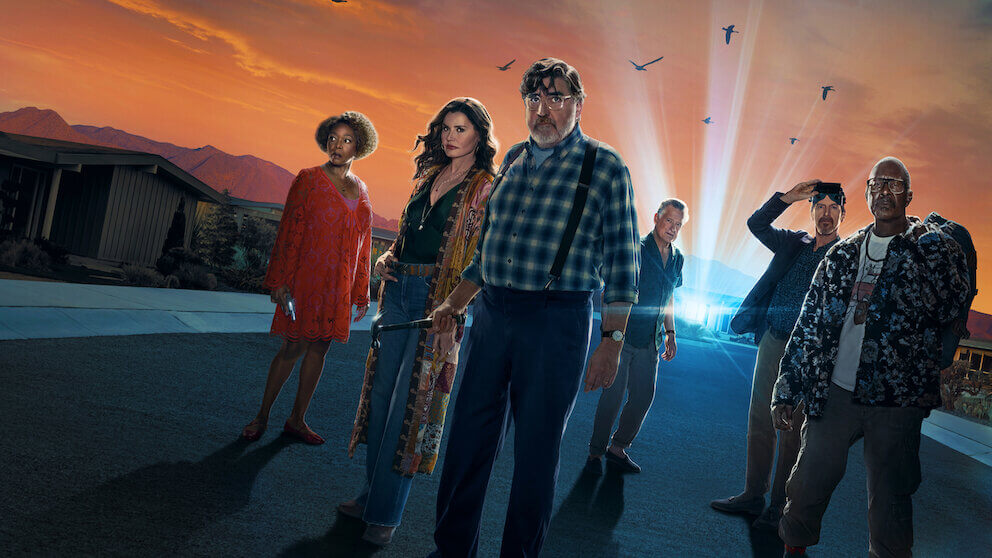
Ever since “Stranger Things” became a cultural phenomenon, fans have eagerly followed the Duffer Brothers’ next moves. Now that their latest project, “The Buroughs” has been released viewers are tuning in to see if the creators can recapture the winning formula that made “Stranger Things” such a hit: a clever blend of pop-culture references, nostalgic charm, and just the right dose of supernatural mystery.
In contrast to “Stranger Things,” “The Buroughs” features a very different group of unlikely heroes: a motley group of septuagenarians relegated to a retirement community located deep in the American southwestern desert. As a result of using older protagonists, the series directly challenges the notion that old age inevitably means decline and that youth is something to be clung to. The shows’ candid discussions about death, loss, regret and mourning are seamlessly injected into the storyline, bringing such important topics even closer to mainstream attention and acceptance.
What “The Buroughs” Is About
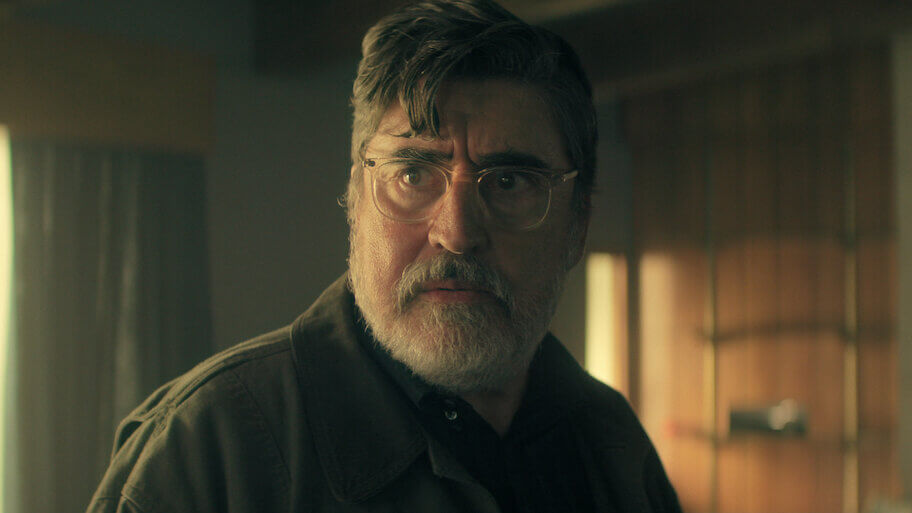
Alfred Molina plays Sam Cooper, a gruff, retired aeronautical engineer whose wife, Lily (Jane Kaczmarek) has recently died of a stroke. Forced to move into The Buroughs because of a contract Lily had talked him into, Sam is bitter, resentful of having to live in a sanitized and closely-monitored (“for your safety and comfort!”) village that he refers to, at one point, as “God’s waiting room.”
Before too long, Sam discovers that this retirement haven was, indeed, too good to be true. He accidentally discovers an otherworldly threat that is stalking their neighborhood, and embarks on a quest – along with his neighbors – to fight for survival.
The Impact of Profound Grief
[Warning: Spoiler alerts abound! Please read with caution!]
By the end of the first episode, it quickly becomes clear that some of Sam’s more off-putting moments are as much a result of his unprocessed grief as his cantankerous nature. When his new neighbor, Bill Pullman’s charismatic Jack, pushes Sam to attend a welcome bar-b-que, socializing proves too much for Sam – still in the raw stages of grief – and he breaks down, crying out from his front porch, “My wife is dead!” Jack comforts him by saying, “Grief makes your past feel too close to your future.”
This moment, which is easily overlooked at the time, becomes the overarching premise of the show. Sam’s frequent flashbacks revealing his wife’s death aren’t just a result of his recent bereavement. In an interview with Netflix’s Tudum, showwriter Jeffrey Addiss revealed that Sam’s consciousness has been split by grief, allowing the supernatural creature known as Mother to communicate with him.
“He’s always stuck in the moment that he lost Lily, so he’s got a foot in two different times,” he explained. “He’s here with you, but he’s always, in some way, with her, holding onto that moment because of the loss. That’s how much he loved her. And so his experience of time is a little bit fractured.”
As the show and its characters evolve, Sam’s grief for Lily doesn’t abate, but it does become more manageable. “If Sam’s arc is about going from not accepting that death is part of life to embracing it, then he starts in a very sad place, missing Lilly,” Addiss’ showwriter partner Will Matthews told Tudum. “We thought [the way] to help complete that arc—to heal that wound and create a little closure—[was] to give him this magical moment,” [the scene that concludes the series, which we won’t give away.]

Choices by Show Writers Hold Up a Mirror To Society
Featuring an A-list ensemble of stars like Geena Davis, Bill Pullman and Alfre Woodard, “The Buroughs” taps into a familiar sci-fi/horror pastiche, but from a perspective not often seen from Hollywood. In many such films children are the protagonists, capable of seeing what adults cannot, and operating “under the radar” in their quests because society largely ignores their input. But in “The Buroughs,” that concept is flipped, reflecting how our society undervalues seniors with pointed criticism.
When Sam and his neighbors uncover the truth about The Boroughs, they can’t just broadcast it to the authorities or the media, because nobody would believe them. Where a child would simply be discounted, Sam and his friends run the additional risk of being diagnosed with senility or dementia, and they’d find themselves prisoners in The Manor – the community’s pastel-hued memory ward that hides the CEO’s sinister machinations.
In this way, the show hints at the fact that our habitual suppression and manipulation of older voices might be even more terrifying than the actual monsters. As Jennifer Ouellette points out in her review for Ars Technica, the retirement community setting “lends itself naturally to delving into themes of grief, aging and fear of death, with the monster serving as a central metaphor—although the characters find themselves grappling with who the real monsters might be.”
As a result, viewers are forced to rethink their attitudes toward older people; if the main characters we’re rooting for “can remain perceptive, brave and capable in a world that has already written them off,” Greer Riddell wrote in her review for entertainment website Collider, “then aging itself becomes less frightening.”
May We Suggest:
 Beyond the Five Stages: Grief Theories in the Modern Age
 How to enhance your life by embracing death? (Interview)
 Survivors Are Breaking the Taboos Around Disenfranchised Grief
-

Grief doesn’t end with age, and neither does courage. Stories like this remind us that every stage of life still holds purpose, love, and the capacity to grow.



Leave a Reply