


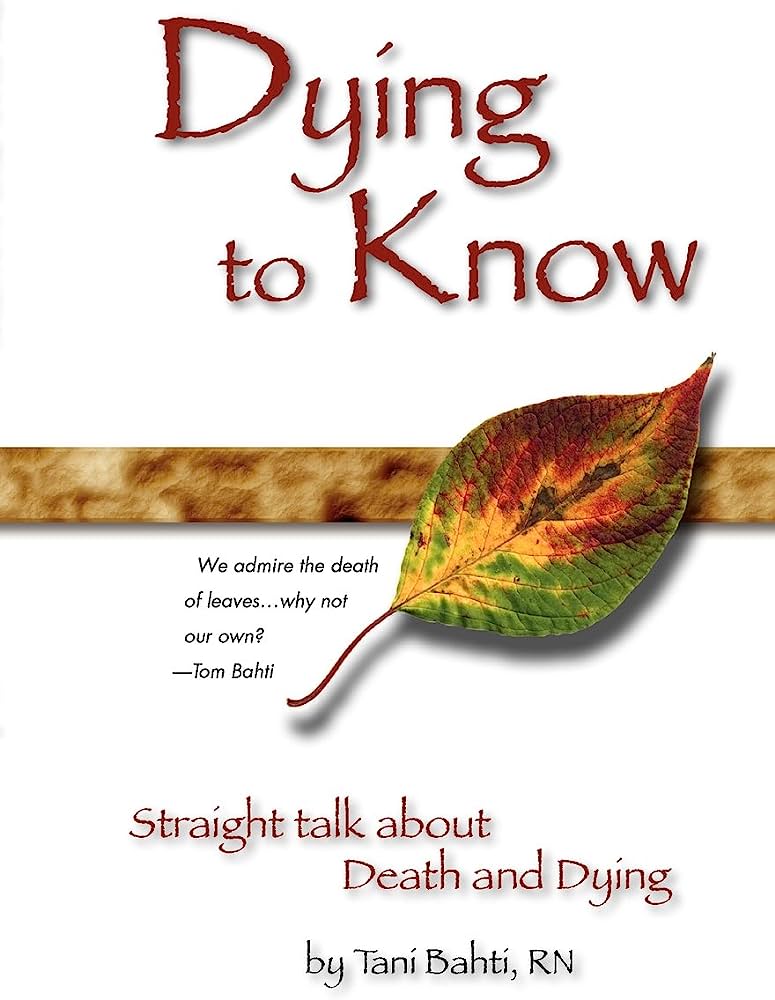
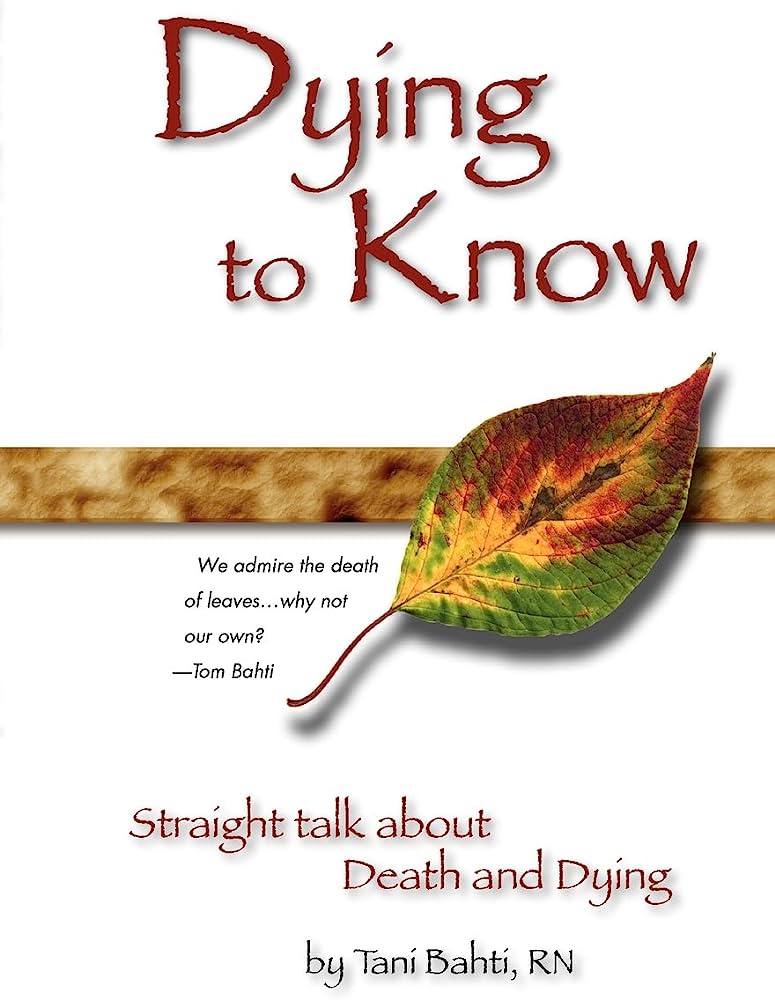
“Dying to Know, straight talk about death and dying”After all these years of research I was “Dying to Know” and a book by that name offers “straight talk about death and dying”
Dear Tani, I need to thank you for crafting the most important book I have ever read about what truly happens as our bodies move through the natural process of dying. Bless your sweet heart and all your years of dedication to hospice as you sat by the bedsides of so many in their final…

Dear Tani,
I need to thank you for crafting the most important book I have ever read about what truly happens as our bodies move through the natural process of dying.
Bless your sweet heart and all your years of dedication to hospice as you sat by the bedsides of so many in their final moments of life. Thank you for your wisdom, insight, experience and for sharing them all with me so generously. Most important, finally, you – Tani Bahti – have demystified what will happen when I die and helped me understand what to expect during the active dying process. What a sigh of relief!!
Your book Dying to Know: Straight Talk About Death and Dying feels as though it were written specifically for me, explaining the realities of dying with clarity and honesty. I especially appreciate that you never belabor the point or sugarcoat the process. The short, succinct chapters get right to the heart of things without leaving anything unexplored. My goodness—you even write about sex for the dying. And I agree: life doesn’t stop until we are dead.
I had already sensed that as my body continues to fail, it might challenge my ego. Your chapter, “No Need to Lose Your Dignity,” helped me understand that dignity “has nothing to do with whether you are able to wipe your own face or behind.” You wrote about witnessing “the amazing grace of countless patients who let go of their previous self-image and focused on what was most important—giving and receiving love.” I understand that now.
Tani, I have a few confessions. One thing that always confused me was pain. I wondered why, despite modern medicine, I had still heard of people suffering unbearable pain at the end of life. It puzzled me deeply. Your explanation helped me understand the rare cases of “intractable pain,” and it gave me the confidence to insist on more pain medication if I’m uncomfortable—unless, of course, my condition happens to be one of those rare situations.
Your chapter “The Line in the Sand” is also one of the best discussions I have read on the subject of aid in dying. It is such a difficult topic, yet your story about Tom’s process and his determination “to take those little pills” if his cancer became too much brought so much clarity. It helped me see how fragile that line in the sand truly is, and how our sense of what is “normal” shifts along with our bodies as we near the end of life. It gave me a great deal to reflect on.
What a gift it was to learn from you about the natural ways our bodies begin to shut down—how thirst, appetite, and even bowel movements change. Your honest guidance about why we might not want medical intervention in many of these situations was, quite frankly, invaluable.
I will recommend this book endlessly. In fact, just last week I suggested it to someone new to hospice work, and they were thrilled to discover such a resource. I loved your many stories and the quotes you included throughout.
This has become my go-to book—the one I will read again and again. It’s the book I will keep close someday when I sit beside my parents, hopefully a very long time from now.
For so long I have lived with this great mystery looming over my head. Writing this letter felt like the best way I could thank you, dear Tani.
A big hug,
Suzette
Founder, SevenPonds
Buy This Book
Buy this book from Amazon. We earn a small commission at no cost to you.
As an Amazon Associate, we earn from qualifying purchases.
May We Suggest:
 “Medical Aid in Dying: A Guide for Patients and Their Supporters”
 “The Craft of Dying: The Modern Face of Death”
 “Sacred Dying”
-

Wow a great recommendation to stumble on when searching online. My mom is dying and I will indeed purchase this book. Great website and I will be checking back. This is much needed.



Leave a Reply