


What Is Traumatic Grief? (Interview)An interview with psychologist, grief counselor and educator Dr. Joanne Cacciatore
Today SevenPonds speaks with Dr. Joanne Cacciatore, Ph.D. a psychologist and educator who specialize in helping clients navigate the experience of traumatic grief, especially in the wake of the death of a child. The founder of the MISS Foundation, an international nonprofit which provides counseling, advocacy, research and education to bereaved families, she is a…

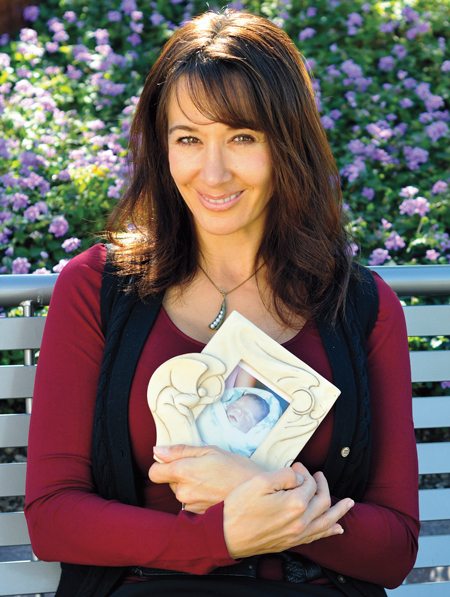
Credit: raisingarizonakids.com
Today SevenPonds speaks with Dr. Joanne Cacciatore, Ph.D. a psychologist and educator who specialize in helping clients navigate the experience of traumatic grief, especially in the wake of the death of a child. The founder of the MISS Foundation, an international nonprofit which provides counseling, advocacy, research and education to bereaved families, she is a professor at Arizona State University and the author of several books, including the critically acclaimed “Bearing the Unbearable: Love, Loss and the Heartbreaking Path of Grief.” Dr. Cacciatore is also the founder of the Center for Loss and Trauma and the Selah House Care Farm and Respite Center in Sedona, Arizona. Perhaps most importantly, she is the mother of five children, “four who walk, and one who soars.”
Editor’s note: This interview has been edited for length and clarity.

Kathleen Clohessy: Thank you so much for speaking with me today, Joanne. I know you’re very busy!
Joanne Cacciatore: You’re welcome!
Kathleen: So, I want to talk with you a bit about your book, “Bearing the Unbearable,” which I absolutely loved. But first I wanted to ask you about something I just learned about — something you’re doing in connection with the MISS Foundation called the Care Farm. Can you tell me a little about what that is?
Joanne: Sure! The care farm concept actually originated in Europe, where there are thousands of care farms operating today. The concept is deceptively simple. People benefit physically, psychologically and spiritually from being outdoors in the sunshine, performing hard physical labor and connecting with animals, especially animals who have been traumatized and abused. On a care farm, people with no farming expertise participate in these activities while also receiving psycho-education, counseling and support. In Europe and the U.K., care farming has been very successful in helping vulnerable groups, such as prisoners, people with mental health disorders and those struggling with substance abuse. But our center is the first in the world to implement a program of care farming for traumatic grief.
Kathleen: That sounds fascinating! Is it a live-in program or do people just visit the farm?
Joanne: Right now we offer a day care program; overnight accommodations are limited to one family. But our goal is to create a facility that can accommodate several families at a time. In fact, we are now in the process of building the Selah House Care Farm and Respite Center, which will allow us to do just that. Thus far we’ve raised about $76,000 towards the project. But we’re still a ways from our goal. We need about $500,000 to complete the work.
Kathleen: What does the current program consist of?
Joanne: There are three aspects to the program. The first is creating connection, which happens when our grieving clients care for our rescue animals. Right now we have four horses, seven sheep and four dogs on the farm. All were rescued from situations where they endured horrible abuse and neglect. Our clients empathize with the suffering these animals have gone through, and the animals, for their part, accept our clients just as they are. That creates an incredible connection. And connection is what sustains us in life. It is what allows us to be more human, more compassionate, more loving and, ultimately, more able to open our hearts to our grief.

Credit:facebook.com/SelahHouseCarefarm
The second part of the program focuses on physical well being. Working on the farm, our clients get out in the sunshine and do really hard, physical labor, which is good for both the body and the mind. We also focus on good sleep hygiene. Many people who have experienced grief and trauma have difficulty sleeping, yet sleep is central to physical and emotional health. So we work with them on strategies to improve their sleep quality. One of these, of course, is being physically tired from working on the farm.
The last aspect is contemplative practice — which includes things like meditation, yoga, and barefoot hikes through the mountains around Sedona. And, of course, we provide individual counseling as well.
Kathleen: What a wonderful program! How can our readers learn more about it?
Joanne: Anyone who wants to learn more about the program can visit the Center for Loss and Trauma online. The website has a lot of information about the Care Farm and what we do there. There are photos of the center and several videos that provide some background about me, the families I work with, our rescue animals and how it all came to be.

Credit: raisingarizonakids.com
Kathleen: Great! Now I’d like to shift gears a bit and ask you about your work. You specialize in “traumatic grief.” What exactly does that mean? Isn’t all loss and grief traumatic?
Joanne: All loss is painful but not necessarily traumatic. For example, imagine that your 90-year-old grandmother is dying of cancer. The disease has progressed slowly and she is reaching the end of her life. Her family is gathered around her; her pain is well-controlled. She isn’t suffering. When she dies, her family will be sad and they will miss her. But they will have the comfort of knowing that she experienced what most of us would call a good death.
Now imagine instead that this same 90-year old grandmother was found murdered in her bed — how different that would feel. That’s the difference between grief and traumatic grief.
Kathleen: So traumatic grief typically follows an unexpected or particularly violent death?
Joanne: Yes: Any sudden or unexpected death, violent or disfiguring death, homicide, suicide, or death that follows prolonged suffering can provoke traumatic grief. And the death of a child of any age from any cause is always traumatic for the parents. It doesn’t matter whether the child is a newborn or 50 years old.
Kathleen: How does the experience of traumatic grief differ from “ordinary” grief?
Joanne: Traumatic grief is shocking in its intensity, so much so that it overwhelms the person’s ability to cope. Any death is disorienting, and all grief causes a certain degree of disequilibrium. But traumatic grief permeates every aspect of our being. We feel uprooted, and insecure, and our trust in the world as we once knew it is gone. It is loss so unbearably painful that the grieving person simply can’t adapt without an enormous amount of support.
This concludes the first part of our interview with Dr. Joanne Cacciatore, Ph.D. Please come back next week for part two, when we talk to Joanne about how our grief-and-suffering averse culture compounds traumatic grief.
Today SevenPonds concludes our interview with Dr. Joanne Cacciatore, Ph.D. a psychologist and educator who specialize in helping clients navigate the experience of traumatic grief, especially in the wake of the death of a child. The founder of the MISS Foundation, an international nonprofit which provides counseling, advocacy, research and education to bereaved families, she is a professor at Arizona State University and the author of several books, including the critically acclaimed “Bearing the Unbearable: Love, Loss and the Heartbreaking Path of Grief.” Dr. Cacciatore is also the founder of the Center for Loss and Trauma and the Selah House Care Farm and Respite Center in Sedona, Arizona. Perhaps most importantly, she is the mother of five children, “four who walk, and one who soars.”
Editor’s Note: This interview has been edited for length and clarity.
Kathleen Clohessy: Why do you think our culture is so grief averse? Why is it that we cannot be fully present with our own or others’ grief?
Joanne Cacciatore: I believe our culture is very fearful of painful emotions. We are so caught up in the idea that life is all about the “pursuit of happiness” that we seek only pleasant experiences and “feel good” emotions. We are terrified of pain and suffering, and when we see it in others we want to “fix” it and make it go away. This is especially true when we are faced with an unthinkable tragedy like the death of a child.
Kathleen: But what drives this aversion? What’s wrong with us that we run away from suffering in this way?
Joanne: That’s a great question. Ernest Becker tackled it in his book, “Denial of Death” in which he posits that fear of death is what drives most human behavior. And I believe that extends to the fear of grief. When we are confronted with another person’s suffering, we’re forced to look at our own fear of loss. And it’s terrifying to consider that much pain. So we push it away. That’s one of the reasons I started the MISS foundation — to help educate and raise awareness about the need to provide ongoing support to those who have a lost a child in a compassionate, accepting, non-medicalized way.
Kathleen: How does the fear of grief affect us as human beings?
Joanne: When we cut ourselves off from negative emotions and what we perceive as negative experiences, we cut ourselves off from a part of ourselves. We become a contracted version of the people we are meant to be. Even as we’re working so hard to be “happy,” we’re separating ourselves from the full range of human experience, including the experience of deeply felt joy.
On the other hand, when we allow ourselves to fully inhabit our grief, our hearts break open, and we are able to open to the suffering of those around us. We connect to the entire universe in a completely different, much more authentic way.
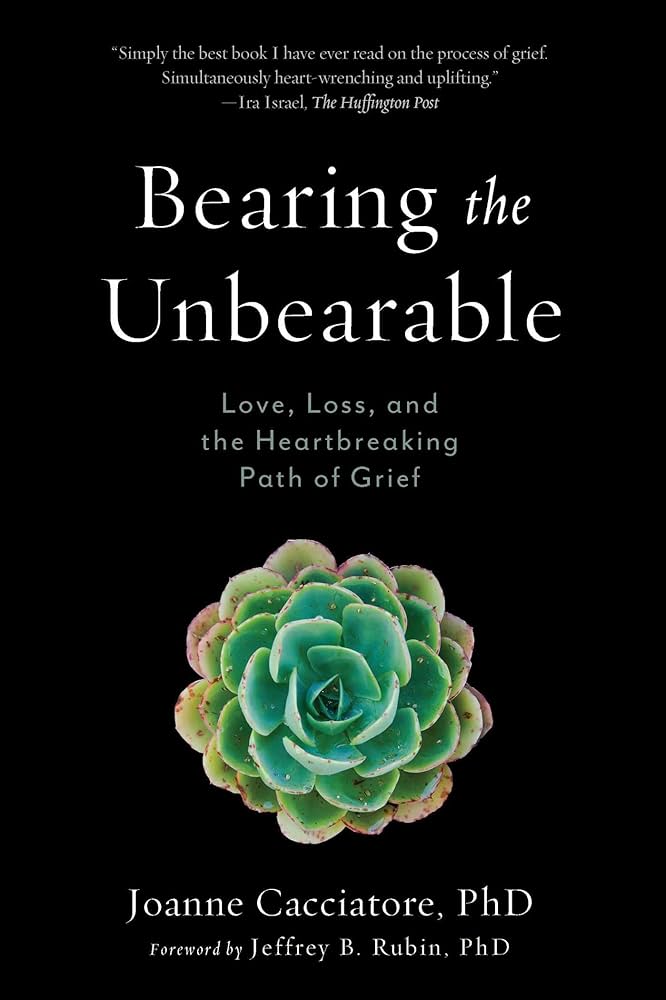
Kathleen: In your book, “Bearing the Unbearable” you talk about clients you’ve worked with who have lived with traumatic grief for many years. And many of them had gone to great lengths, psychologically and behaviorally, to escape their pain. Can you talk about that a little bit?
Joanne: Sure. When people come to me, they have very often been suffering terribly for a very long time because they have never been supported in a way that allows them to fully inhabit their grief. They’ve been told that it was time to “move on.” They’ve been told that their grief had gone on for too long; that is was time to “get over” their loss. Of course, this advice was impossible to follow, and it left them feeling alone and isolated at a time when what they most needed was connection and support.
Ultimately, many people in traumatic grief who don’t get the support they need turn to self-destructive behaviors to numb the pain. I had one aging client who had been engaging in multiple self-destructive behaviors for 46 years after the death of her child. Finally, she decided that she didn’t want to end her life the way she was living it, and she reached out to me for help.
Kathleen: What are your thoughts on the concept of “pathological” or “complicated” grief? Do you think there is a “typical” timeline for grief and when a person exceeds that time frame their grief becomes “abnormal”?
Joanne: No I don’t. Everything in life happens in context, including grief and loss. Going back to the example of a 90-year old woman who dies peacefully in her sleep versus being murdered in her bed, context matters. Saying that “normal” grief lasts six months to two years or that grieving longer than that is pathological ignores context completely. What were the circumstances of the loss? Was it a traumatic death? What was the person’s support system like? Those are just some of the contextual issues that impact a person’s experience with grief.
The psychiatric community has been trying to medicalize grief for a long time, and has recently assigned certain grief behaviors ICD and DSM codes. I see this as very unfair and unhelpful. Grief is not linear or acontextual. It is an individual experience, and everyone who grieves needs compassionate acceptance and ongoing support.
Kathleen: What advice would you offer to someone who is suffering from traumatic grief or who knows someone who is suffering and wants to help?
Joanne: First, I would tell them to find a really good counselor. The MISS Foundation offers a certificate program in Compassionate Bereavement Care to providers and we provide a directory of certified professionals on our website. So I would recommend that anyone who needs help with traumatic grief start there.
I would also encourage them to seek out a “green care” provider, someone who integrates the concepts of care farming into their model of care. Encouraging the family to participate in counseling is also important, since traumatic grief involves the entire family unit, including siblings and grandparents.
Bibliotherapy can also be very helpful. Reading about the experiences of others helps people who are grieving realize that they are not alone and that their feelings are far from unusual or unique. Attending a grief retreat can have the same effect. It’s so beneficial for grieving people to connect to others who have suffered a traumatic loss. It creates a positive feedback loop of compassion and support.
Kathleen: What about the concept of “self care”? You talk about that quite a bit in your book too. Can you explain what that is and what it involves?
Joanne: Sure. Self care is “self compassion in action.” It’s about being kind to yourself and caring for yourself in a really conscious way: Being outside; taking walks; getting enough sleep; writing about your feelings; doing what you love to do…these are all examples of compassionate self care. For some more examples, take a look at Ideas for a Self-Care Strategy on my website JoanneCacciatore.com.
Kathleen: Joanne, I would love to talk with you for another few hours, but I think you’ve got other work to do. Thank you so much for taking the time to speak with me and sharing your knowledge with our readers. It’s been a pleasure!
Joanne: You’re very welcome.
May We Suggest:
 Beyond the Five Stages: Grief Theories in the Modern Age
 How Can People Overcome the Effects of Trauma in Their Lives? (Interview)
 Survivors Are Breaking the Taboos Around Disenfranchised Grief



Leave a Reply