


What Is Urban Zen Integrative Therapy? (Interview)An interview with Menna Olvera Feder, then Program Director of Urban Zen Integrative Therapy (2018), (Intervew)
TIn this 2018 interview, SevenPonds spoke with Menna Olvera Feder, then Program Director for the Urban Zen Integrative Therapy Program (UZIT). A yoga teacher and Urban Zen integrative therapist, Menna studied under Rodney Yee and Colleen Saidman Yee, who, along with designer and philanthropist Donna Karan, started the Urban Zen Foundation in 2009 following the…

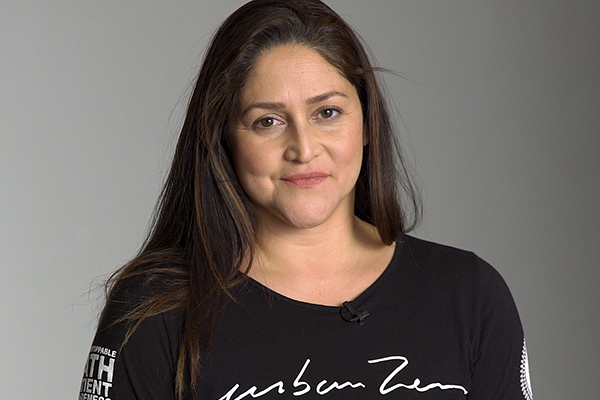
TIn this 2018 interview, SevenPonds spoke with Menna Olvera Feder, then Program Director for the Urban Zen Integrative Therapy Program (UZIT). A yoga teacher and Urban Zen integrative therapist, Menna studied under Rodney Yee and Colleen Saidman Yee, who, along with designer and philanthropist Donna Karan, started the Urban Zen Foundation in 2009 following the death of Donna’s husband Stephan from cancer. The goal of the program is to provide an approach to healthcare that treats “the patient, not the disease” by integrating traditionally Eastern healing modalities with Western medicine.
Editor’s note: This interview has been edited for length and readability.
Kathleen Clohessy: Hi Menna. Thanks for speaking with me today! Can I start out by asking you a little about your background and how you became involved with UZIT?
Menna Olvera Feder: I first heard about the idea in 2007, at a Well Being Initiative hosted by the Urban Zen folks. It was a 10-day conversation among patients, doctors, nurses, yoga instructors and various alternative healthcare practitioners about changing the paradigm of Western medicine to more holistic, patient-centered care. I wasn’t even a yoga teacher at the time, but I really wanted to be a part of what was happening there, so I began to study yoga. After receiving my certification, I applied to the UZIT program, but I wasn’t accepted the first time around. It actually took me about 4 years to get my foot in the door!
Kathleen: What exactly is Urban Zen Integrative Therapy?
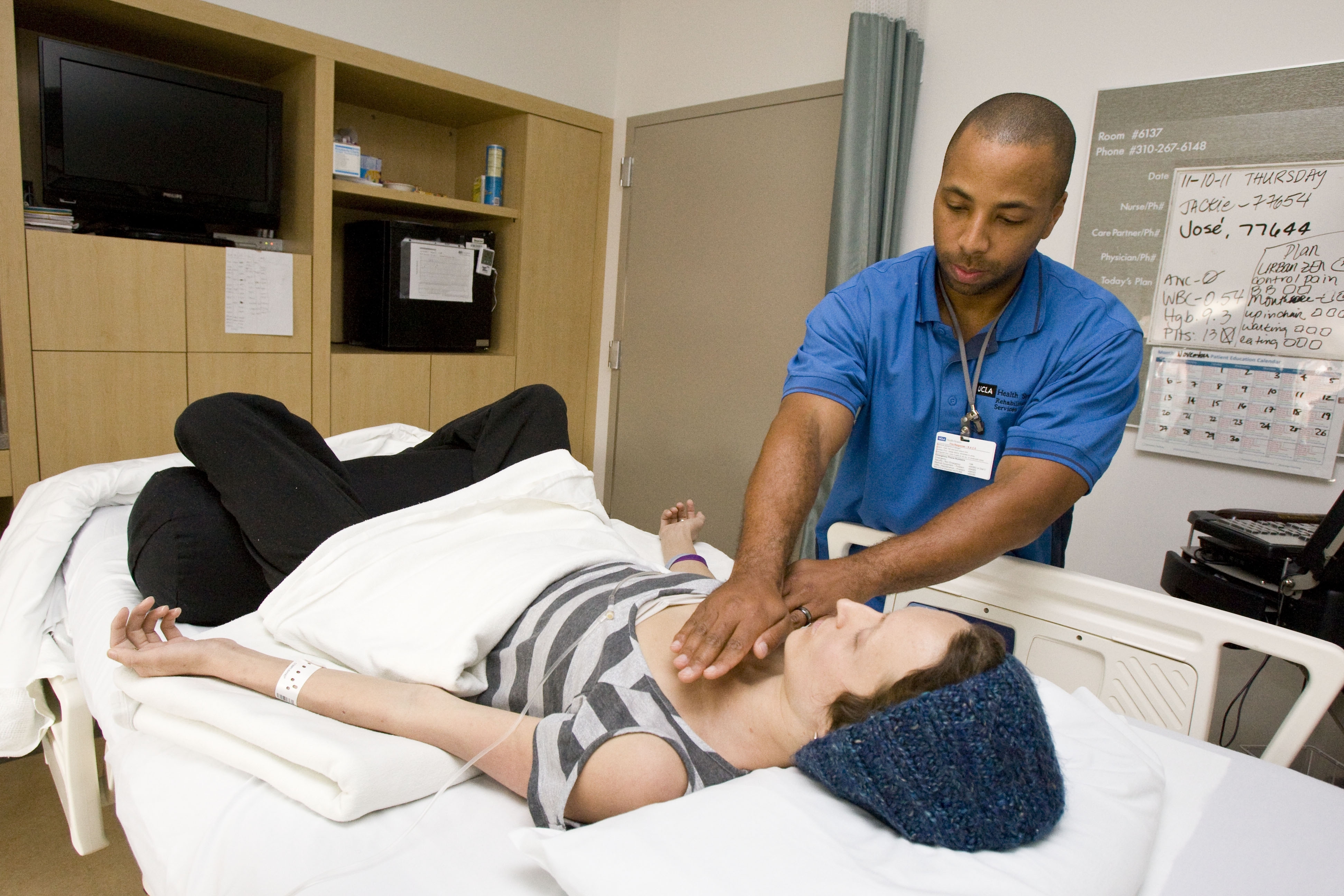
Menna: Urban Zen Integrative Therapy is an approach to health care that integrates five healing modalities: yoga, essential oils, Reiki, nutrition and contemplative care. It’s practiced somewhat differently in hospitals and in the community. In hospitals, where it is used primarily to manage symptoms associated with serious illness, the modalities are often used together: for example, essential oils paired with Reiki or yoga. In the community, UZIT is more of a self-care model in which people are taught how to use UZIT techniques to better care for themselves and manage stress.
Kathleen: What sort of symptoms does UZIT address?
Menna: Urban Zen integrative therapy can help manage many symptoms of disease, but those we address most regularly are pain, anxiety, nausea, insomnia, constipation (PANIC ™) and exhaustion — all of which are very common symptoms of patients undergoing treatment for cancer and other life-limiting illnesses. We sequence the various modalities in very specific ways to address symptoms or groups of symptoms. For example, restorative yoga poses combined with essential oils can address both pain and constipation.
Kathleen: How can a seriously ill person practice yoga?
Menna: Obviously, a person who is hospitalized with a serious illness can’t get down on a yoga mat and do a downward dog! But there are many ways that UZIT therapists help patients to assume poses that restore and heal…positioning them properly and propping them up with pillows, for instance. We also teach a variety of breathing techniques that work to calm, restore, or energize the patient, depending on what the person needs at the time.
Kathleen: Do you use UZIT with patients only or is it helpful for caregivers as well?
Menna: UZIT isn’t exclusively for people who are ill…not at all. In the hospitals we partner with, caregivers receive training on not just on how to integrate the UZIT model into their patient care, but also how to use it to practice self care. In fact, self-care is one of the core tenets of the UZIT philosophy. You can’t fill a bucket from an empty well. In order to provide the best care for your patients, you need to care for yourself first,
Kathleen: Are you in partnership with many hospitals right now?
Menna: Yes! Our first pilot program was at Beth Israel Medical Center in 2008 on a 24-bed medical oncology unit. Beth Israel was bought by Mount Sinai Health Systems in 2013, so that program no longer exists. Nevertheless the results of our research were profound. For example, the data showed that UZIT saved about $500 in medication costs for each patient, or $156 per patient per day. That adds up to about $1 million in cost savings per year.
Based on that initial success, we were able to move on to other providers across the country, including UCLA Medical Center, Northwell Health’s gynecology oncology program, and several providers in the Chicago area. At UCLA alone we have trained over 300 doctors, nurses and staff in UZIT.
Kathleen: Do you work with other non-hospital care providers too?
Menna: Yes. One of our most exciting partnerships at the moment is with CareRite Centers, a healthcare company that buys and refurbishes nursing homes, turning them into high-end rehabilitation centers that provide immersive patient-centered care, primarily to the elderly. CareRite currently has 26 facilities across five states, and we are partnering with them in 10 of those locations, and will be in five more within the next six months.
Kathleen: Do you use UZIT for patients with dementia and/or those at the end of life?
Menna: Yes. And we are finding that the UZIT has a significant impact, especially in people with Alzheimer’s and dementia. The contemplative care aspect is also an important adjunct for people at the end of life. Our therapists support the patient during the dying process, sit vigil with the family and bear witness to the transition. It’s a very powerful tool.
Kathleen Clohessy: It sounds like Urban Zen Integrative Therapists are very skilled in many different disciplines. How does one become a therapist and what is the training like?
Menna Olvera Feder: UZIT training is multidimensional, as you might expect. It begins with a 2-and-a-half day training on self-care, which is geared towards the average person. Then, there is a 7-day Level I certification course for medical and allied healthcare professionals such as yoga therapists, Reiki practitioners, doctors and RNs. Then the advanced level program includes a total of 12 in-person training sessions that cover the five core modalities — yoga, essential oils, Reiki, nutrition and contemplative care. Therapists learn how to teach patients chair and in-bed restorative yoga poses and how to use mindful movements and breathing techniques to improve symptom control. They also receive Level I Reiki training, and learn how to integrate about a dozen essential oils, such as lavender, lemon, peppermint and some special blends, into their practice. There are also classes in nutrition and contemplative care, which includes mindfulness and other skills needed to stay calm and present in the midst of suffering and death.
In addition to the in-person trainings, the Urban Zen therapist-in-training needs to complete 18 practice sessions with friends or family, and a minimum of 50 clinical hours, some of which are with a mentor, some of which are with another trainee or on their own.
Lastly, they have to complete a three-day silent retreat.
Kathleen: That is intense! Do people have to travel to the Urban Zen Center in New York for the trainings or are they available elsewhere?
Menna: In the beginning all of the trainings happened at the Urban Zen Center, but we now have a network of training centers across the United States. Right now there are several locations in California (including UCLA); one in Naperville, Illinois, outside of Chicago; and one in Columbus, Ohio. We will also be establishing a training center in Boulder, Colorado, in 2019.
Some of our centers also offer drop-in classes for the public, which focus on different aspects of self care. If your readers are interested, they can find a list of locations on the Urban Zen website under Training Programs/Find a Class.
Kathleen: I’d like to switch gears just a bit now and talk a bit about the Urban Zen Foundation. What is it and how did it come about?
Menna: Sure. As you probably know, the Urban Zen Foundation is a nonprofit that was founded by fashion designer Donna Karan following the death of her husband, Stephan Weiss. Stephan lived with lung cancer for seven years, and both he and Donna were determined that his legacy would be something that would change our approach to healthcare in a very meaningful way. What came out of that were three related initiatives, UZIT, Preservation of Culture and Education.
Kathleen: The Foundation has done a lot of work in Haiti and other impoverished countries. What does that entail and how does it integrate with UZIT?
Menna: Donna is definitely a forward-thinker, and she has been working with artisans in Africa, Haiti, Guatemala and other parts of the world for years to help them to create items that can be resold. The goal is to support the local economy, fund education and healthcare and preserve the unique culture or the region at the same time. She’s even taken students from the Parson’s School of Design with her on many of these trips to help generate ideas for how to turn local crafts into sellable products.
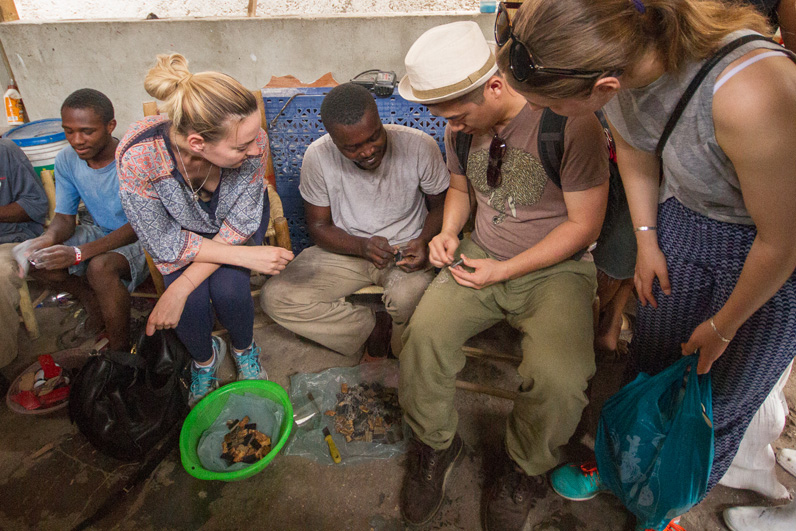
Credit: newschoolnews.edu
At the same time, the Foundation has also sent UZIT therapists to Haiti to train local healthcare practitioners in UZIT techniques. As you might imagine, the resources available in the hospitals and clinics there are extremely limited. So having UZIT in their toolbox is an invaluable resource.
The trainers also go into the local schools and teach children yoga and other techniques that integrate mind-body-spirit awareness into their lives at a young age. It’s all about changing the way we look at health and wellness, both on an individual level and in our communities.
Kathleen: What a wonderful program!
Menna: Yes it is!
Kathleen: Is there anything else you would like to share with our readers before we close?
Menna: I’d just like to emphasize that Urban Zen Integrative Therapy is not just for people who are sick or people working in healthcare. Anyone can learn UZIT self-care techniques; you don’t need to know yoga or have experience in mindfulness to do it. And, once you have the skills in your toolbox, you can practice them anywhere, anytime. It’s a wonderful way to manage the stress and anxiety that we all experience from time to time.
Kathleen: Thank you so much, Menna. It’s been a pleasure speaking with you.
Menna: You’re very welcome!
This article has been updated from its original publication as of July 2026 to reflect the most current information.
May We Suggest:
 How Can Yoga Help Us Confront Death? (Interview)
 How Can People Overcome the Effects of Trauma in Their Lives? (Interview)
 What Is Pediatric Massage Therapy? An Interview with Tina Allen: Part One (Interview)





Leave a Reply