

Stem Cell Research Bioethics

Jump ahead to these answers:
- How Has Stem Cell Research Benefited Humanity?
- What Is Stem Cell Research and Why Is It Ethically Controversial?
How Has Stem Cell Research Benefited Humanity?
July 7th, 2025Stem cell research has resulted in significant advancements to medicine, from its first inception with bone marrow transplants in the 1960s to more rapid progress within the last couple of decades. Stem cells are capable of developing into different types of cells, allowing them to be used to treat a wide range of diseases and disorders. Studying how stem cells mature into bone, nerves, heart muscle, organs, and other tissues can also help researchers learn about how disease develops.
In regenerative medicine, stem cells can be used to replace or repair damaged tissue and organs, which is revolutionary in the treatment of various cancers. Stem cell research has also shown promise in treating conditions like Parkinson’s, heart disease, diabetes, stroke, spinal cord injury, blindness, autoimmune disease, and more. Research is also underway to better understand how stem cells can be used in tissue engineering and 3D bioprinting of organs — advancements on this front would greatly relieve the heavily burdened organ transplant system.
Stem cell therapy and cancer
Using stem cells to treat certain types of cancer, doctors can mitigate the risk of the cell-damaging side effects associated with chemotherapy and radiation, and in certain cases, treat cancer cells directly. The stem cells used for transplants come from bone marrow (either the patient’s or someone else’s), the bloodstream (the patient’s or someone else’s), or the umbilical cord of a newborn.
Many cancers start in bone marrow or spread to it, including leukemia, lymphoma, and multiple myeloma. Stem cell therapy for cancer replaces a patient’s own stem cells that have been destroyed or damaged by cancer, radiation, or chemo. By transplanting healthy stem cells, a medical team can use much greater doses of chemo to attack the cancer, as the healthy cells will continue normal growth and reproduce cancer-free cells.
Another type of cancer-treating stem cell therapy is known as the “graft-versus-cancer” effect, which uses stem cells transplanted from someone other than the patient. Donated cells are usually more able to seek and kill cancerous cells than the patient’s own immune cells. The “graft,” aka donated stem cells, helps destroy cancer cells along with encouraging the growth of normal cells in bone marrow.
Sources
“How Stem Cell and Bone Marrow Transplants Are Used to Treat Cancer”. American Cancer Society. https://www.cancer.org/cancer/managing-cancer/treatment-types/stem-cell-transplant/why-stem-cell-transplants-are-used.html
“Regenerative Medicine”. Association for the Advancement of Blood & Biotherapies. https://www.aabb.org/news-resources/resources/cellular-therapies/facts-about-cellular-therapies/regenerative-medicine
“Introduction to Stem Cells”. National Institutes of Health. https://stemcells.nih.gov/info/basics
“Stem Cells”. What is Biotechnology? https://www.whatisbiotechnology.org/index.php/science/summary/stem/stem-cells-repair-tissues-and-regenerate-cells
“Stem Cells: What they are and what they do”. Mayo Clinic. https://www.mayoclinic.org/tests-procedures/bone-marrow-transplant/in-depth/stem-cells/art-20048117
What Is Stem Cell Research and Why Is It Ethically Controversial?
July 7th, 2025Embryonic stem cells (also known as pluripotent stem cells) are immature, undifferentiated human cells that have the capacity to develop into almost any type of cell (e.g. nerve cell, bone marrow cell, pancreas cell, muscle cell). They also have the unique ability to reproduce almost indefinitely, even after long periods of inactivity, both in the body and in the lab.
According to the National Institutes of Health, one of the main goals of stem cell research is to study how undifferentiated embryonic stem cells differentiate into cells that form tissues and organs. Understanding this process is key to finding the answers to many different diseases, including those caused by errors in cell division, such as cancer.
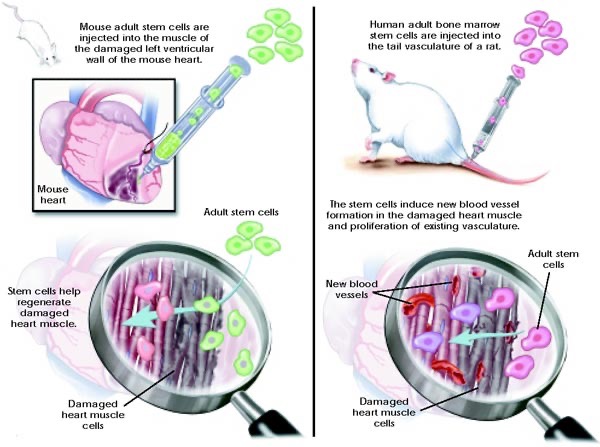
Another goal of stem cell research is to develop cell-based therapies, in which stem cells are induced to develop into a specific kind of cell. The stem cells are then injected into an ailing organ (such as a damaged spinal cord or failing heart) to stimulate the growth of healthy cells. These types of therapies have the potential to treat and possibly cure many different conditions, including diabetes, heart disease, macular degeneration, spinal cord injuries, burns, arthritis, and ALS, to name just a few. (See graphic below)
The main ethical dilemma surrounding stem cell research is the fact that the pluripotent stem cells are derived from human embryos, which are destroyed in the process of extracting the cells. These embryos are extraordinarily immature, 100-cell blastocysts that are typically about 3-4 days old. They have no neural tissue, that is, no spinal cord or brain (these do not develop until the embryo is 14 days old). Nevertheless, some opponents of stem cell research believe that, because they could develop into a fetus if implanted in a uterus, destroying them is tantamount to destroying a human life.
Since its inception in the 1990s, embryonic stem cell research has been the subject of a great deal of legal wrangling, legislation, and policy-making by the Executive Branch. However, after years of steady controversy, in 2013, the legality of stem cell research was decided by the Supreme Court. In a landmark decision, the court ruled that a 1995 law prohibiting the use of federal funds for research that involves the creation or destruction of human embryos (the Wicker-Dickey Amendment) does not apply to research performed using stem cells harvested by private institutions and later obtained by the NIH or its grantees.
Sources
“Introduction to Stem Cells.” National Institutes of Health. https://stemcells.nih.gov/info/basics
“Stem Cell Policy Timeline”. Research America. https://www.researchamerica.org/wp-content/uploads/2023/02/U.S.-Stem-Cell-Policy-Timeline-Through-2020.png

“Supreme Court allows federal stem cell research to continue”. https://www.cnn.com/2013/01/07/justice/stem-cell-appeal/index.html