

Homeopathy & Integrative Medicine
Jump ahead to these answers:
- What Are Some Examples of Homeopathic Medicines?
- What Are Homeopathic Remedies, and Are They Legitimate?
What Are Some Examples of Homeopathic Medicines?
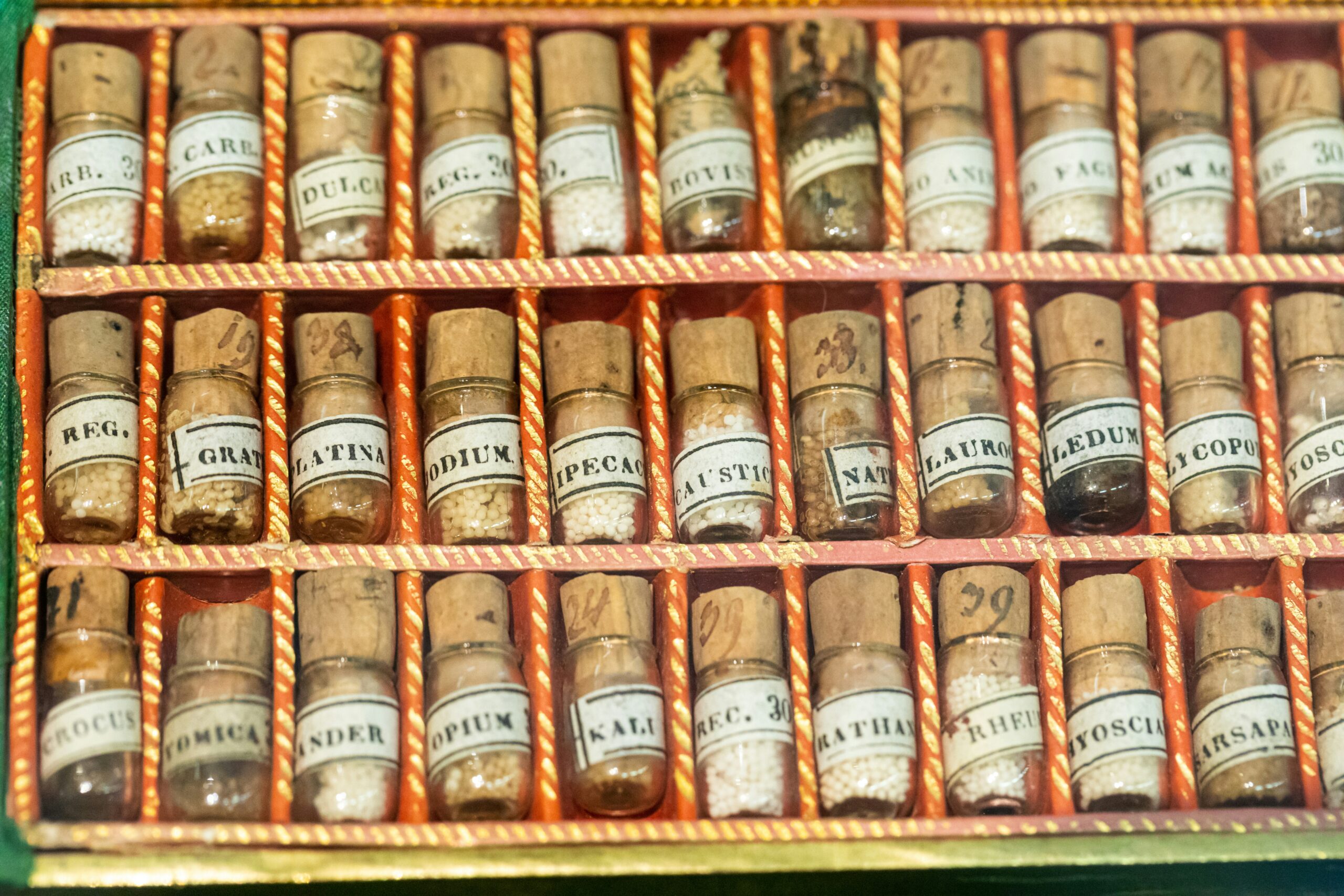
July 8th, 2025Homeopathic medicines, also known as homeopathic remedies, are made from various ingredients such as minerals, plants or animals. They are thought to operate on the principle of “like cures like,” which implies substances that cause symptoms may be used to treat the same symptoms by stimulating the body’s natural defenses. Homeopathic medicines are generally diluted, but the Food and Drug Administration has determined that some contain active ingredients in more significant amounts that may potentially cause harm. Some common ingredients used in homeopathic medicines include:
- Plants: Red onion, poison ivy, arnica, stinging nettle, belladonna (deadly nightshade)
- Minerals: White arsenic, mercury, sulphur, natrum
- Animals/Animal products: Crushed bees, sepia (squid ink), lachesis (snake venom), blatta orientalis (cockroach)
Homeopathic products are typically comprised of a few different ingredients. The ingredients that are included in these products are based on the symptoms that the product is intended to target. For example, allium cepa (red onion) may be used in homeopathic products for allergies since it is thought to treat watery eyes and runny noses. In a product purchased over the counter, it may be used as an ingredient alongside other plants that are commonly used in homeopathy.
Although many individuals report positive outcomes from homeopathic medicines, it is important to approach homeopathy with a general understanding of its limitations. Ongoing evaluation of homeopathy has generally indicated that it is neither evidence-based nor effective in the treatment of health concerns. Those who are interested in pursuing treatment with homeopathic medicines are encouraged to consult with their healthcare provider who can provide guidance regarding potential options for their specific concerns.
Sources
“Homeopathic products”. Food and Drug Administration. https://www.fda.gov/drugs/information-drug-class/homeopathic-products
“Homeopathy: What you need to know”. National Center for Complementary and Integrative Health. https://www.nccih.nih.gov/health/homeopathy
“What is homeopathy?” Healthline. https://www.healthline.com/health/what-is-homeopathy
What Are Homeopathic Remedies, and Are They Legitimate?
July 8th, 2025Homeopathic remedies are a form of alternative medicine that emerged toward the end of the 17th century with the practice of homeopathy, or homeopathic medicine. The practice is based on two theories, one of which is known as “like cures like” and states that illnesses and diseases can be cured by using substances that result in similar symptoms as the condition being treated among healthy individuals. Similarly, another theory known as the “law of minimum dose” indicates that providing a lower dose of medication results in greater effectiveness. On the basis of these theories, most homeopathic remedies are composed of highly diluted substances, some of which may not even contain the original substance.
The legitimacy of homeopathic remedies is controversial within the medical community. There have been numerous scientific studies that have indicated that homeopathic remedies are no different than a placebo. Since homeopathic remedies are significantly diluted, many doctors argue that they do not have any therapeutic effect. And the theory of the law of minimum dose has not been proven to be valid in scientific research.
Although they are regulated by the Food and Drug Administration (FDA) in the same manner as over-the-counter drugs, homeopathic remedies are not tested in clinical trials, so they are subject to less testing and regulation in comparison to prescription medications. Ultimately, since there is no evidence that homeopathic remedies are effective treatments for health concerns, they should not be used as replacements for conventional medicine.
Sources
“Homeopathy: What You Need To Know”. National Center for Complementary and Integrative Health. https://www.nccih.nih.gov/health/homeopathy
“Homeopathy Is as Effective as Placebo”. American Family Physician. https://www.aafp.org/pubs/afp/issues/2006/0115/p312a.html
“What Is Homeopathy and Does It Work?” Cleveland Clinic. https://health.clevelandclinic.org/what-is-homeopathy