

Environmental Impact of Burial & Burial Products
Jump ahead to these answers:
- How Can I Minimize the Environmental Impact of My Death?
- Can Recycling Metal Implants Offset the Environmental Impact of Death?
- How Do Headstones Impact the Environment?
- What Health Hazards Do Embalmers and Funeral Workers Face?
- Is Embalming Fluid Harmful to the Environment?
- Why Are Hardwood Caskets Bad for the Environment? Aren’t They Biodegradable?
- Is the Steel and Concrete Used in Burials Bad for the Environment?
How Can I Minimize the Environmental Impact of My Death?
July 8th, 2025You can minimize the environmental impact of your death by choosing sustainable options for after-death care and memorialization. Although death is a natural process, many actions taken to prevent decomposition or memorialize loved ones are known to have a detrimental environmental impact. Deciding to pursue more environmentally sound practices after death can help reduce the negative consequences of most traditional arrangements. These may include:
- choosing green burial, natural organic reduction (human composting), or alkaline hydrolysis,
- opting out of embalming or opting for eco-friendly, biodegradable embalming fluids if preservation is necessary (Enigma Green by Champion, or Freedom Art ND and Freedom Cav by Dodge)
- selecting eco-friendly biodegradable caskets and urns,
- donating your body to science or participating in organ donation (please note that bodies donated to science are sometimes embalmed for anatomical study and are often cremated, although Mayo Clinic and UCLA use alkaline hydrolysis for disposal)
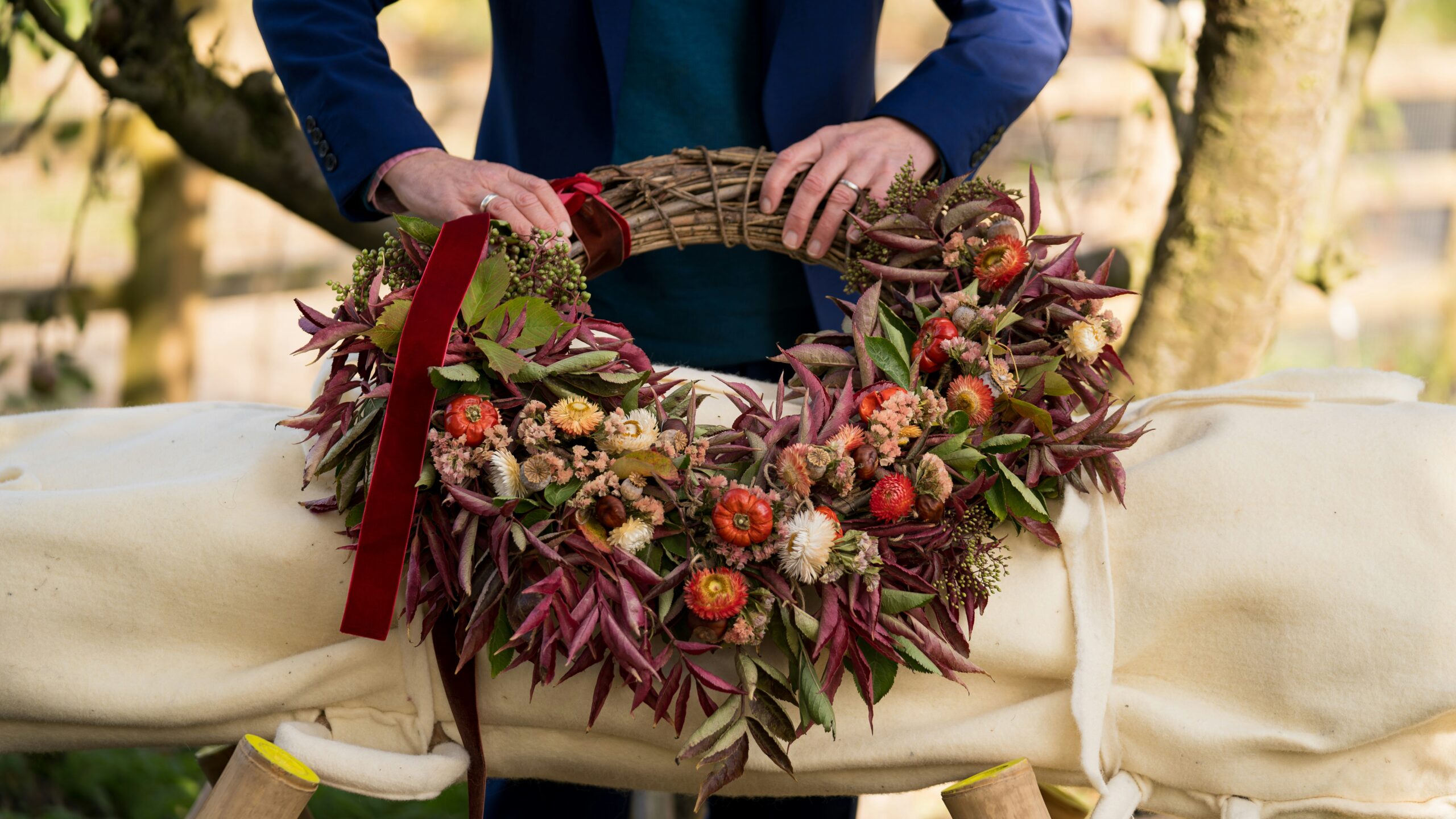
Instead of conventional burial, opting for a green burial with a biodegradable casket or shroud can help reduce carbon emissions attributed to cremation. Most green burials forgo embalming, though some eco-friendly, biodegradable embalming products are now available. This allows the body to naturally decompose after burial and return nutrients to the soil. This option can help preserve natural habitats and provide important organic compounds that will encourage the growth of trees, flowers, and other natural resources. Another method that facilitates the return of nutrients to the soil is natural organic reduction (also known as human composting). Similarly, alkaline hydrolysis, also known as water cremation, is an increasingly popular alternative to flame cremation, as it is often marketed as using less energy and reducing emissions.
Using biodegradable urns, caskets, and grave markers is equally important in minimizing environmental impact while memorializing a loved one. Using biodegradable alternatives means these components will gradually break down as they are exposed to natural elements such as rain or soil. Unlike traditional options, these alternatives will not slow decomposition and won’t clutter the land with materials that have the potential to disrupt a natural habitat.
Another option is to consider donating the body to science. The decision to make a whole-body donation allows the body to be used for a variety of purposes, which can include educating future healthcare professionals, contributing to medical research, or aiding in forensic and safety studies, such as those conducted by crash test facilities or the military. It is important to be aware that practices vary significantly between programs; for instance, bodies are often embalmed with higher concentrations of formaldehyde for preservation. Additionally, the organization or facility that receives the donation will typically ensure the body is respectfully handled and is often cremated and returned to the family after its use. For these reasons, it is crucial to learn about the specific practices of the organization you are considering and, when possible, to specify how you do or do not want your body to be used.
Sources
“How Their Son’s Death Drove His Parents to Find an Alternative to Tradition”. Time. https://time.com/6151559/aquamation-cremation-funeral-alternative/
“Letters to the Editor: Looking for a ‘green’ burial? Donate your body to science”. Los Angeles Times. https://www.latimes.com/opinion/letters-to-the-editor/story/2022-09-26/green-burial-donate-your-body-to-science
“End-of-life options: A comparison guide”. Science Care. https://www.sciencecare.com/resources/end-of-life-options
Can Recycling Metal Implants Offset the Environmental Impact of Death?
July 8th, 2025Recycling metal implants can help offset the negative environmental impact of death, especially since these implants are frequently left behind following common disposition methods such as flame cremation, alkaline hydrolysis, natural organic reduction, or burial. It should be noted that although dental implants contain metal, they are rarely included in the recycling process. Gold may be recycled, but its use in dental fillings is rare. Silver amalgam fillings can deteriorate into mercury vapor during flame cremation; however, this volatilization does not occur during alkaline hydrolysis or natural organic reduction. Any remnants of silver after cremation are small enough to be indistinguishable within the cremated remains. When individuals are buried or otherwise disposed of, implants such as joint replacements usually remain in the body and, if buried, may slowly leach metals into the soil and groundwater over time. Removing and recycling these implants is environmentally beneficial because it extends the availability of natural resources, conserves energy, and reduces the impact of industrial production. It is also notable that while pacemakers must always be removed prior to flame cremation due to the risk of explosion, their removal is not always required for alkaline hydrolysis.
Part of the recycling process involves extracting metals from implants and repurposing them for use in other items. This prevents the release of harmful substances into the environment following cremation or burial and preserves resources that can be used again. Because the metals are being repurposed and reused, the process also reduces the demand for mining and the production of new metals. Repurposed implants can be used in machinery such as aircraft engines and automobiles, electronics, catalytic converters, or even new implants. When not recycled, these metals are either buried, incinerated, or discarded as waste.
Additionally, many crematories and funeral homes donate the funds from recycling to a cause or charity. Since recycling enough implants can easily generate thousands of dollars in profit, these funds can benefit environmental organizations, give back to the community, or support other organizations and nonprofits in promoting social good. Although recycling is not yet widely practiced, it is becoming increasingly popular as funeral homes, crematories, and their clients become more conscious of the importance of sustainable and environmentally sound practices. This practice also raises ethical considerations. For instance, some people view their implants as a part of their bodily identity rather than as disposable foreign matter—a perspective informed by disability and bodily enhancement that adds nuance to decisions about posthumous recycling.
Sources
“The Value of Cremation Recycling”. Cremation Recycling. https://cremationrecycling.com/resources/legal/#
“Green Up Your Cremations by Recycling”. Funeral Director Daily. https://funeraldirectordaily.com/green-up-your-cremations-by-recycling/
“Recycling Implants After Death”. Funeral Consumer Alliance. https://funerals.org/get-help/making-decisions/recycling-implants-after-death/
“How Post-Cremation Metal Recycling Helps Charities”. Garfield Refining. https://www.garfieldrefining.com/resources/blog/how-post-cremation-metal-recycling-helps-charities/
Recompose, “Our Model: FAQ, ‘What happens to bones and teeth during human composting?” https://recompose.life/our-model/
How Do Headstones Impact the Environment?
July 8th, 2025Headstones can have an environmental impact due to the manufacturing process and the materials used. Granite is the most common material for traditional headstones, and its extraction and processing can contribute to soil erosion, deforestation, and the destruction of natural habitats. Transporting stone also results in the consumption of fossil fuels and contributes to carbon emissions. Additionally, headstones made of materials such as granite and marble are non-biodegradable. While they are durable, they do erode very slowly over time and will not break down in a meaningful way. The primary environmental concern is the permanent use of land and resources, rather than overcrowding, as cemetery plots are typically designated in perpetuity.
It is possible to mitigate the environmental impact of headstones in several ways. First, if a traditional headstone is preferred, choosing one made from locally sourced stone can help reduce the carbon footprint from transportation. Another option is to select a headstone made from recycled granite. Alternatively, choosing a biodegradable headstone made of sustainable materials such as paper, bamboo, cardboard, or wood is an eco-friendly choice. It is important to note that these materials will be less durable than stone, especially as they are exposed to natural elements like rain and wind.
Other environmentally friendly options can include creating grave markers using elements already in the natural environment, such as flowers, rocks, or shrubs. Some individuals prefer to plant trees, which can serve as a living grave marker and further support the environment. GPS technology is another potential option to help locate grave sites without a physical monument. Overall, as people become more aware of sustainability, there will be an increased demand for green and eco-friendly alternatives to traditional headstones in the memorial industry.
What Health Hazards Do Embalmers and Funeral Workers Face?
July 8th, 2025Embalmers and funeral workers encounter a range of health hazards stemming from exposure to chemicals and infectious diseases, physical injuries, and psychological distress. These professionals dedicate themselves to supporting bereaved individuals, facilitating the honoring of their loved ones in a manner consistent with their legacy. However, this commitment comes at the expense of their own health and safety.
One of the most prevalent health risks embalmers face is exposure to formaldehyde, a known chemical carcinogen (NTP) used in embalming. Formaldehyde exposure can lead to respiratory irritation and sensitization, skin irritation, dermatitis, eye irritation, and even cancer. Some individuals may develop occupational asthma due to respiratory sensitization from formaldehyde. Some studies suggest funeral directors may be at a heightened risk of developing Amyotrophic Lateral Sclerosis (ALS), a neurological disease that affects nerve cells controlling muscle movement.
Another significant concern involves infectious diseases. The risk of exposure to infectious diseases among embalmers and funeral workers became particularly evident during the COVID-19 pandemic when shortages of personal protective equipment (PPE) severely hindered their ability to protect themselves.
Physical injuries also pose a considerable risk to death care professionals. Tasks like setting up grave sites or carrying caskets can cause musculoskeletal injuries. Given the repetitive nature of these tasks, the risk of sprains or strains over time increases. If not given appropriate medical attention, some injuries may not heal correctly or at all, particularly if the individual continues to perform these activities.
Lastly, the psychological impact on death care workers is not to be overlooked. Regular interaction with grieving individuals and constant exposure to death can lead to depression, compassion fatigue, and other serious psychological issues. The demanding nature of the work often results in burnout. Given the extent and severity of these health hazards, it is essential that deathcare professionals have consistent, reliable access to resources and support for their well-being.
Sources
“Occupational safety for the death care industry”. OSHA. https://osha.oregon.gov/OSHAPubs/4989.pdf
“Funeral directors may face greater risk of ALS (Lou Gehrig’s disease)”. CBS News. https://www.cbsnews.com/news/funeral-directors-risk-als-lou-gehrigs-disease/
“Last Responders — Coroners, Funeral Workers and Others — Say They Faced Risks as COVID Spread”. Frontline. https://www.pbs.org/wgbh/frontline/article/last-responders-coroners-funeral-workers-faced-risks-covid-spread/
National Toxicology Program, Department of Health and Human Services, “Report on Carcinogens, Fifteenth Edition: Formaldehyde”
https://ntp.niehs.nih.gov/sites/default/files/ntp/roc/content/profiles/formaldehyde.pdf
Is Embalming Fluid Harmful to the Environment?
July 8th, 2025Why Are Hardwood Caskets Bad for the Environment? Aren’t They Biodegradable?
July 8th, 2025All wood is biodegradable, although finished wood will take longer to degrade and may leach chemicals into the ground. Many of these chemicals are toxic — for example, the finishing spray used on most wood caskets contains methylene chloride, which OSHA classifies as a potential occupational carcinogen. Other compounds that may leach into the soil from paint and metal casket parts include heavy metals such as lead, cadmium and arsenic, and xylene, all of which have been shown to have detrimental effects on human health.
Additionally, caskets made from tropical hardwoods such as mahogany and Brazilian cherry (jatoba) have a direct impact on the planet’s tropical rainforests. According to Mongabay Rainforest, satellite images indicate that tropical rainforests are being destroyed at a rate of 31,000 square miles per year. That’s an area about the size of South Carolina, containing about 15 billion trees. The causes of deforestation vary, and include increased use of land for agriculture and urban development. However, logging for commercial use is an important factor as well.
The importance of trees to the health of the planet cannot be overstated. First, though they cover only 2 percent of the earth’s surface, they are home to 80% of the planet’s terrestrial species and 50% of all life forms currently found on earth. Thus, deforestation is one of the greatest and most imminent extinction risks many species face.
Second, and equally as important, trees recycle carbon dioxide, one of the major greenhouse gases contributing to global warming and climate change. According to Raintree.com, the billion-plus-acre Amazon rainforest produces more than 20 percent of the world’s oxygen by converting carbon dioxide and water to oxygen through photosynthesis. A single acre of forest absorbs six tons of carbon dioxide and puts out four tons of oxygen. This is enough to meet the annual needs of 18 people, according to the U.S. Department of Agriculture.
Lastly, trees filter dust and pollutants such as carbon monoxide, sulfur dioxide and nitrogen dioxide from the air. These toxins are a major source of global air pollution and a corresponding major source of illness and death throughout the world. Preserving our forests, therefore, is an essential step in preserving all forms of life on earth.
Sources
“Groundwater Pollution and Radiation Contamination in Cemeteries”. Disabled World. https://www.disabled-world.com/health/cemetery.php
“Rainforest Information”. MongaBay. https://worldrainforests.com/deforestation/
“How many trees are cut down every year?” MongaBay. https://news.mongabay.com/2015/09/how-many-trees-are-cut-down-every-year/
“About the Rainforest”. Rain-Tree Publishers. https://www.rain-tree.com/facts.htm#.WZT8YFWGND8
Is the Steel and Concrete Used in Burials Bad for the Environment?
July 8th, 2025When non-biodegradable substances such as steel, concrete and reinforced concrete (concrete with wire mesh or steel bars embedded to increase its tensile strength) are deposited in the ground, they don’t contaminate the ground, per se. However, they make the area unusable for other purposes unless they are manually removed. This has become a significant concern as cemeteries take up more and more space both in the United States and across the globe.
For example, an estimated 76 million Americans will reach the age of 78 (the current expected life expectancy) between 2024 and 2042, according to urban planning professor Chris Coutts. If each of these people were buried in a standard burial plot, the graves alone would take up about 130 square miles — an area about the size of Las Vegas. And that doesn’t account for roads, pathways or trees. All of this cemetery space is lost to other uses — uses that would serve the living far better than the dead.
Nor is the space problem limited to the U.S. In Greater London, eight of the 32 boroughs have no available burial space, and the city predicts that 10 more will run out of space by 2022. And China is already experiencing extreme shortages of cemetery plots.. According to a 2019 report in the funeral industry publication Connecting Directors, the Chinese government has been forced to resort to drastic measures order to address the crisis, such as recommending vertical burial, limiting the size of burial plots to 5-feet square, and forcing citizens to turn over their handmade coffins for payment of about one-third of what they are worth. It is also offering incentives to people who choose alternative forms of disposition, such as burial at sea, tree burial, or sky burial, since the popularity of cremation has resulted in an extreme shortage of columbarium space as well.
Moreover, according to a BBC report, in some European countries, notably Germany, graves are routinely reused after several years. In Spain and Greece, families rent above-ground crypts where bodies are entombed for a number of years. After the bodies have decomposed, they are relocated to a communal burial ground so the crypt can be reused. A similar situation exists in Venice, Italy, where the city’s San Michele Island Cemetery removes and relocates bodies after they have decomposed.
Sources
“America’s Looming Burial Crisis”. Bloomberg. https://www.bloomberg.com/news/articles/2012-10-31/america-s-looming-burial-crisis
“China’s Burial Space Crisis has Presented Major Opportunities for Industry”. Connecting Directors. https://connectingdirectors.com/54207-chinas-burial-crisis
“The world is running out of burial space”. BBC. https://www.bbc.com/news/uk-31837964