

Green Burial Locations & Sites
Jump ahead to these answers:
- What is a conservation burial ground?
- How Can I Raise Awareness About Green Burials in My Community?
- How Can I Find a Natural or Conservation Burial Ground in My Area?
- Can I Hold a Green Burial on Private Property?
- What Are the Three Types of Green Burial Sites?
- Where Can a Green Burial Take Place?
What is a conservation burial ground?
May 1st, 2026A conservation burial ground is a burial site within a sanctuary or protected portion of land that emphasizes the preservation of ecosystems and natural resources. They are often maintained in partnership with a conservation organization that agrees to adhere to specific protocols to ensure that burial practices will not harm the land. In comparison to traditional cemeteries, conservation burial grounds prioritize sustainability and the protection of wildlife or habitats. Many people who opt to be buried or to bury a loved one at a conservation burial ground make their selection in an effort to reduce harm to the environment and to continue a lasting legacy of environmentally sound decisions.
Burials on conservation burial grounds differ significantly from conventional burials. Natural burial is usually emphasized, which means that a deceased loved one may be interred in a biodegradable casket or shroud to allow natural decomposition. Embalming is not allowed due to the potential to leach harmful chemicals into the soil and the inhibition of the natural decomposition of the body, which provides valuable nutrients to the surrounding environment. Additionally, concrete burial vaults are prohibited, grave markers are typically not used and are replaced by native plants, GPS, platting, or survey pins, in order to reduce the impact on the land. Every conservation burial ground has its own requirements and prohibitions, so it’s important to become familiar with the expectations prior to making arrangements.
Conservation burial grounds are differentiated from green burial cemeteries by their unique characteristics. For example, the land must be managed with the intent to meet specific conservation goals, have minimal burial density, and operate on protected land that is affiliated with a conservation entity or land trust. Burial density refers to the depth, size, distance, and ratio of burial plots to the available land. A conservation burial ground cannot hold over 300 burial plots per acre. By contrast, conventional cemeteries have around 1000 to 1200 burial plots per acre.
When managed properly, conservation burial grounds reduce the impact of burials on nature and promote biodiversity. They also offer unique options for memorialization, such as the ability to erect tree markers or plant native trees on a plot instead of traditional headstones or gravemarkers.
Sources
“Conservation Burial FAQ”. Green Burial Council. https://www.greenburialcouncil.org/conservation-burial-faq.html
“Frequently Asked Questions”. Larkspur Conservation. https://larkspurconservation.org/frequently-asked-questions
“Conservation Burial for Land Trusts”. Conservation Burial Alliance. https://www.conservationburialalliance.org/what_land_trusts_need_to_know_about_conservation_burial.html
How Can I Raise Awareness About Green Burials in My Community?
July 8th, 2025Raising awareness about green burials in your community can be a great way to promote honoring the memory of loved ones in a meaningful manner while also advocating for environmental sustainability. You can advocate for green burials among individuals in your community or focus directly on outreach to local cemeteries, depending on the outcome you are aiming to achieve. For example, if the goal is to encourage local cemeteries to adopt green burial practices, advocating to funeral directors and contacting those local cemeteries is often an appropriate place to start. However, if the goal is to educate the public about the alternative of green burials and their environmental impact, it may be preferable to focus on raising awareness among various groups and organizations in your community instead.
One way that you can educate the general public about green burials is to start with personal outreach. Many people simply aren’t aware that this option exists or lack clarity regarding how it affects the burial process. This can include hosting an informal gathering or facilitating a discussion group with informative materials and topics. Social media can be used to organize these interactions and to get more people interested. Over time, this can expand into a larger community outreach by contacting environmental organizations for partnerships or speech opportunities to promote awareness. Reaching out to nature centers, non-profit organizations, conservation groups, and similar organizations can help to increase the overall reach of your advocacy efforts.
If you have a local paper or similar media entity, reaching out to them offers the potential to reach a larger audience regarding the importance of green burials. Local newspapers, TV stations, or radio stations can all be potential platforms to share your message and raise awareness. Some environmental and conservation groups have blogs or similar communications shared online and may be willing to share your perspective and materials about green burials. You can also develop infographics, brochures, flyers, or other resources that can be shared virtually and in person to help others understand more about green burials at a glance.
Sources
“Outreach Tools”. Green Burial Council. https://www.greenburialcouncil.org/outreach_tools.html
“Green Burials Bring Awareness to Environmental Concerns”. U.S. News. https://www.usnews.com/news/articles/2016-03-04/green-burials-bring-awareness-to-environmental-concerns
“‘Green burials’ can change our relationship with death — and help the Earth”. The Washington Post. https://www.washingtonpost.com/outlook/green-burials-can-change-our-relationship-with-death–and-help-the-earth/2021/12/16/85137994-5de5-11ec-bda6-25c1f558dd09_story.html
How Can I Find a Natural or Conservation Burial Ground in My Area?
July 8th, 2025If you’re looking for a natural cemetery, the Green Burial Council (GBC) is one of the best places to start. The GBC maintains a trusted directory of certified providers across North America and Canada, including natural burial grounds, conservation burial grounds, and hybrid cemeteries. This directory is specifically designed to help individuals and families locate environmentally responsible burial options that align with their values.
While other directories exist, many have expanded their listings to include cemeteries that may or may not be certified by the GBC. Due to limited access and a growing demand, these listings can be helpful when you don’t have the ability to advocate for new options in your area and are trying to find access to natural burial. Still, the GBC’s directory stands out by offering verified information and clear distinctions between types of green burial providers, making your search easier and more reliable. In addition to the GBC directory, you can also reach out to local funeral homes. With increasing interest in sustainable end-of-life options, many funeral directors are becoming familiar with nearby cemeteries that support natural burial practices. If you are only interested in conservation burial, you can visit the Conservation Burial Alliance’s page.
Once you’ve identified a few options, take time to explore what each burial ground and funeral home offers. Natural burial grounds may have specific guidelines regarding burial containers, grave markers, or the types of items that can be brought to the site. Funeral homes may not allow for public visitation without embalming, accommodate more natural methods, or know much about the option. Because some directories are independently managed, it’s always a good idea to confirm details directly with the burial grounds and funeral home. Whenever possible, visiting in person or calling ahead can help ensure that the site aligns with your personal values and expectations.
Sources
“Interactive GBC Provider Maps”. Green Burial Council. https://www.greenburialcouncil.org/gbc_provider_maps.html
“Green Burial Cemeteries in the US and Canada”. New Hampshire Funeral Resources & Education. https://www.nhfuneral.org/green-burial-cemeteries-in-the-us-and-canada.html
“Conservation Burial Grounds”. Conservation Burial Alliance. https://www.conservationburialalliance.org/cemetery-contact-information.html
“National Cemetery Administration”. U.S Department of Veteran Affairs. https://www.cem.va.gov/green-burial/#:~:text=There%20are%20currently%20three%20VA,national%20cemeteries%20in%20the%20future
“The Natural Burial Cemetery Guide”. Green Burial Naturally. https://www.greenburialnaturally.org/
“Green Burial Directory”. US Funerals Online. https://www.us-funerals.com/green-burial-directory/
“Find AGF Providers and Green Cemeteries”. A Greener Funeral. https://www.agreenerfuneral.org/providers/
Can I Hold a Green Burial on Private Property?
July 8th, 2025You may be able to arrange a green burial on private property owned by yourself, by friends, or by relatives, depending on where you live. While there are no federal regulations regarding home burials, various states and municipalities may restrict the practice or impose restrictions on how it can be done. In California, Indiana, and Washington, for example, burials are permitted only in an established cemetery.
You may be able to apply for a special permit, but the process can be long and onerous and you may well need to hire an attorney to deal with the legal issues that arise. In Alabama, Illinois, Iowa, Louisiana, Michigan, Nebraska, and New York, you may be able to bury your loved one on your own property, but you must hire a funeral director to oversee the process and ensure that you comply with local laws. Other states allow private home burials, but local ordinances may limit the conditions under which you can bury a person on privately owned land (for instance, the location of the proposed site in relation to other homes or groundwater). Because of these complexities, it’s best to plan for a home burial far in advance.
Keep in mind, too, that having one or more people buried on your property may impact its resale value should you ever decide to move. (In most states, you need to disclose this to prospective buyers along with a survey indicating exactly where the body or bodies are). What’s more, if you move, family and friends may one day be unable to visit the grave. However, you may be able to negotiate an easement with your buyer to allow visitation in the future.
Sources
“How You Can Be Buried on Your Own Property in All 50 States”. Rome Monuments. https://www.romemonuments.com/home-burials
What Are the Three Types of Green Burial Sites?
July 8th, 2025All green burial sites are similar, but not the same. The Green Burial Council designates three levels of green burial sites, each of which has slightly different requirements and characteristics. They are:
- Hybrid grounds: Hybrid burial grounds are a mix of traditional cemetery and green burial site. In a hybrid burial ground, a portion of the land is set aside for unembalmed bodies and biodegradable caskets or shrouds. The cemetery must agree not to require concrete liners in the area designated as a green burial site.
- Natural burial grounds: A natural burial ground does not accept embalmed bodies and only allows biodegradable materials to be buried in the ground. Concrete vaults and grave liners are prohibited. Additionally, the owners of the cemetery must agree to maintain a “natural appearance” at the site, using native plants and materials.
- Conservation burial grounds: These burial sites meet all the criteria of a natural burial ground, but they also further land conservation by maintaining the site in its natural state. These sites are typically run by an independent conservation organization, such as a land trust, that holds a conservation easement or deed that guarantees long-term stewardship of the land. Much of the funding received from conducting burials goes towards maintaining the land, thus conservation burial sites can be a useful tool in furthering the cause of land conservation in perpetuity.
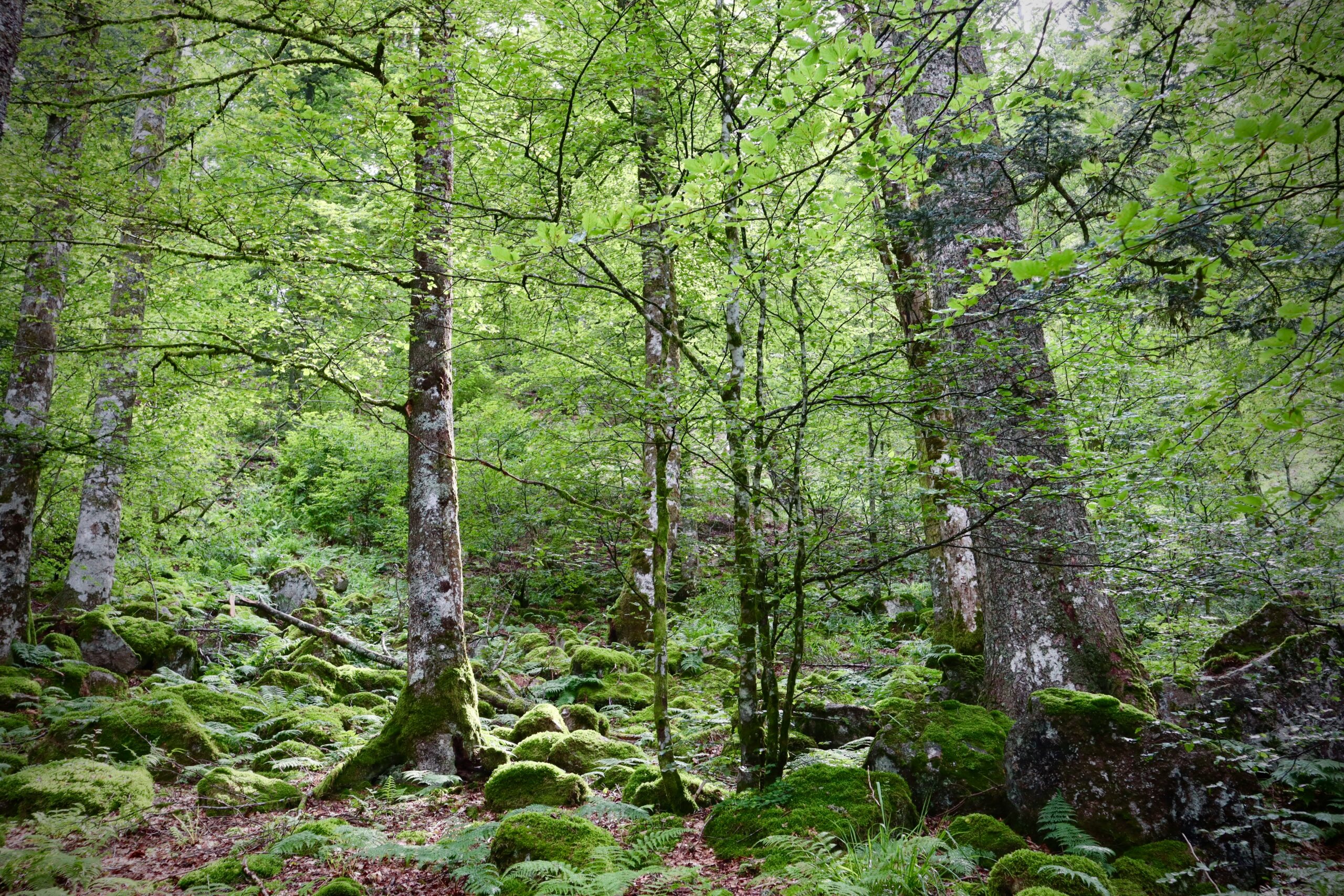
Generally speaking, however, most natural cemeteries and conservation burial grounds look very much alike. Because they seek to preserve the natural ecosystem, there are no lush, manicured lawns or professionally landscaped grounds. Instead, the landscape typically consists of native plants, trees and shrubs. Graves are usually marked with a plain wooden plaque, unpolished stone or a native plant or tree. In fact, some natural and conservation burial sites prohibit grave markers entirely and mark gravesites using GPS coordinates and an RFID chip instead.
Hybrid burial sites, on the other hand, may look more like a conventional cemetery, and may use electric or gas-powered equipment to maintain the grounds. Some of the graves will be marked with traditional headstones, and the landscaping may include lawns and non-native plants and trees.
Where Can a Green Burial Take Place?
July 8th, 2025There are no laws in any state in the U.S. that prohibit natural burial. Unembalmed bodies may be buried at any cemetery, and most cemeteries allow the use of a plain wooden casket or other biodegradable container for burial. However, nearly all conventional cemeteries require the use of cement grave liners or vaults, which prevent the casket from coming in contact with the ground. These liners serve multiple purposes, including:
- protecting the casket from damage caused by heavy machinery and equipment
- preventing the digging of other graves placed closely together
- to allow for more plots in a smaller area, and
- to help with ground subsidence
However, the use of concrete is discouraged by the Green Burial Council due to the environmental harms associated with manufacturing, such as the production of CO2 and depletion of valuable natural resources. Additionally, it reduces these resources for a one-time burial rather than utilizing them more sustainably.
The preferred depth for burial, according to the Green Burial Council, is 3.5-4 feet, which maintains the natural “smell barrier” while allowing the body to come into contact with the top layers of the soil, where the majority of microbial activity occurs. Burial depth at conventional cemeteries varies greatly by state, as laws primarily pertain to how much soil is on top of the grave rather than the depth of the grave itself.
For these reasons, a green burial should take place at a natural cemetery, a hybrid cemetery or a conservation burial ground where concrete grave liners and vaults are not required. It may also be possible to bury a person without a vault or grave liner in some municipal cemeteries across the United States. In no state is a grave liner or vault required by law, this is a cemetery rule and can be avoided. Ask if your cemetery will allow burial without a vault, especially rural cemeteries where these rules often do not exist. Although their numbers are growing, access to these options is still expanding in many parts of the country—and with growing interest and demand, availability is likely to continue improving.
To locate a green cemetery in your area, check the Green Burial Council’s website for certified and non-certified cemeteries across the U.S and Canada. Be aware that laws pertaining to burial can vary if you choose a cemetery outside of your home state. We recommend checking with your local chapter of the Funeral Consumer Alliance to find out more about which laws are applicable.
Sources
“New Hampshire Funeral Resources & Education”. https://www.nhfuneral.org/
“Funeral Consumers Alliance”. https://funerals.org/
“Legal Burial Requirements by State”. New Hampshire Funeral Resources and Education. https://www.nhfuneral.org/legal-requirements-by-state.html
“Cemeteries”. Green Burial Council. https://www.greenburialcouncil.org/cemeteries.html