


‘Cracked Pot’ by Vince MontagueAt the potter’s wheel, Vince Montague continues his storytelling journey, shaping clay—and his grief—into stories of love, loss and renewal.
At the potter’s wheel, Vince Montague continues his storytelling journey in “Cracked Pot”, shaping clay—and his grief—into stories of love, loss and renewal. When Vince Montague lost his wife, Julia, in a tragic accident, he felt lost and couldn’t quite make sense of what happened. While he was aware his wife had died, he had…

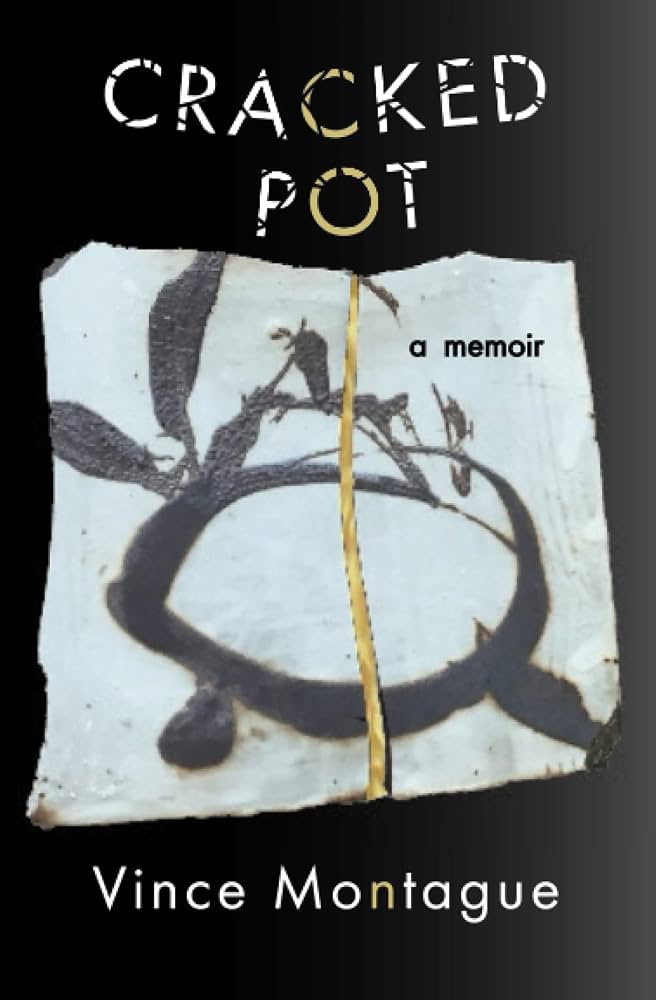
At the potter’s wheel, Vince Montague continues his storytelling journey in “Cracked Pot”, shaping clay—and his grief—into stories of love, loss and renewal.
When Vince Montague lost his wife, Julia, in a tragic accident, he felt lost and couldn’t quite make sense of what happened. While he was aware his wife had died, he had the experience of not quite believing it. He kept thinking, “When is Julia coming home?”
It took some time, but he found his way to his wife’s pottery studio. At first, he simply entered and turned the light off. However, he eventually took what she taught him in life and started working with clay. He struggled at first, but reminded himself that he could start simply. His consistent refrain was, “Just make a bowl. Just make a cup.”
Building Stories
Montague builds his story of grief, loss, and healing through the states of clay as it develops from the wet state to the solid state. Connecting deeply with his new creative outlet, he says:
“I could tell you the story of my life if I could throw you a pot”
During Montague’s grieving process, he confronts the pain of memory. He recounts his first playful encounter with Julia during a New York City winter when she pressed her shoe down on his and ran away. That reminiscence and others turn toward a longing. Montague reflects on subtle everyday moments triggering grief unexpectedly.
“The hardest part about moving on in life without your partner is avoiding the past, dodging those old roads where you lived and breathed,” he states “It’s hard to know when those moments will arrive because every object, every moment is a reminder.”
Even in those days when he keeps busy and finds connection, he still gets blindsided by waves of grief. In his chapter “Unbearable,” Montague shares, “Grief blooms on those days when you lose track of yourself, when you forget the pain enough to relax and have a good time. In the end, grief never leaves.”
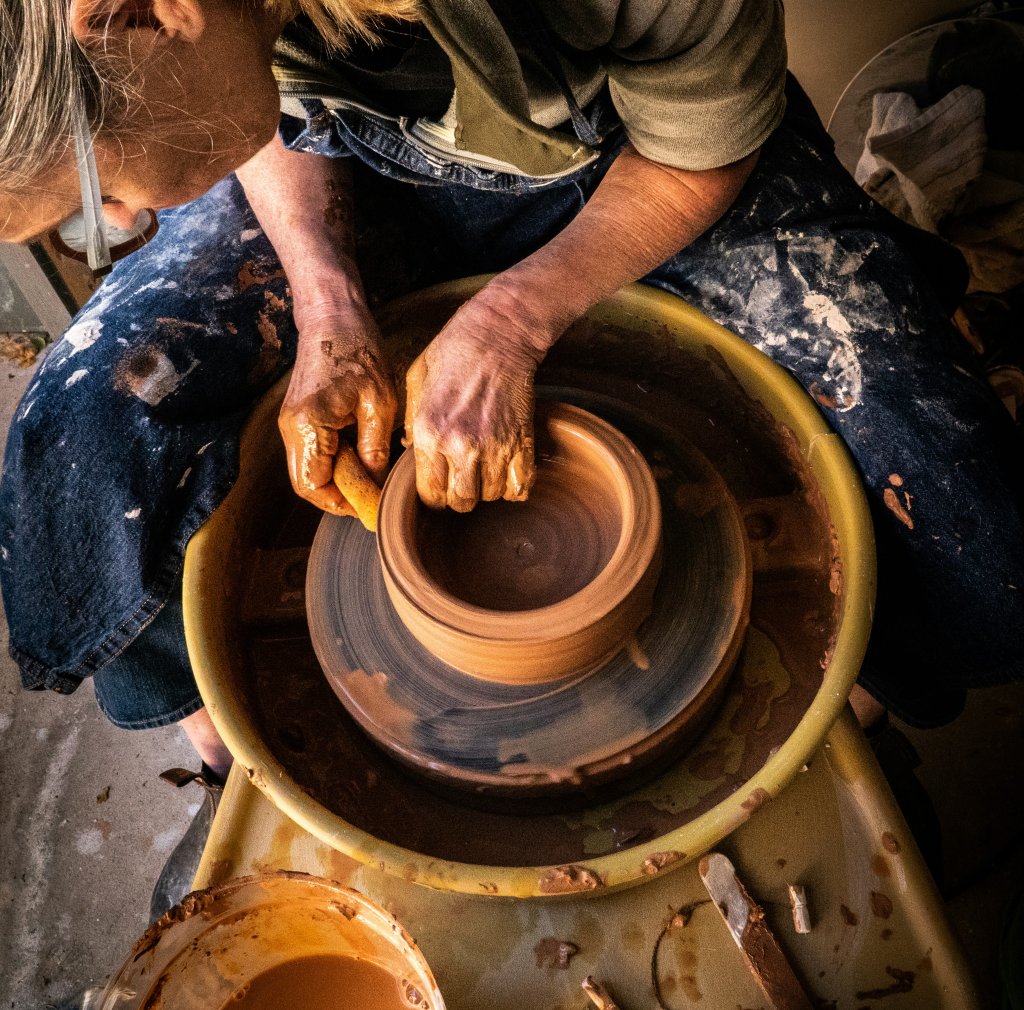
Finding Renewal and Healing Between The Wet State and The Solid State
While Montague continues to battle the symptoms of grief both emotionally and physically, he finds some relief in turning points. He recognizes how building pots helps him connect with his wife. “When we make objects, we communicate with the invisible realm,” he says, “we dialogue with the unsaid.” Montague does acknowledge how prolonged grief has affected his health.
“My body is breaking down from prolonged grief,” he says, “and although I’m able to function and navigate, within me lives a pent-up rage.”
Even though Montague knows he and Julia intentionally gave each other space for their respective art forms – his writing and her pottery – he still holds onto regret.
“An overarching regret emerges for all the time I lost with Julia because I required time to write,” he says.“I’m seeing my actions as selfish even though I know they are not selfish because Julia and I gave each other the necessary room to do our own art.”
In “Cracked Pot,” Montague recognizes that even with the overwhelming experience of pain and sorrow, there is a hopefulness and a transformation evolving through the healing power of art. In his chapter “Home,” found in the section titled “The Dry State,” he says, “My life feels both simultaneously carpet-bombed and yet explosive, all around me is ruin and failure, but also bursting on the periphery is a new awakening, a new identity.”
Vince Montague’s memoir, “Cracked Pot,” has essential nuggets of insight about the grief journey. He addresses the mixed emotions of loss, new connections and moving on while recognizing grief isn’t linear. Montague shares how he rediscovers himself by discovering the joy and passion of pottery as he explores his late wife’s studio. The focus on finding oneself while navigating the harder moments of grief and the power of renewal during the process is essential. However, the book feels repetitive and a bit cumbersome in its last pages. Some of the connection between the experience of throwing pots and the experience of writing also feels a bit contrived. Overall, though, “Cracked Pot” is a valuable tool, particularly for those facing a sudden loss of a loved one, especially if that person was a creative partner.
Buy This Book
Support indie book stores or buy from Amazon. We earn a small commission at no cost to you.
As an Amazon Associate, we earn from qualifying purchases.
May We Suggest:
 The 21 Most Breathtaking Locations to Scatter Ashes in the U.S.
 Survivors Are Breaking the Taboos Around Disenfranchised Grief
 Beyond the Five Stages: Grief Theories in the Modern Age
-

Grief has a way of reshaping us, and creative expression can become a powerful companion in that journey. This moving story is a reminder that healing doesn’t erase loss; it helps us learn how to carry it with love.
-
Beautifully said. Creative expression can give grief somewhere to go when words alone aren’t enough. The loss remains, but creating something from that love can become a meaningful way to stay connected while slowly learning how to live forward.
-







Leave a Reply