


“The Group: Seven Widowed Fathers Reimagine Life”The stories of widowers with young children are shared alongside the latest bereavement research for a helpful, male-centered resource
As clinicians working at the Lineberger Comprehensive Cancer Center at the University of North Carolina, Donald Rosenstein and Justin Yopp were all too familiar with caring for patients as they neared the end of their lives. After a spate of dealing with terminally ill women who had young children at home, the doctors found themselves…
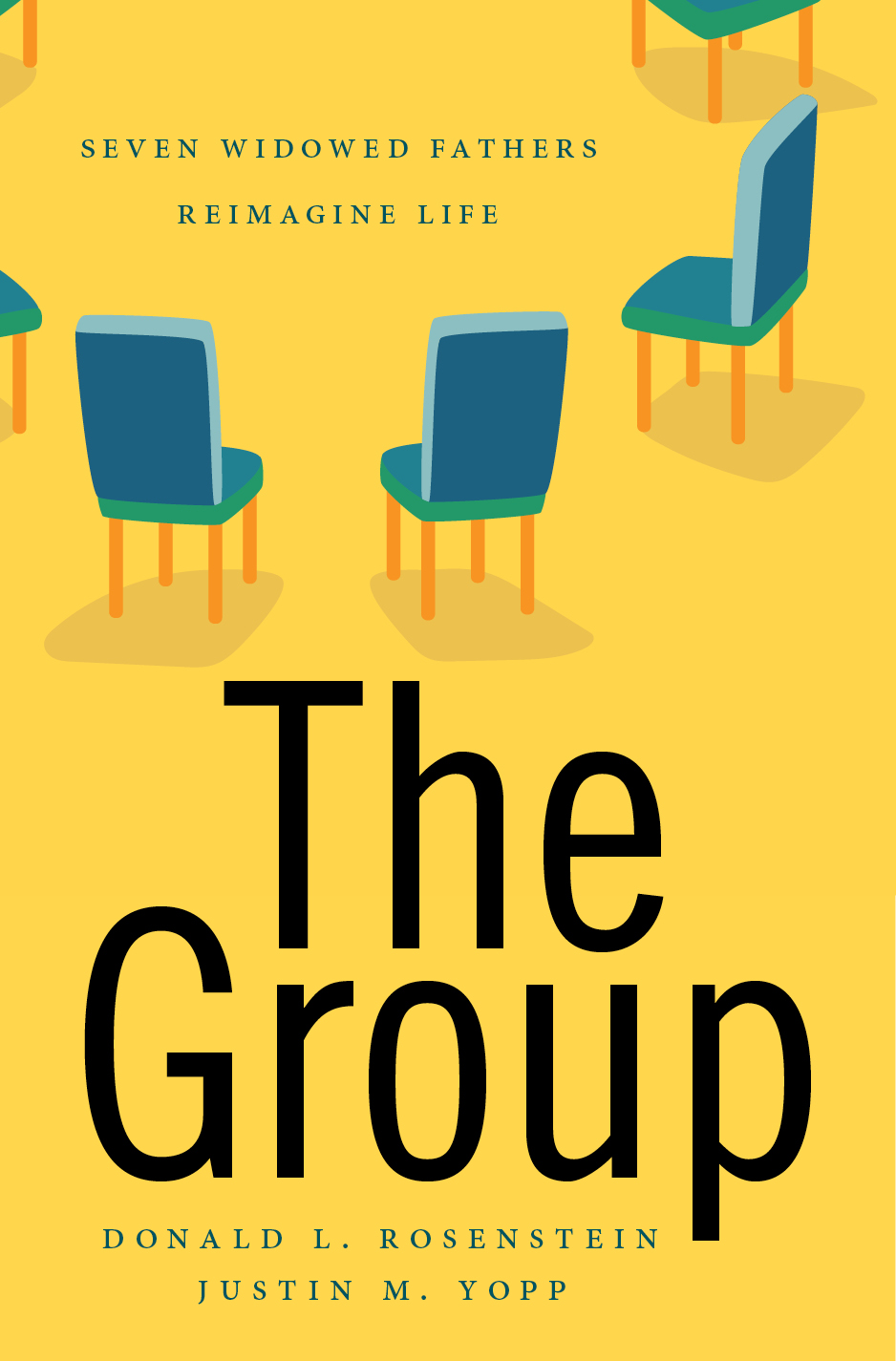
As clinicians working at the Lineberger Comprehensive Cancer Center at the University of North Carolina, Donald Rosenstein and Justin Yopp were all too familiar with caring for patients as they neared the end of their lives. After a spate of dealing with terminally ill women who had young children at home, the doctors found themselves wondering how well their families were fairing after their deaths.
Their book, “The Group: Seven Widowed Fathers Reimagine Life,” is the recounting of how they started a support group for the men who now had to shoulder all the responsibilities of having a young family while mired in the most profound kind of grief. Integrated with contemporary research findings, the book provides a novel, male-centered perspective on responses to loss.
The Group
As they recount in the first chapter, Doctors Rosenstein and Yopp found themselves in new territory after treating several terminally ill women within the span of a few months.
“Their sadness was profound and the inevitability of leaving their children nearly too much for them to handle,” they write.“ Furthermore, their anxiety about how their husbands would manage without them was palpable.”
When they sought support groups to which they could refer these newly-widowed men, the doctors realized that no such thing existed at the time. So, taking matters into their own hands, they formed one themselves.
Although the members of the group fluctuated over time, the book focuses on seven men, sharing an account of their individual struggles while also illustrating the healing potential of shared grief.
Updated Grief Research
To provide some perspective for the group, Rosenstein and Yopp wanted to be able to share contemporary research on grief, which they include in the book with the relevant anecdotes.
For example, in Chapter 3 they explain how the infamous Kübler-Ross grief model (the five stages of grief; i.e. denial, anger, bargaining, depression, acceptance) took on a life of its own within popular culture, exceeding the boundaries of the research behind it and leading to widespread misconceptions about the theory itself.
After dispelling the myths surrounding the 5 Stages, Rosenstein and Yopp outline the research that they think more accurately reflects the dynamic and individualized nature of grief:
“Developed by Margaret Stroebe and Henk Schut, two psychologists at Utrecht University in the Netherlands, the Dual Process Model [of coping with Bereavement] captures the essence of loss and adaptation in a simple and elegant fashion.”
This model, they explain, holds that how well a person adapts following the death of a loved one is determined by how well he or she copes with two distinct types of grief-related stressors: “loss-oriented stressors,” consisting of thoughts and feelings most commonly associated with grief (like dwelling on memories of the person or yearning for their company); and “restoration-oriented stressors,” which relate to the challenges of restoring a life without the person who died.

“The Wrong Parent Died”
In a theme that courses through the book – whether the authors intended it or not — is the constant undercurrent of societal sexism. There is a cultural expectation in our country that men are, somehow, incapable or ill-equipped to manage a young family on their own, a belief that men have internalized for decades. As a result, the widowers in the group all struggle with the fact that they have to take on the seemingly infinite tasks associated with caring for children.
This mental load, often referred to as women’s invisible labor, is frequently openly lamented (and resented) by moms across research, opinion essays and in conversation — but seeing the men struggle to cope under its burden is a novel approach. It is somewhat refreshing to see the tables turned, for once, but frustratingly, the authors don’t ever address this dichotomy head-on. When one man sheepishly shares that a teacher purchased shoes for his daughter because they were in such poor condition, there isn’t discussion about why he might’ve needed a woman to come to his rescue. Instead, the book focuses on the fact that all the men had experiences that were similar, and were able to find relief in realizing they weren’t the only ones.
In subsequent chapters, the authors get so close to addressing the issue of sexism and the role it played in the men’s bereavement. For example, they cite a 2015 study conducted by George Bonanno, a clinical psychologist at Columbia University’s Teachers College, in which he and his colleagues identified several factors that predict prolonged grief in bereaved spouses, including: prior dependence on their spouses; difficulty relying on social support; and the belief that members of their support system do not understand what they are going through. Doctors Rosenstein and Yopp acknowledge that those factors were likely particularly relevant for their widowers, but no further exploration of the subject was pursued.
On a more positive note, the men ultimately have a positive arc in their parenting journeys. Despite earlier discussions about feeling like “the wrong parent died,” by the end of the book they have realized that their role as the only parent has forced them to step up, to embody the role their wives would have played.
“My girls and I wouldn’t be as close if Lisa were still alive,” one of the widowers admits to the group. “It’s ironic that we feel more connected to our kids because our wives died […] I desperately hate being a widower, but I love that I’ve grown closer with my kids as a result.”
Recommendations
“The Group” would be an extraordinarily helpful tool for any man who has found themselves in the same situation as the men in the book, offering anecdotes of relatable worries and practical information that could aid them in their bereavement.
Women, on the other hand, may find the book a frustrating resource; its male-centered focus makes it difficult to relate to.
In the years since its publication, however, the doctors and men involved in the original group have worked to build an online resource that would encompass the needs of widowed mothers, as well, which can be found at www.widowedparent.org.
Buy This Book
Support indie book stores or buy from Amazon. We earn a small commission at no cost to you.
As an Amazon Associate, we earn from qualifying purchases.
May We Suggest:
 Beyond the Five Stages: Grief Theories in the Modern Age
 Survivors Are Breaking the Taboos Around Disenfranchised Grief
 How to Break the News that Someone Has Died
-

One of the most powerful lessons in grief is that no one should have to carry it alone.
What stands out about these widowed fathers is not just their loss, but their willingness to show up for one another in the midst of it. Grief can be profoundly isolating, especially when someone feels they must remain strong for their children. Shared experience reminds us that strength is not found in carrying the burden alone; it is found in connection.
The book also highlights an important truth: grief is not a series of stages to complete. It is a continual process of adapting to a life that has been forever changed. Sometimes healing looks like remembering. Sometimes it looks like rebuilding. Most often, it looks like moving back and forth between the two.
For anyone navigating the loss of a spouse while raising children, may this story serve as a reminder that support is not a sign of weakness. It is often the path forward.
-
I agree. Grief can feel incredibly isolating, especially when others are depending on you. Finding people who understand that loss can make the weight a little easier to carry.
-








Leave a Reply