


Dealing With the Hidden Stress of Being a Funeral Director (Interview)An interview with Kim Zavrotny, U.S. Director of Funeral Professionals Peer Support
Kim Zavrotny has seen a lot of changes in the funeral business in her 32-year career, some of which have made the work more challenging. She’s currently a Senior Funeral Director with McComas Family Funeral Homes in Abingdon, Maryland, a mid-sized business handling around 800 funerals a year. She’s also the U.S. Director of Funeral Professionals…

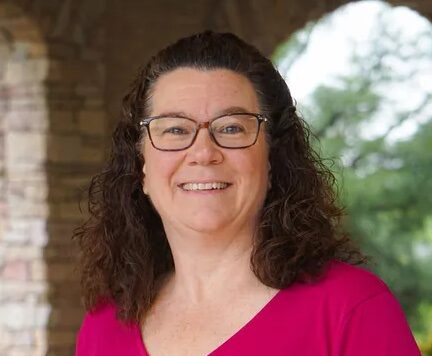
Kim Zavrotny has seen a lot of changes in the funeral business in her 32-year career, some of which have made the work more challenging. She’s currently a Senior Funeral Director with McComas Family Funeral Homes in Abingdon, Maryland, a mid-sized business handling around 800 funerals a year. She’s also the U.S. Director of Funeral Professionals Peer Support (FPPS), a non-profit established to help funeral professionals cope with the behind-the-scenes stress of serving others in their time of grief.
Editor’s note: This interview has been edited for length and readability.
What drew you to the funeral business?
When I was in high school one of my classes explored death and dying. And one of the things we did in the segment was what we called a Death Day. We went to a local crematorium and something clicked. I’m not sure what it was. Later, when I started college and wasn’t doing well, I thought that wasn’t where I was supposed to be. So, I enrolled in a mortuary science program. Something inside of me was just drawn to it. I’m by nature a nurturing, caring person, so I think that was part of it. It’s a calling. You don’t choose it; it chooses you.
What do you think is the biggest misconception the public has about funeral directors?
People feel that we get used to the grief and the situations that we deal with on a regular basis, and the families that we serve and the deaths we encounter don’t affect us anymore. People think we get used to — even hardened — by it, and it doesn’t bother us.
That just isn’t true. There are a lot of situations and deaths we deal with that are very difficult emotionally. The day that I get hardened it’s time for me to walk away because I won’t serve families who come through our door as well as I should.
What other hidden stressors are funeral professionals dealing with?
Well, you might have a death in your own family, but you have to put aside processing that in order to serve others. And then there’s the long hours we put in and the nights on call. On top of that you have all the traditional workplace issues: co-workers you don’t get along with, problems with the leadership of the organization, and so on.
So, what happens with that accumulated emotion and stress?
We keep a lot of the grief and emotion inside. Then when we go home to our own families, they don’t want us bringing it up either. Also, there’s lot of confidential information that we can’t share. That’s a big thing we deal with. If you don’t have a supportive person at home, then that just makes it more difficult.
Are there changes you’ve observed over your 30-plus years in the business that are contributing to job stress?
Yes, there’s a labor shortage in the funeral industry And that means fewer people are having to take on more work.
What’s behind the labor shortage?
Funeral homes have traditionally been family-owned businesses, passed from one generation to the next. (Her firm is a prime example. It was founded in 1808 and is now being managed by the family’s seventh generation.) But family businesses aren’t as prevalent as they used to be. So, you no longer have a built-in workforce of people growing up in the business who understand it and want to continue it. And you have fewer people going into the industry.
Why the drop in interest?
One of the big reasons is a lot of younger people are more focused on work-life balance. One of the biggest issues is the long hours. For example, we may have to come in at 7 in the morning to set up a viewing, and a service later in the day, and our day won’t end until 9 p.m. And then there’s being on call. You may get a call at 10 p.m. or 2 a.m. or 4 a.m. to collect a body. We’re fortunate here that we have nine funeral directors, so I’m on call every other weekend. In smaller firms, you may be on call three or four times a week. So, there’s no definitive start and stop time in this business.
Often when young people start work after mortuary school they think, wow, this wasn’t what I expected. And they leave the industry.
What other changes have you noticed that make the job more challenging?
I’ve been doing this since the early ‘90s and the family dynamic is definitely a lot different. There’s often more tension and distance between family members. Families that just don’t talk to each other. And that can complicate things. For instance, in Maryland our policy for cremation is that all the children must sign the cremation request. That may require reaching out to a sibling they haven’t talked to in 10 years. A lot of times, people don’t want to sign. It may have something to do with sibling grudges, those kinds of dynamics, or financial issues.
Or in other cases, you’re dealing with one sibling who may have been the main caregiver for a father or mother who has passed, but there are other siblings who may not live in the area. As siblings will do, the others don’t think their sister or brother was taking good care of mom. They were spending all the money, etc. A lot of times we’ll get a sibling who wants you to do it one way and another sibling wants to do it another way. These can be high maintenance situations where you’re constantly getting calls from family members. A lot of times you end up getting more information about family members than you want to know. Families that get along are the rarities anymore. Some days we’re playing mediators.
Given all the traditional stressors of the job, plus societal changes that make the funeral business more challenging, it sounds like there’s a real need for an organization like Funeral Professionals Peer Support.
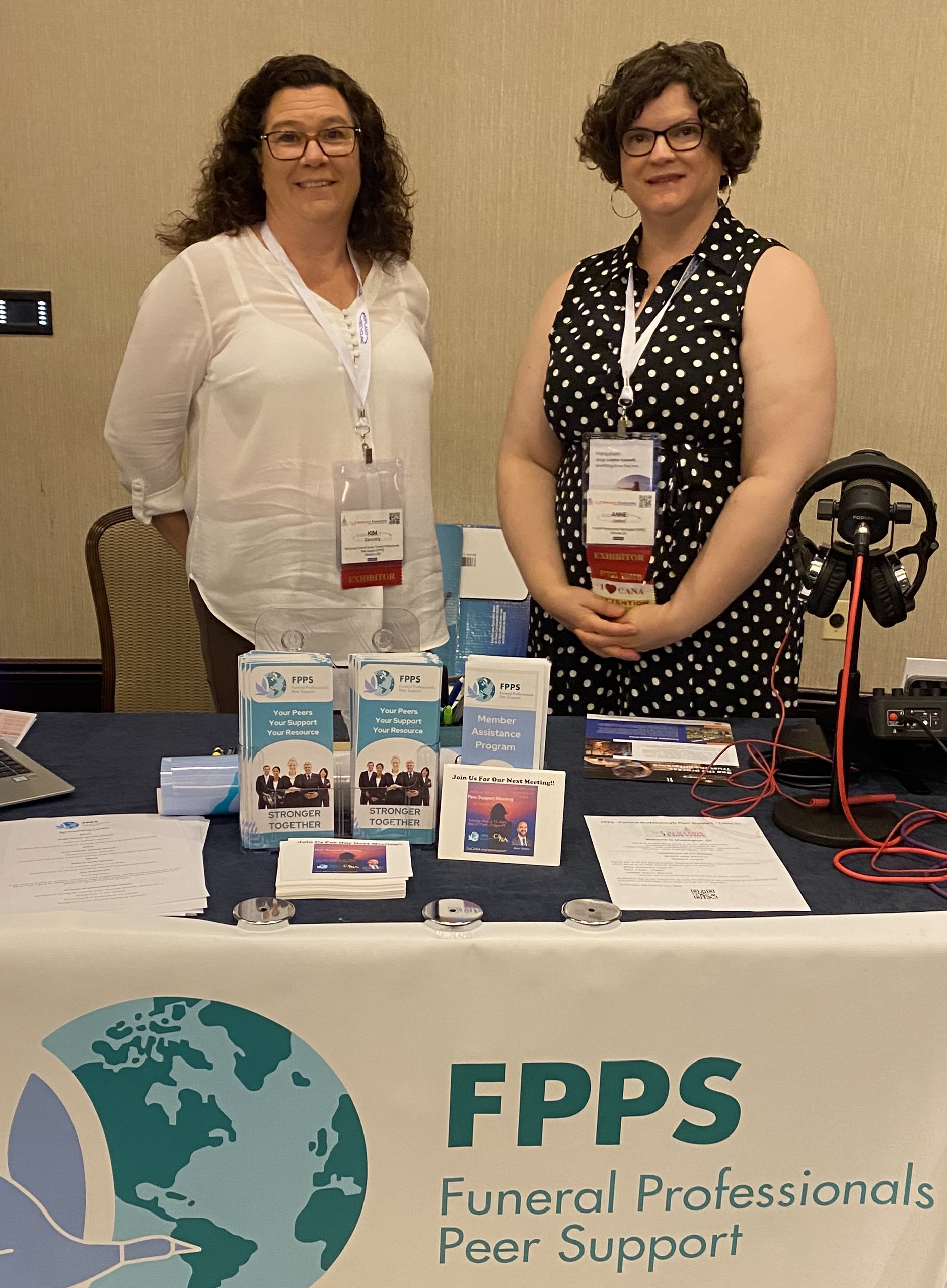
You really need to be able to reach out to someone who understands what you’re going through who’s willing to listen. And that’s what we offer with FPPS. We give everyone the opportunity to feel connected, validated and understood in a supportive, non-judgmental environment.
How did it get started?
It was founded in Canada in 2018 and expanded into the U.S. in 2021. Anyone can attend our online meetings. There’s no charge to attend meetings, and there’s 24-hour hotline that immediately connects someone in distress with a licensed therapist.
In addition to providing wellness resources to help retain good people in our industry, our mission is to educate and advocate and to foster a network of peer support groups across the world.
Do you have members outside of North America?
We have a group in Kenya, and we’ve been approached by groups in other countries.
How did you get involved?
It was during COVID. One of my former classmates in Canada posted that the FPPS had Zoom meetings, and I decided to pop in and see what was happening. So, when it opened in the U.S., I volunteered to run it to get the word out.
The content on the website makes a point of presenting the group as a family. Even going so far as to say “We are that brother or sister that always has your back.” So it’s a place peers can go to learn from one another but also to lean on one another in difficult times. Can you give us an example of how a sense of family helped you get through a difficult time?
Eight years ago, we had two sheriff’s deputies die in the line of duty. Both of their services came through our funeral home in about a week and a half or so. It hit everybody pretty hard. We’re a fairly tightly knit community, and we hadn’t lost anyone in law enforcement in 100 years. And here we’d lost two. None of us had time to process it. We were busy taking care of the families. But when it was all over, we all got together at our weekly meeting and watched a video of the service that had been captured on dashcams in the hearses. And there wasn’t anybody who didn’t have tears in their eyes. We were passing the tissues around, because we hadn’t been able to let our guard down during all the preparations and the service. We were finally able to acknowledge the emotion we had felt during that time. It allowed us to experience the camaraderie we had together. In a typical workplace you’re not going to cry in front of your colleagues. It helped all of us. It was a powerful moment.
But not everyone has management as understanding as ours. So that’s another reason why it’s important to have FPPS available to everyone who needs it.
With all the challenges that funeral directors face today, even in a well-run, well-staffed business, what keeps you in the profession?
It’s the satisfaction that you get from the families that you serve. If you’ve done your job, you’ve given them what they needed and wanted for their loved one, a simple thank you at the end of service time means a lot.
What would be your top two pieces of advice for your peers?
First, you need to disconnect when you’re out of the office. It’s ok to put your phone down. Don’t look at emails or text messages. If you’re able, it’s actually a good thing to have two phones. I have a work phone and a personal phone. So when I’m off, I do leave my work phone and just take my personal phone. No one other than work related people have my work phone number.
Second, have a great support system at home. You need to have those people that understand your passion and what you need to do to fulfill that passion.
May We Suggest:
 Why is Death Midwifery Important? (Interview)
 Are Funeral Homes a Dying Breed?
 What Is The Benefit of A Member Owned Cooperative Funeral Home? (Interview)





Leave a Reply