

What Can Awareness of Death Teach Us About Life? (Interview)An interview with teacher, author and spiritual guide, Frank Ostaseski
Today SevenPonds speaks with Frank Ostaseski, an internationally respected Buddhist teacher, cofounder of the Zen Hospice Project, and founder of the Metta Institute. Frank has lectured at Harvard Medical School, the Mayo Clinic, and Wisdom 2.0, and teaches at major spiritual centers around the globe. He is also the 2018 recipient of the prestigious Humanities…

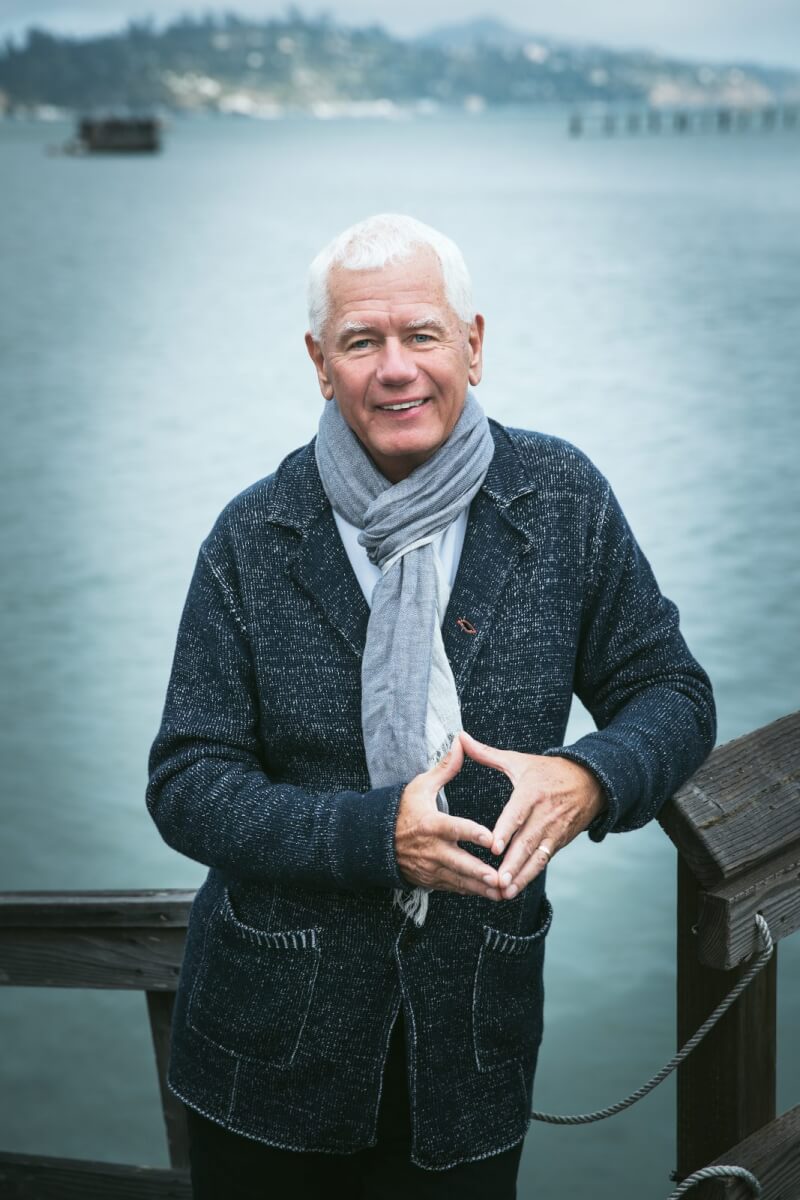
Today SevenPonds speaks with Frank Ostaseski, an internationally respected Buddhist teacher, cofounder of the Zen Hospice Project, and founder of the Metta Institute. Frank has lectured at Harvard Medical School, the Mayo Clinic, and Wisdom 2.0, and teaches at major spiritual centers around the globe. He is also the 2018 recipient of the prestigious Humanities Award from the American Academy of Hospice and Palliative Medicine.
Frank Ostaseski’s groundbreaking work has been featured on the Bill Moyers PBS series “On Our Own Terms,” highlighted on “The Oprah Winfrey Show,” and honored by H.H. the Dalai Lama. He is the author of “The Five Invitations: Discovering What Death Can Teach Us About Living Fully.”
Editor’s Note: This interview has been edited for length and readability.
__________________________________________________________________________
Kathleen Clohessy: Thank you so much for speaking with me today, Frank. Can we start out with you telling us how you came up with the five invitations that are the basis for your book?
Frank Ostaseski: “The Five Invitations” are my attempt to honor the lessons I have learned sitting bedside with so many dying patients. They are five mutually supportive principles, permeated with love. They have served me as reliable guides for living life with an awareness of death. And, as it turns out, they are equally relevant guides to living a life of integrity.
I think of these as five bottomless practices that need to be lived into and realized through action.
An invitation is usually thought of as a request to participate in a particular event. The event is your life, and my book is an invitation for you to be fully present for every aspect of it.

Kathleen: What inspired you to write this book now?
Frank: The writing grew out of my work as the founder of the Metta Institute and cofounder of the Zen Hospice Project, the first Buddhist hospice in America. Both organizations were a fusion of spiritual insight and practical social action. My aim has been to reclaim the soul in caregiving and restore a life-affirming relationship to dying.
Our society is more open to discussing death today. However, the predominant view is still that dying is a medical event and that the most we can hope for is to make the best of a bad situation. I have witnessed the pain of people going to their deaths feeling themselves to be victims of circumstance, suffering ill consequences because of factors that were beyond their control, or worse yet, believing that they were the sole cause of their problems. As a result, too many people die in distress, guilt and fear.
I thought that in writing the book I could do something about that.
Kathleen: As I understand it, you believe that dying isn’t something we prepare for in the last months or weeks or even years of our lives, but something we need to be conscious of throughout our lives. Can you explain why that’s true? What does awareness of death teach us about life?
Frank: In the light of dying, it’s easy to distinguish what leads us toward wholeness, and what inclines us toward separation and suffering. Without an awareness of death, we tend to take life for granted, often becoming lost in endless pursuits of self-gratification. When we keep death at our fingertips, it reminds us not to hold on to life too tightly. We take ourselves and our ideas a little less seriously. We let go a little more easily. When we recognize that death comes to everyone, we appreciate that we are all in the boat together. This helps us to become a bit kinder and gentler with one another.
We can harness the awareness of death to appreciate the fact that we are alive, to encourage self-exploration, to clarify our values, to find meaning and to generate positive action. It is the impermanence of life that gives us perspective. The habits of our lives have a powerful momentum that propel us toward the moment of our death. The obvious question arises: What habits do we want to create?
Death is a good companion on the road to living well and dying without regret.

Kathleen: One of the things you say in your book is that the idea of a “Good Death” is largely a myth – that while death can be transformative, “Very few people walk toward the immense challenge of dying and find peace and beauty there.” Can you expand on that a bit?
Frank: In my experience, the romantic expectation of a “good death” can place an immense and unnecessary burden on people who are dying. It’s up to them to do it well.
It is important to examine and improve the systems and conditions in which people die. Let’s make them “good” so people can die in a way that best suits them. Studies show that approximately 80 percent of Americans prefer to die at home. Despite this, 60 percent of Americans die in acute care hospitals, 20 percent in nursing homes and only 20 percent at home. A minority of deaths occur in hospice care, and the average length of stay is only 22 days.
Medical technology has dramatically altered the dying experience. The idea of a “natural death” is slowly vanishing from our culture, having been replaced by a more antiseptic, institutionalized death managed by medical professionals. There are wonderful benefits to modern treatments and interventions, and remarkably dedicated people delivering that care. However, there are also serious drawbacks. Witness the advances in life support, where the line between who is alive and who is dead has become increasingly hazy.
Let’s stop putting pressure on people to “die a good death” and instead fix our health care system so that people can have “good” supportive conditions and appropriate care. When folks are dying they need intensive care—intensive love, intensive compassion and intensive presence.
Kathleen: You spend some time in the book talking about hope. In my experience, many people in the “death positive” community today tend to confound hope with the desire to avoid or “defeat” death. But you see hope differently. Can you talk about that?
Frank: There is a buoyancy in hope that is a basic human need.
To discern the real value of hope, we must draw a line between hope and expectation. Our usual kind of hope is little more than wishful thinking. It becomes object-focused. It’s frequently tied to an almost childlike belief, sometimes even blind faith, that an external agency or authority will bring about what we desire. Driven by our preference for a different set of conditions, this conventional view of hope is a rejection of what is present in the here and now. It is the flipside of fear. It takes us outside of ourselves.
We need to rework our understanding of hope. I speak about mature hope, a hope that takes us inside ourselves and toward finding the good in the experience.
Mature hope requires both a clear intention and a simultaneous letting go. This hope is not dependent upon outcome. In fact, hope is tied to uncertainty because we never know what will happen next. The hope is in the potential for our wise and compassionate response, not in things turning out a particular way. It is an orientation of the heart, a trust of our basic human goodness. That trust guides our actions and allows us to cooperate with others and to persevere, without attachment to a specific result. In illness, mature hope helps us come to a place of wholeness, even if a cure is unavailable.

Kathleen Clohessy: In your book, you discuss the need to confront our suffering in order to access the innate qualities that allow us to heal. But that’s such a difficult thing to do. Where/how does a person — someone who doesn’t have a foundation in contemplative practice or even spiritual practice – start?
Frank: In Western culture, we are taught that if suffering exists, something is wrong. It is a mistake. It has no value.
As a result, we have become masters of distraction. Our primary human practice is to protect ourselves from discomfort. Each day consumed with distraction; surfing the Internet, watching TV, working long hours, drinking, eating. Our approach naturally leads to epidemics of alcoholism and drug abuse; compulsive overeating, gambling, and shopping; and an insecure attachment to our technological devices.
Suffering is exacerbated by avoidance.
The willingness to see and accept what is true is the first step in working with suffering. The great African-American writer James Baldwin once said, “Not everything that can be faced can be changed. But nothing can be changed that is not faced.”
Suffering occurs as a chain reaction: stimulus-thought-reaction. We may not have any control over the stimulus that causes us pain. But we can shift our relationship to the thoughts about and emotional reactions to the pain, which frequently intensify our suffering.
After my heart attack and a triple bypass surgery a few years ago, a famous Tibetan Buddhist teacher kindly called to wish me well. I knew he had heart problems himself, so I asked him how he dealt with it all — the drama, the confusion, the depression and the beauty. I expected him to offer me some esoteric meditation practice.
Instead there was a pause, after which he said, “Well, I thought to myself, it’s good to have a heart. And if we have one, then we should expect it will have problems!” The teacher giggled in his very Tibetan way, reminded me to get plenty of rest, and hung up the phone.
I realized he was right. It was true. All humans have problems. All beings feel pain. Once I was able to accept that I had a fragile human heart I could relax around this temporarily painful situation. In so doing, my suffering also relaxed.
We don’t need to meditate to learn to work with suffering, (although that could help). We just have to be willing to look, to become familiar with that which we are trying to avoid.
When you are afraid, don’t you know that you’re afraid? Sure, there are signs and symptoms; maybe your mouth gets dry, your chest tightens, your mind starts strategizing. Becoming familiar these signals helps us to identify fear as it’s arising and provides the opportunity to intervene with fear before it becomes panic.
If you know you are afraid, the part of you that knows, that is aware of the fear, is not afraid. Then we have a choice, to function from the fear, or to function from the knowing.
Kathleen: I particularly enjoyed the section of your book “Bring your whole self to the experience,” where you discuss the “inner critic” and how it shapes so much of our lives. Can you talk about it a bit? Where does this critical voice come from? More importantly, how can we stop it from dictating how we live our lives?
Frank: The critic is the enforcer, demanding compliance to an acquired set of standards and moral codes. It’s the voice that says, “My way or the highway.” Often in our most vulnerable moments, when we would benefit from tenderness, we club ourselves with self-judgment.
The inner critic knows your every move, every trick up your sleeve, every bit of your past. You shower with it. Take it to work. It sits next to you at every meal and even sticks around for dessert. It’s there during and after sex. And yes, it’s also there when you are dying.
The pursuit of perfection is learned early on and, for most of us, becomes a lifelong addiction. This is why, in order to bring our whole self to the experience, we must address the often unconscious, corrosive voice of the inner critic.
When all of us were children, our well-intentioned parents and other authorities did their best to show us right from wrong and protect us from harm. We needed guidance to grow into a healthy adulthood and navigate our way through society’s codes of conduct. Gradually we internalized that judging voice.
The critic is the protector of ego. It denies everything else. It doesn’t know your soul. It doesn’t trust your heart. It doesn’t have faith that your intuitive gut sense. It doesn’t trust in your ability to reason and evaluate as a way to navigate through life’s dilemmas. We must be willing to act on our own behalf.
There is an alternative to the critic. It’s found in the movement from judgment to discernment. Judgment is a harsh and aggressive habit. It shuts down the conversation, binds us to the past and old behaviors. Discernment makes space, helps us to have perspective, and allows more of our humanity to show up. Then wisdom can emerge and we can choose a more beneficial future.
The critic may have served a purpose back in kindergarten, but it’s time to trade in our old model.

Kathleen: You also spend some time in your book discussing our addiction to “busy-ness,” and the importance of finding a place to “rest in the middle of things.” Assuming that many of our readers are not skilled in mindfulness or meditation, what tips could you give them for learning to find an oasis of calm in their lives?
Frank: I love to lie in bed on a cold winter morning. The sheets are soft and warm. My body is well rested and enjoys taking refuge under the blankets. My mind is at peace and has yet to leap forward into the day’s tasks. For a while, all is right with the world. A moment of perfection.
Then I have to pee.
After a moment of resistance, I run quickly to the bathroom. Upon attaining the temporary ease of release, I leap back under the blankets in the hope of re-creating perfection. But I can’t get everything back the way it was just moments earlier. I can’t create conditions that are capable of providing an enduring happiness that is resistant to change.
The gift of impermanence is that it places us squarely in the here and now. It relaxes the tendency to manipulate the conditions to achieve happiness. We learn to let go into uncertainty, to trust that our basic nature and that of the world are not different. Then the fact that things are not solid and fixed becomes a liberating opportunity, rather than a threat.
Reflecting on this might cause us to savor the moment, to imbue our lives with more appreciation and gratitude.
Kathleen: You also talk about different types of courage, one of which is the courage to be vulnerable. In our society most people look at vulnerability as weakness, but you say that’s not true. How so?
Frank: Vulnerability is not weakness; it is non-defensiveness. The absence of defense allows us to be wide open to our experience. Less defended, we are less opaque and more transparent. We become sensitive to the ten thousand sorrows and the ten thousand joys of this life. If we are not willing to be vulnerable to pain, loss, and sadness, we’ll become insensitive to compassion, joy, love, and basic goodness.
The courage to love requires vulnerability. Is there a more vulnerable state than love? It is full of risk, uncertainty, intensity, intimacy, conflict and truth-telling. Being vulnerable means we are sensitive, impressionable, more receptive to others and to our own inner guidance. We recognize the illusion of control, the reality that suffering is inevitable, and we are invited to release our grips and let go into the inexplicable and unpredictable.

Kathleen: We live in such a divided, polarized society today, it seems that everyone is so firmly entrenched in their positions that we can’t see anything but our own point of view. Do you have any suggestions as to how we as individuals can begin to change that?
Frank: To be human is much more than being born, getting an education, finding the right partner, or buying a pretty house on a nice street, just so that you can sleep, wake, work, go to bed, and do it all over again.
It’s an invitation to feel everything, to come into direct contact with the strange, beautiful, horrible, and perfectly ordinary thing we call life. It is an opportunity to be conscious of the fact that some of us will make love while others make war. To recognize the truth that there are babies like my granddaughter born into loving arms and caressed by a mother who kisses her bright future into her child’s cheeks, and there are babies like Carolyn, a woman I knew whose parents left her in a dumpster as a baby.
To be willing to see that there are teenagers being shot in our schools and others that are speaking truth to power. To embrace the night screams in Syrian refugee camps and the giggling of children in living rooms under tents made of couch pillows and bed sheets.
There is devastation and hopelessness, and there is passion and holy commitment to creating a better future for everyone.
Kathleen: Lastly, of the five invitations, is there one that you believe most important? If I could incorporate just one of them into my life, which would you suggest it be?
Frank: I think that is a good question for your readers. Pick one and start. As John Muir once said, “When we try to pick out anything by itself, we find it hitched to everything else in the Universe.”
Kathleen: Thank you, Frank, for sharing your insights with me and our readers at SevenPonds. It’s been a pleasure!
May We Suggest:
 How Can People Overcome the Effects of Trauma in Their Lives? (Interview)
 How Can Confronting Our Suffering Enrich Our Lives? (Interview)
 What Is Exercise Therapy and How Can It Ward Off Dementia? (Interview)
-

Great interview! Waiting for more! By the way, I think it tells a lot, who draws what conclusions from the perspective of imminent death. Mr Ostaseski obviously is a good and active man, that’s why inevitability of death makes him more kind. But I know couple of people in whom the same inevitability of death awakens depressing sense of purposelessness of life. I also remember some I’ve read some gangsters justify killing with ‘everyone’s gonna die anyway’. So in the end it’s all about what is in us, I think.
-
What a pleasure to read this interview. Mr. Ostaseski’s explanation of death positive was spot on. I agree it is a childlike belief. It’s those at the bedside like him who are helping us redefine words, how to view and accept death. I’m greatly looking forward to reading his book.




Leave a Reply