


What Family Caregivers Need to Know About Showering a Loved One (Interview)An interview with experienced caregiver Elizabeth Martins. She explains step-by-step techniques, shares safety precautions and addresses sensitive situations
Throughout her long career as a nurse, Elizabeth Martins worked extensively with the aging population, including in an Assisted Living+ (Memory Care) facility that was for late-stage Dementia/Alzheimer’s patients. This interview has been edited for length and clarity. Martins is now retired, though she occasionally picks up some professional caregiving work. She lives in The…

Throughout her long career as a nurse, Elizabeth Martins worked extensively with the aging population, including in an Assisted Living+ (Memory Care) facility that was for late-stage Dementia/Alzheimer’s patients.
This interview has been edited for length and clarity.
Martins is now retired, though she occasionally picks up some professional caregiving work. She lives in The Villages, Florida and is a family caregiver for her father. Here, she shares her expert tips for family caregivers on successfully showering a loved one.
Can you walk us through the steps of what you do when giving a loved one a shower?
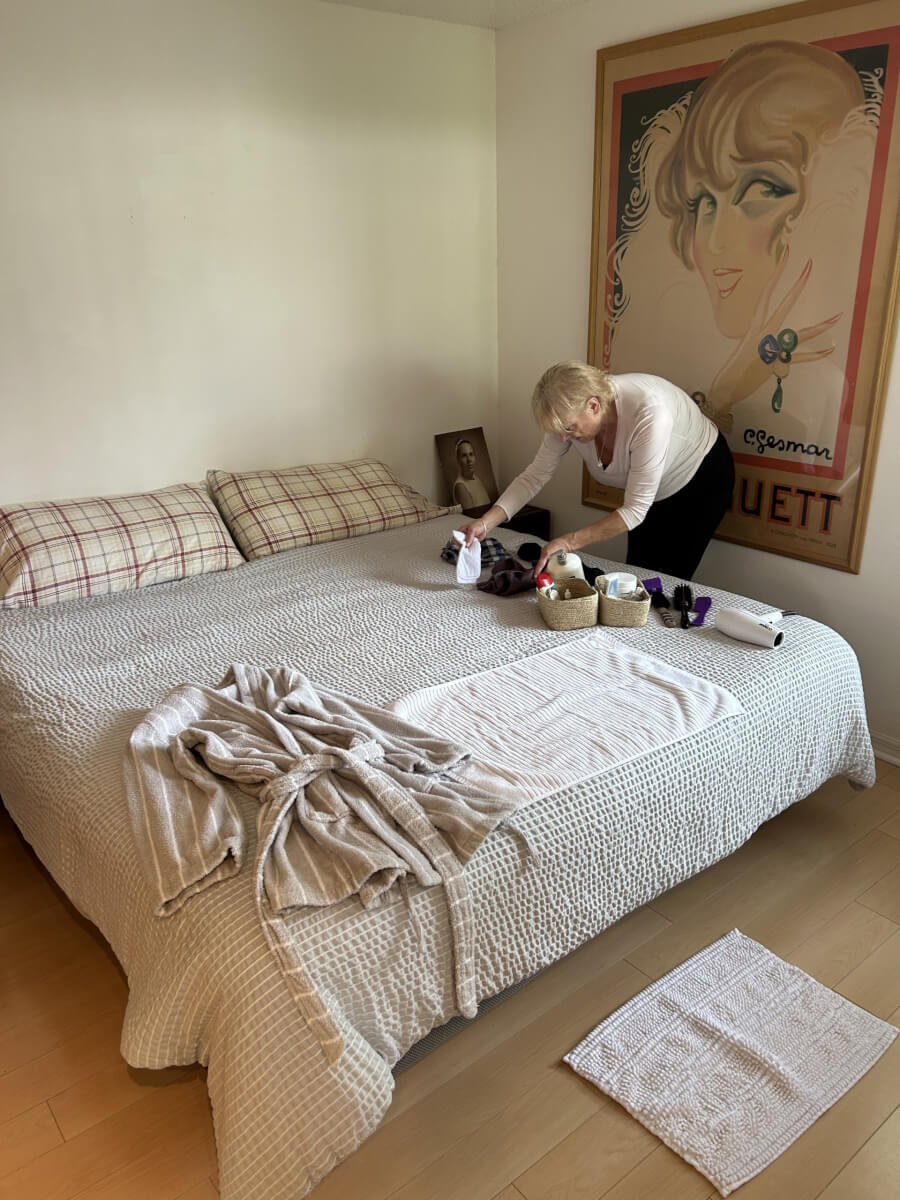
It’s important to do some preparations before you begin. Dress comfortably and expect to get wet. You may also want to wear a shower cap. Make sure to gather all items ahead of time. Creams, lotions, potions, deodorant. Have them all lined up, so you don’t need to reach. You can’t forget a washcloth or anything like that. If you do, it’s like they lose trust in you.
Here is a step-by-step guide to washing an aging but still mobile person who uses a walker or a wheelchair.
- Ask about toilet needs first. Before beginning, always ask if they need to use the toilet.
- Preserve their autonomy. Let them know they still have a voice. Check in with them about any needs or concerns they have, and tell them to speak up at any time during the shower if something doesn’t feel right.
- Prepare the shower area. Make sure there is a shower seat appropriate for the type of shower, whether it is a tub or walk-in style. Ensure rubber non-slip pads are on the shower or tub floor. It’s also important that any floor mats have rubber backing to prevent falls.
- Warm up the seat. Run hot water over the shower seat first so it is warm and comfortable when they sit down.
- Offer a warm robe and slippers. Ask if they would like to be wrapped in a warm robe with slippers for the walk to the shower. Some people prefer to walk in without a robe — respect their preference.
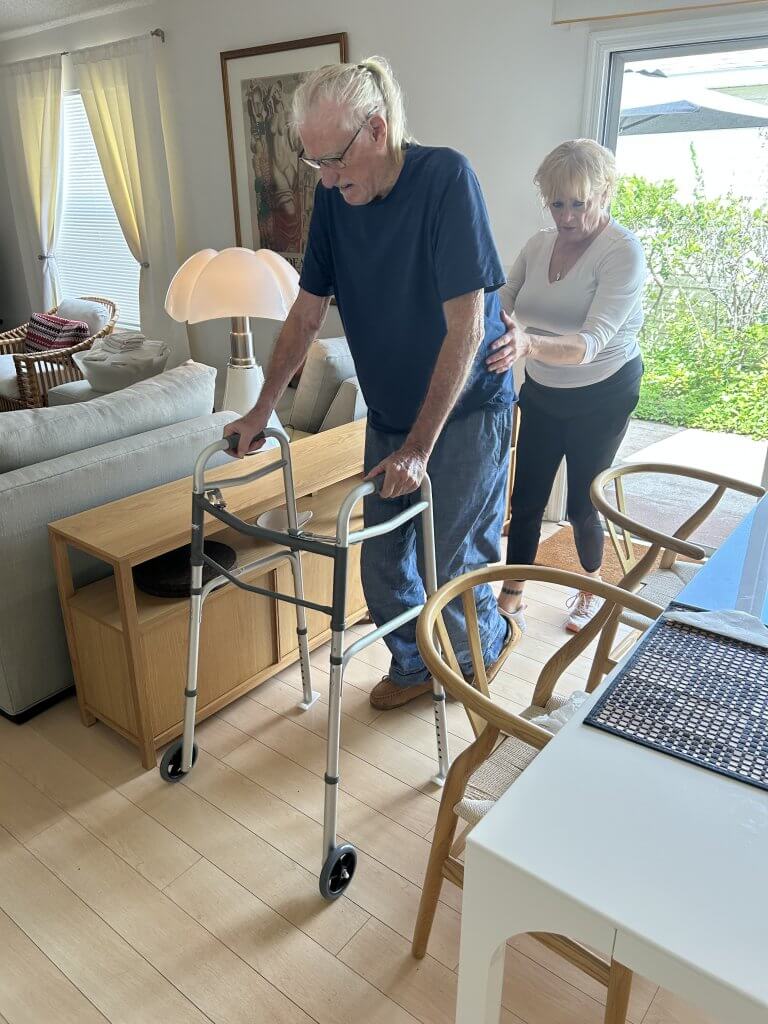
- Escort them safely to the shower. Walk behind them with your hand on their back to help them feel secure and supported.
- Check the water temperature. Ask what temperature they prefer and confirm that they’re comfortable when they enter the shower with the water on.
- Help them to the shower seat. Have them walk in and sit on the stool. Work efficiently — aim to complete the shower in 15 minutes or less.
- Wash their body. Use a soft liquid soap and a scrubbie to wash their body thoroughly. Avoid bar soap, as it can be slippery and dangerous.
- Have them stand to wash hard-to-reach areas. Ask them to stand so you can wash their behind and the back of their legs. Use a separate, designated washcloth solely for cleaning between the buttocks to maintain proper hygiene. (Note: If the person is an uncircumcised male, gently wash under the foreskin as well.)
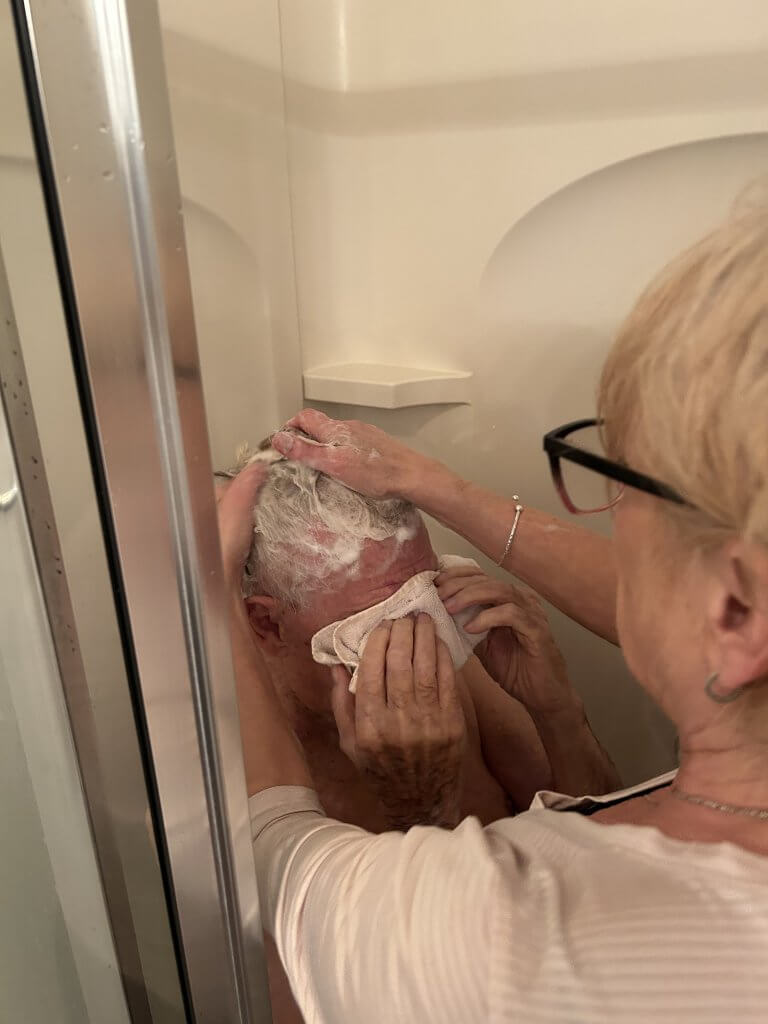
- Wash their hair. Use a no-tears shampoo and have them hold a washcloth over their eyes to keep soap out. Follow with conditioner, as thinning and fine hair is common with aging.
- Encourage dental hygiene if able. If they are capable, hand them a toothbrush with toothpaste and allow them to brush their own teeth, encouraging their independence.
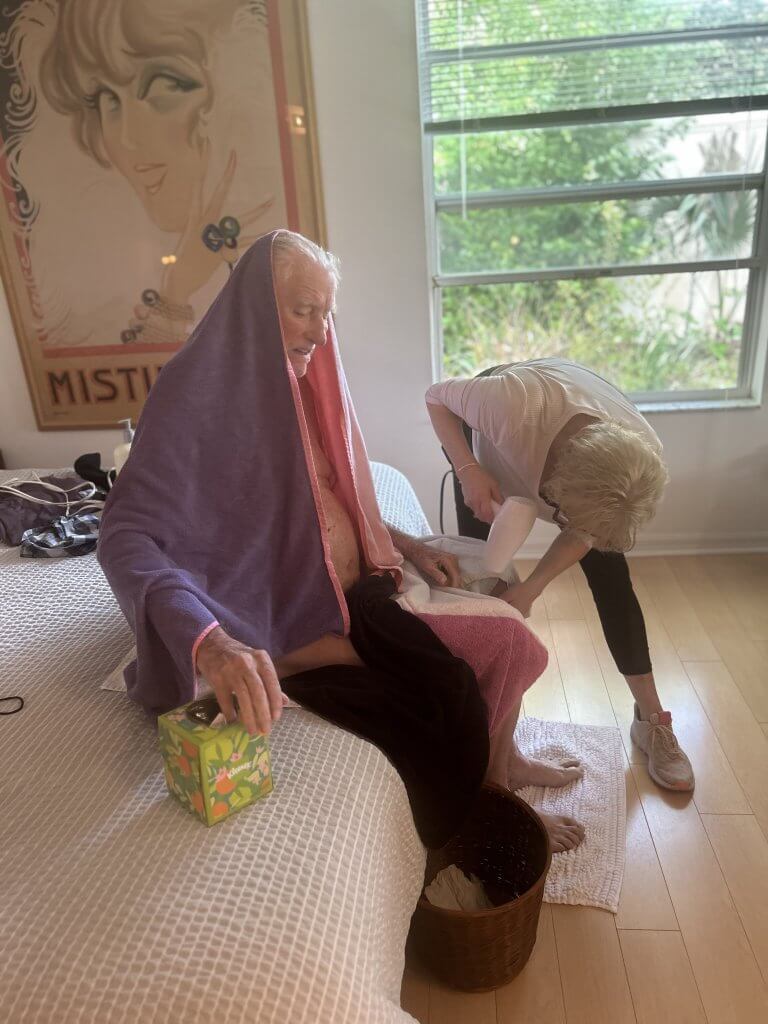
- Dry them off in the shower. Use two large beach towels to dry them as thoroughly as possible while still in the shower — beach towels are ideal because they are large and highly absorbent. Another trick is to use a hairdryer on low heat underneath the towels for several minutes. Dry their feet carefully, then assist them out of the shower. It’s important not to put hearing aids back on until drying is done due to the stress of the noise levels.
- Remove floor mats after the shower. Once they have stepped out, remove any floor mats so they do not trip on the way back to the toilet or bedroom.
- Consider Energy Levels. Showering can really take a lot out of an aging loved one. After their shower, have them sit for a minute. Then, stand them up and walk them to wherever they’re going to go. Make sure to have the bed ready to go just in case. Ensure that the sheets are clean and smooth and tuck them in. For comfort, use cotton sheets.
Why is Bathing Such an Important Aspect of Caregiving?
Family caregivers should know that hygiene and other safety issues require a lot of monitoring. By keeping on top of their hygiene, you have the ability to see if there are any problem spots before anything happens. Places to check are shoulders, elbows, knees, buttocks, heels, coccyx/hips, back/sacrum and ears; these are pressure points. Check for any unusual-looking areas. Be on the lookout for bruises, abrasions and/or cuts. Purple areas or discoloration is the first sign of the skin breaking down. Check fingernails and toes.
[Editor’s note: While this guide is focused on still-mobile people, it is crucial to know that bedridden folks who can’t move themselves need to get repositioned every two hours.]
Why Is It Difficult for Older Adults to Bathe Themselves?
There are many reasons older adults struggle to shower, but one of the main reasons is whiteouts. Their visual perception changes. Their peripheral vision is gone a little bit. It’s an issue with visual depth and a lack of visual density. When they get to a white floor, you see them try to keep stepping on it.
Older adults with dementia often don’t recognize themselves in the mirror because they’ve forgotten time. It stops at whatever age it stops at. In their minds, they’re not old; they’re still 20 or 30. I know from watching them. A lot of the women carry baby dolls everywhere. They want their babies. Other times, they go back to when they were children.
The first time I saw a patient say, “Why is the person in the bathroom with us?” I thought, “There’s no way.” With anyone in this stage, there are good days, worse days and some days are impossible. You have to enter their world, not the one they used to be in. You’ll never succeed as a caregiver if you fight it.
This population also has trouble showering due to sensory processing differences that come with age. They don’t want anything on their own skin. It actually hurts their skin. You have to be careful of fabrics. It’s best to keep things soft. Be careful not to put them to bed in really heavy clothing, either. Even if they are non-speaking, they will let you know what they want. You’ll see it in their eyes or in body movements like shirking or twitching.
While it is common for older people to get cold in all types of weather, that is not true for everyone. However, if the patient does, people here [in Florida] wear sweaters. You put on warmer clothing. Again, it’s important to use soft fabrics like fleece. Layers help. Put them in short sleeves with a long-sleeve shirt over it. That way, if they get too hot, they can remove a layer. One really important health tip is to make sure they get at least 15 minutes of sun a day.
Due to a lack of concept of time, they look at the shower as a torture chamber. However, they can’t keep going on week after week without a shower. Sometimes you have to play games with them. It’s important to watch out because some will say they showered when they didn’t. On the Assisted Living+ unit, we had to lock up clothing because they layered to avoid showering. One way to prevent this is to use different types of clothing. They make adaptive clothing for those with limited mobility and those with Alzheimer’s or dementia. For example, one available item is a jumpsuit that zips up the back so people can’t get out of it.
Where Can Family Caregivers Find Support?
Many family caregivers are not in the medical field, so they don’t have what they need on hand. There is not enough out there to support family caregivers. They often get themselves in bad situations and lack the tools and resources to provide care without exhausting themselves to the point of burnout.
It’s true that there are more support groups for caregivers than there used to be, but you will often feel alone as you navigate caretaking tasks. Hospice programs will sometimes come out and show you how to properly care for your loved one. Some may also have options for \ respite care for you as well, so that you can take a break. However, right from the start, make sure you take the opportunity to ask as many questions as you can.
Find out if hospice providers or local organizations in your area provide informational packets with references. That way, you ensure that you have all the possible resources at your disposal should you need to carry on without additional help..
May We Suggest:
 What to Say to a Friend Whose Spouse Has Dementia
 Why is Death Midwifery Important? (Interview)
 How to Comfort A Dying Loved One (Interview)
-

Family caregivers often learn by doing. Practical guidance like this can make everyday care safer, more compassionate, and a little less overwhelming. Thank you!
-
I used to put on a brave face every time I helped my mom shower, like if I stayed cheerful enough it would somehow be less hard for her. One day I just got quiet and said “this is hard, and I love you.” She squeezed my hand and said that meant more to her than all my smiling ever had. Wish I’d let her see me sooner.
-
I love this website. It’s the practical advice I most appreciate. It warms my heart.








Leave a Reply