


What Is the Legality of Home Burials In California? (Interview)An interview with attorney Barry Vogel
Barry Vogel is an attorney who had his own practice in Ukiah, California, for over 40 years. He mainly worked to protect clients’ personal rights and social justice rights. He’s worked on cases regarding the constitutional right to be buried on your own private property, a.k.a. home burials. Vogel also hosts a radio program called…

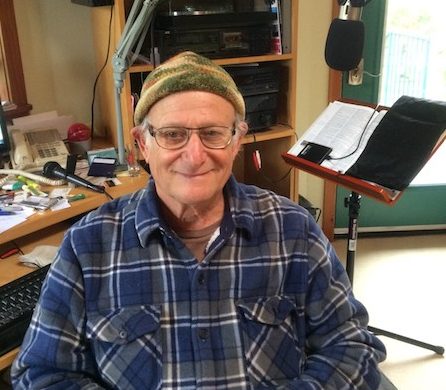
Barry Vogel is an attorney who had his own practice in Ukiah, California, for over 40 years. He mainly worked to protect clients’ personal rights and social justice rights. He’s worked on cases regarding the constitutional right to be buried on your own private property, a.k.a. home burials. Vogel also hosts a radio program called Radio Curious, which he’s done since 1991.
Editor’s note: This interview has been edited for length and clarity.
Lucas Morgan: Hello Barry! Thanks for taking the time out to speak with me today. Why did you decide to become an attorney?
Barry Vogel: Legal issues were common topics in my household growing up. My dad was a lawyer and my mother was a psychologist. So we talked about law and psychology a lot at the dinner table, more so than sports or the weather. I learned at a young age that law is the best tool for social change. So that is what prompted me to go to law school.
Lucas: For how long were you an attorney?
Barry: I graduated from college in 1964 and was in the Peace Corps for two years in Peru. I went to law school in 1966 and graduated in 1969. At that point, the National Legal Services Foundation that was funded by Congress had fellowships for people who wanted to be community activists/organizers.
I thought it was a long shot, but I applied and got that fellowship and got a job in Rhode Island. I spent three years there from 1970 to 1973 and settled in Ukiah, California where I’ve been ever since. I ran my own law practice except for two years between 1999 and 2001 until June of last year (2018). My license is still active.
Lucas: What is the legality of home burials in the state of California?
Barry: It’s not nearly as cut and dry as it should be. The mortuary industry is the one that tends to control what’s going on in terms of home burials in California. In three states (California, Washington and Indiana) it is a criminal offense to bury someone outside of a cemetery. With that said, there are two code sections in California law that control home burial practice, but they also contradict each other.
Health Code section 7054 reads that it is a misdemeanor to bury someone outside of a cemetery. This is the section that the mortuary industry and Clerk of Vital Statistics refer to if they issue a legal refusal to bury somebody on private property.
property in California is not entirely clear
Credit: aglandloans.com
And then there is Health & Safety Code section 103055 that reads (in part):
“If the certificate of death is properly executed and complete, the local registrar of births and deaths shall issue a permit for disposition that, in all cases, shall specify any one of the following:
1. The name of the cemetery where the remains shall be interred;
2. Burial at sea as provided in Section 7117;
3. The address or description of the place where remains shall be buried or scattered;”
Subsection three here is in direct contradiction to the interpretation that remains must be buried in a cemetery. So it is not as clear of an issue as it should be.
Lucas: Wow, those do seem to be quite contradictory. How many home burial cases have you been a part of?
Barry: I’ve been involved with two home burial cases, but I am very interested in it as a topic in general. The first case regarded Carrie Hamburg in 2013.
Lucas: Could you describe the Carrie Hamburg petition/case?
Barry: About six to eight weeks before she died, Carrie made it very clear in meetings with me (I had also known her for over 30 years) and had written in a legal declaration stating that she wanted to be buried on her rural private property and why. She was buried on the family’s 46-acre rural property. However Mendocino County originally did not issue a burial permit, so the law was technically violated.
So we had to get the courts involved. The case/lawsuit was argued substantially in writing. It was the first one that began to shift the paradigm regarding rural home burials in California. The lawyers from Mendocino County ultimately said they would not object to the issuance of a burial permit on the family’s land as long as Dan Hamburg (her husband) waived his right to attorney’s fees.
Dan agreed to waive that right. I applied for an order for a judge to sign, and we were in and out of court in less than five minutes, even though we didn’t actually go into court until six weeks after we had filed the petition. So even though the original permit was not issued, and there was technically a violation, we were able to receive the legal permission needed for her to be buried on the family’s rural property.
Lucas: Are there public health issues that may arise regarding home burials and potential contamination?
Barry: On the Radio Curious website I have posted the court documents from the Carrie Hamburg case. There are declarations from two public health officials in Mendocino County.
In particular, they describe the lack of any public health problem if anyone is buried on rural private property as long as they’re buried at least 100 feet from a water source. So if the body or remains are far enough away from a water source, there’s no public health hazard. One of the doctors wrote, “wild animals dying in watercourses or cattle defecating in watercourses are far more likely to cause infectious disease than whole body burials on rural parcels of property.” So generally there are no public health issues to worry about.
Lucas Morgan: What was the other home burial case you worked on?
Barry Vogel: A man in his 30s had an accidental death on some property in western Sonoma County, a 1,100-acre parcel where he grew up and was living. Because of the accidental death of an otherwise healthy man, the coroner was notified, an autopsy was performed, and the cause of death was determined. The coroner returned the body to the mortuary, and the man’s parents decided they wanted a home burial.
There’s a law that says a body must be returned if the family of a person who has died wants their loved one’s body. The man who died was not married and had no children, so his parents were the authority.
So the parents took their son’s body back home and buried him on the 1,100-acre property. The family then went to the coroner’s office and asked for a copy of the death certificate. The coroner’s office asked if he was buried yet and they said, “Yes, he’s buried on the 1,100 acres where he grew up.”
Lucas: I’m guessing that’s where you come into the story?
Barry: You bet because the coroner’s office responded by saying that home burials without a permit is a misdemeanor and the office actually recommended me to the family. The family called and came to see me the next day here in Ukiah. To make a long story short, I obtained a copy of the death certificate, and we filled out all the necessary paperwork to obtain a burial permit after the burial.
But still, we got resistance from the sheriff’s office. They threatened at one point to dig up the body. I wrote a letter to the public health officer of Sonoma County showing all the proper documents and asking that a burial permit be issued. I said that if the permit was denied, we would not hesitate to bring a lawsuit against them.
For me, these cases, including this one, come down to the issue of fundamental rights and the fact there was no compelling state interest against this home burial on a massive rural property. I stated in the letter that it’s clear we would win the case, would insist on attorney’s fees and that the County would have to pay. That was the last communication I had with them. So safe to say they agreed.
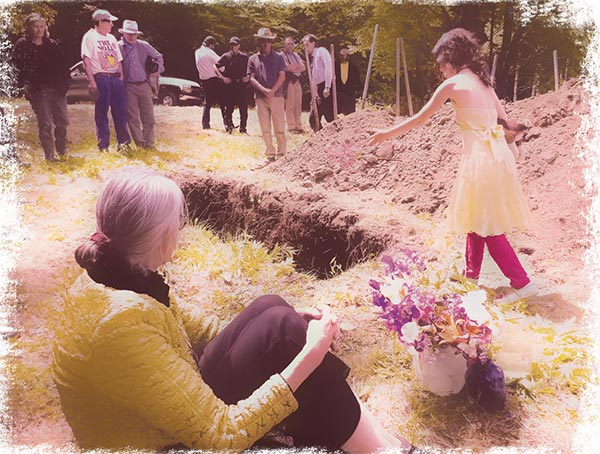
Credit: northernwoodlands.org
Lucas: Wow that is a fascinating story! Do people usually win these home burial cases?
Barry: The short answer to your question is yes. In my research and personal experience, that is the case. But do people usually bring these cases up? Are they common? No. This is because most people do not want to think about death, or they don’t want to be an active member of a county-wide home burial society. That being said, I think you need to have at least two people as plaintiffs in case the person petitioning for their own home burial dies during the process.
Lucas: How many different professionals would be involved in a home burial case, such as physicians or health officials?
Barry: The ones who would be involved, at least from my perspective, would mainly be public health officers. They’d have the most significant credentials. Professionals in water movement and/or contamination issues would also be beneficial to have on our side.
Lucas: What are the penalties someone could face if they are convicted of the misdemeanor of burying a body without a permit?
Barry: Penalties for any misdemeanor have maximums. Last time I looked, the maximums were a $1,000 fine or six months in jail. If a person were convicted, the choices would be to move the body or get a court order permitting it to stay.
Lucas: How would a home burial affect potential future owners of that property?
Barry Vogel: There should be a notice pertaining to the subject property saying something along the lines of “Notice of Unusual Circumstance.” That notice may not specifically say but, for a hypothetical example, perhaps there is a person buried in the northeast corner of the property 100 feet from the northern border and 100 feet from the eastern border. So the title would have “Notice of Unusual Circumstance” on it. Then the prospective buyer/new owner would need to inquire and have the conversation about it. It’s all about full disclosure, and the prospective buyer needs to get a full title report.
Lucas: Do you have any tips and/or suggestions for people who are interested in having a home burial in California?
Barry: In my opinion, people who want to be buried on their own land should tend to these issues prior to their death. I could see some recalcitrant counties bringing to issue that “the person’s not dead yet,” and that there’s nothing for the court to discuss, to which I’d have two responses. First, let’s go to Health and Safety Code Section 7100, which guarantees that a person can decide how their body will be disposed of after death. Secondly: death is not a hypothetical. It’s a fact of life. I think when you frame it that way to the opposition, they’ll generally back off.
People in a county could also organize a “Home Burial Society” to aid the process. They could file cases as a group and have all the paperwork filled out in advance and bring it to court. I believe most times they would win. I would also be willing to work with a group like that as I’m firm enough in my belief that they would win.
Lucas: Thank you, Barry, for speaking with me! I learned so much from our conversation.
Barry: Thank you Lucas, it was my pleasure.
May We Suggest:
 What Is Geropsychology? (Interview)
 Biohazard Cleanup: An Uncomfortable Subject Explained (Interview)
 How Can Families Save Money By Having A Home Funeral? (Interview)
-

I am in Sonoma County and live in a rural area. We have 5 acres. How would I be able to obtain a permit to be buried on the family property?
-
I am available for consultation on this matter.
-
-
I have a 20 acre parcel in Mendocino Co. on the southern coast. I would like to know the most expeditious method of pre planning a home burial and without the need for embalming .Is there some printed resource for this information?
-
My husband and I own 42 acres in Willits and are very interested in home burial. and understand the need to be buries away from any water source. What are the steps we should take now for that to be possible?
-
Hi Barry,
We have interest on our property for siblings and myself to if possible . Create a cemetery on our land
We have 2 adjacent parcels of aprox 18 acres in rural Jamul Ca.91935
Is there a way to create a family cemetery?
Thank you , Jose -
hello id like a consultation with you about some acreage I have in Madera county to use as a family burial plot. thank you.
-
Please have Barry vogel contact me or send me his email as I wish to be buried on my land north of covelo (40 acres).
-
Our family owns aprox 250 acres of rural property in Mendocino County
I want to be buried on our property , please list the different steps I would be required to
Take to legally be permitted to do this-
I would recommend contact Barry for his legal advice. Happy to hear we were helpful.
-
-
I have lived for over 50 years 5 miles outside of Point Arena Mendocino County on 160 acres of communal land and wish to be buried here, What do I need to do to have this happen legally so that my heirs don’t get in trouble?
Thank you for your advice Barry.
Appreciate my,
Cheeta




Leave a Reply