


Honing in on Psychedelic-Assisted Therapy in Palliative and End-of-Life CarePsychedelics have been used in cultural, spiritual, and medicinal practices for a very long time. However, it is in the last decade or so that Psychedelic-Assisted Therapy (PAT) has enjoyed a renaissance and has gone more mainstream
While there have been general discussions around the use of psychedelic-assisted therapy for addressing treatment-resistant anxiety, depression, Post-Traumatic Stress Disorder (PTSD), substance use disorders and more, there have been fewer discussions on its use in hospice and in palliative care. Now, that landscape is changing with promising studies, most focused on cancer patients with advanced…


While there have been general discussions around the use of psychedelic-assisted therapy for addressing treatment-resistant anxiety, depression, Post-Traumatic Stress Disorder (PTSD), substance use disorders and more, there have been fewer discussions on its use in hospice and in palliative care.
Now, that landscape is changing with promising studies, most focused on cancer patients with advanced or terminal prognoses. Although anxiety and depression are common among those with advanced and terminal illnesses, a considerable concern is demoralization: a sense of profound loss and hopelessness, which PAT hopes to address.
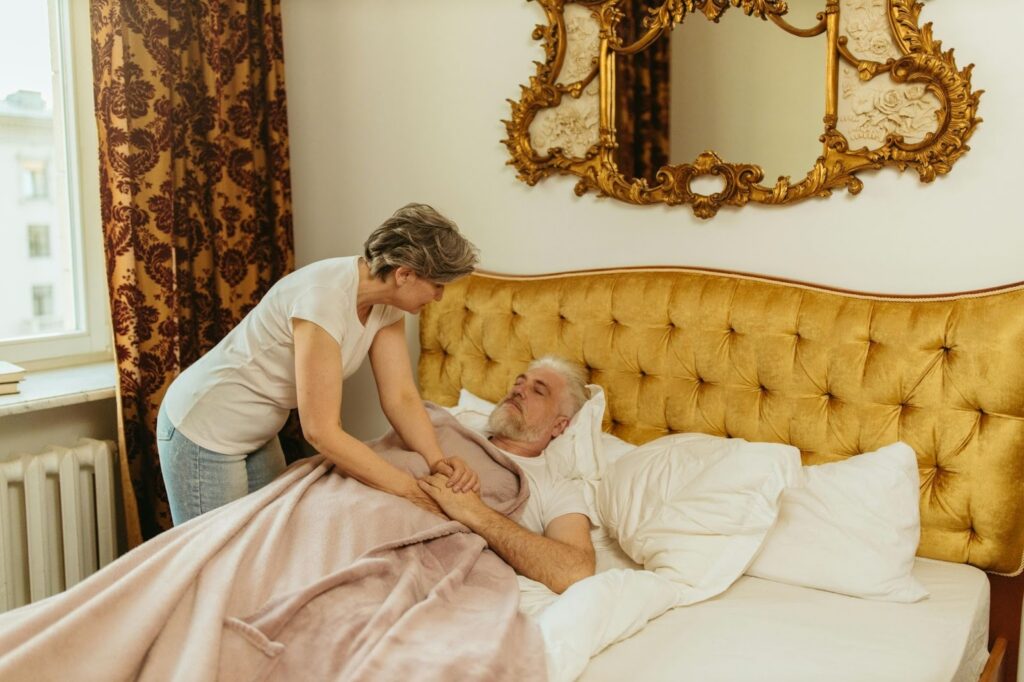
New grants open the opportunity to bridge the gap between new research and the populations it can serve.
Credit: Yaroslave Shuraev via Pexels
What is Psychedelic Assisted Therapy (PAT)?
In a clinical, supervised setting, using psychedelics like psilocybin (common name: magic mushroom), MDMA (common name: ecstasy), DMT (Common name: Ayahuasca), and Ketamine can benefit patients who need something different than traditional treatments for their mental health treatment. Ketamine is already approved for this purpose. Each of these treatments targets different parts of the brain and different mental health concerns, with some crossover. f these substances, psilocybin has shown the most promise.
Targets/Functions of Each Psychedelic Used
Psilocybin: Alters perception and may trigger spiritual experiences and a sense of detachment. Psilocin, a chemical found in psilocybin mushrooms, connects with neurotransmitters in the brain, producing psychedelic effects as well as activating the serotonin receptor 5-HT2A, according to an article by the American Society for Microbiology. Serotonin is the brain chemical responsible for regulating mood, sleep, digestion, and more.
MDMA: Considered an empathogen (or entactogen), it is known for helping people feel empathy and connection toward self and others, and for reducing fear. MDMA, in particular, has shown great potential in treating PTSD.
DMT: Like psilocybin, it acts on serotonin receptors. However, it is more intense and comes on more quickly than its counterpart. DMT is also available naturally in the ayahuasca plant, but it has also recently been used in injectable forms. One very promising study on DMT’s use for PAT had a very small sample size, so its use needs to be investigated further.
Ketamine: Ketamine is given in a nasal spray for treatment-resistant depression, major depressive disorder, and suicidal ideation and behaviors, as well as for chronic pain. It is an anesthetic that blocks glutamate signals to the brain. Glutamate is a compound that helps control mood, memory, and decision-making. An overproduction of glutamate can negatively affect stress levels and increase anxiety.
How PAT Can Add to Hospice and Palliative Care Regimens
A 2022 article in the Journal of Palliative Medicine stated that “within the palliative care field, one-time PAT dosing may lead to sustained reductions in anxiety, depression, and demoralization—symptoms that diminish the quality of life in both seriously ill patients and those at end-of-life.”
One important facet of any PAT regimen is the use of additional therapeutic modalities, as well as tools for integration. Some tools include guided reflection and therapy, mindfulness and meditation, journaling and creative expression, and community and support groups. Guidance in PAT should also include preparation for the “trip” and additional opportunities for processing the experience.
Given the often spiritual and consciousness-changing experiences of PAT, adding a chaplain to the support team in any setting, but particularly in hospice and palliative care settings, could be an asset.
Cultural Considerations
The use of psychedelics should include a reverence for indigenous cultures and traditions that incorporate these substances in both tradition and in medicinal practices. Additionally, different cultures will have different needs and experiences with psychedelic-assisted therapy based on cultural norms and values. In their article, Psychedelic Therapy and Cultural Humility, published in Translational Psychiatry, the authors expressed a growing awareness of the tendency for studies to focus on Euro-American values:
“The evolving healthcare framework of cultural humility emphasizes ongoing self-reflection, relational sensitivity towards power sharing, and openness to diverse worldviews and lived experiences of patients … patient experiences are sensitive to settings, relational processes, and meaning-making.”
Funding
A new grant program from Healing Hearts Changing Minds, also called Walking Each Other Home: A Fund to Promote Psychedelic Compassion for End-of-Life, has awarded more than half a million dollars to seven organizations, several of which fall under the hospice and palliative care umbrella. Other recipients include psychedelic and trauma care centers. The goal of the funding is to increase research into how psychedelics impact end-of-life care.
One unique program is a collaboration among End of Life Psychedelic Care, the Institute of Rural Psychedelic Care, and Ligare to address gaps in care. The program is focused on home-bound people in psychological and existential distress. It is an in-home ketamine-assisted psychotherapy and spiritual care model.
Psychedelic-Assisted Therapy holds promise for a variety of settings in treating depression, anxiety, PTSD and existential distress. When people are in advanced or terminal stages of illness, they often turn to palliative care and hospice. There has been a recent resurgence in interest in using psychedelic-assisted therapy.
Given the unique experiences of those facing increased pain, anxiety, and potentially death, hospice and palliative care are settings fit for offering alternative and integrative options. Care teams should include medical staff, therapeutic teams, and, potentially, spiritual guides like chaplains- who can offer both religious and non-religious guidance. As with any modality, only patients and their teams can determine whether PAT is appropriate. It is also important to note that research is ongoing.
May We Suggest:
 Can Psychedelic-Assisted Therapy Help Alleviate End-of-Life Anxiety? (Interview)
 What Is the California State University Institute for Palliative Care? (Interview)
 Hospitals Expanding Access To Hospice And Palliative Care Services







Leave a Reply