


Multivitamins May Help Slow Biological Clock in Some Older AdultsA recent clinical study shows that multivitamins may have additional benefits
A large-scale trial submitted to Nature Medicine shows that multivitamins (sometimes abbreviated as MVMs) show promise in helping with age-related chronic conditions, including a slight slowing of biological aging. The […]

A large-scale trial submitted to Nature Medicine shows that multivitamins (sometimes abbreviated as MVMs) show promise in helping with age-related chronic conditions, including a slight slowing of biological aging.
The study followed 958 older adults for two years as they received a daily multivitamin. In comparison to the placebo group, those taking the daily multivitamin experienced a slower increase in biological age. They aged only 20 months at the cellular level over 24 months.
The Biological Age vs. the Chronological Age
Outside of scientific studies, we tend to measure our age chronologically, or by the time that has passed since we were born. Biological age, or one’s epigenetic clock, instead measures how much “wear and tear” the body experiences. These two clocks may not be synchronized; a chronological 60-year-old may have a biological clock of only 57 years old.
What Does the Study Mean?
The authors of the study warn that this particular study cannot definitively conclude the effects of multivitamins on biological aging, as “it remains unclear whether these two supplements directly slow the biological aging process” and “additional studies are needed to determine the clinical relevance of daily MVM supplementation on epigenetic clocks.”
The study also does not imply that taking daily multivitamins adds time to your lifespan. Instead, a daily multivitamin, combined with a healthy lifestyle and other genetic factors, may provide benefits to older adults, particularly those with accelerated biological aging.
“What it means is that your trajectory of health moving forward should stand to benefit,” said Howard Sesso, the study’s senior author and associate director of preventive medicine at Brigham and Women’s Hospital and Harvard Medical School. “This is not to say that if you aren’t taking a multivitamin that you must start taking a multivitamin. The decision to take a multivitamin is still one that should be always taken in consideration with your health care provider.”
Study Background and Logistics
This particular study belongs to the larger COcoa Supplement and Multivitamin Outcomes Study (COSMOS), created to learn the effects of multivitamins and cocoa extract on reducing the risk of diseases like cancer and heart disease in older adults. The study focused on older adults with an average (chronological) age of 70.
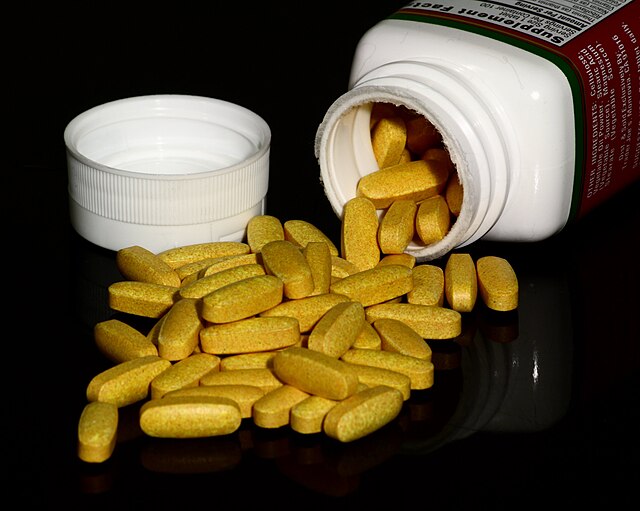
Credit: Wikimedia Commons
The study separated patients into four groups: a placebo group, patients who took a multivitamin only, patients who took cocoa extract only and patients who took both supplements.
Researchers of the study measured small changes in the patients’ DNA over time to estimate how the supplements affected their biological ages. Cocoa extract showed no effect on the patients’ biological clock, but multivitamins showed promise that requires further evaluation, according to the study authors.
Conclusion
Daniel W. Belsky, who submitted a commentary with the study results in Nature Magazine, pointed out there is “no gold standard measurement of aging.” It can be difficult to grasp a concept like biological aging as a result.
“I think of biological aging as the progressive loss of the integrity and resilience capacity of cells, tissues and organs with the passage of time,” Belsky said. “Happens to all of us. It’s the leading cause of almost all chronic disease and death.”
With multivitamins showing a promising effect on biological aging in older adults, more research may be the key to helping us age healthier and reduce troubling symptoms of certain terminal illnesses as we grow older.
May We Suggest:
 ‘Exploding’ Cells? Swedish Scientists Discover Potential Cancer Treatment for Glioblastoma MultiformeCalico Picks Up Steam: Cynthia Kenyon Joins Google ‘Anti-Death’ ProjectHIV Virus Cure: Can Soy Sauce Save the Day?



Leave a Reply