


Arizona Toddler Found Alive in Hospital Morgue: What Happened and What Families Can DoVincent Fiordilino’s case raises questions about how death is determined, agonal breathing and how families can speak up when they’re concerned about emergency care
Cases in which someone is mistakenly declared dead and later found to be alive are rare, but they do occur. Most recently, this happened to Vincent Fiordilino, an 18-month old boy who was pronounced dead after drowning in his family pool — only to be found alive in a hospital morgue hours later. Months after…

Cases in which someone is mistakenly declared dead and later found to be alive are rare, but they do occur. Most recently, this happened to Vincent Fiordilino, an 18-month old boy who was pronounced dead after drowning in his family pool — only to be found alive in a hospital morgue hours later.
Months after the incident occurred, there still aren’t a lot of answers about who is to blame for this tragic mistake. Plus, it is all too easy to get lost in the macabre aspects of Vincent’s story. The medical ramifications of his mistakenly pronounced death are severe, and the trauma suffered by Vincent and his family is unspeakable.
For many others, what is most disturbing is the fact that this error could have been avoided. The Associated Press reported shortly after the incident that the child’s parents, along with a nurse and police officers, all raised concerns that Vincent was still alive — only to be dismissed by the attending doctor.
It can be extraordinarily difficult to make medical decisions in times of distress, particularly when you are expected to place trust in doctors you don’t know. It is also evident that doctors are under pressure to treat as many patients in as little time as possible, which might have contributed to the issue. In Vincent’s case, it is unclear whether his health outcome would be different if one of those people had demanded further treatment, but it would certainly have reduced the anguish he and his family have suffered since.
Vincent’s Story
On February 8th, 2026, 18-month old Vincent wandered out of his parents’ sight during a Super Bowl gathering. According to reports from the Maricopa County Attorney’s Office, multiple adults were present at the time, all of whom believed someone was watching the child.

When Vincent was found floating face down in the pool, family members immediately started performing CPR and called 911, according to the New York Times. First responders continued the resuscitation efforts as they rushed him to the emergency room at Mercy Gilbert Medical Center in Phoenix, Arizona, where medical workers attempted life-saving measures.
According to recent interviews with Vincent’s mother, Alexus Fiordilino, the family agreed to stop treatment after Dr. Aryan Toosi notified them that Vincent’s blood pH levels were too high for him to survive. (Drowning typically causes acidosis, a drop in blood pH below the normal range of 7.35 to 7.45, which is often fatal, according to the National Institutes of Health.)
But while Dr. Toosi was relaying this information to them outside the room, a nurse said she detected a pulse. According to reports obtained by the New York Times, a police officer who was present went to inform Dr. Toosi, who replied, “Please do your thing and let me do my thing; I went to medical school for a reason.”
Dr. Toosi then walked back into the room where Vincent was being treated and announced that Vincent had blood gas levels showing “a pH balance incompatible with life,” and asked if there were any objections to calling the time of death. No one spoke up.
As grief-stricken family members hugged Vincent goodbye, several remarked that they thought Vincent was still breathing. Hospital staff repeatedly told them the sounds were agonal breathing, involuntary breaths that can occur near death. Police also documented apparent gasps after Vincent was pronounced dead, though medical staff attributed the sounds to resuscitation efforts and oxygen, according to USA Today.
Vincent was moved to the morgue shortly after 7 pm, according to reports. At about 11:30 pm, an employee of the medical examiner’s office arrived to retrieve the boy’s body and observed that he was still alive.
Mistaken Death Declarations
According to Dr. Judy Melinek, a forensic pathologist interviewed by the Associated Press, cases in which someone is mistakenly declared dead and later found to be alive are rare, but they do happen. “It tends to be much more common in elderly people than in children or toddlers,” she said. “The criteria of death require no heartbeat, no breathing, and no brain activity or neurologic activity.”
But determining death depends on a doctor’s skill and training, she added, and policies may differ from hospital to hospital. In Vincent’s case, it is difficult to determine whether Dr. Toosi’s dismissal of concerns was due to callous disregard or a mistaken judgement call. (Complicating the issue, the Fiordilino family’s lawyer John Brewer believes that Dr. Toosi was acting on information he couldn’t possibly have had. He says a review of Vincent’s medical records showed that critical test results that Toosi cited to justify ending efforts to save the child — namely, his blood pH levels — were not completed until 18 minutes after the toddler was declared dead.)
For many people, it is unthinkable that medical professionals would dismiss reports of breathing after death has been declared, but agonal breathing is a common part of the dying process. According to Dr. Jimmy Johannes, a pulmonologist and critical care medicine specialist, agonal breathing is characterized by involuntary, shallow, slow, gasping breaths.
“This breathing pattern happens when the brain isn’t getting enough blood or oxygen,” he told HealthCentral. “Typically, it’s seen when someone is close to death or having cardiac arrest.”
Agonal breathing doesn’t always sound like gasping; it can also sound like snorting, labored breathing or even moaning, according to the Sarver Heart Center at the University of Arizona. Sometimes it’s very brief, and in other cases it can go on for hours. But agonal breathing should not be confused with true breathing; it is an involuntary reflex.
In rare cases, someone declared dead after the administration of CPR might suddenly show signs of circulation and breathing, in what is known as the Lazarus Phenomenon. Experts suggest this may happen if high chest pressure from CPR drops after resuscitation ends, allowing blood to flow back to the heart. However, most cases are brief and do not change long-term survival expectations.
Making Informed Decisions In Times of Distress
In recent interviews, Alexus Fiordilino said that Dr. Toosi had led her to believe any further attempts to save Vincent would just prolong his agony. “As a mom, you don’t want to hear that,” Fiordilino said. “I didn’t want him to suffer. It seemed to be they’d done everything they could.”
It isn’t unusual for families to have to make these kinds of decisions in the ER, and often they have no choice but to trust that whatever the doctor is saying is true. Unfortunately, doctors are only human; they can — and do — make mistakes. So what should you do if your gut instincts are telling you to push back on what you’re being told?
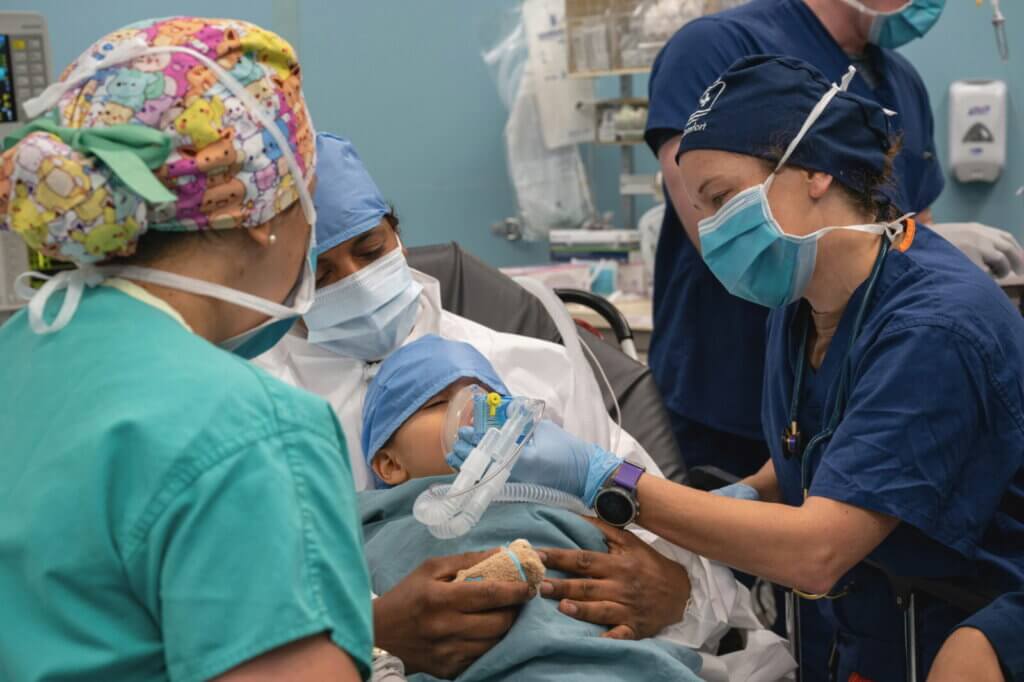
In Vincent’s case, it is important to understand that emergency departments are focused on stabilizing acute medical emergencies; they aren’t generally set up for routine second opinions. But if you feel that it is warranted, you should speak directly with a member of your ER care team to explain your concerns.
If those concerns are dismissed,as they seem to have been in this case, there are a few avenues you can then pursue, like requesting an explanation of findings (a review of the specific clinical tests performed) or asking for a second opinion from another attending physician. You can also ask for a hospital patient advocate, whose job is to help patients and their families resolve care concerns and navigate hospital policies. (Although it can be difficult to obtain their services on short notice, it definitely doesn’t hurt to ask.)
If we learn anything from Vincent’s story, it’s that we should listen to our instincts, and always advocate for ourselves or a loved one in situations of doubt. The worst that could happen is that the outcome doesn’t change.
May We Suggest:
 ‘Vincent’
 “Dreams of a Life“
 Why is Death Midwifery Important? (Interview)







Leave a Reply