

What Is Green Burial?
July 9th, 2025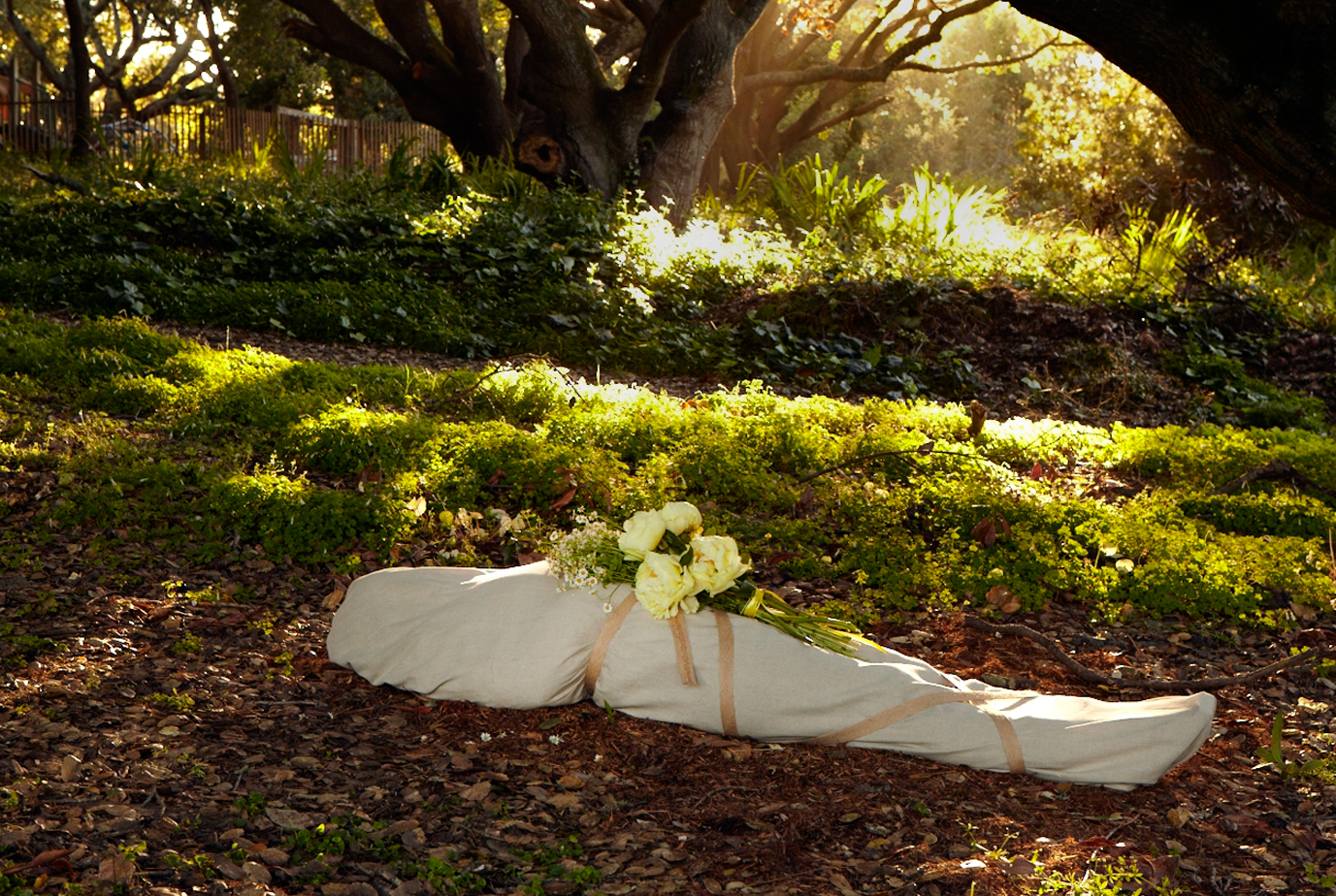
“Green burial” (also known as natural burial) is a term that describes the interment of a body in a way that has minimal impact on the environment. According to the Green Burial Council, the practice seeks to “conserve natural resources, reduce carbon emissions, protect worker health and/or protect the natural habitat.” Green burial eschews the trappings of the conventional North American burial, such as embalming, concrete grave liners and vaults, lacquered hardwood coffins, and ornate tombstones. Instead, bodies are buried in their natural state in biodegradable coffins or a simple shroud.
Although green burial is a relatively modern term, the practice of natural burial is far from new. Muslims and Jews have practiced “green” burial for centuries as part of their religious faith. And prior to the late 19th century, virtually all burials that took place in the U.S and most of the world were “green,” though they were not referred to in that way. People typically died at home, and those who died elsewhere were taken home for after-death care. The family bathed and dressed the body, which was then placed in the “parlor” so friends could come to pay their last respects. Eventually, the body was placed in a plain wooden coffin, often constructed by the family, and buried on the family property or, in the case of non-landowners, a church graveyard or community cemetery.
Jump ahead to these answers:
The Conventional Burial
The practice of embalming emerged in the U.S. during the Civil War as a way to preserve the bodies of those who died on the battlefield for the long journey home. After the war ended, embalming grew more popular, especially after the 1865 assassination of Abraham Lincoln, whose body was embalmed and carried by train over the course of two weeks through seven states before reaching Springfield, IL. Initially, embalming was performed by doctors and trained military personnel, but eventually the practice was taken over by morticians and performed in the family home.
At the same time, embalming was gaining popularity, and a new profession, the undertaker, began to emerge. Typically, cabinet makers or carpenters of some sort, these were the people whose families called upon to build a coffin when someone died. But as Americans began to take a more hands-off approach to caring for their dead, the undertaker’s role expanded. By the mid-20th century, they had largely morphed into “morticians” and later “funeral directors,” who prepared bodies for burial (including embalming) in their own homes. Soon, these newly minted “professionals” were arranging funerals and burials, transporting bodies in special vehicles, and handling all the details of final disposition — all for a fee. Thus began the evolution of formalized, institutionalized death care in the U.S, which is projected to become a $68 billion industry by 2023.
Alongside the development of a commercial death care industry, the idea of privately owned cemeteries began to emerge. In part due to industrialization and in part due to the increasing cultural emphasis on separating the living from the dead, by the late 19th century, Americans began to bury their dead in rural graveyards rather than at a community cemetery or church graveyard in the center of town. Initially, these public cemeteries were managed by the community and local governments. But with the opening of Mount Auburn Cemetery in Cambridge Massachusetts in 1831, the era of privately owned cemeteries was born.
As Mount Auburn exemplified, cemeteries soon became much more than simple repositories for the dead. Rural land was plentiful, and after centuries of burying their dead in cramped churchyards where bodies were sometimes buried four or five deep, the public wanted to lay their loved ones to rest in a beautiful setting with sweeping vistas and manicured grounds. And since there were no public parks at the time, these cemeteries were also places where city dwellers could have picnics, let their children play, and enjoy a break from city life. Today, Mount Auburn Cemetery is viewed not only as the first designed, landscaped cemetery in the nation, but as a blueprint for the public open spaces and designed suburbs of the 20th century.
But the era of large, pastoral cemeteries came with additional burdens. Those expansive lawns and botanical gardens needed regular maintenance, and as industrialization progressed, cemeteries began to use heavy, gasoline-powered machinery to maintain the grounds. During the same era, metal caskets were introduced and, alongside cherry, mahogany, and other hardwoods, became a favorite among American consumers (who had by that time been enculturated by the funeral industry into believing in the importance of “preserving” the dead). Concrete burial liners were also introduced to prevent graves from collapsing under the weight of heavy machinery, and quickly became required. Thus, by the mid-20th century, what had once been a simple, family-led process had evolved into a more costly, elaborate, and less environmentally friendly approach to funerals and burials.
The Green Burial Movement
In spite of the growth of the death care industry (or perhaps because of it) during the latter part of the 20th century, a small but committed group of individuals began to raise awareness around the wasteful and harmful nature of our culture’s current approach to death care and burial. In the United States, two of these pioneers were Juliette and Joe Sehee, who in 2002 moved to the Mojave Desert to open an eco-retreat that would serve individuals who were grieving a death. The two were also intrigued by the green burial movement that was emerging in the U.K. and the creation of the first conservation cemetery in the United States, founded in South Carolina by Dr. William and Kimberley Campbell in 1998. The Sehees began to envision a partnership with a conservation organization that would help them create a similar conservation cemetery and healing space on their land.
For various reasons, the Sehees’ dream did not manifest as they envisioned, and they began to realize that more structure was needed around the idea of green burial before the concept would be accepted by our death-averse culture. So in 2005, they sold their land in the desert and founded the Green Burial Council, a non-profit organization that would develop standards for green burial and certify qualified providers. Then in 2015, they formed Green Burial International, an educational organization that seeks to inform the public about green burial and connect them with certified providers.
Today, the Green Burial Council is the sole organization in the U.S and Canada that creates standards for green burial products and providers and offers certification to those who adhere to those standards. At present, there are about 100 GBC-certified cemeteries in North America as well as over 450 others that offer natural burials but have not yet been certified by the GBC. Some of these are what are called hybrid cemeteries, which permit natural burials as well as more “conventional” burials on the grounds. Others are “natural burial grounds” which follow strict protocols around embalming and what kinds of materials are placed in the earth. Still others are conservation burial grounds, which operate in conjunction with a government agency or non-profit organization to ensure that the cemetery is maintained in a manner that restores or maintains the natural habitat.
The Growth of Green Burial
Although the green burial movement is still in its infancy, its impact is being felt, especially in the western and northeastern U.S. According to a 2021 consumer survey conducted by Kates-Boylston Publications, 51% of 500 respondents surveyed said they had attended a green burial, and a whopping 84% said they would consider it as an option if it were available to them. This was a striking increase from a similar survey conducted by the company in 2008, in which only 7% of respondents had attended a green burial and 43% said they would consider it.
And there are good reasons for the shift. Not only has the cost of a funeral and burial reached dizzying heights (close to $8000 in 2021, and that does not include a burial plot or other cemetery fees) but the environmental cost of our current funeral and burial practices is also completely unsustainable. According to data provided by the Green Burial Counci, traditional burials in the U.S. consume an incredible amount of resources, including:
- 20 million board feet of hardwoods (coffins)
- 64,500 tons of steel (coffins)
- 17,000 tons of copper and bronze (coffins, handles and hardware)
- 1.6 million tons of concrete for grave liners and vaults
- 4.3 million gallons of embalming fluid, which contains methane, formaldehyde and benzene, the latter two of which are known human carcinogens
Nor does this account for the carbon footprint of the backhoes and other heavy machinery used to maintain cemetery grounds, the carbon cost of transporting millions of board feet of hardwoods from the rainforests of South America to their neighbors in the north, or the impact of the manufacturing process for caskets and vaults.
By contrast, a natural burial can be less costly and uses far fewer resources than a typical burial, especially if the family opts for a home funeral and the body is buried in a shroud. In some cases, graves are hand-dug (sometimes by surviving loved ones), and the body is carried by hand to the graveside. If the body must be transported a long distance to the grave site, part of the journey may be made by car. And, of course, by avoiding embalming, no unnecessary toxins are buried in the ground.
Holding a green burial on private property is even more cost-effective and environmentally friendly, though there may be legal hurdles to overcome.
Green burials are also more personal than a typical American burial. Many green burial sites allow mourners and participants to be a part of the process to the extent that they wish to be. This may include washing and dressing the body, transporting the body back to the cemetery, carrying the body to the grave, digging the grave, and assisting in placing the body in the ground. For many mourners, this is one of the most meaningful and satisfying aspects of green burial — it can be a loving, dignified, and personalized way to say goodbye.
Still another reason for green burial’s growing popularity is the desire expressed by many people to “go back to basics’” and allow their bodies to nurture the earth when they die. Cremation is currently the most popular form of final disposition in North America, but its carbon footprint is far from negligible, especially as the number of cremations increases each year. Further, while scattering cremation ashes can be a beautiful healing ritual for those mourning a loved one, those ashes do nothing for the environment and can actually harm surrounding plant life. Thus, more and more people find that allowing the body to decay as naturally as possible is a comforting and logical end-of-life choice.
The Safety of Green Burial
One question many people who are unfamiliar with green burial ask is: “is it safe?, voicing concerns ranging from possible contamination of groundwater from unembalmed bodies to the possibility that animals will dig up the grave. According to the Green Burial Council, these concerns are common but unfounded. Here are a few answers from the Green Burial Council to some common questions readers pose:
- If bodies are buried at a depth of 3.5 to 4 feet won’t animals dig them up?
According to the GBC, animals can’t smell a body buried 3.5 feet underground. Even wild boars, which have an extremely sensitive sense of smell, can only sense potential food sources to a depth of about 12 inches at most.
- Will an unembalmed body buried in a 3.5 foot deep grave smell?
Humans have a poor sense of smell compared to most animals and won’t smell anything that’s buried 3.5 feet deep.
- Will chemotherapy or other drugs leach from the body into the ground?
A dead body decomposes gradually. According to the Green Burial Council, it takes about 6 weeks for all of the soft tissue to decompose and about 2 years for the entire body to do so. As this takes place, small amounts of various chemicals will be released into the ground and trapped in the soil. There, soil microorganisms remove toxins, drugs, and pathogens through a process known as bioremediation.
The Benefits of Green Burial
People choose green burial for a number of reasons. According to the Green Burial Council, the top reason why people choose green burial is to minimize impact on the environment, while a desire to revert back to old tradition is the second most common reason. Outside of this rationale, people also choose green burial due to cost, spiritual or religious reasons, or the preference for taking a do-it-yourself approach to disposition.
There are, however, other tangible benefits to natural burial over conventional burial in a traditional cemetery. These include:
- Natural burial has a smaller carbon footprint than conventional burial
Although it’s difficult to quantify exactly how much less energy is consumed for a natural burial vs conventional burial, if you are buried in a natural cemetery or conservation burial ground (link to new definition in list), your grave is sometimes dug by hand rather than by a gas-powered backhoe, and the cemetery grounds will be maintained based on minimally invasive operations and an ecological assessment rather than by lawn mowers and fertilizers. Additionally, the use of a biodegradable burial container avoids the energy-intensive processes used in the harvesting, manufacturing and transport of hardwood or steel caskets and concrete vaults. This is especially true if you opt for a simple burial shroud made of natural cotton or silk.
- Natural burial uses more thoughtfully sourced materials
As a rule, those choosing natural burial should prioritize biodegradable materials—such as plant, animal, or unfired earthen products—and source them locally to reduce energy costs and support the local economy.
- Natural burial protects the health of funeral workers
Embalming fluid contains formaldehyde and benzene, both of which are known carcinogens. According to numerous studies cited by the Centers for Disease Control and the National Cancer Institute, prolonged exposure to embalming fluid puts the health of all funeral workers at risk. For example, an increasing body of evidence indicates that funeral directors and embalmers have:
- A 13% higher death rate from all causes than the general public
- A higher risk of contracting leukemia, brain cancer,and cancers of the respiratory tract, especially the nose and throat.
- A 4.5 higher risk of dying from ALS than those whose jobs entailed no exposure to formaldehyde
- Natural burial protects local land, water and wildlife
Natural cemeteries avoid the use of pesticides and fertilizers which have the potential to contaminate surrounding groundwater and negatively impact local wildlife. Further, according to data from the Green Burial Council, contaminants found in cemetery soil research could be linked to concrete vaults, non-biodegradable caskets, or other incidental materials of conventional burials, while no such contamination has been reported from or near any green cemeteries in the U.S, Canada, Great Britain or Australia since their inception in 2003.
- Natural burial encourages greater family involvement
When families relinquish control of their dead to funeral homes and allow bodies to be preserved in an unnatural way, the natural connection between the living and the dead is somewhat lost. Natural burial, especially when combined with natural death care and a home funeral, allows loved ones a greater opportunity to participate in the process of saying goodbye. For example, some natural cemeteries allow the family to help dig and fill the grave and encourage them to design a graveside service that is personally meaningful to them.
In summary, green or natural burial is an environmentally sound and uniquely loving way to dispose of the dead. It is safe and poses no hazard to water supplies, humans, plants or wildlife when recommended safeguards are in place. Furthermore, it allows loved ones and other mourners to connect with the person who died in a meaningful way that can facilitate healthy grieving and allow healing to begin. For more on ‘What is Green Burial?’, visit the Green Burial Council.
Sources
“Our Standards”. Green Burial Council. https://www.greenburialcouncil.org/our_standards.html
“Green Cemetery Survey Results”. Green Burial Council. https://www.greenburialcouncil.org/gbc_survey_results.html
Funerary Artisans Collective. https://www.funeraryartisanscollective.org/
“Statistics”. National Funeral Directors Association. https://nfda.org/news/statistics
“Green Burial Defined”. Green Burial Council. https://www.greenburialcouncil.org/greenburialdefined.html
“Planting In Cremation Ashes – Are Cremation Ashes Good For Plants”. Gardening Know How. https://www.gardeningknowhow.com/garden-how-to/info/cremation-ashes-and-plants.htm
“What is a green burial?” Green Burial Council. https://www.greenburialcouncil.org/what-is-green-burial/
“Bioremediation Techniques for Polluted Environment: Concept, Advantages, Limitations, and Prospects”. IntechOpen. https://www.intechopen.com/chapters/70661
“United States Death Care Market Report 2018-2023: Market is Estimated to Reach Revenues of Around $68 Billion”. PR Newswire. https://www.prnewswire.com/news-releases/united-states-death-care-market-report-2018-2023-market-is-estimated-to-reach-revenues-of-around-68-billion-300755813.html
“2021 NFDA General Price List Study Shows Funeral Costs Not Rising as Fast as Rate of Inflation”. National Funeral Directors Association. https://nfda.org/news/media-center/nfda-news-releases/id/6182/2021-nfda-general-price-list-study-shows-funeral-costs-not-rising-as-fast-as-rate-of-inflation