


“Suncoast”Set against the backdrop of the controversial Terri Schiavo case, this film follows Doris as her adolescence unfolds alongside her brother Max’s illness and hospice death
Weaving together differing views on end-of-life ethics and a teenager’s coming of age, “Suncoast,” writer-director Laura Chinn’s semi-autobiographical tale, centres on Doris (Nico Parker), whose brother Max (Cree Kawa) is dying. The story also highlights the family dynamics of a mother, Kristine (Laura Linney), who is losing her son while struggling to appreciate and engage…


Weaving together differing views on end-of-life ethics and a teenager’s coming of age, “Suncoast,” writer-director Laura Chinn’s semi-autobiographical tale, centres on Doris (Nico Parker), whose brother Max (Cree Kawa) is dying.
The story also highlights the family dynamics of a mother, Kristine (Laura Linney), who is losing her son while struggling to appreciate and engage with her daughter.
Framing Against The Terri Schiavo Case
Laura Chinn’s brother – also named Max – was dying as Terri Schiavo’s protracted legal battle captured the nation’s attention. Paralleling her own story, “Suncoast” uses Schiavo’s case as a backdrop for Doris’s struggles, grappling with adolescence and a dying brother amid a national controversy.
In 1990, Terri Schiavo suffered cardiac arrest. Due to oxygen deprivation, she suffered a brain injury, and after several years in different rehabilitation centers and attempts at home care, doctors told Michael Schiavo, her husband, that she was in a persistent vegetative state. In 1998, Michael began the process of having her feeding tube removed. However, her parents, Robert and Mary Schindler, disagreed with his decision. They challenged Michael’s guardianship and his statements (which were backed by his brother and sister-in-law), that, based on conversations with her she would not want artificial life support if she became so ill that she was dependent on them in order to maintain life.
Right-to-life groups and right-to-die advocates would each take up their sides of the cause. Right-to-life groups protested Terri Schiavo’s feeding tube being removed, while those who advocated for “death with dignity” would point to this case as an example of the need for advance directives and for choice at the end of life.
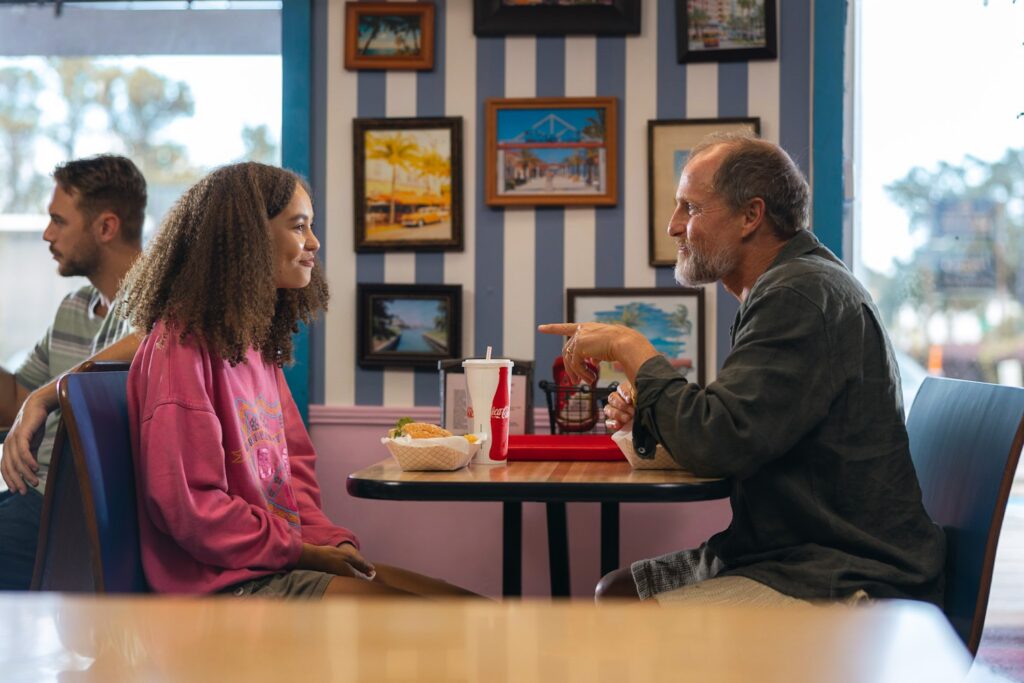
This ethical question and controversy are highlighted in Doris and Paul’s first conversation. Paul (Woody Harrelson), a right-to-life protester standing vigil at Suncoast, says, “I’ll pray for his recovery,” while Doris says, “Oh, please don’t. He has brain cancer. He’s blind, and he can’t walk, and he hasn’t talked in years. His brain just doesn’t really function anymore … so, if he survived, I don’t think he’d be happy.”Paul retorts, “Still, every life is precious.”
Despite their conflicting experiences and views, they develop an incredible bond that helps Doris navigate the challenges of her strained relationship with her mother, navigating adolescence and her own experiences of denial amidst her anticipatory grief.
Anticipatory Grief
Kristine embodies many of the facets of anticipatory grief cited in a post on mental well-being from the University of Minnesota Extension. Throughout the film, viewers see her “psychologically and emotionally preparing for a loss, feeling anxious or worried, thinking about the loss frequently, experiencing feelings of sadness and grief as if the loss has occurred, making practical decisions to prepare for the loss and making decisions as if the loss has already happened.”
Frequently telling Doris to recognize that her brother is dying, complaining about all the things wrong with the hospice and choosing to stay there while leaving Doris home alone all encapsulate these varied symptoms of anticipatory grief. There is one moment in the movie where the grief counselor asks Kristine if she has any other children, and she says, “No.” She very quickly realizes what she’s done, but doesn’t quite understand why she said it. In essence, she has lost sight of the child she has because of the child she is losing.

Adolescence As a Lens for Anticipatory Grief
The teenage years are tough, even when your family isn’t marked by loss or impending loss. Some of the typical challenges, like testing boundaries, particularly when left unsupervised, and increased conflict between parent and child, are on display in this film. As Doris is left alone more consistently, she forms friendships when she offers to host a hurricane party at her home. Although she and her friends are not caught during this particular rebellion, Kristine later comes home because she can’t get into the hospice due to threats of violence aimed at those inside. Stating that she shouldn’t have left her alone so much, but also coming down hard on her daughter, Kristine forces Doris to stay at Suncoast with her.
Before she connects with her newfound friends and at some other moments in the movie, we frequently see Doris laid out on the couch watching the news and some other TV shows, appearing apathetic or bored, but more likely using these tools as a way to suppress her feelings. The boundary-testing referred to with the hurricane party continues as she experiments with risk-taking behaviors like drinking, experimenting with some drugs and playing games involving taking clothes off. An increase in risk-taking is common at this age, but likely exacerbated in teenagers facing loss and grief.
No matter what age someone is, family dynamics are shaken when faced with impending loss. But, even if people struggle to understand another’s experience, there is no wrong way to grieve.
No Wrong Way to Grieve
“Suncoast” supports the premise that grieving has no specific shape, rule, or timeline. Chinn does an excellent job showing this through both Kristine’s high focus on her dying son and Doris’s seeming detachment, which Kristine reads as self-centeredness. “Suncoast” does a great job of highlighting many ideas and experiences.
While it may need to be taken in doses depending on your own journey with terminal illness, hospice or death, it can work well as a healing tool; you may see reflections of the varied emotions you feel as you watch your loved one pass.
Official Trailer: SUNCOAST | Official Trailer | Searchlight Pictures
May We Suggest:
 How Can Afterlife Communication Aid The Grieving Process? (Interview)
 Survivors Are Breaking the Taboos Around Disenfranchised Grief
 Beyond the Five Stages: Grief Theories in the Modern Age
-

Grief looks different for every person. Sometimes understanding another’s journey begins with accepting that there is no single “right” way to grieve.
-
Exactly. One of the kindest things we can offer someone who is grieving is the freedom to experience their loss without judgment or comparison. Sometimes simply meeting people where they are can help them feel less alone.
-








Leave a Reply