
European Death Practices
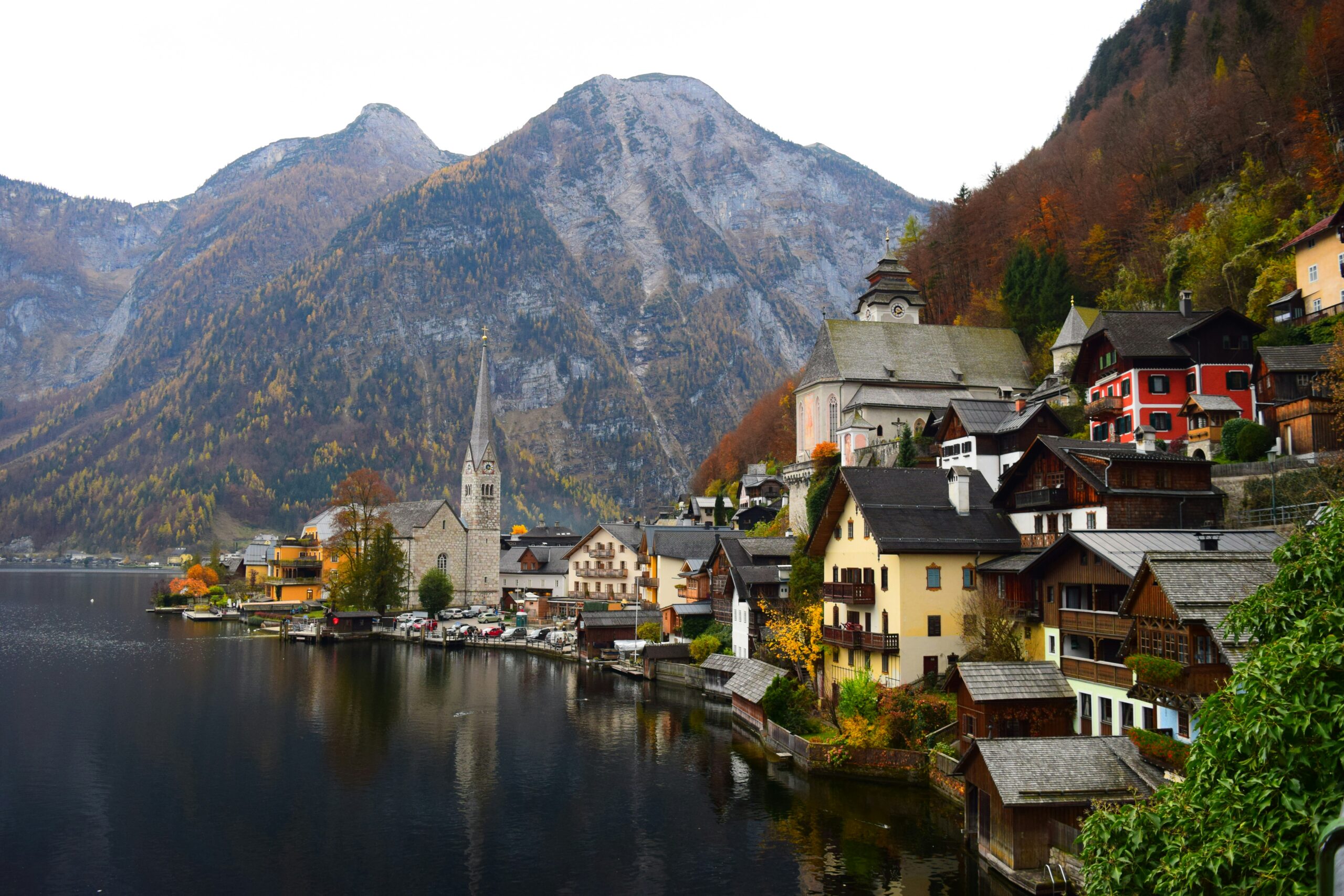
The continent of Europe comprises 44 countries and four dependencies. Smaller in total area than any continent but Oceania, it is home to over 750 million people from hundreds of different ethnic and cultural groups. Here we provide just a small sample of the many practices, traditions and beliefs around death, dying and mourning that you might encounter in the people who live there.
Jump ahead to these answers:
- Switzerland Death & Funeral Practices
- Death Practices in Germany
- Dutch Death & Funeral Practices
- British Funeral Traditions & Rituals
- Death Practices in Ireland
- French Funeral Traditions & Rituals
- Death Practices in Spain
- Italian Death & Funeral Practices
- Death Practices in Greece
- Danish Death & Funeral Practices
- Swedish Death & Funeral Practices
- Eastern European Death Practices
Switzerland Death & Funeral Practices
December 17th, 2025A tiny country known for its crystal clear lakes and breathtaking mountains, Switzerland is a wealthy nation with a high standard of living and two of the most “livable” cities in the world, Zurich and Geneva. Although the majority of the population is native Swiss, the country has more expats living within its borders than any other European nation. A highly educated and innovative people, the Swiss are known for their pragmatic attitude, which includes relatively widespread acceptance of both euthanasia and assisted suicide.The country is also one of only two in Europe that allows medical aid in dying (known as assisted voluntary dying, or AVD.)
Read more about some Swiss customs around death, mourning and remembrance below
Death Practices in Germany
December 17th, 2025Germany is a beautiful country with a rich and varied history, from the castles and moats of the ancient Germanic people to the horrors of the Holocaust, to its post-WWII occupation and the erection of the Berlin Wall. It’s also a large, densely populated nation of about 81 million people that emerged from the Cold War with one of the strongest economies in the world.
Sensible and logical, the German people revere order, punctuality and respect for authority. But they are also fun-loving gourmands who love bread and sausage (there are over 1,000 kinds of sausage sold there) and are the second largest consumers of beer in the world. As a whole,Germans have a deep respect for nature and a strong commitment to sustainability. (Over a third of the country is still undeveloped forest.) This attitude is reflected in many of their beliefs around death and mourning as well.
Read more about German customs and beliefs around death, mourning and remembrance below
- Germany’s World-Renowned Forests Serve as Natural Burial Grounds for Cremated Remains.
- Always Practical, Germans Bake a Special Sugar Cake that They Serve at Both Weddings and Funerals
- During the Middle Ages, a German Friar Wrote the“Ars Moriendi” to Instruct the Community on How to Prepare for Death
Dutch Death & Funeral Practices
December 17th, 2025Independent, immensely practical and very direct, the people of the Netherlands are highly educated and have a deep regard for personal autonomy. They are also one of the world’s most secularized cultures (only about 40% of the population has a religious affiliation, and few of those attend church). Nonetheless, the Dutch tend to view death and mourning in a very somber light.
Interestingly, euthanasia and physician assisted dying are illegal in the Netherlands, but physicians may engage in the practice without fear of prosecution as long as they follow the guidelines drafted in 1987 by the Royal Dutch Medical Association. According to New Scientist, about 2,700 terminally ill Dutch patients receive lethal injections from their doctors every year.
Read more about Dutch beliefs and costumes around death and dying below.
British Funeral Traditions & Rituals
December 17th, 2025An island in the North Atlantic Ocean, Great Britain comprises three independent nations, England, Scotland and Wales, as well as the outlying islands surrounding it. Until recently, the three countries were part of the European Union, but in January 2020, the United Kingdom (which comprises England and Northern Ireland) withdrew from the alliance. Wales and Scotland did not.
Great Britain has been inhabited by modern humans for over 30,000 years. Steeped in history, the largely maritime region is dotted with castles and ancient ruins, including England’s world famous Stonehenge. Although modern culture has taken hold in most urban areas, much of the country’s rural population still holds firmly to traditional ways of life, including their approach to death, mourning and remembrance.
Read more about British customs and beliefs around death, mourning and remembrance below
- Since Ancient Times, the Tolling of Church Bells Has Signaled Death to Communities in Great Britain
- In Ancient Wales, Unexplained Lights Around the Homes of the Dead Were Believed to Portend the Death of Those Who Saw Them
- Great Britain’s Ancient Celts Buried Their Dead With Everything They Would Need to Resume Life in the “Otherworld”
- In Ancient Times, the Celts Celebrated Fall with Fire and a Silent Feast to Ward Off the Spirits of the Dead
- In an Ancient Burial Rite, the Scottish Place a Wooden Plate Covered with Salt and Dirt on the Graves of Those They Love
- Throughout Great Britain and Much of Western Europe, Bees Were Central to Survival And Beliefs Around Life and Death
Death Practices in Ireland
December 17th, 2025Nicknamed the Emerald Isle, Ireland is an island nation that sits just off the westernmost coast of Europe. About 80% of the region comprises the Republic of Ireland (Southern Ireland), an independent nation made up mostly of people of the Catholic faith. A small area to the north, known as Northern Ireland, is part of the U.K. The official language of the country is Irish (Gaeilge), but English is spoken by most of the population except for small pockets along the western coast.
Once a poor country ravaged by famine and civil unrest, in recent years Ireland has become one of Europe’s most vibrant economies, fueled by thriving high-tech, financial services and agribusiness industries. Still, many of the Irish hold fast to their Celtic roots, and have a great reverence for nature and rural life. These traditional beliefs are often reflected in how the Irish celebrate and mourn their dead.
Read more about some Irish customs and beliefs around death, mourning and remembrance below.
French Funeral Traditions & Rituals
December 17th, 2025A picturesque country with a mild, oceanic climate, France is one of the world’s premier tourist destinations and a “melting pot” of people from all over Europe, Northern Africa, Central Asia and the Middle East. Predominantly Roman Catholic and Protestant, France has one of the largest Muslim populations in Europe: Over 5 million Muslims currently reside there, mostly in Marseille in southeastern France, as well as in the cities of Paris and Lyon.
Because of their cultural and ethnic diversity, the people of France follow many different traditions and rituals around death and mourning, depending largely on their religious affiliation and where in the country they live. Below are a few examples of French traditions from the past and modern times.
- Long Ago in Rural France, Some Graves Were Marked with Mysterious Stone Towers with Lanterns at the Top
- In Many French Towns, Those in Mourning Leave a “Funeral Book” on Their Doorstep So Friends and Family Can Leave Messages of Support
- After the Closure of Paris’ Cemeteries in 1785, the City Built an Underground “Empire of the Dead” to Hold the Bones of Bodies That Were Displaced
- The Breton People of Northwestern France Have Some Unique Beliefs About Food and Death
Death Practices in Spain
December 17th, 2025Once ruled by Islamic Moors, Spain was a world power that ruled over much of Europe and the Americas from the time of Columbus’ first voyage in 1492 throughout most of the ensuing 300 years. But the country’s power began to wane during the 16th and 17th centuries, and while its cultural influence can still be seen across the globe, it no longer has the global impact it once enjoyed.
Today’s Spain is a modern country of about 46 million people who are divided into a number of distinct ethnic groups. About 75% of the population are Castilian, who speak Spanish and live in the historic region of Castile in central Spain. Another 16% are Catalans, who reside in the independent region of Catalonia — a popular tourist destination known for its beautiful beaches and the Pyrenees mountain range. The two smallest ethnic groups are the Galicians, who hail from Galicia in the northwestern Iberian peninsula, and the Basques. Together form about 9% of the population as a whole. Each of these groups has its own language, traditions and cultural norms around all aspects of life, including death.
Read about some Spanish beliefs and customs around death, dying and remembrance below.
Italian Death & Funeral Practices
December 17th, 2025Once the seat of the ancient Roman Empire, (27 BCE- 476 CE) Italy’s heritage is rich and varied. Largely responsible for the Renaissance, the country gave birth to some of the most revered artists of all time, including Michaelangelo, DaVinci and Raphael. It was also home to one of the modern world’s most tyrannical dictators, Benito Mussolini, an ally of Adolf Hitler who was executed by his countrymen at the end of WWII. Most importantly perhaps, the country is the home of the Holy See of the Roman Catholic Church and the sovereign, independent Vatican City State, where the Pope resides.
Italy is a traditional country, where art, architecture, food and music have long been cultural staples and are still to this day. Overwhelmingly Roman Catholic, the country is ethnically homogenous, with over 90% of the population being native Italian. And though the Church and State are technically separate, the Vatican and its hierarchy continue to have enormous influence over Italy’s politics, laws and cultural norms, including those that govern death, mourning and remembrance.
Read about some death practices of Italians, from ancient Rome to modern-day Italy, below.
- In Ancient Rome, Wax Replicas of the Faces and Heads of Those Who Died Were Prepared Immediately After Death and Kept in the Family Home
- Long Before the Invention of Photography, the Ancient Romans Created Death Masks to Memorialize and Honor Their Dead
- The Ancient Roman Practice of Sending Clowns to Funerals to Ease the Sadness Is Being Resurrected in Countries Around the World
- After the Fall of the Roman Empire, the Byzantine Empire Survived, Creating Splendid Art Dedicated to Celebrating the Dead
- The Traditional Italian Funeral Is A Solemn Religious Rite with a Small Dose of Old Country Superstition Thrown In
Death Practices in Greece
December 17th, 2025A mountainous peninsula with an astonishing 13,676 kilometers (nearly 8,500 miles) of coastline, Greece is a nation with strong, long-standing ties to the sea. Known for fishing, ship-building and maritime trade, the country sits at the intersection of Europe, Africa and Asia, and its diverse, distinctive culture reflects that. Greeks love good food, good wine, music and dancing, but are, at the same time, extremely religious. Over 98% of the population are Orthodox Christians, and the customs and norms of the country, including its rituals around death, mourning and remembrance, are heavily influenced by the teachings of the Church,
Read about some Greek beliefs and customs around death and dying below.
- Despite the Passage of Centuries, Greek Funerals Are Still Very Similar to Those Held in Ancient Times
- The Traditional Epitaph Is a Modern Invention, But It Dates Back to Ancient Greece
- In a Tradition That Dates Back Centuries, the Greek Orthodox Celebrate Easter in Unique Ways
- The Three-Part Funeral Rites of Ancient Greece Reflected Both Fear of and Reverence for Death
- In the Mythology of Ancient Greece, the Afterlife Was a Terrifying Place Presided Over by the Tyrant-God Hades.
- The Ancient Greek Practice of Sending Clowns to Funerals Is Being Resurrected in Countries Around the World
- Symbolism Around the Death and Resurrection of Jesus Play an Important Part in Greek Easter Celebrations
- In Ancient Greece, Mourners Are Believed to Have Captured Their Tears in Tiny Bottles That Were Then Placed in the Tomb of the Deceased.
- Was the Greek God Hermes the World’s First Death Doula? Legend Suggests He Was
Danish Death & Funeral Practices
December 17th, 2025Like their close neighbors to the north, the Dutch, the people of Denmark are open-minded, cosmopolitan and very direct. A modern, egalitarian society, the Danish are known for punctuality, politeness and an open communication style. The country is, overall, highly educated and affluent, with a strong middle class and little poverty. Although the countryside is dotted with small villages, castles, and open air markets, almost 90% of Denmark’s nearly 6 million people live in cities, which are quite lovely and picturesque in their own right.
Danish traditions revolve largely around Christianity and Christian culture. About 85% of the population is Evangelical Lutheran, and the Church has been influential in shaping many cultural norms, including those around death and dying. Nonetheless, some superstitions and beliefs from ancient times still persist.
Read about some common beliefs around death held by the Danish people in the articles below.
Swedish Death & Funeral Practices
December 17th, 2025Officially known as the Kingdom of Sweden, Sweden is a country of about 10 million people that is bordered by Norway, Finland and the Baltic Sea. An egalitarian people who emphasize civility, generosity and punctuality, Swedes, as a rule, are family-oriented, health conscious and highly respectful of the environment in which they live. They are also very private, which means celebrations, including funerals and memorial services, are usually small, intimate affairs.
Sweden’s national church is the Evangelical Lutheran church, which boasts over 5 million members. However, only about 2% of those members attend religious services regularly, and only 17% of Swedes say that religion is part of their daily lives. Nevertheless, the church retains a great deal of influence over rituals and practices around the end of life.
Eastern European Death Practices
December 17th, 2025Consisting of Bulgaria, Czech Republic, Hungary, Poland, Romania, Russian Federation, and Slovakia, as well as the republics of Belarus, Moldova, and Ukraine, Eastern Europe is generally viewed as the area of Europe that was once under Communist rule. Each of the Eastern European nations has its own culture, language and history, yet they also have many things in common, particularly their ties to both the East and the West. Although heavily influenced by Christianity and neighboring European nations such as Germany, Italy and France, many also had close relationships with the East. Russia, for example, was under the control of the Mongol Empire for centuries, and the Ottoman Empire controlled several nations to the south. Additionally, the Balkan Peninsula, which comprises Albania, Bosnia and Herzegovina, Bulgaria, Croatia, Kosovo, Montenegro, North Macedonia, Romania, Serbia, and Slovenia, was once occupied by the Turks. All of this led to a great deal of ethnic diversity, and cultural beliefs around life, death and mourning that are unique to the region in many ways.
Read about the death practices and beliefs of some of the nations of Eastern Europe below.
Ukrainians
Romanians
The Romani People (Roma)
Belarusians
Czechs
Russians
Estonians