

Integrative & Alternative Medicine
Many people turn to complementary and alternative medicine (CAM) to enhance well-being and comfort, especially during serious illness or end-of-life care. This section explores what CAM is, including approaches like homeopathy, nutritional supplements, and other holistic therapies. You’ll also learn about different types of practitioners, along with the potential benefits and risks. These articles aim to help you make informed choices that align with your values and care preferences.
Jump ahead to these answers:
- What Is Integrative and Alternative Medicine?
- What Kind of Training Does an Acupuncturist Need?
- Is a Chiropractor a Medical Doctor?
- Are All Naturopaths Medical Doctors?
- What Is a Naturopathic Doctor?
- What Are Some Examples of Homeopathic Medicines?
- What Are Homeopathic Remedies, and Are They Legitimate?
- Are Nutritional Supplements Regulated in the U.S.?
- Are Nutritional Supplements Considered Integrative Medicine?
- What Is Ayurveda or Ayurvedic Medicine?
- What Is Placebo Therapy?
- What Is Traditional Chinese Medicine?
- What Is Virtual Reality Therapy?
- What Is Psychedelic-Assisted Therapy?
- What Is Art Therapy?
- What Are Biofield Therapies?
- What Is Music Therapy?
- What Is Aromatherapy?
- What Are Tai Chi and Qigong?
- What Is Mindfulness-Based Stress Reduction?
- What Is Meditation?
- What Is Yoga?
- What Is Spinal Manipulation?
- What Is Acupuncture?
- Is Integrative and Alternative Medicine Covered by Health Insurance?
- How Is VR Therapy Used in End-of-Life Care?
- Are There Risks to Using Integrative Therapies?
- What Are the Benefits of Integrative Therapies at the End of Life?
- Do People With Cancer Benefit From Integrative Therapies?
- What Health Challenges Are Integrative and Alternative Therapies Used For?
- Integrative & Alternative Medicine: Explore Trusted Resources
What Is Integrative and Alternative Medicine?
July 9th, 2025In a general sense, “Integrative and alternative medicine” refers to a host of treatments and therapies that fall outside the parameters of traditional Western medical care. When considering that definition, however, it is important to keep in mind that what is “traditional” in the U.S. may be far from mainstream elsewhere in the world, and what other cultures consider highly beneficial may be dismissed by doctors here in the United States. Further, therapies that are now thought to be of no benefit by mainstream practitioners may become an accepted adjunct to Western medical practice over time (as has been the case with acupuncture, for example.)
Thus, a more useful definition of Integrative and alternative medicine might be the one proposed in 2005 by the Institute of Medicine (US) Committee on the Use of Integrative and Alternative Medicine by the American Public, which reads:
Integrative and alternative medicine (CAM) is a broad domain of resources that encompasses health systems, modalities, and practices and their accompanying theories and beliefs, other than those intrinsic to the dominant health system of a particular society or culture in a given historical period. CAM includes such resources perceived by their users as associated with positive health outcomes. Boundaries within CAM and between the CAM domain and the domain of the dominant system are not always sharp or fixed.
A much more fluid interpretation, this definition allows for variations between cultures and changes in perspective over time.
Jump ahead to these answers:
Integrative vs. Alternative Medicine
Most Western medical practitioners assign different meanings to the terms “Integrative” and “alternative.” According to the National Center for Integrative and Integrative Health:
- Integrative therapies are non-mainstream practices that are used in conjunction with traditional medical care. For example, Western doctors may treat a person for cancer with radiation and/or chemotherapy, but the patient may also use Integrative techniques such as meditation and massage to manage the symptoms associated with treatment and/or the disease itself.
- Alternative therapies, on the other hand, are non-mainstream medicines and practices that are used instead of traditional medical care. These therapies often have very little or no scientific evidence to support their use. Some examples of alternative therapies include the drug Laetrile, which is sold in Mexico as a cancer cure but has no demonstrated efficacy in clinical trials.
In the U.S. today, the use of alternative therapies is relatively rare, but many people choose to incorporate both Integrative and traditional therapies in their approach to their health. This approach is often called integrative medicine or integrative health, which, according to Duke Health, can be defined as follows:
“… an approach to care that puts the patient at the center and addresses the full range of physical, emotional, mental, social, spiritual and environmental influences that affect a person’s health. Employing a personalized strategy that considers the patient’s unique conditions, needs and circumstances, it uses the most appropriate interventions from an array of scientific disciplines to heal illness and disease and help people regain and maintain optimum health.”
The model is based on the World Health Organization’s definition of “health,” which stresses that health is a state of physical, social and mental well-being, not just the absence of disease or infirmity.
Types of Integrative Therapy
There are literally thousands of Integrative health approaches and products available today, not all of which have been evaluated by the National Center for Integrative and Integrative Health. However, those that the agency has looked at are divided into two very broad categories: natural products and mind/body practices.
According to the NCCIH, natural products are herbs, vitamins and minerals, and probiotics. They are widely available to the public and typically marketed as dietary supplements. According to the 2012 National Health Interview Survey, these are the most popular types of Integrative products in use by Americans. Just under 18% of those surveyed stated that they had taken a dietary supplement other than vitamins and minerals during the previous year.
Mind/body practices are techniques that are either administered or taught by specially trained practitioners. Some examples include acupuncture, meditation, spinal manipulation (chiropractic), massage therapy, tai chi, and yoga. According to the 2017 National Health Survey, the most popular techniques among American adults are presently yoga, chiropractic and meditation, all of which increased in popularity between 2012 and 2017.
With that said, there are literally dozens of other Integrative practices that people in the U.S. and globally use to help manage physical symptoms, cope with stress and anxiety, improve their sense of well-being or achieve better overall health. These include but certainty aren’t limited to the following:
- Relaxation techniques (guided imagery, breathing exercises and progressive muscle relaxation)
- Mindfulness-based stress reduction
- Qi gong
- Hypnotherapy
- Biofeedback
- Biofield therapy (Reiki, Healing Touch, Therapeutic Touch)
- Movement therapies (Pilates, Rolfing Structural Integration, Feldenkrais method, Trager psychophysical integration)
- Music therapy
- Aromatherapy and essential oils
- Art therapy
- Psychedelic-assisted therapy
Additionally, there are Integrative disciplines that fit into neither of the above categories. These include the following:
- Ayurvedic medicine
- Traditional Chinese medicine
- Homeopathy
- Naturopathy
The History of Integrative and Alternative Medicine
Although many therapies that are currently labeled “Integrative” or ”alternative” have been in use for centuries (traditional Chinese medicine and acupuncture, for example), Western doctors, particularly those in the U.S., historically rejected them as unscientific at best. After the formation of the American Medical Association in 1847, medical doctors began to aggressively challenge other health care practitioners as “unethical” pseudo-professionals, arguing that physicians represented by the AMA were the only professionals whose practice was scientifically sound.
One of the professions the AMA targeted most aggressively was chiropractic, a specialty founded by Daniel Palmer in 1895. Denied professional licensure, chiropractors were routinely arrested for practicing medicine without a license, and many, including Palmer, spent time in jail. The campaign to undermine the profession was so intense and long-lived, in fact, that in 1963 the AMA formed the Committee on Quackery, whose sole aim was to destroy the chiropractic profession by any and all means. According to a detailed report in the AMA Journal of Medical Ethics published in 2011, the head of the committee, Joseph Sabatier, said that “rabid dogs and chiropractors fit into about the same category. Chiropractors were nice but they killed people.”
Nevertheless, the profession survived and even thrived, largely because the public believed that spinal manipulation worked. By 1974, chiropractors were licensed in every state. But the AMA’s campaign continued unabated. In addition to undermining chiropractors in the media and with their patients, the group successfully lobbied many states to change the chiropractic licensing exam to include questions that only a medical doctor would be able to answer correctly. This essentially barred many qualified chiropractors from obtaining a license: In Nebraska, for example, not a single chiropractor passed the exam in the two decades between 1929 and 1950.
Eventually, fed up with the harassment, in 1976, a group of chiropractors led by Chester C. A. Wilk sued the AMA for violating the Sherman Antitrust Act. After 11 years of legal wrangling, the suit was decided in favor of the plaintiffs, with presiding judge Susan Getzendanner asserting that the AMA had tried to “eliminate chiropractic as a profession” with the intent of destroying a competitor.
The decision may have done little to change the AMA’s attitudes towards alternative therapies, but it did put the organization on notice that other professions would fight for their right to practice the healing arts.
The Public Embraces Integrative Therapies
By the early 1990s, Americans were beginning to embrace alternative therapies in increasing numbers. Tired of soaring health care costs and Western doctors’ frustrating inability to provide solutions to what ailed them, they were turning elsewhere for help. At about the same time, then-senator Tom Harkin of Iowa, who had lost two daughters to cancer and was a strong believer in alternative medicine, convinced Congress to create an advisory panel to “more adequately explore the potential of unconventional medical practices.” This panel soon morphed into the Office of Alternative Medicine under the umbrella of the National Institutes of Health.
The move was decidedly unpopular with many NIH scientists, including the newly formed agency’s director, Dr. Bernadine Healy, who viewed the OAM as a means of using NIH scientists to legitimize what most of them considered quackery. But others, including one of the earliest proponents of lifestyle change for the control of heart disease, Dr. Dean Ornish, welcomed the opportunity to use scientific methods to investigate therapies that might improve patients’ lives. Still others saw the agency as an avenue to begin applying scientific research principles to the investigation of alternative therapies, thus providing a means to inform the public about which options had the potential to be of benefit and which did not.
The first large, multicenter research trial sponsored by the newly created agency began in 1997 — a study that tested the effect of St. John’s wort for depression. (The trial failed to establish the herb’s clinical efficacy.) Over the next several years, other studies evaluated the effect of Ginkgo biloba on dementia, glucosamine and chondroitin on osteoarthritis, and acupuncture on osteoarthritis of the knee. By the early part of the 20th century, the agency had initiated over 200 research studies, and its budget had grown to over $130 million.
Still, CAM was far from widely accepted by the medical community, and many professional journals published scathing critiques of what they saw as the hawking of pseudoscience by the NIH. An editorial published in the New England Journal of Medicine in 1998 sums up those sentiments this way:
“There can not be two kinds of medicine—conventional and alternative. There is only medicine that has been adequately tested and medicine that has not, medicine that works and medicine that may or may not work.”
That being said, the American public had already embraced the idea of Integrative medicine in a big way, and there was no way that detractors could turn back the clock. By 2005, one in four hospitals in the U.S. offered some form of Integrative medicine to its patients, and today, nearly every major medical center in the nation has a department devoted to integrative health.
Sources
“Integrative and Alternative Medicine in the United States”. The National Academies. https://www.ncbi.nlm.nih.gov/books/NBK83799/
“Complementary, Alternative, or Integrative Health: What’s In a Name?”. National Center for Complementary and Integrative Health. https://www.nccih.nih.gov/health/complementary-alternative-or-integrative-health-whats-in-a-name
“Duke Integrative Medicine Center”. Duke Health. https://www.dukehealth.org/locations/duke-integrative-medicine-center
“Statistics From the National Health Interview Survey”. National Center for Complementary and Integrative Health. https://www.nccih.nih.gov/health/statistics-from-the-national-health-interview-survey
“Use of Yoga, Meditation, and Chiropractors Among U.S. Adults Aged 18 and Over”. CDC. https://www.cdc.gov/nchs/data/databriefs/db325-h.pdf
“Mind and Body Practices”. National Center for Complementary and Integrative Health. https://www.nccih.nih.gov/health/mind-and-body-practices
“Chiropractic’s Fight for Survival”. AMA Journal of Ethics. https://journalofethics.ama-assn.org/article/chiropractics-fight-survival/2011-06
“The Development of the Office of Alternative Medicine in the National Institutes of Health, 1991-1996”. Project Muse. https://muse.jhu.edu/article/4093
“Alternative Medicine — The Risks of Untested and Unregulated Remedies”. The New England Journal of Medicine. https://www.nejm.org/doi/full/10.1056/NEJM199809173391210
“What Exactly Is Alternative Medicine?” WebMD. https://www.webmd.com/balance/what-is-alternative-medicine
“Here are the alternative therapies offered by top hospitals”. STAT. https://www.statnews.com/2017/03/07/alternative-therapies-chart/
“Ayurvedic Medicine: In Depth”. National Center for Complementary and Integrative Health. https://www.nccih.nih.gov/health/ayurvedic-medicine-in-depth
“Traditional Chinese Medicine: What You Need To Know”. National Center for Complementary and Integrative Health. https://www.nccih.nih.gov/health/traditional-chinese-medicine-what-you-need-to-know
“What Is Homeopathy?” WebMD. https://www.webmd.com/balance/what-is-homeopathy
“What Is Naturopathic Medicine?” WebMD. https://www.webmd.com/balance/what-is-naturopathic-medicine
What Kind of Training Does an Acupuncturist Need?
July 8th, 2025Becoming a licensed acupuncturist requires extensive training in Traditional Chinese Medicine and the theoretical aspects of acupuncture. It typically requires four years in a bachelor’s degree program, followed by a three to four-year master’s degree program. Most programs include a Master of Acupuncture or Master of Oriental Medicine degree. Some acupuncturists opt to pursue a Doctor of Acupuncture degree, which typically requires two additional years of training after completing the designated master’s degree program.
Aspiring acupuncturists in master’s degree programs are exposed to highly specialized and rigorous training. The curriculum covers physiology, anatomy, traditional Chinese medicine theory, and acupuncture techniques. Students in these programs must participate in hands-on training during clinical internships, where they receive supervision from some of the most experienced acupuncturists in their field. These experiences enable students to apply their growing knowledge of acupuncture in real-world settings. Completing an internship usually requires at least 1,000 clinical hours spent with patients under supervision.
In addition to completing an accredited degree program, acupuncturists are expected to adhere to the requirements for licensure. Some states have additional requirements to provide services, such as obtaining specific types of insurance or completing state-specific exams. Still, most acupuncturists must pass at least the National Certification Commission for Acupuncture and Oriental Medicine exam. To be eligible to sit for the exam, applicants must prove they have met the requirements for a formal education in acupuncture.
Finally, acupuncturists must continue participating in ongoing professional development to ensure they are up to date with any advances in their field. This professional development must be achieved through attending conferences, workshops, and other specialized training. Maintaining ongoing education helps to refine their skills and knowledge further while ensuring that they can continue to provide quality care to their patients.
Sources
“How to become an acupuncturist in 5 steps.” Indeed. https://www.indeed.com/career-advice/finding-a-job/how-to-become-acupuncturist
“Educational requirements for NCCAOM certification.” National Certification Commission for Acupuncture and Oriental Medicine. https://www.nccaom.org/certification/nccaom-certification-eligibility/educational-eligibility/
Is a Chiropractor a Medical Doctor?
July 8th, 2025There’s some nuance involved in understanding if a chiropractor is a medical doctor. Chiropractors are considered medical professionals and are doctors in their field. However, they are not medical doctors (MDs) and do not practice medicine. Instead, chiropractors have earned a Doctor of Chiropractic (DC) degree, which allows them to diagnose and treat conditions related to the spine and neuromusculoskeletal system (muscles and nerves).
A DC requires training and education in chiropractic care and is a postgraduate program typically requiring three to four years of study. This includes many subjects that overlap with those of medical doctors, such as physiology and anatomy, while in-depth study focuses on spinal anatomy and neuromusculoskeletal conditions.
Chiropractic Treatments
Chiropractic treatments generally involve manipulation or adjustment of the spine. During a typical chiropractic session, the chiropractor uses their hands or a small instrument to apply brief, controlled force to a spinal joint. The intention is to align the body’s musculoskeletal structure to improve physical function and reduce pain. It’s also common for chiropractors to incorporate other treatments, like heat and ice, electrical stimulation, relaxation techniques, and general fitness advice, into their patient care approach.
Chiropractic Safety and Risks
Like any other medical treatment or procedure, chiropractic care has potential problems and risks. Though generally considered safe, certain individuals may experience side effects like soreness, fatigue, or headaches after a chiropractic adjustment. In very rare cases, a specific type of stroke (vertebral artery dissection) can occur. Discussing your health history and current health status with your chiropractor before starting treatment is essential to ensuring you receive the best and safest care.
Sources
“Why Chiropractors are Doctors and How to Become One”. Cleveland University. https://www.cleveland.edu/why-chiropractors-are-doctors-and-how-to-become-one/
“What are the signs of stroke after a chiropractic adjustment?”. Medical News Today. https://www.medicalnewstoday.com/articles/signs-of-stroke-after-chiropractic-adjustment
“Chiropractic adjustment”. Mayo Clinic. https://www.mayoclinic.org/tests-procedures/chiropractic-adjustment/about/pac-20393513
Are All Naturopaths Medical Doctors?
July 8th, 2025Not all naturopaths are medical doctors with proper licensure. Traditional naturopaths and licensed naturopathic doctors both aim to encourage healing in the body through natural and holistic methods, but they have different educational backgrounds which determines their scope of practice. In general, the practice of naturopathic medicine differs significantly from traditional naturopathy. Traditional naturopaths do not have licensure, whereas naturopathic doctors (ND or NMD) are primary care physicians who have specialized training to diagnose, prevent, and treat illnesses.
Naturopathic doctors must undergo extensive training at accredited naturopathic medical schools where they participate in residencies, supervised clinical training, and the study of biomedical sciences to understand evidence-based treatments. They also have to complete extensive board exams before they can be licensed in a state with regulatory practices for naturopathic medicine. Although the terminology of naturopaths and naturopathic physicians is often used interchangeably, it is not the same thing, and some states prohibit the misuse of these terms. Unlicensed naturopaths lack the professional training that licensed naturopathic doctors have completed. Most frequently, unlicensed naturopaths have completed their education online and have not received direct supervision or in-person clinical training.
Although naturopaths and licensed naturopathic doctors have similar interests and intents, only naturopathic doctors have the licensure and knowledge of evidence-based medicine since they are technically medical doctors with expertise in a specialization. Since terminology can vary by state, individuals who are interested in receiving naturopathic care are encouraged to do their due diligence to confirm that they are partnering with a licensed medical professional.
Sources
“How Licensed NDs and Unlicensed Naturopaths Differ”. Institute for Natural Medicine. https://naturemed.org/what-is-the-difference-between-a-licensed-naturopathic-doctor-and-an-unlicensed-naturopath/
“The Difference Between a Licensed Naturopathic Doctor and a Traditional Naturopath in North America”. Association of Accredited Naturopathic Medical Colleges. https://aanmc.org/featured-articles/difference-between-traditional-naturopath-and-licensed-naturopathic-doctor/
What Is a Naturopathic Doctor?
July 8th, 2025A naturopathic doctor is a practitioner of naturopathy, a practice that aims to support the body’s healing abilities through holistic, often non-Western, therapies and lifestyle changes. A naturopathic doctor’s primary focus is to identify the underlying causes of disease (as opposed to only alleviating symptoms) and to consider the patient’s mind, body and spirit in cultivating overall well-being.
Professional education for naturopathic doctors
To become a licensed naturopathic doctor, one generally completes a bachelor’s degree with pre-medical studies and then attends a four-year, graduate-level naturopathic medical school. After graduating, the candidate must pass the postdoctoral Naturopathic Physicians Licensing Exam (NPLEX). Currently, 22 states allow licensed naturopathic doctors to practice. It’s essential to recognize that some practitioners call themselves naturopaths or naturopathic doctors without being licensed, so be sure to check the credentials of any potential ND before beginning treatment with them.
Naturopathic therapies
Whether treating short-term or chronic illness, preventing disease or educating patients, naturopathic doctors believe in the body’s healing power and strive to remove barriers to health and cultivate resilience. They do this by focusing on the unique aspects of each patient, including their physical condition, lifestyle, emotional state and genetic factors. Some treatment therapies include:
- Clinical Nutrition
- Acupuncture
- Herbal medicine
- Behavior modification
- Homeopathy
- Hydrotherapy
- Massage and physical medicine like sound waves, heat and cold therapy
- Psychological and lifestyle counseling
The practice provides a comprehensive, whole-body healthcare approach and incorporates modern, traditional, scientific and empirical methods.
Sources
“Health Library”. Mount Sinai. https://www.mountsinai.org/health-library
“What Is a Naturopathic Doctor?” Healthline. https://www.healthline.com/health/naturopathic-doctor
“What Is Clinical Nutrition?” Learn. https://learn.org/articles/What_is_Clinical_Nutrition.html
What Are Some Examples of Homeopathic Medicines?
July 8th, 2025Homeopathic medicines, also known as homeopathic remedies, are made from various ingredients such as minerals, plants or animals. They are thought to operate on the principle of “like cures like,” which implies substances that cause symptoms may be used to treat the same symptoms by stimulating the body’s natural defenses. Homeopathic medicines are generally diluted, but the Food and Drug Administration has determined that some contain active ingredients in more significant amounts that may potentially cause harm. Some common ingredients used in homeopathic medicines include:
- Plants: Red onion, poison ivy, arnica, stinging nettle, belladonna (deadly nightshade)
- Minerals: White arsenic, mercury, sulphur, natrum
- Animals/Animal products: Crushed bees, sepia (squid ink), lachesis (snake venom), blatta orientalis (cockroach)
Homeopathic products are typically comprised of a few different ingredients. The ingredients that are included in these products are based on the symptoms that the product is intended to target. For example, allium cepa (red onion) may be used in homeopathic products for allergies since it is thought to treat watery eyes and runny noses. In a product purchased over the counter, it may be used as an ingredient alongside other plants that are commonly used in homeopathy.
Although many individuals report positive outcomes from homeopathic medicines, it is important to approach homeopathy with a general understanding of its limitations. Ongoing evaluation of homeopathy has generally indicated that it is neither evidence-based nor effective in the treatment of health concerns. Those who are interested in pursuing treatment with homeopathic medicines are encouraged to consult with their healthcare provider who can provide guidance regarding potential options for their specific concerns.
Sources
“Homeopathic products”. Food and Drug Administration. https://www.fda.gov/drugs/information-drug-class/homeopathic-products
“Homeopathy: What you need to know”. National Center for Complementary and Integrative Health. https://www.nccih.nih.gov/health/homeopathy
“What is homeopathy?” Healthline. https://www.healthline.com/health/what-is-homeopathy
What Are Homeopathic Remedies, and Are They Legitimate?
July 8th, 2025Homeopathic remedies are a form of alternative medicine that emerged toward the end of the 17th century with the practice of homeopathy, or homeopathic medicine. The practice is based on two theories, one of which is known as “like cures like” and states that illnesses and diseases can be cured by using substances that result in similar symptoms as the condition being treated among healthy individuals. Similarly, another theory known as the “law of minimum dose” indicates that providing a lower dose of medication results in greater effectiveness. On the basis of these theories, most homeopathic remedies are composed of highly diluted substances, some of which may not even contain the original substance.
The legitimacy of homeopathic remedies is controversial within the medical community. There have been numerous scientific studies that have indicated that homeopathic remedies are no different than a placebo. Since homeopathic remedies are significantly diluted, many doctors argue that they do not have any therapeutic effect. And the theory of the law of minimum dose has not been proven to be valid in scientific research.
Although they are regulated by the Food and Drug Administration (FDA) in the same manner as over-the-counter drugs, homeopathic remedies are not tested in clinical trials, so they are subject to less testing and regulation in comparison to prescription medications. Ultimately, since there is no evidence that homeopathic remedies are effective treatments for health concerns, they should not be used as replacements for conventional medicine.
Sources
“Homeopathy: What You Need To Know”. National Center for Complementary and Integrative Health. https://www.nccih.nih.gov/health/homeopathy
“Homeopathy Is as Effective as Placebo”. American Family Physician. https://www.aafp.org/pubs/afp/issues/2006/0115/p312a.html
“What Is Homeopathy and Does It Work?” Cleveland Clinic. https://health.clevelandclinic.org/what-is-homeopathy
Are Nutritional Supplements Regulated in the U.S.?
July 8th, 2025Nutritional supplements are regulated by the Food and Drug Administration (FDA). The FDA was granted regulatory authority in the Federal Food, Drug, and Cosmetic Act of 1994 and the Dietary Supplement Health and Education Act of 2006. Additionally, the Federal Trade Commission (FTC) regulates advertisements of nutritional supplements according to its truth-in-advertising laws. Nutritional supplements may include minerals, vitamins, herbs, and other dietary ingredients. However, these supplements are classified as foods rather than drugs, so they are managed with a different set of regulations than medications.
There is no requirement that the FDA approve nutritional supplements prior to their availability on the market. It is entirely possible for a company to produce nutritional products and sell them without the FDA being aware that the products are available to the public. If a nutritional supplement isn’t safe or has incorrect branding, the FDA is responsible for investigating these issues. In the event that a nutritional supplement is found to be unsafe, the FDA can work with the manufacturer to ensure that it achieves compliance or remove the supplement from the market if it is truly unsafe.
If the labeling on a nutritional supplement claims that the product can diagnose, treat, prevent or cure a disease, the FDA can treat the product as a drug rather than as food. Drugs are subject to closer scrutiny and are regulated much more strictly, which is why most nutritional supplements include a visible disclaimer stating that the product is not intended to diagnose, treat, prevent or cure any disease.
The FDA also monitors and regulates the production of nutritional supplements. Companies must follow strict guidelines when it comes to manufacturing these products, such as utilizing proper equipment and testing for quality assurance. The FDA inspects facilities and checks for compliance with its regulations in order to protect consumers.
With that being said, many healthcare advocates believe regulation of nutritional supplements in the U.S. is insufficient due to potential gaps, issues with safety, and lack of visibility into quality assurance in supply chains. Most individuals believe that if nutritional supplements are marketed as having natural ingredients, they must be safe. As a result of this misconception, healthcare professionals and other experts frequently issue reminders of the risks associated with taking supplements. It is crucial for individuals to thoroughly research nutritional supplements and to consult their healthcare provider before integrating any supplements into their diet. By doing so, individuals can ensure they make informed choices that align with their health goals and needs.
Sources
“Dietary Supplements”. U.S. Food and Drug Administration. https://www.fda.gov/food/dietary-supplements
“FDA 101: Dietary Supplements”. U.S. Food and Drug Administration. https://www.fda.gov/consumers/consumer-updates/fda-101-dietary-supplements
“What Should Dietary Supplement Oversight Look Like in the US?” AMA Journal of Ethics. https://journalofethics.ama-assn.org/article/what-should-dietary-supplement-oversight-look-us/2022-05
“Dietary supplements are regulated by FDA and FTC”. Council for Responsible Nutrition. https://www.crnusa.org/regulation-legislation/dietary-supplements-are-regulated-fda-and-ftc
Are Nutritional Supplements Considered Integrative Medicine?
July 8th, 2025Nutritional or dietary supplements are categorized as biologically based practices in Integrative and Alternative Medicine (CAM). Integrative medicine encompasses a wide variety of practices, therapies, and products that can be used in conjunction with traditional medical treatments. This includes nutritional supplements, which may contain minerals, vitamins, herbal remedies, botanical extracts and more. People generally take these products orally to provide additional nutrients or support to the body.
Unlike medications, FDA approval is not required before nutritional supplements are sold to consumers.. Companies that make nutritional supplements are expected to follow Good Manufacturing Practices (GMPs), which means that the supplements must be produced according to specific quality standards. The manufacturer must also list the ingredients on the label, and the product cannot contain impurities or contaminants. The FDA maintains oversight of reports of adverse reactions, injuries, or illnesses associated with supplements. However, since the efficacy and safety of these supplements can vary, they should be used with caution.
Individuals are encouraged to communicate with their healthcare provider if they intend to start a new supplement regimen or use supplements in combination with medications. It should be noted that combining nutritional supplements with medications may result in unwanted side effects including the increase or decrease of the medication’s effects or adverse reactions. Additionally, it is important to remember that these supplements should not be used as a substitute for receiving traditional medical care and treatment.
Sources
“Complementary and Alternative Medicine”. National Cancer Institute. https://www.cancer.gov/about-cancer/treatment/cam
“Good Manufacturing Practice (GMP) Resources”. ISPE. https://ispe.org/initiatives/regulatory-resources/gmp
“What Are Dietary Supplements?” American Cancer Society. https://www.cancer.org/cancer/managing-cancer/treatment-types/complementary-and-integrative-medicine/dietary-supplements/intro.html
“Know the Science: How Medications and Supplements Can Interact”. National Center for Complementary and Integrative Health. https://www.nccih.nih.gov/health/know-science/how-medications-and-supplements-can-interact/introduction
What Is Ayurveda or Ayurvedic Medicine?
July 8th, 2025Ayurveda, or Ayurvedic medicine, is a traditional and holistic medical system that originated in India over 5,000 years ago. It is one of the oldest medical systems in the world and continues to be a traditional healthcare system in modern India. The term Ayurveda is derived from Sanskrit and means science of life. Ayurveda focuses on the prevention and treatment of illness through balancing the mind, body, and consciousness with an appropriate diet, lifestyle, and the use of herbs.
Ayurvedic beliefs indicate that every individual has three energy types (doshas) which are known as vata, pitta, and kapha. Each energy controls a specific function in the body. Vata dosha controls functions associated with motion; pitta dosha controls the metabolic systems, and kapha dosha controls growth. When these energies are unbalanced, they can cause illness or negative emotional responses. Unbalanced vata results in anxiety and fear; unbalanced pitta results in anger and ulcers; and unbalanced kapha results in envy and insecurity. Energy balance can be negatively affected by factors such as unhealthy eating habits, stress, poor family relationships, or the weather. Ayurvedic treatments address these imbalances to help restore health and well-being.
There have been a few clinical trials and studies with findings that have suggested Ayurvedic treatments are effective for concerns such as knee pain, arthritis symptoms, type 2 diabetes, and some aspects of ulcerative colitis and cancer. However, some findings have also shown that the safety of Ayurvedic products can be questionable since some may include high levels of lead, heavy metals, mercury, and arsenic. It should be noted that around 20% of Ayurvedic medicines are classified as Rasashastra, which combines gems, metals, and minerals as the ingredients. Among these Ayurvedic medicines, some purposely contain lead or mercury as part of the treatment. Being mindful of this, individuals interested in Ayurvedic medicine are encouraged to consult with their physician to examine the benefits and risks associated with its use.
Sources
“Ayurveda”. Mount Sinai. https://www.mountsinai.org/health-library/treatment/ayurveda
“Ayurvedic Medicine: In Depth”. National Center for Complementary and Integrative Health. https://www.nccih.nih.gov/health/ayurvedic-medicine-in-depth
“What is Ayurveda and Does It Work?”. Cleveland Clinic. https://health.clevelandclinic.org/what-is-ayurveda
What Is Placebo Therapy?
July 8th, 2025A placebo is any treatment with no therapeutic value or active properties. Placebo therapy can include tablets known as sugar pills, injections that only contain saline solution, or even sham surgeries that omit a therapeutically necessary step in the process. When patients experience a change or improvement after being given a placebo, this is known as a placebo effect. In clinical trials for pharmaceuticals, researchers use placebos to determine and evaluate the efficacy of new medications.
While placebos don’t have any actual substances or properties to them, they still have the potential to improve symptoms, often due to the patient’s belief that they are receiving effective treatment for their condition. Since they lack therapeutic value, they aren’t able to cure medical conditions. Still, they can be helpful in the management of the symptoms associated with those conditions. For example, a placebo cannot cure cancer. But it can help relieve the symptoms of nausea and fatigue. Placebos may also be helpful in pain management and relieving the symptoms of stress-induced insomnia.
Although there is a stigma surrounding the use of placebos in healthcare, the positive outcomes associated with the placebo effect may still provide comfort and symptom relief to individuals who might otherwise fail to experience improvement with traditional forms of medicine. Some of these positive outcomes may be associated with the hopeful expectations of the patients and the fact that they are receiving medical care, which may convince the brain that the treatment is real and effective. In any case, it’s important to consider the placebo’s ability to produce the desired outcome and relief, especially if it reduces distress among patients with end-stage disease. Eventually, scientists may harness the effects of placebos to herald a new type of care that relies less on pharmacological interventions while emphasizing psychosocial interactions and the power of the mind.
Sources
“The Power of the Placebo Effect”. Harvard Health. https://www.health.harvard.edu/mental-health/the-power-of-the-placebo-effect
““Consensus on Placebo and Nocebo Effects Connects Science with Practice:” Reply to “Questioning the Consensus on Placebo and Nocebo Effects” Karger. https://karger.com/pps/article/90/3/213/294358/Consensus-on-Placebo-and-Nocebo-Effects-Connects
“The neuroscience of placebo effects: connecting context, learning and health”. Nature Reviews Neuroscience. https://www.nature.com/articles/nrn3976
What Is Traditional Chinese Medicine?
July 8th, 2025Traditional Chinese Medicine (TCM) is a holistic medical system practiced for thousands of years throughout China and other parts of East Asia. It is based on the belief that the body’s vital energy, called “Qi,” flows through channels in the body to keep an individual’s emotional, mental, spiritual, and physical health in constant balance. The use of TCM aims to balance the body between two forces, yin and yang. Yin is characterized by negative and cold energy, whereas yang is characterized by positive and warm energy. Although both forces exist opposite of each other, they are interconnected and complementary to Qi. If there is a disruption or imbalance in the flow of Qi, the individual will experience illness or chronic disease.
Since traditional Chinese medicine is a medical system, it consists of various therapeutic practices. These practices include but are not limited to Chinese herbal medicine, acupuncture, cupping, qigong, and tai chi. Each of these practices aims to restore the balance of Qi in the body to promote health and well-being.
Acupuncture involves inserting thin needles in any of the over 2,000 identified points in the body to improve the flow of Qi, which should relieve discomfort. Practices such as qigong and tai chi focus on poses, breathing patterns, and movement to reduce the amount of qi stuck or stagnant in the body’s channels. Another method of removing stagnated qi is cupping, which uses small cups to achieve a suction effect on the skin, resulting in the breaking of blood vessels to stimulate healing.
Chinese herbal medicine uses specific herbs in the form of capsules, granules, tea, powder, liquid extracts, or combined into a formula. Some formulas are traditional and have been used for thousands of years. In contrast, others are customized based on the individual’s unique needs. The focus of using Chinese herbal medicine is not to treat disease but to address individual signs and symptoms of the imbalance in the body to optimize health and well-being. Individuals interested in being treated with Chinese herbal medicine are encouraged to talk with their physician first and, if approved, have a formal consultation with a licensed herbalist who is board-certified in traditional Chinese herbal medicine.
Sources
“Complementary and Alternative Medicine”. National Cancer Institute. https://www.cancer.gov/about-cancer/treatment/cam
“What Is Traditional Chinese Medicine?” Cleveland Clinic. https://health.clevelandclinic.org/chinese-medicine
“Acupuncture”. Johns Hopkins Medicine. https://www.hopkinsmedicine.org/health/wellness-and-prevention/acupuncture
“An Introduction to Qigong”. Cleveland Clinic. https://health.clevelandclinic.org/what-are-the-health-benefits-of-qigong
“Slow and Steady: The Health Benefits of Tai Chi”. Cleveland Clinic. https://health.clevelandclinic.org/the-health-benefits-of-tai-chi
“Cupping Therapy”. Cleveland Clinic. https://my.clevelandclinic.org/health/treatments/16554-cupping
“What You Should Know About Chinese Herbs”. Cleveland Clinic. https://health.clevelandclinic.org/what-you-should-know-about-chinese-herbs
What Is Virtual Reality Therapy?
July 8th, 2025Virtual reality therapy is an innovative therapeutic intervention that uses technology to create immersive simulated environments, ultimately enabling patients to participate in settings and activities that they might otherwise not be able to experience due to physical limitations. Although virtual reality therapy continues to be a focus of research in a variety of contexts, it has been shown to have promising implications for use among patients at the end of life since it provides a unique source of distraction and relief from anxiety and distress. Studies have also found that VRT may reduce pain and improve the quality of life for terminally ill patients.
VR therapy is a powerful intervention since it can engage patients through multiple senses to provide a truly immersive experience. The use of equipment such as headsets in combination with 360° panoramic videos and open worlds can introduce patients to settings and environments that are vividly realistic. It may be used in conjunction with relaxation or mindfulness techniques for additional benefit, although some use cases focus more directly on the experience of these visually immersive settings to promote positive emotions, develop a sense of comfort or confidence, or even fulfill final wishes.
Common use cases for VRT have included overcoming phobias, easing chronic pain, and navigating psychiatric disorders such as depression, anxiety, and PTSD. A limited number of providers are trained in using VRT since it is a fairly new form of therapy, but this is likely to change as the technology continues to improve and become more accessible. VRT costs tend to vary based on insurance coverage, the provider, and whether patients are expected to purchase headsets or other equipment. Some healthcare facilities maintain multiple headsets and other equipment to ensure that they are accessible for patients determined to be a good fit for this level of intervention.
It is important to understand that the field of VR therapy is actively evolving and will require additional research to fully understand the potential long-term implications and applications in different settings. Integrating VR experiences specifically tailored to patient needs and preferences may further enhance its therapeutic benefits. It would also significantly expand the possibilities for patients to experience different aspects of their bucket lists. Ultimately, VRT may be a valuable therapeutic tool and source of final cherished memories with loved ones at the end of life.
Sources
“The use of virtual reality technology in the treatment of anxiety and other psychiatric disorders.” National Library of Medicine. https://www.ncbi.nlm.nih.gov/pmc/articles/PMC5421394/
“Virtual reality therapy: Everything you need to know.” Forbes Health. https://www.forbes.com/health/mind/virtual-reality-therapy/
“Virtual reality reduces pain in palliative care–A feasibility trial.” BMC Palliative Care. https://bmcpalliatcare.biomedcentral.com/articles/10.1186/s12904-022-01058-4
What Is Psychedelic-Assisted Therapy?
July 8th, 2025Psychedelic-assisted therapy is the newly rediscovered technique of using psychedelic substances such as psilocybin and LSD to help patients achieve mental health goals. Patients are given low to moderate doses of a psychedelic substance in a controlled setting under the supervision of a medical or mental health professional and then observed as the experience unfolds. Later, the patient and therapist meet to discuss the experience in a process called “integration,” during which they talk about what the experience was like and what it meant. A second session following the same protocol is usually scheduled within one to two weeks.
Although deceptively simple in design, psychedelic therapy has proven to have remarkable benefits for a wide array of mental health conditions. Below is a short summary of just a few recent studies and their results:
Post-traumatic stress disorder
A recent Phase 3 clinical trial conducted by the Multidisciplinary Association of Psychedelic Studies, or MAPS, treated 90 patients with severe, chronic PTSD with MDMA (ecstasy). After three sessions, 67% of patients no longer met the criteria for PTSD, and 88% had achieved significant reduction of PTSD symptoms. This held true even for those subjects who had comorbidities such as depression and substance abuse.
Distress associated with terminal illness
Multiple studies have demonstrated a significant reduction in symptoms of depression and anxiety in terminally ill patients treated with psilocybin. Patients in these studies have also reported improvements in quality of life, optimism, death acceptance and spiritual connection following the treatment experience. Additionally, a recent study at Johns Hopkins University School of Medicine using a single dose of high-dose psilocybin in patients with terminal cancer showed significant reductions in depression and anxiety in approximately 80% of subjects both immediately after the experience and at a six-month follow-up.
Depression
A small phase 2 clinical trial conducted in London and reported in the New England Journal of Medicine compared the efficacy of two doses of psilocybin to daily dosing of the antidepressant escitalopram (Lexapro) for the treatment of long-standing major depressive disorder. Of the 59 patients in the study, those who received psilocybin had at least as great or a greater decrease in self-reported depressive symptoms than those in the antidepressant group. This study builds on prior research that has shown psilocybin therapy to nearly eliminate depressive symptoms in a majority of patients with chronic major depressive disorder.
The results of these and other studies are so promising that the Food and Drug Administration recently designated psilocybin as a breakthrough therapy and approved a large-scale clinical trial for its use in major depression. MAPS has also requested breakthrough status for MDMA in the treatment of PTSD.
Sources
“LSD”. Drugs.com. https://www.drugs.com/illicit/lsd.html
“What Is Psychedelic Therapy?” VeryWell Mind. https://www.verywellmind.com/psychedelic-therapy-how-does-it-work-5079161
“Treating PTSD with MDMA Assisted Therapy”. Multidisciplinary Association for Psychedelic Studies. https://maps.org/2021/05/03/maps-phase-3-trial-of-mdma-assisted-therapy-for-ptsd-achieves-successful-results-for-patients-with-severe-chronic-ptsd/
“Policy Statement and Review: Psilocybin Therapy for Emotional Suffering Caused by Terminal Illness”. End of Life Washington. https://endoflifewa.org/news/policy-statement-and-review-psilocybin-therapy-for-emotional-suffering-caused-by-terminal-illness/
“Psilocybin produces substantial and sustained decreases in depression and anxiety in patients with life-threatening cancer: A randomized double-blind trial”. Journal of Psychopharmacology. https://pmc.ncbi.nlm.nih.gov/articles/PMC5367557/
“Trial of Psilocybin versus Escitalopram for Depression”. The New England Journal of Medicine. https://www.nejm.org/doi/full/10.1056/NEJMoa2032994
“Psychedelic Treatment with Psilocybin Relieves Major Depression, Study Shows”. Johns Hopkins Medicine. https://www.hopkinsmedicine.org/news/newsroom/news-releases/2020/11/psychedelic-treatment-with-psilocybin-relieves-major-depression-study-shows
“Breakthrough Therapy”. U.S. Food and Drug Administration. https://www.fda.gov/patients/fast-track-breakthrough-therapy-accelerated-approval-priority-review/breakthrough-therapy
What Is Art Therapy?
July 8th, 2025Art therapy is the practice of making art under the guidance of a trained professional who has completed a master’s degree and received special training in both the creative process and psychology. Art therapists work in conjunction with mental health providers, doctors, nurses and other clinicians in various settings to help clients meet a variety of therapeutic goals. These include but aren’t limited to the following:
- Exploring their feelings
- Developing self-awareness
- Managing undesirable behaviors such as addictions
- Developing social skills
- Reducing anxiety
- Reconciling emotional conflicts
- Coping with trauma, including grief and loss
- Managing stress and distress
The field of art therapy was first introduced in the U.S. in the 1940s, when Margaret Naumburg, a psychologist with an interest in art, and Edith Kramer, an artist who had a deep regard for Freud’s psychoanalytic theory, joined forces. Together, they developed a process that used art-making as a way to help clients express their thoughts and feelings through creative expression. Since that time, the practice has gained popularity, both with mental health professionals and medical providers. The techniques used can be applied in a variety of situations, including the following:
- Children who have suffered trauma or abuse
- Children who are having behavioral problems at home or at school
- Adults who have experienced a trauma or traumatic loss
- Adults or children living with a serious illness
- Older adults who are struggling with loneliness, infirmity, and physical challenges associated with advancing age
Art therapy has also been used — typically in conjunction with other Integrative techniques such as music therapy and meditation — in hospice and palliative care. Various studies involving people with cancer have shown that engaging with art in a variety of ways helps patients focus more on positive life experiences, maintain an identity apart from their diagnosis and develop emotional resilience. Art therapy has also been shown to help dying patients with meaning-making and to provide an outlet for feelings of anxiety and existential dread. Patients with dementia have also shown improvements in mental acuity, social interaction and levels of depression when they engaged in art therapy consistently over time.
Sources
“The Connection Between Art, Healing, and Public Health: A Review of Current Literature”. American Journal of Public Health. https://ajph.aphapublications.org/doi/10.2105/AJPH.2008.156497
“Art Therapy and Creative Coping Techniques for Older Adults”. https://books.google.com/books?id=OJLy_3RRqE4C&pg=PA251&dq=art+help+clients+communicate,+overcome+stress,+and+explore+different+aspects+of+their+own+personalities.&hl=en&sa=X&ved=2ahUKEwiM8feMkajkAhVEuVkKHWPBA48Q6AEwAnoECAIQAg#v=onepage&q=art%20&f=false
What Are Biofield Therapies?
July 8th, 2025Biofield therapies are noninvasive techniques in which a practitioner interacts with another’s biofield (also called an energy field or aura) with the goal of rebalancing vital energy to facilitate healing, improve well-being and address specific health concerns. Also referred to as “energy healing,” biofield therapies have been practiced across the globe for thousands of years, but only in the past few decades have they become accepted in the Western world. Although many variations on the techniques exist, those most commonly practiced in the U.S. are Reiki, Therapeutic Touch, and Healing Touch. Below we give a brief overview of each one.
Reiki
The term “Reiki” is derived from two Japanese words: “rei,” which means universal, and “ki,” which means energy (also referred to as “qi”) and translates roughly to “mysterious energy” in English. The practice began in Japan thousands of years ago, but the form of Reiki used most often today was introduced by Usui Sensei in 1922. The practice came to the U.S. in the 1940s and Europe in the 1980s. According to a 2014 report from the Washington Post, the technique is offered in at least 60 hospitals in the U.S., and demand among patients is growing every year.
In a typical Reiki session, a practitioner, known as a Reiki master, uses their hands to interact with the client’s energy field. During some Reiki sessions, the practitioner will touch the client, while in others they just hold their hands a few inches above the client’s body. The hands are held in position until they feel warm to the touch, indicating that movement of “stuck” energy has occurred. Some Reiki sessions are done from a distance of many miles away.
The benefits of Reiki, like all biofield therapies, have not been established scientifically. But patients and practitioners say it works. The main benefit, they claim, is a profound sense of relaxation and greater well-being. Reiki has not been shown to have an effect on any disease processes, although some anecdotal reports say it helps alleviate pain.
Therapeutic Touch
Developed in the 1970s by Dolores Krieger, Ph.D, R.N, of New York University, and Dora Kunz, a natural healer, Therapeutic Touch is very similar to Reiki in that it involves the balancing of a client’s energy field using the hands. Therapeutic touch practitioners place their hands a few inches above the client’s body and move them from head to toe, sensing where energy is stuck or blocked. Once they have made this assessment, they use a practice called “clearing” or “unruffling,” in which they move their hands up, down and across the client’s body in a rhythmic way to balance the energy field.
There have been numerous studies conducted on the benefits of Therapeutic Touch, either alone or in combination with other Integrative therapies. Most of these have shown that Therapeutic Touch promotes deep relaxation, decreases anxiety and helps to relieve physical pain in postoperative patients and people with osteoarthritis or burns. It has also been shown to stimulate cell growth, which may aid in wound healing and improve function in patients with connective tissue disorders such as arthritis. The deep relaxation achieved by people who receive therapeutic touch has also been shown to improve sleep quality and overall well-being in elderly patients receiving palliative care.
Healing Touch
Very similar in most aspects to both Reiki and Therapeutic Touch, Healing Touch is a technique in which a practitioner uses their hands to sense energy imbalances in a person’s body and moves them in specific ways to re-establish energy flow so that the client can heal. Research has shown that the practice can achieve the following:
- Reduce anxiety
- Alleviate stress
- Reduce symptoms of depression, particularly in patients with cancer
- Reduce the perception of physical pain
- Enhance feelings of hope and well-being
Originally taught as a continuing education course for nurses and massage therapists, Healing Touch is now part of the curriculum at many universities, nursing schools and medical schools.
Sources
“What is the History of Reiki?”. The International Center for Reiki Training. https://www.reiki.org/faqs/what-history-reiki
“Research – Creating and supporting the development and evolution of Therapeutic Touch”. Therapeutic Touch International Association. https://therapeutictouch.org/about-us/research/
“Therapeutic Touch(®) in a geriatric Palliative Care Unit – A retrospective review”. Complementary Therapies in Clinical Practice. https://pubmed.ncbi.nlm.nih.gov/27502814/
“What is Healing Touch?” Healing Beyond Borders. https://www.healingbeyondborders.org/index.php/what-is-healing-touch
What Is Music Therapy?
July 8th, 2025Music therapy is a therapeutic tool in which a specially trained music therapist develops individualized interventions to meet specific patient goals. Music therapists complete a college degree in music therapy and an internship, after which they are eligible to sit for a certification exam offered by the Certification Board for Music Therapists. Those who pass the exam are then board-certified music therapists and may work in a variety of settings, including hospitals, nursing homes, mental health facilities, prisons and schools.
Music therapy as a discipline includes a wide array of interventions and techniques, including the following:
- Music improvisation
- Receptive music listening
- Songwriting
- Singing
- Music-assisted relaxation
- Music and guided imagery
- Movement to music
- Music and massage
It has many applications in clinical practice, including symptom management for people living with chronic illnesses such as cancer, heart disease and HIV; elderly persons with dementia or Alzheimer’s disease; and those living with mental illness such as depression, anxiety or schizophrenia. It has also proven useful in palliative care and hospice. According to a literature review published in the journal Evidence-Based Complementary and Alternative Medicine in 2005, music therapy may help patients at the end of life manage symptoms such as pain, fatigue and anxiety, and improve their mood and overall quality of life.
Music at the bedside of the dying
With that being said, music can be therapeutic even when it is not part of a formal intervention by a board-certified music therapist. Many hospitals, hospices and outpatient settings offer live music performed by paid musicians or volunteers as a means of creating a more healing environment for patients, visitors and staff. Bedside Harp, for example, partners with several hospitals on the East Coast to offer harp music at the bedside of terminally ill and dying patients and also trains staff and interested volunteers in the art of playing the bedside harp. And Threshold Choir, a 501(c)3 nonprofit with over 200 chapters across the U.S., has offered sung music at the bedside of those hovering between life and death since 2001. Members visit the dying in groups of two to four, performing soft, soothing harmonies that comfort both the dying person and their grieving loved ones.
Sources
“Music Therapy in Hospice and Palliative Care: A Review of the Empirical Data”. Evidence-Based Complementary and Alternative Medicine. https://onlinelibrary.wiley.com/doi/10.1093/ecam/neh076
“Our Founding Story”. Bedside Harp. https://www.bedsideharp.com/about/
Threshold Choir. https://thresholdchoir.org/
What Is Aromatherapy?
July 8th, 2025Aromatherapy is the therapeutic use of essential oils extracted from plants. Each essential oil has a different chemical makeup that affects how it smells, how it is absorbed and how it is used by the body.
Some of the oils most commonly used in aromatherapy include:
- Roman chamomile
- Geranium
- Lavender
- Tea tree
- Lemon
- Ginger
- Cedarwood
- Bergamot
Aromatherapy may be employed in several different ways. According to the National Cancer Institute, these include the following:
- Indirect inhalation, in which the oil is placed in a diffuser and dispersed throughout the patient’s room. The oils may also be placed on a tissue or cotton ball and placed next to the patient’s bed or chair.
- Direct inhalation, in which a patient uses an inhaler that uses a few drops of essential oil set atop hot water.
- Massage, in which one or more essential oils is added to a carrier oil and massaged into the skin.
One of the most common uses of aromatherapy is to relieve stress and anxiety. According to Hopkins Medicine, the scent of inhaled oils travels through the olfactory nerves directly to an area of the brain known as the amygdala, which processes fear-inducing stimuli. This action may be responsible for its calming effect. However, this premise hasn’t been proven scientifically. Moreover, a study conducted by the National Center for Complementary and Integrative Health found no change in biochemical markers, immune function or other stress indicators in individuals who received aromatherapy while under stress.
Essential oils have also been shown to have antidepressant qualities, particularly in people with cancer. And according to Dr. Brent A. Bauer, director of the Department of Internal Medicine’s Complementary and Integrative Medicine Program at Mayo Clinic in Rochester, Minnesota, the use of lavender oil specifically may help to reduce pain due to osteoarthritis of the knee, improve sleep quality in people with dementia and help alleviate pain from kidney stones.
Aromatherapy is also used in combination with other Integrative health approaches to improve the quality of life for people with cancer. According to the National Cancer Institute, many cancer patients find that aromatherapy helps to relieve stress and anxiety and reduce chemotherapy-related nausea and vomiting. Aromatherapy is also widely employed in hospice and palliative care.
Sources
“Aromatherapy With Essential Oils (PDQ®)–Patient Version”. National Cancer Institute. https://www.cancer.gov/about-cancer/treatment/cam/patient/aromatherapy-pdq#link/_45
“A Review on the Effects of Aromatherapy for Patients with Depressive Symptoms”. The Journal of Alternative and Complementary Medicine. https://www.liebertpub.com/doi/abs/10.1089/acm.2008.0333?2=
“Home Remedies: What are the benefits of aromatherapy?”. Mayo Clinic. https://newsnetwork.mayoclinic.org/discussion/home-remedies-what-are-the-benefits-of-aromatherapy/
“Aromatherapy”. National Center for Complementary and Integrative Health. https://www.nccih.nih.gov/health/aromatherapy
“Aromatherapy: Do Essential Oils Really Work?” Johns Hopkins Medicine. https://www.hopkinsmedicine.org/health/wellness-and-prevention/aromatherapy-do-essential-oils-really-work
What Are Tai Chi and Qigong?
July 8th, 2025According to WebMD, tai chi and qigong are closely related, centuries-old practices that combine slow, coordinated movements with meditation and breathing techniques. Tai chi was initially developed as a martial art similar to judo and karate, but has evolved into a slower practice that is used to improve physical and emotional health. The focus is on moving the entire body in a prescribed fashion in patterns similar to those seen in nature.
Qigong, on the other hand, is a more contemplative practice — some refer to it as the “internal process” of tai chi. Literally translated as “energy work” or energy cultivation, the aim of qigong is to move energy through the body in a specific way with a specific goal. Thus, the movements are more static and are performed repeatedly in sequence, usually three, six or nine times.
Cate Morrill, a tai chi and qigong instructor at Piedmont Healthcare Cancer Wellness, explains the difference between the two this way: “Think of a weightlifter who focuses on building his or her biceps with biceps curls. The weightlifter repeats those curls to build the muscle, focusing on that muscle only. In the same way, qi gong focuses on a particular issue in the mind, body or spirit,” she says. “Tai chi, on the other hand, has more similarities to a full-body weightlifting routine.”
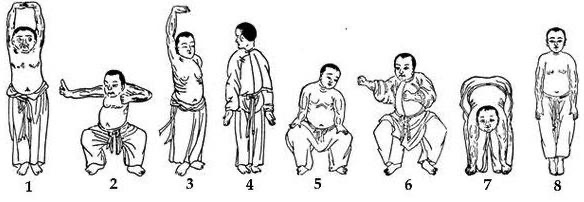
One of the simplest forms of qigong, Baduanjin qigong, incorporates only eight movements, sometimes called the Eight Pieces of Brocade. Photo-Public Domain
With that being said, in actual practice, qigong and tai chi are remarkably similar, at least as they are performed in the Western world. And they have similar health benefits, according to the National Center for Complementary and Integrative Health. For example, both practices achieve the following:
- Improve balance and stability in the elderly and people with Parkinson’s disease
- Improve flexibility
- Reduce back pain
- Reduce pain associated with osteoarthritis of the knee
- Improve quality of life for people with cancer, heart disease and other serious illnesses
- Improve thinking, problem solving, reasoning and memory in seniors who showed no evidence of cognitive decline and those with mild cognitive impairment (tai chi only).
What’s more, both forms of exercise are low-impact and easy on the joints, so they are well-suited to people who are elderly or living with chronic conditions such as osteoarthritis.
Sources
“Tai Chi and Qi Gong”. WebMD. https://www.webmd.com/fitness-exercise/tai-chi-and-chi-gong
“The difference between tai chi and qi gong”. Piedmont. https://www.piedmont.org/living-real-change/the-difference-between-tai-chi-and-qi-gong
“Tai Chi: What You Need To Know”. National Center for Complementary and Integrative Health. https://www.nccih.nih.gov/health/tai-chi-what-you-need-to-know
What Is Mindfulness-Based Stress Reduction?
July 8th, 2025In Western culture, one of the most popular and most studied forms of meditation is mindfulness-based stress reduction, a technique started in 1979 by Jon Kabat Zinn, Ph.D., professor of medicine emeritus at the University of Massachusetts Medical School. The deceptively simple practice includes two main components: attention to breath and the body scan (sequentially bringing attention to different parts of the body). Originally developed as an eight-week in-person course taught at the Center for Mindfulness at UMass Memorial Medical Center, the practice is based on a series of techniques, including a sitting meditation, a walking meditation, yoga and a 45-minute body scan. Since its inception, MBSR has been adopted by health care providers across the world as a means of helping people living with various forms of chronic illness manage stress and distress in their everyday lives. The Center for Mindfulness also currently offers online access to bi-weekly mediation sessions on its website, which are free to attend.
Since Kabat-Zinn introduced the idea of using mindfulness as an adjunct to conventional medical treatment, three decades of research have substantiated its beneficial effects. Some of the most notable of these include the following:
- A 41% reduction in mortality after two years in patients who added MSBR to a standard cardiac rehabilitation regimen for the treatment of coronary artery disease. Cardiac rehab patients in the MBSR program also experienced less psychological distress and better overall health, as indicated by greater weight loss, improved lipid profiles and lower blood pressure, than those treated with standard care alone.
- Reduced blood pressure in people with hypertension. These reductions were comparable to those achieved with medication and lifestyle changes such as weight loss, salt restriction and increased exercise.
- A substantial reduction (65%) in symptoms of anxiety, depression, anger and confusion in cancer patients along with a 30% decrease in physical symptoms associated with stress. In one study, survival rates of patients with melanoma and metastatic breast cancer also improved with the introduction of MBSR.
- Significant improvement in both the experience of pain and the overall functional abilities of people living with chronic pain. Patients who received mindfulness meditation training also had a reduction in symptoms of psychological distress such as depression and anxiety, and an overall reduction in pain medication use, which was not seen in patients who received standard care. Most patients maintained these benefits during a four-year follow-up.
- Lower blood glucose measurements in people with poorly controlled type 1 diabetes.
- Substantial improvement in pain levels, energy, sleep quality and overall well-being in a group of 77 patients undergoing treatment for fibromyalgia.
MSBR has also been shown to reduce recurrence rates in people treated for major depressive disorder, and to relieve depressive symptoms in people living with chronic illnesses such as HIV and diabetes, as well as organ transplant recipients.
Sources
“Center for Mindfulness”. UMass Memorial Health. https://www.ummhealth.org/services-treatments/center-mindfulness
“Mindfulness-Based Stress Reduction Research Summary”. University of Massachusetts Medical School. https://palousemindfulness.com/docs/research_summary.pdf
“Managing cancer pain with nonpharmacologic and complementary therapies”. Journal of the American Osteopathic Association. https://pubmed.ncbi.nlm.nih.gov/18165373/
“Everything You Need to Know About Fibromyalgia”. Healthline. https://www.healthline.com/health/fibromyalgia
“Mindfulness-based cognitive therapy as a treatment for chronic depression: A preliminary study”. Behavior Research and Therapy. https://pubmed.ncbi.nlm.nih.gov/19249017/
What Is Meditation?
July 8th, 2025Meditation and meditative practices embody a wide range of disciplines with dozens of different names. In general, however, these fall into four general categories:
- Contemplative meditation, in which the meditator focuses on an object, such as the breath, a sound (called a mantra), an image or a flame.
- Open awareness, in which the meditator seeks to open the mind to whatever is happening without focusing on any one thing. The Zen sitting practice of “zazen” is an example of this type of meditation.
- Mindfulness meditation is similar to contemplative meditation, but with a less narrow focus and an emphasis on noticing without judgment the distractions of the mind.
- Guided meditation, during which the meditator follows the voice of an instructor who guides them through a series of images, affirmations, feeling states (happiness, peacefulness) or experiences.
Studies show that all forms of meditation have a profound impact on the brain and measurable effects on thinking, behavior, learning and mood. These include the following:
- Preservation of brain mass: A study published in Frontiers in Psychology showed that long-term meditators had less gray-matter loss than non-meditators as they aged. (Gray matter is the part of the brain responsible for processing information — the human equivalent of a computer’s CPU.)
- Decreased “mind-wandering”: A 2011 study from Yale showed that meditating decreased activity in the brain’s “default mode network,” or DMN. This is the part of the brain that’s active when we are not thinking about anything in particular, the so-called “monkey brain.” When the DMN is active, we are more prone to ruminating and worrying about past or future events, which makes us more unhappy and more stressed.
- An antidepressant effect: According to a large meta-analysis by researchers at Johns Hopkins University, meditation had a small effect on symptoms associated with depression and anxiety. However, that effect was identical to that achieved with the use of antidepressant drugs.
- Improved attention and concentration: In a study done in 2013, researchers learned that only two weeks of meditation practice improved students’ performance on the graduate school entrance exam (GRE) by about 16 points.
- Change in size of key brain structures: A study from Harvard in 2011 showed that meditation increased the thickness of the hippocampus, a structure in the brain that governs learning and memory. Additionally, meditators had decreases in the volume of the amygdala, the part of the brain responsible for fear, anxiety and stress. What’s more, these physical changes were linked to self-reported improvements in feelings of well-being and mood.
- Help with addiction: According to several studies, just two weeks of meditation training can improve the success rate of smoking cessation efforts. In one study, meditation was better than the American Lung Association’s Freedom from Smoking Program in helping smokers to quit. There is also some evidence that mindfulness-based relapse prevention is better than conventional treatment in preventing relapse in people treated for substance abuse.
Additionally, research conducted by Michael Posner of the University of Oregon and Yi-Yuan Tang of Texas Tech University showed that meditators had changes in their brain’s white matter, the nerve fibers that allow brain regions to communicate with one another. Specifically, meditators had increased levels of myelin, the brain’s natural “insulation,” after only a few weeks of regular meditation practice. Posner believes that increased insulation helps different brain regions communicate faster and more efficiently.
Sources
“Forever Young(er): potential age-defying effects of long-term meditation on gray matter atrophy”. Frontiers in Psychology. https://www.frontiersin.org/journals/psychology/articles/10.3389/fpsyg.2014.01551/full
“Meditation experience is associated with differences in default mode network activity and connectivity”. PNAS. https://www.pnas.org/doi/abs/10.1073/pnas.1112029108
“Meditation Programs for Psychological Stress and Well-being: A Systematic Review and Meta-analysis”. JAMA Internal Medicine. https://jamanetwork.com/journals/jamainternalmedicine/fullarticle/1809754
“Mindfulness practice leads to increases in regional brain gray matter density”. PubMed Central. https://pmc.ncbi.nlm.nih.gov/articles/PMC3004979/
“Mechanisms of white matter change induced by meditation training”. Frontiers in Psychology. https://pmc.ncbi.nlm.nih.gov/articles/PMC4209813/
What Is Yoga?
July 8th, 2025Yoga is an ancient discipline that originated in India about 2,000 years ago. Although most Westerners think of it as a form of physical and mental exercise involving postures and breathing techniques, it was originally conceived as an ascetic practice and a path to enlightenment.
According to Chopra.com, the Indian sage Patanjali collated the 195 philosophical tenets behind the practice of yoga in the Yoga Sutras sometime between the 2nd and 4th centuries CE. This ancient Sanskrit text outlines the eight “limbs” of yoga:
- Yamas — correct behavior towards others: truthfulness, generosity and nonviolence
- Niyamas — guiding principles to live by: purity, contentment, study and devotion
- Asanas — body postures
- Pranayamas — breathing techniques
- Pratyahara — turning inward to explore the true self
- Dharana — training the mind to focus
- Dhyani — effortless meditation
- Samadhi — unity with the divine
According to the Sutras, the regular practice of these disciplines allows the mind to “settle into silence” and reveal one’s essential nature, which is unbounded consciousness.
Modern-day yoga, on the other hand, is a more physical practice, based heavily on asanas (postures) and breathing techniques. Created by Tirumalai Krishnamacharya in collaboration with gymnast and bodybuilding enthusiast Maharaja Krishnaraja Wodeyar IV, today’s yoga is actually a combination of traditional asanas, gymnastics and calisthenics with a smattering of meditative practice added in. Its primary goal is no longer the expansion of consciousness, but rather the maintenance of health and well-being. It is also considered a form of therapy.
Yoga’s health benefits
Like most Integrative health approaches, yoga has not yet been studied extensively by Western researchers. However, it does appear to have certain health benefits that can’t be attributed to exercise alone. For example, recent studies show that chronic low back pain responds well to certain “carefully adapted” yoga poses, says the National Center for Complementary and Integrative Health. Other studies suggest that yoga may help decrease the effects of stress on the body, including lowering blood pressure and heart rate. There is also some evidence that yoga may help prevent or relieve tension headaches, alleviate symptoms of anxiety and depression, and improve sleep.
Yoga and yoga therapy have also been shown to be a beneficial adjunct in palliative care. Although people with advanced disease may be too ill to participate, many yoga poses can be adapted for people who are chronically ill, and may be especially helpful when combined with mindfulness meditation and breathing techniques. Some observed benefits in women with advanced breast cancer who were taught to do yoga at home included a lessening of disease impact and an improved sense of well-being. Gentle yoga combined with breathing exercises and mindfulness have also been shown to help patients manage cancer-related pain and fatigue.
With that being said, yoga can be physically taxing, and may lead to injuries if not properly performed. According to the NCCIH, the most common injuries are sprains and strains, especially of the lower legs and knees. You can reduce your risk of injury by working with a trained instructor who can help you adapt your practice to match your skill level and physical abilities. And, as with all forms of exercise, you should check with your health care provider before you enroll in a yoga class. This is particularly important if you have health conditions such as glaucoma, high blood pressure or sciatica, or if you are pregnant.
Sources
“Mindfully Mortal”. https://www.kenbreniman.com/
“Yoga: Effectiveness and Safety”. National Center for Complementary and Integrative Health. https://www.nccih.nih.gov/health/yoga-effectiveness-and-safety
“Yoga for palliative care”. Integrative Medicine Research. https://pmc.ncbi.nlm.nih.gov/articles/PMC6160500/
What Is Spinal Manipulation?
July 8th, 2025Spinal manipulation refers to a wide array of techniques that are used to treat a number of medical conditions, most commonly back and neck pain. According to Spine-Health, the usual goal of spinal manipulation is to “restore or enhance joint function, with the general goals of resolving joint inflammation and reducing pain.” However, most practitioners of spinal manipulation believe that improper spinal alignment has a profound effect on the body as a whole, and that correcting misalignment in the spine can improve overall health.
Spinal manipulation may be performed by either a chiropractor or an osteopathic physician. Both professions employ a variety of techniques, but chiropractors typically focus on spinal adjustments, whereas an osteopathic physician may employ many different modalities, including massage, pressure and mobilization of other joints. Additionally, an osteopathic physician is a medical doctor who can diagnose illnesses, perform surgery and prescribe medications. Chiropractors are not medical doctors, although they receive an extensive postgraduate education and must pass an exam to be licensed by the state. (Note: Many European countries and Canada offer osteopathic training, but these professionals are not medical doctors and cannot practice medicine in the U.S.)
There are over 100 different techniques used in spinal manipulation, which generally fall into two broad categories: high-velocity, low-amplitude thrust, or low-force, gentle techniques. The former is the one with which most people are familiar, and involves positioning the patient in a certain way and then moving a joint suddenly, typically creating an audible “pop.” The second group of techniques involves less forceful movements. Often called spinal mobilization, these techniques are preferred by some practitioners, especially for patients who are small or frail or have certain medical conditions such as osteoporosis or nervous system disorders.
Efficacy of Spinal Manipulation
Research supports the use of spinal manipulation techniques for a number of conditions. According to WebMD, it is often effective for neck pain, headaches, osteoarthritis and fibromyalgia, and may be of some benefit for low back pain. However, it’s important to note that people with certain medical conditions, such as osteoporosis, inflammatory arthritis, spinal cord compression or some forms of cancer should avoid spinal manipulation, as it may cause harm. People who are taking blood thinners such as warfarin or Xarelto or those with known degenerative disc disease, should be cautious as well. Although rare, spinal manipulation has been known to worsen herniated discs or cause spinal cord compression in patients with underlying disc disease or a history of trauma to the back or spine.
Sources
“What is a Chiropractor?”. Spine-Health. https://www.spine-health.com/treatment/chiropractic/what-a-chiropractor
“What Training Do Chiropractors Have and What Do They Treat?” Healthline. https://www.healthline.com/health/are-chiropractors-doctors
“Chiropractic Adjustment for Back Pain”. WebMD. https://www.webmd.com/back-pain/chiropractic-pain-relief#1
“Fibromyalgia”. Mayo Clinic. https://www.mayoclinic.org/diseases-conditions/fibromyalgia/symptoms-causes/syc-20354780
“What Is Degenerative Disc Disease?”. Spine-Health. https://www.spine-health.com/conditions/degenerative-disc-disease/what-degenerative-disc-disease
What Is Acupuncture?
July 8th, 2025Acupuncture is a technique used in traditional Chinese medicine that acts to redirect the flow of the body’s vital energy, known as “qi” (pronounced “chee”). In traditional acupuncture, a trained practitioner inserts very thin needles about the size of a human hair into designated points along a “meridian” (a path in the body along which qi flows). According to John Pirog, MSOM, of Northwestern Health Sciences University, there are 12 meridians in all, each of which corresponds to a particular organ in the body. “Yin” meridians typically correspond to organs without an empty cavity, such as the heart, liver, spleen and kidney. “Yang” meridians correspond to organs that have an empty cavity, such as the stomach, gallbladder and intestines. By stimulating points along a particular meridian, the acupuncture practitioner balances the flow of energy and provokes therapeutic change in the corresponding organ, Pirog explains.
Although acupuncture employs needles, when done properly, the procedure rarely hurts. Most patients report no sensation at all or a mild feeling of pressure when the needles are inserted. With that being said, some acupuncture points may be more sensitive than others, especially those on the hands and feet. Additionally, some practitioners stimulate acupuncture points further by heating the needles with a mild electrical current, which creates a “pins and needles” effect. In any case, discomfort should be very mild and brief. If it isn’t, you should let your practitioner know.
In addition to needles, an acupuncturist may use other forms of stimulation to redirect the flow of qi. These include the following:
- Vacuum pressure (“cupping”)
- Application of heat (“moxibustion”)
- Mild electrical current (electroacupuncture)
- Chinese massage (tui na)
- Chinese exercise system (tai ji)
Does acupuncture work?
Practitioners of traditional Chinese medicine have used acupuncture to successfully treat various ailments for about 2,500 years. Here in the West, it first gained popularity as a Integrative therapy in the 1990s, when the FDA approved acupuncture needles as a medical device. In the two decades since that time, multiple studies have confirmed that acupuncture does, in fact, work, says Hopkins Medicine. The conditions that have been successfully treated with either acupuncture alone or acupuncture in combination with more traditional Western therapies include the following:
- Asthma
- Post-surgical dental pain
- Headaches
- Fibromyalgia
- Addiction
- Tennis elbow
- Low back pain
- Osteoarthritis
- Menstrual pain
Additionally, a 2012 study in which researchers conducted an analysis of four large randomized controlled studies on the efficacy of acupuncture for chronic pain found acupuncture to be superior to both no treatment and “sham” acupuncture for four chronic pain conditions: chronic migraines, neck and back pain, osteoarthritis and shoulder pain.
Sources
“What is the Meridian System?” Shen Nong. http://www.shen-nong.com/eng/principles/whatmeridian.html
“What is acupuncture?”. Johns Hopkins Medicine. https://www.hopkinsmedicine.org/health/wellness-and-prevention/acupuncture
“Acupuncture for Chronic Pain”. JAMA Internal Medicine. https://jamanetwork.com/journals/jamainternalmedicine/fullarticle/1357513
Is Integrative and Alternative Medicine Covered by Health Insurance?
July 8th, 2025The coverage of Integrative and alternative medicine varies significantly among insurers and available plans. Most cIntegrative and alternative medicine therapies are not covered, although common exceptions usually include chiropractic therapy. When these approaches are covered by insurance, partial coverage is typically provided. It often depends on factors such as referrals, pre-authorizations, and if the provider is in-network with the insurance plan. It is common for individuals to pay out-of-pocket costs to ensure they can receive the Integrative and alternative care they consider most beneficial to their health outcomes.
Generally, the best practice when seeking coverage for Integrative and alternative medicine treatments is communicating clearly with the health insurance provider and the practitioner. Health insurance is fairly specific about requirements or criteria that must be met to have coverage. This often includes the number of visits allowed for coverage or the total amount the insurance provider is willing to cover for certain types of care. Since most insurance providers require that treatments, tests, and screenings are medically necessary, requesting a recommendation for Integrative or alternative therapy may be helpful documentation supporting the need for coverage.
Most health insurance plans have selective or limited coverage for Integrative and alternative medicine therapies. Coverage outcomes can vary on a case-by-case basis, so individuals interested in pursuing these therapies are encouraged to contact their insurance provider for further guidance.
Sources
“Complementary and Alternative Medicine”. National Cancer Institute. https://www.cancer.gov/about-cancer/treatment/cam
“Paying for Complementary and Integrative Health Approaches”. National Institute of Complementary and Integrative Health.
https://www.nccih.nih.gov/health/paying-for-complementary-and-integrative-health-approaches
“Will My Insurance Cover Complementary and Integrative Therapies”. American Cancer Society.
How Is VR Therapy Used in End-of-Life Care?
July 8th, 2025Virtual reality (VR) therapy is used in palliative and hospice care to improve quality of life, increase comfort levels, decrease stress and anxiety, and enable individuals with end-stage diseases to complete some of the final wishes on their bucket lists. The technology used in VR therapy allows patients to have immersive and rewarding experiences in realistic settings and scenarios that they might otherwise not be able to access due to reduced mobility and deteriorating health. These experiences are not limited to the patient and can be shared with family members and loved ones to foster a few more cherished memories of time spent together.
VR systems work by displaying simulated environments through headsets and other equipment that enables viewers to interact and explore the surrounding area as if they were physically present. Some systems may also engage with other senses beyond sight, such as the ability to hear or smell. The environments that are accessible in VR can vary based on the system and the patient’s preferences. For example, some VR systems are preloaded with a variety of specific environments or games, but others may include environments that are customized and unique to the patient’s preferences, requests, or interests. This means that patients can experience exploring another country, participate in a favorite hobby, or even pursue an exhilarating adventure whenever they need a break from the reality of their circumstances.
While providing patients with a greater sense of freedom from physical limitations is helpful, it is not the only benefit associated with the use of VR therapy. Studies in recent years have found that patients who receive VR therapy experience decreased pain, restlessness, anxiety, and blood pressure.
Although VR therapy offers many benefits, it is important to be aware of potential side effects and safety considerations. Patients who have a risk of falling should only use VR headsets while sitting or lying down, and likewise, this technology should be used with caution in patients who have dementia or similar neurological conditions that can cause increased confusion.
Although VR therapy is still in the early stages of application in hospice care, it holds significant promise for transforming the experiences of patients who are terminally ill. While there has been limited adoption of VR therapy in hospice, its use cases have proven to have a positive influence on the lives of patients and their loved ones by introducing experiences that can be a source of comfort, bonding, distraction, or even fulfillment of final wishes. More comprehensive research is necessary to fully understand the extent of benefits that VR therapy can provide in end-of-life care scenarios, but it will be interesting to see how this form of technology will continue to develop to support the needs and interests of those who are actively dying.
Sources
“Using Virtual Reality Program for Hospice Patients”. Mirasol Health. https://hospicecarelc.org/using-virtual-reality-program-for-hospice-patients/
“Virtual Reality & Hospice Care Bucket List”. Keystone Hospice. https://keystonehospice.org/hospice-virtual-reality-bucket-list
“Using Virtual Reality to Improve the Lives of the Terminally Ill”. Guided VR. https://guidedvr.com/vrforhospices/
“Using Virtual Reality In Palliative Care: What Experts Say”. Forbes. https://www.forbes.com/health/healthy-aging/virtual-reality-in-palliative-care/
Are There Risks to Using Integrative Therapies?
July 8th, 2025Integrative therapies can have unanticipated side effects and risks. Although many of these therapies are considered natural and presumed to be safe, it is essential to acknowledge that they can potentially be harmful. A primary risk associated with Integrative therapies is that they lack regulation and standardization, which is common among traditional therapies and conventional medicine. Conventional medicine is highly regulated and emerges from rigorous medical education and licensing. In contrast, Integrative therapies are subject to inconsistent quality standards and differing levels of professional expertise.
Some Integrative therapies, such as nutritional supplements, can potentially cause dangerous interactions with conventional medications. They may result in adverse reactions or even reduce the efficacy of prescription or over-the-counter drugs. For this reason, individuals are encouraged to inform their healthcare providers if they are considering incorporating natural remedies or supplements into their regimen. Additionally, some vitamins and minerals can potentially increase the risk of cancer and other serious illnesses.
Another reason Integrative therapies can be risky is that they may delay or prevent individuals from pursuing evidence-based treatments and interventions for serious conditions. Although some Integrative therapies can help relieve symptoms of some health issues, they should not replace conventional medical care. Some symptoms can indicate a more severe medical condition, so it is crucial to get evaluated by a healthcare professional to gain more insight into any health concerns. Individuals with an existing treatment plan should consider discussing their interest in Integrative therapies with a healthcare professional to determine which therapies may be appropriate to include in their current plan.
Integrative therapies can provide alternative approaches to facilitating health and well-being. Still, they are not without risks and side effects. Individuals are encouraged to stay informed and exercise caution, especially if they plan to combine these therapies with their current conventional medical treatments or prescription drugs. Since reactions to Integrative therapies can vary, it is crucial to maintain consistent communication with a healthcare professional for optimal safety.
Sources
“Complementary and Alternative Medicine”. National Cancer Institute. https://www.cancer.gov/about-cancer/treatment/cam
“Are You Considering a Complementary Health Approach?”. National Center for Complementary and Integrative Health. https://www.nccih.nih.gov/health/are-you-considering-a-complementary-health-approach
“Alternative Medicine”. American Cancer Society. https://www.cancer.org/cancer/managing-cancer/treatment-types/alternative-medicine.html
What Are the Benefits of Integrative Therapies at the End of Life?
July 8th, 2025Little research exists examining the benefits of Integrative therapies at the end of life. However, several small studies support the use of three types of therapeutic touch to alleviate pain, emotional distress, nausea and anxiety in people who are terminally ill. These include two energy-balancing techniques, reiki and healing touch, along with Compassionate Touch, a technique developed by Pam Brandon, the president and founder of the AGE-u-cate Institute, which combines focused attention, intentional touch and gentle massage with special communication skills.
Anecdotal reports from patients, caregivers and hospice administrators also support the use of Integrative techniques to control symptoms and increase comfort at the end of life. According to one survey of 54 hospice providers in Nevada and Montana, dying patients received a variety of benefits from an array of Integrative and alternative techniques. These benefits included:
- Decreased anxiety
- Less pain
- Less difficulty breathing
- Enhanced feelings of well-being
- Greater sense of control
- Decreased fatigue
- Less psychological distress
Further, benefits were associated with a number of different Integrative therapies and techniques, either alone or in combination. These included the following:
- Acupuncture
- Animal-assisted therapy
- Aromatherapy
- Art therapy
- Mindfulness meditation
- Hypnosis
- Massage
- Massage combined with aromatherapy
- Music therapy
- Reflexology
- Therapeutic touch
- Yoga therapy
Another Integrative therapy that has proven beneficial to patients in hospice and palliative care is mindfulness meditation — a self-directed therapeutic tool that has been shown to be highly effective for dying patients and caregivers alike. One of the most studied Integrative therapies available today, mindfulness meditation and mindfulness-based stress reduction have been shown to provide many benefits, including:
- Decreased psychological distress
- Decreased anxiety
- Increased immune function
- Decreased inflammatory response
- Lower pain sensitivity
- Less fatigue
- Decreased depressive symptoms
- Improved mood
Additionally, maintaining a regular mindfulness practice helps professional caregivers develop stronger feelings of empathy and avoid “compassion fatigue.” Further, teaching mindfulness techniques to family caregivers may help alleviate caregiver stress and caregiver burnout, a debilitating state of exhaustion that affects up to 40% of family caregivers in the U.S.
Sources
“Reiki”. National Center for Complementary and Integrative Health. https://www.nccih.nih.gov/health/reiki
“Compassionate Touch”. Age-U-Cate. https://ageucate.com/index.php?main_page=compassionate_touch
“A Survey of Hospices Use of Complementary Therapy”. Journal of Hospice and Palliative Nursing. https://pmc.ncbi.nlm.nih.gov/articles/PMC2743113/
“Caregiver Burnout”. Cleveland Clinic. https://my.clevelandclinic.org/health/diseases/9225-caregiver-burnout
Do People With Cancer Benefit From Integrative Therapies?
July 8th, 2025Some Integrative therapies have been shown to be helpful in managing the symptoms of cancer and treatment side effects. According to the NCCIH Clinical Digest, preliminary research shows that several Integrativehealth approaches have positive effects on symptoms such as anxiety, depression, nausea and vomiting, and fatigue. Specifically, evidence suggests the following:
- Acupuncture helps ease nausea and vomiting related to cancer chemotherapy and has a small effect on cancer-related pain. It has also shown promise in the treatment of chemotherapy-induced peripheral neuropathy, a common side effect of cancer treatment that causes pain, numbness, weakness and abnormal sensations in the extremities, especially the feet. Acupuncture has also been shown to reduce hot flashes in some women receiving hormonal therapy for breast cancer.
- Massage therapy may help with anxiety, depression, nausea and vomiting, and pain. In particular, studies support the use of massage to help alleviate symptoms of anxiety and depression in breast cancer survivors and in people undergoing treatment for lung cancer whose anxiety and/or pain are not well-controlled.
- Mindfulness-based stress reduction (mindfulness meditation) may ease symptoms such as stress, anxiety, fatigue, mood issues and sleep problems, especially in women with early-stage breast cancer.
- Yoga may help with stress, anxiety and depression. However, the evidence of this at present is not very strong.
- Ginger, when used in conjunction with conventional medicines, may be helpful in controlling chemotherapy-induced nausea and vomiting.
Unfortunately, researchers have conducted few carefully controlled studies on the benefits of Integrative or integrative approaches in cancer care. So the scientific evidence to support most of these strategies is not very strong.
The National Cancer Institute also urges cancer patients to keep in mind that even “natural” products can be harmful if they interfere with traditional care. For example, a 2002 study reported in BMJ showed that the herbal supplement St. John’s wort can speed up the metabolism of some chemotherapy drugs, thus decreasing their effectiveness. St. John’s wort also enhances the metabolism of a number of other drugs, such as the anticoagulant warfarin, the heart medicine digoxin and the immunosuppressant cyclosporine, according to a 2012 Healio report.
The NCI also advises that large doses of some vitamins, including vitamin C, can decrease the efficacy of some cancer drugs. And the herbal supplement kava kava, which is used to alleviate anxiety, can cause severe liver damage, even in people who are healthy.
Sources
“Complementary Psychological and/or Physical Approaches for Cancer Symptoms and Treatment Side Effects: What the Science Says”. National Center for Complementary and Integrative Health. https://www.nccih.nih.gov/health/providers/digest/mind-and-body-approaches-for-cancer-symptoms-and-treatment-side-effects-science
“Acupuncture (PDQ®)–Patient Version”. National Cancer Institute. https://www.cancer.gov/about-cancer/treatment/cam/patient/acupuncture-pdq
“Peripheral Neuropathy”. American Cancer Society. https://www.cancer.org/cancer/managing-cancer/side-effects/pain/peripheral-neuropathy.html
“Complementary and Alternative Medicine”. National Cancer Institute. https://www.cancer.gov/about-cancer/treatment/cam
“St John’s wort interferes with chemotherapy, study shows”. The BMJ. https://pmc.ncbi.nlm.nih.gov/articles/PMC1169455/
“The Role of Complementary and Alternative Medicine in End-of-Life Care”. Psychiatric Annals. https://journals.healio.com/doi/full/10.3928/00485713-20120323-09
“What is Kava Kava?” Medical News Today. https://www.medicalnewstoday.com/articles/324015#uses-and-possible-health-benefits
What Health Challenges Are Integrative and Alternative Therapies Used For?
July 8th, 2025Americans use Integrative therapies to manage a number of health problems. For example, according to the 2012 National Health Interview Study, about 40% of Americans who suffer from a musculoskeletal pain disorder use Integrative health approaches in some way. However, only 14% of them actually use these approaches to manage their pain. Others report using them to manage stress and improve their overall quality of life.
As the opioid epidemic continues to claim tens of thousands of American lives each year, researchers have also been looking into the benefits of Integrative therapies in the management of all forms of chronic pain. According to a 2017 literature review by the National Center for Complementary and Integrative Health, studies show that pain sufferers receive some benefit from the following:
- Acupuncture
- Yoga
- Tai Chi
- Massage
- Spinal manipulation
- Hypnosis
- Mindfulness meditation
- Music therapy
However, only acupuncture has been shown to reduce patients’ need for opioids.
Integrative and alternative therapies are also sometimes useful in the treatment of mental health disorders such as schizophrenia, anxiety, panic disorders and depression. According to the National Alliance on Mental Illness, there is currently little research to support their use, but a few studies have shown promising results. For example:
- Omega-3 fatty acids have been shown to decrease the likelihood that a young person who experiences an episode of psychosis will develop a more chronic and severe form of schizophrenia
- Folate (also called folic acid and vitamin B9) may help reduce the severity of symptoms of certain mental illnesses, especially in people whose blood levels of this essential vitamin are low. The U.S. Food and Drug Administration has approved one form of folate, l-methylfolate (Deplin) for use as an adjunct to traditional therapies in the treatment of depression and schizophrenia.
- Equine-assisted therapy, in which a person is trained by a licensed mental health professional to groom, ride and care for horses, has been shown in several small studies to be useful in the management of depression, anxiety and impulsiveness related to mental illness.
Additionally, many people who suffer from chronic illnesses such as cancer, heart disease and COPD use various Integrative therapies to manage their symptoms, decrease stress, and achieve a greater sense of overall well-being.
Sources
“New Analysis of Data Reveals Americans’ Use of Complementary Health Approaches for Musculoskeletal Pain”. National Center for Complementary and Integrative Health. https://www.nccih.nih.gov/research/research-results/new-analysis-of-data-reveals-americans-use-of-complementary-health-approaches-for-musculoskeletal-pain
“Drug Overdose Deaths: Facts and Figures”. National Institute on Drug Abuse. https://nida.nih.gov/research-topics/trends-statistics/overdose-death-rates
“Chronic Pain and Complementary Health Approaches”. National Center for Complementary and Integrative Health. https://www.nccih.nih.gov/health/chronic-pain-and-complementary-health-approaches-usefulness-and-safety
“Complementary Health Approaches”. National Alliance on Mental Illness. https://www.nami.org/About-Mental-Illness/Treatments/Complementary-Health-Approaches/
Integrative & Alternative Medicine: Explore Trusted Resources
July 8th, 2025SevenPonds suggests the following resources and experts for those interested in learning more about integrative medicine.
National Center for Complementary and Integrative Health
The National Center for Complementary and Integrative Health is the lead federal agency within the National Institutes of Health dedicated to scientific research on complementary and integrative health approaches. NCCIH funds and conducts rigorous studies on practices such as acupuncture, meditation, yoga, and natural products, providing evidence-based information to help the public and healthcare professionals make informed decisions.
National Certification Commission for Acupuncture and Oriental Medicine
Established in 1982, the National Certification Commission for Acupuncture and Oriental Medicine provides professional certification that validates entry-level competency in acupuncture and Oriental medicine. NCCAOM certification or examination scores are required for licensure in 46 states plus the District of Columbia. The organization maintains a searchable directory of board-certified practitioners. (Note: Effective February 2026, the organization is now the National Certification Board for Acupuncture and Herbal Medicine, or NCBAHM.)
Academy of Integrative Medicine
The Academy of Integrative Medicine is a global, interprofessional community of healthcare providers, researchers, and academics dedicated to treating the whole person—mind, body, spirit, community, and planet. Formed in 2013 through the unification of several holistic health organizations, AIHM provides education, certification pathways, and a professional home for practitioners across all integrative health disciplines.
American Academy of Medical Acupuncture
The American Academy of Medical Acupuncture is the sole physician-only professional acupuncture society in North America, representing MDs and DOs trained in both modern medicine and acupuncture. Founded in 1987, AAMA promotes the evidence-based integration of acupuncture into Western medical practice and provides resources for patients seeking qualified physician-acupuncturists.
American Chiropractic Association
The American Chiropractic Association is the largest professional chiropractic organization in the United States. ACA advances the chiropractic profession through advocacy, research support, and collaboration with other healthcare disciplines, with a focus on higher standards and patient-centered outcomes.
American Osteopathic Association
The American Osteopathic Association is the professional home for more than 197,000 osteopathic physicians (DOs) and students nationwide. AOA serves as the primary certifying body for DOs and accredits osteopathic medical colleges, championing the distinctive osteopathic philosophy that emphasizes the body’s inherent ability to heal itself.
Center for Mindfulness in Medicine, Healthcare and Society
Based at the University of Massachusetts Medical School and founded by Dr. Jon Kabat-Zinn in 1995, the Center for Mindfulness in Medicine, Healthcare and Society pioneered the integration of mindfulness into mainstream medicine. It developed and disseminates Mindfulness-Based Stress Reduction (MBSR), the eight-week evidence-based program now offered in hospitals and clinics worldwide.
National Association for Holistic Aromatherapy
The National Association for Holistic Aromatherapy is a 501(c)(3) non-profit association devoted to the holistic integration and education of aromatherapy into complementary healthcare practices and self-care. Founded in 1990, NAHA promotes high standards of education, ethics, and integrity in the practice of clinical and holistic aromatherapy.
Multidisciplinary Association of Psychedelic Studies
Founded in 1986, the Multidisciplinary Association of Psychedelic Studies is a non-profit research and educational organization working to develop legal, equitable access to psychedelics for healing and personal growth. MAPS advances clinical research—most notably on MDMA-assisted therapy for PTSD—educates policymakers, and provides honest public education about the risks and benefits of psychedelics.
Johns Hopkins Center for Psychedelic and Consciousness Research
Johns Hopkins Center for Psychedelic and Consciousness Research is the leading psychedelic research institution in the United States, established following a landmark 2006 study on psilocybin led by Dr. Roland Griffiths. The Center investigates psychedelics for treating depression, addiction, PTSD, and existential distress, and explores the neurophysiological mechanisms underlying consciousness and therapeutic applications.