

Green Burial
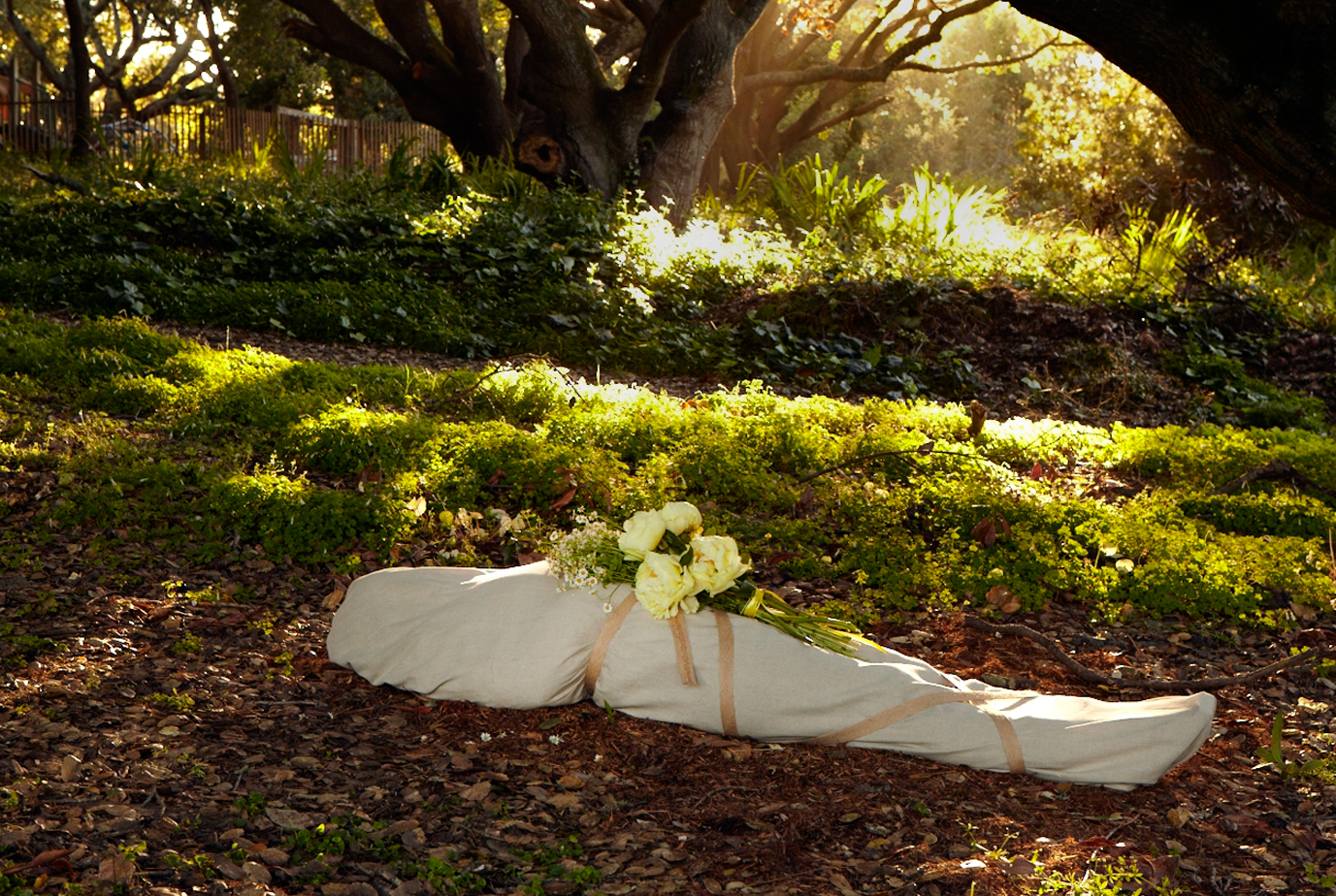
Green burial is a natural and eco-friendly alternative to traditional burial methods, designed to honor both the person and the planet. This section explores what green burial involves, how to plan ahead to ensure your wishes are honored, and what options are available after death. You’ll also find insights on costs, environmental benefits, religious perspectives, and green burial tips—helping you make choices that align with your values.
Jump ahead to these answers:
- What Is Green Burial?
- How Much Does Green Burial Cost?
- How Long Does an Unembalmed Body Buried Without a Casket Take to Decompose?
- What Are the Benefits of Green Burial?
- Will Unembalmed Bodies Leach Drugs Such as Chemotherapy into Groundwater?
- Will Burying an Unembalmed Body Attract Wildlife?
- Will a Naturally Buried Body Contaminate Ground or Water Supply or Cause Disease?
- Can Family Members Transport the Body to a Green Burial?
- Can I Use a Funeral Home and Still Have a Natural Burial?
- Can Family and Loved Ones Participate in Green Burial?
- Can I Hold a Home Funeral Prior to a Green Burial?
- What is a conservation burial ground?
- What Is a Green Burial Service Like?
- What Is the Position of the Catholic Church on Green Burial?
- Do Any Religions Prohibit Green Burial?
- Can I Choose a Green Burial for a Pet?
- How Can I Wrap or Shroud a Body for Natural Burial?
- What Is a Shroud?
- What Is a Bier?
- What Is a “Green” Casket?
- How Can I Raise Awareness About Green Burials in My Community?
- How Can I Find a Natural or Conservation Burial Ground in My Area?
- Can I Hold a Green Burial on Private Property?
- What Are the Three Types of Green Burial Sites?
- Where Can a Green Burial Take Place?
- Before Death: Securing Your Wish for Green or Natural Burial
- Before Death: Securing Your Wish for Green or Natural Burial
- Before Death: Choosing Green or Natural Burial
- After Death: Options for Green Burial
- Green Burial: Explore Trusted Resources
What Is Green Burial?
July 9th, 2025“Green burial” (also known as natural burial) is a term that describes the interment of a body in a way that has minimal impact on the environment. According to the Green Burial Council, the practice seeks to “conserve natural resources, reduce carbon emissions, protect worker health and/or protect the natural habitat.” Green burial eschews the trappings of the conventional North American burial, such as embalming, concrete grave liners and vaults, lacquered hardwood coffins, and ornate tombstones. Instead, bodies are buried in their natural state in biodegradable coffins or a simple shroud.
Although green burial is a relatively modern term, the practice of natural burial is far from new. Muslims and Jews have practiced “green” burial for centuries as part of their religious faith. And prior to the late 19th century, virtually all burials that took place in the U.S and most of the world were “green,” though they were not referred to in that way. People typically died at home, and those who died elsewhere were taken home for after-death care. The family bathed and dressed the body, which was then placed in the “parlor” so friends could come to pay their last respects. Eventually, the body was placed in a plain wooden coffin, often constructed by the family, and buried on the family property or, in the case of non-landowners, a church graveyard or community cemetery.
Jump ahead to these answers:
The Conventional Burial
The practice of embalming emerged in the U.S. during the Civil War as a way to preserve the bodies of those who died on the battlefield for the long journey home. After the war ended, embalming grew more popular, especially after the 1865 assassination of Abraham Lincoln, whose body was embalmed and carried by train over the course of two weeks through seven states before reaching Springfield, IL. Initially, embalming was performed by doctors and trained military personnel, but eventually the practice was taken over by morticians and performed in the family home.
At the same time, embalming was gaining popularity, and a new profession, the undertaker, began to emerge. Typically, cabinet makers or carpenters of some sort, these were the people whose families called upon to build a coffin when someone died. But as Americans began to take a more hands-off approach to caring for their dead, the undertaker’s role expanded. By the mid-20th century, they had largely morphed into “morticians” and later “funeral directors,” who prepared bodies for burial (including embalming) in their own homes. Soon, these newly minted “professionals” were arranging funerals and burials, transporting bodies in special vehicles, and handling all the details of final disposition — all for a fee. Thus began the evolution of formalized, institutionalized death care in the U.S, which is projected to become a $68 billion industry by 2023.
Alongside the development of a commercial death care industry, the idea of privately owned cemeteries began to emerge. In part due to industrialization and in part due to the increasing cultural emphasis on separating the living from the dead, by the late 19th century, Americans began to bury their dead in rural graveyards rather than at a community cemetery or church graveyard in the center of town. Initially, these public cemeteries were managed by the community and local governments. But with the opening of Mount Auburn Cemetery in Cambridge Massachusetts in 1831, the era of privately owned cemeteries was born.
As Mount Auburn exemplified, cemeteries soon became much more than simple repositories for the dead. Rural land was plentiful, and after centuries of burying their dead in cramped churchyards where bodies were sometimes buried four or five deep, the public wanted to lay their loved ones to rest in a beautiful setting with sweeping vistas and manicured grounds. And since there were no public parks at the time, these cemeteries were also places where city dwellers could have picnics, let their children play, and enjoy a break from city life. Today, Mount Auburn Cemetery is viewed not only as the first designed, landscaped cemetery in the nation, but as a blueprint for the public open spaces and designed suburbs of the 20th century.
But the era of large, pastoral cemeteries came with additional burdens. Those expansive lawns and botanical gardens needed regular maintenance, and as industrialization progressed, cemeteries began to use heavy, gasoline-powered machinery to maintain the grounds. During the same era, metal caskets were introduced and, alongside cherry, mahogany, and other hardwoods, became a favorite among American consumers (who had by that time been enculturated by the funeral industry into believing in the importance of “preserving” the dead). Concrete burial liners were also introduced to prevent graves from collapsing under the weight of heavy machinery, and quickly became required. Thus, by the mid-20th century, what had once been a simple, family-led process had evolved into a more costly, elaborate, and less environmentally friendly approach to funerals and burials.
The Green Burial Movement
In spite of the growth of the death care industry (or perhaps because of it) during the latter part of the 20th century, a small but committed group of individuals began to raise awareness around the wasteful and harmful nature of our culture’s current approach to death care and burial. In the United States, two of these pioneers were Juliette and Joe Sehee, who in 2002 moved to the Mojave Desert to open an eco-retreat that would serve individuals who were grieving a death. The two were also intrigued by the green burial movement that was emerging in the U.K. and the creation of the first conservation cemetery in the United States, founded in South Carolina by Dr. William and Kimberley Campbell in 1998. The Sehees began to envision a partnership with a conservation organization that would help them create a similar conservation cemetery and healing space on their land.
For various reasons, the Sehees’ dream did not manifest as they envisioned, and they began to realize that more structure was needed around the idea of green burial before the concept would be accepted by our death-averse culture. So in 2005, they sold their land in the desert and founded the Green Burial Council, a non-profit organization that would develop standards for green burial and certify qualified providers. Then in 2015, they formed Green Burial International, an educational organization that seeks to inform the public about green burial and connect them with certified providers.
Today, the Green Burial Council is the sole organization in the U.S and Canada that creates standards for green burial products and providers and offers certification to those who adhere to those standards. At present, there are about 100 GBC-certified cemeteries in North America as well as over 450 others that offer natural burials but have not yet been certified by the GBC. Some of these are what are called hybrid cemeteries, which permit natural burials as well as more “conventional” burials on the grounds. Others are “natural burial grounds” which follow strict protocols around embalming and what kinds of materials are placed in the earth. Still others are conservation burial grounds, which operate in conjunction with a government agency or non-profit organization to ensure that the cemetery is maintained in a manner that restores or maintains the natural habitat.
The Growth of Green Burial
Although the green burial movement is still in its infancy, its impact is being felt, especially in the western and northeastern U.S. According to a 2021 consumer survey conducted by Kates-Boylston Publications, 51% of 500 respondents surveyed said they had attended a green burial, and a whopping 84% said they would consider it as an option if it were available to them. This was a striking increase from a similar survey conducted by the company in 2008, in which only 7% of respondents had attended a green burial and 43% said they would consider it.
And there are good reasons for the shift. Not only has the cost of a funeral and burial reached dizzying heights (close to $8000 in 2021, and that does not include a burial plot or other cemetery fees) but the environmental cost of our current funeral and burial practices is also completely unsustainable. According to data provided by the Green Burial Counci, traditional burials in the U.S. consume an incredible amount of resources, including:
- 20 million board feet of hardwoods (coffins)
- 64,500 tons of steel (coffins)
- 17,000 tons of copper and bronze (coffins, handles and hardware)
- 1.6 million tons of concrete for grave liners and vaults
- 4.3 million gallons of embalming fluid, which contains methane, formaldehyde and benzene, the latter two of which are known human carcinogens
Nor does this account for the carbon footprint of the backhoes and other heavy machinery used to maintain cemetery grounds, the carbon cost of transporting millions of board feet of hardwoods from the rainforests of South America to their neighbors in the north, or the impact of the manufacturing process for caskets and vaults.
By contrast, a natural burial can be less costly and uses far fewer resources than a typical burial, especially if the family opts for a home funeral and the body is buried in a shroud. In some cases, graves are hand-dug (sometimes by surviving loved ones), and the body is carried by hand to the graveside. If the body must be transported a long distance to the grave site, part of the journey may be made by car. And, of course, by avoiding embalming, no unnecessary toxins are buried in the ground.
Holding a green burial on private property is even more cost-effective and environmentally friendly, though there may be legal hurdles to overcome.
Green burials are also more personal than a typical American burial. Many green burial sites allow mourners and participants to be a part of the process to the extent that they wish to be. This may include washing and dressing the body, transporting the body back to the cemetery, carrying the body to the grave, digging the grave, and assisting in placing the body in the ground. For many mourners, this is one of the most meaningful and satisfying aspects of green burial — it can be a loving, dignified, and personalized way to say goodbye.
Still another reason for green burial’s growing popularity is the desire expressed by many people to “go back to basics’” and allow their bodies to nurture the earth when they die. Cremation is currently the most popular form of final disposition in North America, but its carbon footprint is far from negligible, especially as the number of cremations increases each year. Further, while scattering cremation ashes can be a beautiful healing ritual for those mourning a loved one, those ashes do nothing for the environment and can actually harm surrounding plant life. Thus, more and more people find that allowing the body to decay as naturally as possible is a comforting and logical end-of-life choice.
The Safety of Green Burial
One question many people who are unfamiliar with green burial ask is: “is it safe?, voicing concerns ranging from possible contamination of groundwater from unembalmed bodies to the possibility that animals will dig up the grave. According to the Green Burial Council, these concerns are common but unfounded. Here are a few answers from the Green Burial Council to some common questions readers pose:
- If bodies are buried at a depth of 3.5 to 4 feet won’t animals dig them up?
According to the GBC, animals can’t smell a body buried 3.5 feet underground. Even wild boars, which have an extremely sensitive sense of smell, can only sense potential food sources to a depth of about 12 inches at most.
- Will an unembalmed body buried in a 3.5 foot deep grave smell?
Humans have a poor sense of smell compared to most animals and won’t smell anything that’s buried 3.5 feet deep.
- Will chemotherapy or other drugs leach from the body into the ground?
A dead body decomposes gradually. According to the Green Burial Council, it takes about 6 weeks for all of the soft tissue to decompose and about 2 years for the entire body to do so. As this takes place, small amounts of various chemicals will be released into the ground and trapped in the soil. There, soil microorganisms remove toxins, drugs, and pathogens through a process known as bioremediation.
The Benefits of Green Burial
People choose green burial for a number of reasons. According to the Green Burial Council, the top reason why people choose green burial is to minimize impact on the environment, while a desire to revert back to old tradition is the second most common reason. Outside of this rationale, people also choose green burial due to cost, spiritual or religious reasons, or the preference for taking a do-it-yourself approach to disposition.
There are, however, other tangible benefits to natural burial over conventional burial in a traditional cemetery. These include:
- Natural burial has a smaller carbon footprint than conventional burial
Although it’s difficult to quantify exactly how much less energy is consumed for a natural burial vs conventional burial, if you are buried in a natural cemetery or conservation burial ground (link to new definition in list), your grave is sometimes dug by hand rather than by a gas-powered backhoe, and the cemetery grounds will be maintained based on minimally invasive operations and an ecological assessment rather than by lawn mowers and fertilizers. Additionally, the use of a biodegradable burial container avoids the energy-intensive processes used in the harvesting, manufacturing and transport of hardwood or steel caskets and concrete vaults. This is especially true if you opt for a simple burial shroud made of natural cotton or silk.
- Natural burial uses more thoughtfully sourced materials
As a rule, those choosing natural burial should prioritize biodegradable materials—such as plant, animal, or unfired earthen products—and source them locally to reduce energy costs and support the local economy.
- Natural burial protects the health of funeral workers
Embalming fluid contains formaldehyde and benzene, both of which are known carcinogens. According to numerous studies cited by the Centers for Disease Control and the National Cancer Institute, prolonged exposure to embalming fluid puts the health of all funeral workers at risk. For example, an increasing body of evidence indicates that funeral directors and embalmers have:
- A 13% higher death rate from all causes than the general public
- A higher risk of contracting leukemia, brain cancer,and cancers of the respiratory tract, especially the nose and throat.
- A 4.5 higher risk of dying from ALS than those whose jobs entailed no exposure to formaldehyde
- Natural burial protects local land, water and wildlife
Natural cemeteries avoid the use of pesticides and fertilizers which have the potential to contaminate surrounding groundwater and negatively impact local wildlife. Further, according to data from the Green Burial Council, contaminants found in cemetery soil research could be linked to concrete vaults, non-biodegradable caskets, or other incidental materials of conventional burials, while no such contamination has been reported from or near any green cemeteries in the U.S, Canada, Great Britain or Australia since their inception in 2003.
- Natural burial encourages greater family involvement
When families relinquish control of their dead to funeral homes and allow bodies to be preserved in an unnatural way, the natural connection between the living and the dead is somewhat lost. Natural burial, especially when combined with natural death care and a home funeral, allows loved ones a greater opportunity to participate in the process of saying goodbye. For example, some natural cemeteries allow the family to help dig and fill the grave and encourage them to design a graveside service that is personally meaningful to them.
In summary, green or natural burial is an environmentally sound and uniquely loving way to dispose of the dead. It is safe and poses no hazard to water supplies, humans, plants or wildlife when recommended safeguards are in place. Furthermore, it allows loved ones and other mourners to connect with the person who died in a meaningful way that can facilitate healthy grieving and allow healing to begin. For more on ‘What is Green Burial?’, visit the Green Burial Council.
Sources
“Our Standards”. Green Burial Council. https://www.greenburialcouncil.org/our_standards.html
“Green Cemetery Survey Results”. Green Burial Council. https://www.greenburialcouncil.org/gbc_survey_results.html
Funerary Artisans Collective. https://www.funeraryartisanscollective.org/
“Statistics”. National Funeral Directors Association. https://nfda.org/news/statistics
“Green Burial Defined”. Green Burial Council. https://www.greenburialcouncil.org/greenburialdefined.html
“Planting In Cremation Ashes – Are Cremation Ashes Good For Plants”. Gardening Know How. https://www.gardeningknowhow.com/garden-how-to/info/cremation-ashes-and-plants.htm
“What is a green burial?” Green Burial Council. https://www.greenburialcouncil.org/what-is-green-burial/
“Bioremediation Techniques for Polluted Environment: Concept, Advantages, Limitations, and Prospects”. IntechOpen. https://www.intechopen.com/chapters/70661
“United States Death Care Market Report 2018-2023: Market is Estimated to Reach Revenues of Around $68 Billion”. PR Newswire. https://www.prnewswire.com/news-releases/united-states-death-care-market-report-2018-2023-market-is-estimated-to-reach-revenues-of-around-68-billion-300755813.html
“2021 NFDA General Price List Study Shows Funeral Costs Not Rising as Fast as Rate of Inflation”. National Funeral Directors Association. https://nfda.org/news/media-center/nfda-news-releases/id/6182/2021-nfda-general-price-list-study-shows-funeral-costs-not-rising-as-fast-as-rate-of-inflation
How Much Does Green Burial Cost?
July 8th, 2025A green burial can be more cost-effective than a traditional burial, depending, of course, on the options you choose. Green burial bypasses the cost of embalming, concrete vaults or grave liners, and headstones, which can add up to thousands of dollars in costs. If you opt for a home funeral or hold a funeral service at a church or synagogue, you will also forgo the costs associated with the use of a chapel and other services provided by a funeral home.
What’s more, green caskets can be considerably less costly than the hardwood and steel caskets typically used today. A 2022 cost comparison of products offered by the Natural Burial Co. shows the average cost of a woven willow casket is between $1750 and $2700 while a seagrass casket is about $1600. The store also offers a cardboard casket that buyers assemble themselves for just under $500.
Shrouds are even less expensive, at an average cost of about $300 to $500 each. By contrast, a standard steel casket costs between $1000 and $2000, hardwood caskets are about $3500, and some high-end copper caskets can cost $10,000 or more.
Keep in mind, however, that green burials can be just as costly as traditional burials due to other costs, such as fees to maintain the site in its natural state. You will also need to purchase a burial plot, which, depending on availability, may be more costly than in a community cemetery. The cost of transporting the body to the graveside and opening and closing the grave must be considered, as well as the funeral home’s non-declinable basic services fee. To ensure that you make the best choice for you, use our Comprehensive Step-by-Step Planning Guide: Planning Funeral Arrangements and Disposition and the accompanying checklist to help you assess costs in advance.
Sources
Planning Your Natural Funeral: Ensuring an Eco-Friendly Burial: https://www.youtube.com/watch?v=UeKiQgAmyr8
“Biodegradable Coffins, Eco Friendly Caskets, and Ash Burial Urns for North America”. Natural Burial Company. https://www.naturalburialcompany.com/2009/09/biodegradable_coffins.html
How Long Does an Unembalmed Body Buried Without a Casket Take to Decompose?
July 8th, 2025Although soft tissue decomposes within six weeks, the decomposition of an unembalmed body without a casket can take up to twelve years to reach the skeletal stage. This timeline can vary based on factors such as soil composition, moisture content, and oxygen levels. If an unembalmed body is inside of a casket, decomposition can take longer due to the barrier of the casket’s materials.
Decomposition accelerates in optimal conditions, allowing the body to reach the skeletal stage in one to two years. If the soil is fertile, it may take up to 20 years for the skeleton to fully decompose. In contrast, skeletal remains may exist indefinitely without much decay if buried in neutral soil or sand. The rate of decomposition can also be significantly slower in colder climates and may even be influenced by the depth or shallowness of the burial plot.
Embalming and casket usage can impede decomposition in different ways. Embalming replaces bodily fluids with preservatives to delay decomposition, while caskets provide a physical barrier against decomposition agents. If a body is neither casketed nor embalmed, the body’s natural fluids are subject to decomposition and the decomposition process will increase with the body’s direct contact with the soil. The soil itself can also influence the decomposition rate. For example, acidic soil can increase the rate of decomposition.
Decomposition is a natural process, and likewise, will noticeably differ under the conditions of natural or green burial when compared to traditional burial practices. The decomposition rate of an unembalmed body without a casket can vary greatly, often depending on numerous environmental factors. Ultimately, understanding these differences can be helpful in identifying arrangements that have minimal environmental impact and further contribute to the conservation of natural resources.
Sources
“Top 10 Real Answers to Questions Real People Ask About Green Burial”. Green Burial Council. https://www.greenburialcouncil.org/real_answers_question_about_green_burial.html
“How Long Does it Take For a Body to Decompose Without Embalming?”. Crime Scene Clean-Up. https://crimeclean-up.com/blog/human-decomp-without-embalming
What Are the Benefits of Green Burial?
July 8th, 2025People choose green burial for a number of reasons. Many believe that the process of embalming is unnatural and unnecessary, and reject the idea of manipulating the body after death. Most people who choose natural burial are also aware of the negative impact that conventional funeral and burial practices have on the environment and want to choose a more eco-friendly form of final disposition. Additionally, some individuals value the idea of nurturing the earth with their body after death, and the idea of natural burial closely aligns with that ideal.
There are, however, other tangible benefits to natural burial over conventional burial in a traditional cemetery. These include:
- Natural burial has a smaller carbon footprint than conventional burial
Although it’s difficult to quantify exactly how much less energy is consumed for a natural burial vs conventional burial, if you are buried in a natural cemetery or conservation burial ground (link to new definition in list), your grave is typically dug by hand rather than by a gas-powered backhoe, and the cemetery grounds will be maintained by nature rather than lawn mowers and fertilizers. Additionally, the use of a biodegradable burial container avoids the energy-intensive processes used in the harvesting, manufacturing, and transport of hardwood or steel caskets and concrete vaults. This is especially true if you opt for a simple burial shroud made of natural cotton or silk.
- Natural burial uses more locally sourced materials
As a rule, those who choose natural burial use more locally sourced materials, such as locally grown and harvested wood. This not only obviates the high energy costs associated with transporting materials cross-country or internationally, but also supports the local economy.
- Natural burial protects the health of funeral workers
Embalming fluid contains formaldehyde and benzene, both of which are known carcinogens. According to numerous studies cited by the Centers for Disease Control and the National Cancer Institute, prolonged exposure to embalming fluid puts the health of all funeral workers at risk. For example, an increasing body of evidence indicates that funeral directors and embalmers have:
- A 13% higher death rate from all causes than the general public
- A higher risk of contracting leukemia, brain cancer, and cancers of the respiratory tract, especially the nose and throat.
- A 4.5 times higher risk of dying from ALS than those whose jobs entailed no exposure to formaldehyde
- Natural burial protects local land, water, and wildlife
Natural cemeteries avoid the use of pesticides and fertilizers, which have the potential to contaminate surrounding groundwater and negatively impact local wildlife. Further, according to data from the Green Burial Council, chemicals leached from concrete vaults and non-biodegradable caskets have been linked to to soil and water contamination in many conventional cemeteries, while no such contamination has been reported from or near any green cemeteries in the U.S, Canada, Great Britain or Australia since their inception in 2003.
- Natural burial encourages greater family involvement
When families relinquish control of their dead to funeral homes and allow bodies to be preserved in an unnatural way, the natural connection between the living and the dead is in many ways lost. Natural burial, especially when combined with natural death care and a home funeral, allows loved ones a greater opportunity to participate in the process of saying goodbye. For example, most natural cemeteries allow the family to help dig and fill the grave and encourage them to design a graveside service that is personally meaningful to them.
Sources
“The Science Behind Green Burial”. Green Burial Council. https://www.greenburialcouncil.org/science_green_burial.html
“Why Funeral Directors May Be At a Higher Risk for ALS”. Time. https://time.com/3956241/funeral-directors-als/
“Formaldehyde and Cancer Risk”. National Cancer Institute. https://www.cancer.gov/about-cancer/causes-prevention/risk/substances/formaldehyde/formaldehyde-fact-sheet
Will Unembalmed Bodies Leach Drugs Such as Chemotherapy into Groundwater?
July 8th, 2025The leaching of chemotherapy drugs into groundwater is highly unlikely for a few reasons. First, all medications have a terminal half-life, which determines how long it takes for the medication to deteriorate to half of its original potency. The half-life can be anywhere from minutes to days, depending on the medication. Like other drugs, chemotherapy drugs are metabolized by the body and later excreted through feces and urine, which means that further breakdown and dilution have already occurred by the time of burial.
Additionally, soil acts as a filter when the body is buried. Soil is rich in a variety of microorganisms that will break down any remaining chemical compounds present in the body and prevent them from traveling further into the ground. There is a much greater chance of toxic chemicals leaching into groundwater when a body has been embalmed with preservatives such as formaldehyde, rather than if an unembalmed body has remnants of chemicals from medical treatments. Although the leaching of drugs from unembalmed bodies is highly unlikely, funeral homes and burial sites are still expected to demonstrate due diligence by following established protocols and regulations to ensure the protection of the environment.
Sources
“GBC Publications”. Green Burial Council. https://www.greenburialcouncil.org/science_green_burial.html
“Do Cytotoxic Agents Impact Ground Soil or Well Water?” ONS. https://voice.ons.org/news-and-views/do-cytotoxic-agents-impact-ground-soil-or-well-water
“Green (Natural) Burial Frequently Asked Questions”. Peaceful Passage at Home. https://peacefulpassageathome.com/green-natural-burial.html
“Are Chemicals From Dead Bodies Oozing Into Tap Water?” Slate. https://slate.com/technology/2022/10/cemeteries-drinking-tap-water-pollution-aquifers-dead-bodies.html
Will Burying an Unembalmed Body Attract Wildlife?
July 8th, 2025An unembalmed body will not attract wildlife if it is buried at an appropriate depth. Depth is important since it influences whether animals will be able to smell the body after it is buried. The recommended depth is at least 3.5 feet underground with a minimum soil barrier of 18 inches to prevent animals from detecting the scent. This will deter even wildlife that are most well known for extensive digging, such as wild boar, which will not dig beyond 12 inches into the ground.
Every state has its own requirements and regulations for burial depths, which apply regardless of whether the person who died was embalmed. Following these general regulations reduces the risk of graves being disrupted by animals and individuals. As an additional deterrent, adding the previously displaced soil on top of the grave doubles the protective depth of the grave until the soil naturally settles over time.
Although many people commonly believe that animals will be attracted to natural burial sites, it is uncommon if the cemetery adheres to recommended guidelines. Without a noticeable scent, there aren’t any indicators that would attract animals to locate graves. Natural burials with unembalmed bodies have occurred throughout history, and while these cemeteries have been populated with wildlife, graves were not disturbed by the animals.
Sources
“Top 10 Real Answers to Questions Real People Ask About Green Burial”. Green Burial Council. https://www.greenburialcouncil.org/real_answers_question_about_green_burial.html
“Guide to Green Burial – A Natural Approach to Funerals”. Lincoln Heritage Life Insurance Company. https://www.lhlic.com/consumer-resources/green-burial/#animals
“Natural Burial FAQ”. Green Burial Council. https://www.greenburialcouncil.org/green_burial_defined.html#
“Minnesota paused ‘green burials’ because of a bitter fight over a cemetery in Carlton County. It has led to questions of religious freedom”. MinnPost. https://www.minnpost.com/greater-minnesota/2023/07/minnesota-paused-green-burials-because-of-a-bitter-fight-over-a-cemetery-in-carlton-county-it-has-led-to-questions-of-religious-freedom/
“Nature’s Burial – FAQ”. Nature’s Burial. https://naturesburial.org/faq
Will a Naturally Buried Body Contaminate Ground or Water Supply or Cause Disease?
July 8th, 2025No, says the Green Burial Council. As a body decomposes, microorganisms in the soil break down any residual chemical compounds (such as medicines and toxins created by dying cells) and remove them from the soil. Further, numerous scientific organizations have affirmed that even the bodies of people who died from highly infectious diseases pose very little risk. According to a statement by the Pan American Health Organization,
The human body is host to many organisms, only some of which are pathogenic [capable of causing disease.]When the body dies, the environment in which pathogens live can no longer sustain them. Microorganisms involved in the decay process (putrefaction) are not pathogenic…”
What’s more, even if a pathogen is capable of surviving outside the host, the risk of transmission to others is very small. The only exceptions to this rule are two infections, Ebola and Creutzfeldt-Jakob disease (spongiform encephalopathy.) The presence of either in a dead body disqualifies it for burial of any kind.
In fact, embalmed bodies pose a far greater risk to the environment, since they are pumped full of large amounts of toxic chemicals and preservatives that are immediately released as the body begins to decompose. What’s more, the materials used in nonbiodegradable caskets can leach into soil and groundwater at an alarming rate. Metal caskets, for example, leach heavy metals such as iron, copper, lead, and zinc, especially when buried in acidic soil. And varnished, polished, or artificially sealed wooden caskets may leach arsenic and other toxins, which can accumulate in the soil and impact nearby water supplies.
Furthermore, the 3.5-foot depth at which green cemeteries bury bodies is far above most aquifers, which are usually located about 75 feet underground. Any contaminants that accumulate beneath a decomposing body are naturally neutralized as they filter through 70 feet of microbe-rich soil. Burial sites are also set back from known water sources to ensure that no contamination of surface water takes place.
Lastly, the 3.5-4 foot depth at which bodies are buried in a natural cemetery provides more than adequate protection against smells escaping into the air above the grave. According to the Green Burial Council, a depth of just 18 – 24 inches is more than sufficient to provide a “smell barrier” that neither animal nor human noses can penetrate. Thus, there is virtually no risk that wild animals or domestic pets will dig up the grave.
Sources
“The Science Behind Green and Conventional Burial”. Green Burial Council. https://www.greenburialcouncil.org/science_green_burial.html
“Thousands of unexpected microbes break down our bodies after death”. Science. https://www.science.org/content/article/thousands-unexpected-microbes-break-down-our-bodies-after-death
Can Family Members Transport the Body to a Green Burial?
July 8th, 2025Yes, family members are allowed to transport the body of their loved one to a burial site. This is legal in most states, with the exception being that some states require that bodies must be embalmed if they are crossing state lines. While transportation is frequently handled by the funeral director in a green burial, transporting the body to the burial site can be a deeply intimate experience for the family, adding to the overall process of honoring the person who died.. Further, a funeral home will charge a fee to transport the body, so the decision to have family-led transportation may reduce overall costs.
It is important to note that specific permits or requirements may be necessary to adhere to local laws regarding the transportation of the person who died. Communicating with the funeral home or cemetery can clarify any conditions that need to be addressed and help you coordinate the logistics of the process. Funeral home and cemetery staff are experienced with transporting human bodies. They can guide you on the best practices to transition a loved one to their designated burial site.
Although family-led transportation to the burial site can be a very meaningful experience, families should also consider their comfort level, capabilities, and limitations. Moving the body of a loved one can be emotionally challenging and overwhelming for some individuals. Understandably, there are often also physical challenges in managing the transportation of the body independently rather than professionally. Individuals considering family-led transportation are encouraged to work closely with their chosen funeral home to anticipate potential issues and develop a plan for efficient and respectful transport.
Sources
“Death in One State, Burial in Another – Body Transport After Death”. San Diego Memorial Society. https://sdmsonline.com/body-transport-after-death/
“On the Way to the Green Burial Cemetery: A Guide for Families”. Green Burial Council. https://www.greenburialcouncil.org/green_burial_guide_for_families.html#
“Can I Transport a Loved One’s Body in My Own Car?” iMortuary. https://www.imortuary.com/blog/can-i-transport-a-loved-ones-body-in-my-own-car/
Can I Use a Funeral Home and Still Have a Natural Burial?
July 8th, 2025Yes, it is possible to make arrangements with a funeral home to have a natural or green burial. There are many funeral homes that have been certified by the Green Burial Council. This certification reflects the funeral home’s commitment to green funeral practices and its ability to offer green funeral goods and services. Some funeral homes do not have this certification but offer natural burials in order to serve clients who have an interest in eco-friendly funeral practices.
If you choose to work with a funeral home that is not certified, it is important to clearly define preferences regarding natural burial. As a general recommendation, contacting the funeral director to ask about their experience in arranging natural burials, what is included in the arrangements, and what to expect with their process can provide insight into how effectively the funeral home can accommodate your request. Inquiring about the availability of biodegradable caskets and shrouds or opting out of embalming can also aid in determining if the funeral home can provide options that align with your values. The Federal Trade Commission (FTC) has not developed guidelines or regulations for funeral homes and cemeteries that offer natural or green burials, so researching to make an informed decision regarding funeral home selection for this service is crucial.
Sources
“Our Standards”. Green Burial Council. https://www.greenburialcouncil.org/our_standards.html
“GBC-Certified Funeral Homes in the United States”. Green Burial Council. https://www.greenburialcouncil.org/funeral_homes_a-n.html?gad_source=1&gad_campaignid=144213671&gbraid=0AAAAADpwlRlRp1mBdr3OwX2l9771CwYcZ&gclid=Cj0KCQjw-NfDBhDyARIsAD-ILeB559n33eRSsGfsS4_jPU2ve3hA570DfXIEyD4tBc0K17SOwenQ4yQaAoqqEALw_wcB
Arranging a Green Burial at Any Funeral Home: https://www.youtube.com/watch?v=Q5P1DenneG8
Planning Your Natural Funeral: Ensuring an Eco-Friendly Burial: https://www.youtube.com/watch?v=UeKiQgAmyr8
“Green Burial & Other Environmentally Friendly Choices”. Funeral Consumers Alliance. https://funerals.org/get-help/green-options/
Can Family and Loved Ones Participate in Green Burial?
July 8th, 2025As an eco-friendly alternative to traditional burial methods, green burials can provide a unique and memorable opportunity for family and loved ones to participate in the process of saying goodbye. In fact, one of the most distinguishable features of green burials is the level of participation allowed for family and friends. Typically, green burials can be customized to meet the vision and values of the family, and likewise, develop a more personal experience that can be cherished by the attendees.
Discussing green burials and the processes that take place during them can foster closeness among family and loved ones, as well as a sense of comfort as arrangements are made. Each person can choose to participate in the stages of the burial process, such as preparing the body of the person who died, carrying the body to the burial site, or even digging the grave. It is also very common for family and loved ones to decorate the shroud and the carrier that will be used during the transportation of the body. Many of these actions can be completed together as a shared experience for familial bonding. Through active involvement, family and loved ones can develop a deeper sense of connection and closure, which are often core elements that are missing in traditional funeral services.
Green burials are not always limited to the burial process itself and can include other activities as well. Some green burials can include planting memorial trees that will serve as a living and lasting reminder of a loved one’s legacy. Another common activity is creating natural markers to commemorate the person who died. These markers are usually plants or rocks that are placed near the burial site, allowing family members and loved ones to become familiar and comfortable with the environment.
It is crucial to note that the level of participation involved in a green burial can depend on local regulations and the policies of the natural burial ground where the burial will be conducted. Since requirements and expectations can vary, families are encouraged to research and consult with green burial providers in their area to gain more insight into the approved processes and any limitations.
Allowing family and loved ones to participate in green burial is an important opportunity for remembrance and expression of mourning. It provides everyone with the chance to honor their loved one in a way that aligns with their personal values and wishes while maintaining minimal harm to the environment and its resources. As the culmination of personal loss, environmental stewardship, and familial bonding, participation in green burials can help further foster practices that are aligned intimately with the natural cycle of life and death.
Sources
“On the Way to the Green Burial Cemetery: A Guide for Families”. Green Burial Council. https://www.greenburialcouncil.org/green_burial_guide_for_families.html
“How to Talk With Your Loved Ones About Green Burials”. Ethos. https://the-ethos.co/how-to-talk-with-your-loved-ones-about-green-burials/
Can I Hold a Home Funeral Prior to a Green Burial?
July 8th, 2025Home funerals are a natural precursor to a green burial. During a typical home funeral, the family washes and cares for the body after death and preserves it using dry ice, gel packs or both. Friends and loved ones then come to the home to gather together and pay their last respects. Under most circumstances, the body can be kept at home for several days or longer if appropriate techniques are used. See “How Can I Prevent Decomposition?” for specific instructions on how to accomplish this.
Like natural burial, home funerals are legal in all 50 states. However, you may need to involve a funeral director in certain parts of the process, such as filing the death certificate or obtaining a burial transfer permit. With that being said, you may wish to enlist the help of a funeral director or home funeral guide to help you make arrangements with the cemetery or assist in transporting your loved one’s body to the grave, even if that isn’t required by law. Handling these logistical tasks can be challenging, and you may wish to use your energy planning a meaningful graveside service[link to question about green burial service] instead.
If you are considering a natural burial on private property, there may be legal ramifications to your decision that you should be aware of before you proceed. Most states have no laws restricting burial on private property, but California, Washington and Indiana currently prohibit it. (The laws in California are ambiguous, however, so it may be possible depending on where you live.) Further, many local municipalities limit where bodies can be buried, and may refuse to issue a burial permit if they disapprove of your choice. You may need to work with an attorney to get the permissions you need.
Know, too, that your ability to sell your property may be affected if you bury a body there. According to California attorney Barry Vogel, you will be legally required to append a “Notice of Unusual Circumstance” to the title that explains that a person is buried on the property and where (for example, 100 feet from the northern border and 100 feet from the eastern border) A prospective buyer may accept the special circumstances, but they might also try to negotiate a lower price as a result. Additionally, you might need to negotiate an easement for family members to visit the gravesite after the property is sold.
What is a conservation burial ground?
May 1st, 2026A conservation burial ground is a burial site within a sanctuary or protected portion of land that emphasizes the preservation of ecosystems and natural resources. They are often maintained in partnership with a conservation organization that agrees to adhere to specific protocols to ensure that burial practices will not harm the land. In comparison to traditional cemeteries, conservation burial grounds prioritize sustainability and the protection of wildlife or habitats. Many people who opt to be buried or to bury a loved one at a conservation burial ground make their selection in an effort to reduce harm to the environment and to continue a lasting legacy of environmentally sound decisions.
Burials on conservation burial grounds differ significantly from conventional burials. Natural burial is usually emphasized, which means that a deceased loved one may be interred in a biodegradable casket or shroud to allow natural decomposition. Embalming is not allowed due to the potential to leach harmful chemicals into the soil and the inhibition of the natural decomposition of the body, which provides valuable nutrients to the surrounding environment. Additionally, concrete burial vaults are prohibited, grave markers are typically not used and are replaced by native plants, GPS, platting, or survey pins, in order to reduce the impact on the land. Every conservation burial ground has its own requirements and prohibitions, so it’s important to become familiar with the expectations prior to making arrangements.
Conservation burial grounds are differentiated from green burial cemeteries by their unique characteristics. For example, the land must be managed with the intent to meet specific conservation goals, have minimal burial density, and operate on protected land that is affiliated with a conservation entity or land trust. Burial density refers to the depth, size, distance, and ratio of burial plots to the available land. A conservation burial ground cannot hold over 300 burial plots per acre. By contrast, conventional cemeteries have around 1000 to 1200 burial plots per acre.
When managed properly, conservation burial grounds reduce the impact of burials on nature and promote biodiversity. They also offer unique options for memorialization, such as the ability to erect tree markers or plant native trees on a plot instead of traditional headstones or gravemarkers.
Sources
“Conservation Burial FAQ”. Green Burial Council. https://www.greenburialcouncil.org/conservation-burial-faq.html
“Frequently Asked Questions”. Larkspur Conservation. https://larkspurconservation.org/frequently-asked-questions
“Conservation Burial for Land Trusts”. Conservation Burial Alliance. https://www.conservationburialalliance.org/what_land_trusts_need_to_know_about_conservation_burial.html
What Is a Green Burial Service Like?
July 8th, 2025Typically, a green burial service is far more personal than a conventional burial or graveside service. In most green cemeteries, graves are 3.5 feet deep (versus the traditional 6 feet) and are dug by hand. Friends and family are encouraged to participate in the process of opening and closing the grave if they wish. Some may actually help lower the casket into the ground, or toss handfuls of soil on the casket before the grave is closed. Mourners may also transport the body to the grave site in a personal vehicle and carry it to the grave on a BIER.For some people, this is one of the most satisfying aspects of a green burial service. It can be a very loving and personal way to say goodbye.
Other aspects of a green burial service are often deeply personal as well. As opposed to a formal graveside ceremony with a celebrant or clergy, family and friends may choose to recite poetry, tell stories about their loved one or sing songs. Mourners typically dress informally in colors of their choice rather than in somber blacks and blues. Many people choose to adorn the casket with personal mementos or items that have meaning to them, such as flowers, photographs, jewelry and the like. They may also toss personal mementos into the grave as a way of symbolically wishing their loved one well. According to Kathy Curry of Fernwood Cemetery in Mill Valley, California, [link to video]the beauty and simplicity of the natural landscape inspires mourners to be more participative, turning what had become a rather detached, impersonal process into a true family affair, much like it was in the days before funeral directors co-opted the process of caring for the dead.
Sources
“On the Way to the Green Burial Cemetery: A Guide for Families”. Green Burial Council. https://www.greenburialcouncil.org/green_burial_guide_for_families.html
“Green Burial Stories.” Green Burial Council. https://www.greenburialcouncil.org/green_burial_stories.html
“A Natural Burial for Gracie”. Green Burial Council. https://www.greenburialcouncil.org/green_burial_council_blog/a-natural-burial-for-gracie
“Gallery”. Green Burial Council. https://www.greenburialcouncil.org/gallery.html
“First Burial at The Forest Conservation Burial Ground, Ashland, Oregon”. Green Burial Council. https://www.greenburialcouncil.org/first_burial_forest_conservation.html
What Is the Position of the Catholic Church on Green Burial?
July 8th, 2025Green burial, also known as natural burial, is not prohibited by the Catholic Church. Over recent years, there has been an increased interest in green burial among Catholics. Additionally, many of the established green burial sites are on Catholic cemetery grounds.
One reason the Catholic Church may be receptive to green burial is its relation to maintaining the natural cycle of life and death since this burial method allows the body to return to the earth and soil without any impediment to decomposition. Another perspective may hold that since Christ was buried in a shroud without any embalming, green burial provides the means for similar customs to be incorporated.
Pope Francis has often shared his views on respecting and maintaining reverence for nature. In modeling this perspective to Catholics worldwide, he influences them to consider ecologically ethical and more gentle options for the planet. Within this view, Catholics may feel led to remember and honor their loved ones using methods such as green burial, which is recognized as being less damaging to the natural environment and its resources than other forms of disposition.
Another potential reason for support of green burial within the Catholic Church may be associated with the limitations placed on cremation. Although the Catholic Church removed strict limitations on cremation in 1963, it still emphasizes the importance and appropriateness of allowing the natural decay of the body. In doing so, Catholics acknowledge that the body is sacred and intended to be treated with respect according to the traditions of their faith.
Sources
“To Lie Down in Green Pastures: How the Catholic Church is leading the way in green burial”. Green Burial Council. https://www.greenburialcouncil.org/the-catholic-church-and-green-burial.html
“Green Burial”. The Catholic Cemeteries. https://catholic-cemeteries.org/green-burial/
“More Catholics choose ‘green burials’ hoping for a lighter footprint”. U.S. Catholic. https://uscatholic.org/articles/202004/more-catholics-choose-green-burials-hoping-for-a-lighter-footprint/
“Why are 12% of green burial cemeteries Catholic?” Green Burial Naturally. https://www.greenburialnaturally.org/blog/2017/2/6/why-are-there-so-many-catholic-green-burial-cemeteries
Do Any Religions Prohibit Green Burial?
July 8th, 2025Green burials are not prohibited by any religion, although cremation is the preferred form of final disposition in the Hindu and Buddhist faiths. In fact, many religions embrace natural burial as a means to return the body to the earth in the state in which it arrived. (“For dust thou art and unto dust thou shall return: Genesis, KJV 3:19). This is true in particular of the Abrahamic religions, Judaism, Christianity, Islam, and Baha’i, all of which (with the exception of some forms of Christianity) prohibit cremation and require that bodies be buried in the earth soon after death. Some specific examples of religious tenets and burial practices that mimic what we now call “green” burial include:
Judaism
In the Jewish religion, the body is a vessel for the soul, given to us by God for the time we are on earth. When a person dies, the tenets of Judaism dictate that the body must be handled with reverence and care, and delivered back to God in the same state as it arrived.
Known as “tahara” (the Hebrew word for “cleanse”), traditional Jewish death care involves ritual cleansing of the body along with the reciting of prayers. Bodies are never embalmed and are traditionally wrapped in a shroud before burial in a plain wooden casket. (Sometimes the casket is omitted and the person is buried in a shroud.) Unless circumstances prohibit it, burial occurs within 24 hours of death, after which the family “sits Shiva” for seven days.
Islam
Despite the geopolitical realities that separate them, Islam and Judaism share many of the same beliefs. Both are monotheistic religions that worship a single, supreme entity, and both are based on the teachings of Abraham. Further, they both view our time on earth as one of preparation for an afterlife that includes some form of resurrection and reunification with God.
It’s not surprising, then, that Islamic deathways are very similar to those practiced by people of the Jewish faith. Shortly after death, the body undergoes a ritual cleansing by one or two same-sex relatives and is dressed in a simple cotton shroud. Cremation and embalming are prohibited (although organ donation is now considered acceptable), and the body is buried within 24 hours of death.
Christianity
Although Christianity originated as an offshoot of Judaism, it has evolved into four main branches: the Roman Catholic Church, Eastern Orthodox churches, Oriental Orthodoxy, and Protestant churches. Among these are numerous sects and denominations, each with its own set of beliefs and practices. Nonetheless, the central tenets — obedience to a single, supreme being, belief in a hereafter, and the existence of an immortal soul — continue to unify them to a great degree.
Of the Christian religions, only the Orthodox sects continue to prohibit cremation and follow the Judaic traditions of ceremonial washing of the body and burial within 24 hours of death. Although cremation was prohibited by the Roman Catholic Church for centuries, it is now permitted (though still discouraged) as long as the ashes are buried or interred in a cemetery or a church columbarium. Cardinal Gerhard Ludwig Müller, the prefect of the Congregation for the Doctrine of the Faith, reiterated the Church’s position in 2016, stating, “We believe in the resurrection of the body, so burial is the normal form for the Christian faithful, especially Catholics.” With that being said, the Church has no prohibition against embalming, nor are any specific death care practices the norm. In most cases, the faithful are honored at a funeral mass before burial occurs.
Sources
“Dicastery for the Doctrine of the Faith”. The Holy See. https://www.vatican.va/content/vatican/en.html
“To Lie Down in Green Pastures: How the Catholic Church is leading the way in green burial”. Green Burial Council. https://www.greenburialcouncil.org/the-catholic-church-and-green-burial.html
“Bury Me Green”. Heritage Universalist Unitarian Church. https://www.greenburialcouncil.org/uploads/1/2/4/2/124231485/bury_me_green_by_rev_bill_gupton.pdf
“Mor(t)al Remains: Pastoral Theology and Corpse Care”. Journal of Pastoral Theology. https://www.tandfonline.com/doi/full/10.1080/10649867.2019.1633036
“Ministry on death and dying teaches people how to plan for the end of life”. Duke University. https://faithandleadership.com/ministry-death-and-dying-teaches-people-how-plan-the-end-life
Can I Choose a Green Burial for a Pet?
July 8th, 2025Yes, it is possible to arrange a green burial for a pet, but most conventional pet burial practices already align with what is recommended for a ‘green pet burial’. As an example, if your pet wasn’t embalmed and is buried in a biodegradable container or simple cotton blanket rather than using a vault, this would be deemed a ‘green’ burial in alignment with the Green Burial Council’s standards.
While dedicated green pet cemeteries do exist and adhere to standards, they are less common in comparison to certified green green burial grounds for humans and they are not the only option for pet burials. As noted, what is recommended for a green pet burial is also applicable at conventional pet cemeteries. Whole-family cemeteries are another option and are generally open to allowing pets to be buried in family plots. Likewise, burying your pet at home is almost always an option with some exceptions.
Be mindful that there may be regulations and ordinances regarding pet burials on your property. For many, burying a pet at home is a common and meaningful choice. It is generally permitted in most locations, but it is crucial to be aware of any local ordinances that may restrict it, especially for certain property types or within city limits.
Sources
“Green Pet Cemeteries”. Green Pet Burial Society. https://greenpetburial.org/providers/
“Five Green Ways to Honor Your Departed Dog”. Green Burial Council. https://www.greenburialcouncil.org/green_burial_council_blog/five-green-ways-to-honor-your-departed-dog
“Deceased Pet Care: Burial and Cremation Options”. PetMD. https://www.petmd.com/dog/care/deceased-pet-care-burial-cremation-options
How Can I Wrap or Shroud a Body for Natural Burial?
July 8th, 2025Instructions for wrapping shrouds are usually included with the shroud packaging, as the technique can vary depending on the type of shroud that was selected. The following method applies to shrouds with and without handles. Please note, custom-made shrouds may require unique wrapping techniques, so it is generally advised to reach out to the manufacturer or distributor for guidance. Most shrouds are used in natural or green burials, although they may also be used in cremation.
Whether the shroud of choice comes with or without handles, always begin by unfolding the shroud on a clean dressing table. Most shrouds are long and may drape on the floor, so you should ensure that the surrounding area is also clean. For a shroud without handles, begin by flipping the shroud so that the hemmed edges face upwards. Gently lay your loved one onto the shroud and make sure that the shroud covers the feet by folding it over them. Cover the body by folding the corner diagonally from the foot to the opposite shoulder and then from the shoulder to the opposite foot. Once this is done, fold the shroud’s end over the head and fold the sides inward over the body. At this stage, your loved one is wrapped in the shroud, so you should secure it by sliding the ties beneath the shroud and fastening them gently. When transporting your loved one in a shroud without handles, remember to do so using a casket or a willow carrier.
The technique for wrapping a shroud with handles is similar, but with a few variations. Flip the shroud so that the pouch faces upwards and the handles face downwards. If you are using a board, insert the end of the board into the pouch and slide it into position, then gently place your loved one onto the shroud. Ensure that your loved one’s body is centered on the board, keeping in mind the need to effectively support body weight. Ideally, position the board between the top of the neck and the back of the ankles. Fold the shroud over the feet and cover the body using the same method that you used for the shroud without handles. After the shroud’s end is folded over the head and the sides are folded inward towards the body, secure the shroud by fastening the ties into a bow. The handles on this type of shroud make it easier to transport your loved one by directly lifting. You should always use the handles on the shroud and avoid dragging it to prevent any potential tearing.
Wrapping a loved one in a shroud is a deeply personal and emotional experience, so it’s important to take time and allow yourself to fully be present in the process. Practicing the processes outlined here can be helpful in allowing preparation for the actual shrouding process prior to burial or cremation. Many people have found that practicing with a relative or a friend can make it easier to understand what to expect. Asking a funeral director or home funeral guide for help is also greatly encouraged, along with referencing tutorials or workshops for further guidance.
Sources
“The Basics of Green Burial Shrouding”. Green Burial Council. https://www.greenburialcouncil.org/green_burial_council_blog/the-basics-of-green-burial-shrouding
“Green Burial & Other Environmentally Friendly Choices”. Funeral Consumers Alliance. https://funerals.org/get-help/green-options/
“Shrouds and Carriers”. Interra. https://www.interraburial.com/products/shrouds-and-carriers
“DDLA: How to Shroud a Body”. Dive into Death. https://www.youtube.com/watch?v=OGj3ytyJrZc&t=41s
What Is a Shroud?
July 8th, 2025A shroud is a large piece of cloth that is wrapped around your loved one’s body before burial or cremation. Shrouds can vary based on cultural or religious customs and are made from various materials and fabrics. Most shrouds are made of biodegradable materials, making them a popular choice for green or natural burials. However, they can generally be incorporated into any funeral service. Shrouds can be as simple as a special blanket or sheet., though many individuals choose to personalize shrouds for their loved ones prior to use. There are also many customized shrouds that feature luxe fabrics, vibrant designs, patterns representative of traditions, or that contain practical additions such as handles, rigid boards for ease in transportation, and absorbent materials.
The shrouding process may be completed either by a member of the family, a loved one, or professional staff. In some cultural and religious contexts, shrouding can only be completed by specific relatives or by someone of the same sex. When shrouds are not used for cultural or religious reasons, the person tasked with wrapping the shroud around the body may vary based on comfort and experience level or previously expressed preferences.
If you or your loved one is seeking to be buried in a green cemetery or conservation area, these locations often have standards regarding shroud usage. They usually provide an outline of the specifications that must be met, such as the requirement for shrouds and clothing to be made from all-natural fibers to encourage natural decomposition following burial. Depending on the circumstances, the body of your loved one may be clothed or unclothed underneath the shroud. In regard to cremation, most states require that bodies be placed in a fully combustible, rigid outer container prior to cremation, such as a plain cardboard or plywood box. But this should not preclude the use of a shroud. As you are making arrangements for your loved one’s cremation, ask several cremation providers about their policies.
The decision to use a shroud is deeply personal and frequently influenced by religious, cultural, or environmental factors. For some, shrouds are an important part of preparing the body for transition into the afterlife. They may also be used symbolically to represent equality in death or preserve the privacy of the person who died. For the purposes of green burials, shrouds may be chosen to preserve the environment or natural resources by using fewer materials and avoiding items containing harmful chemicals. Regardless of the reasons behind the decision, shrouds are a dignified and respectful method for observing the funeral rites of a loved one.
Sources
“Shrouds for Burial or Cremation”. Fitting Tribute Funeral Services. https://www.fittingtributefunerals.com/shrouds
“Cremation Laws and How They affect Arranging a Cremation”. U.S. Funerals Online. https://www.us-funerals.com/understanding-cremation-laws-and-how-they-affect-arranging-a-cremation/
“GBC-Certified Product Providers”. Green Burial Council. https://www.greenburialcouncil.org/funeral_products.html
“On the Way to the Green Burial Cemetery: A Guide for Families”. Green Burial Council. https://www.greenburialcouncil.org/green_burial_guide_for_families.html
“What is a shroud and how do I find one?” Green Burial Project. https://www.greenburialproject.org/faq/what-is-a-shroud-and-how-do-i-find-one
“A brief history of shrouds and such”. Kinkaraco. https://kinkaraco.com/pages/history
What Is a Bier?
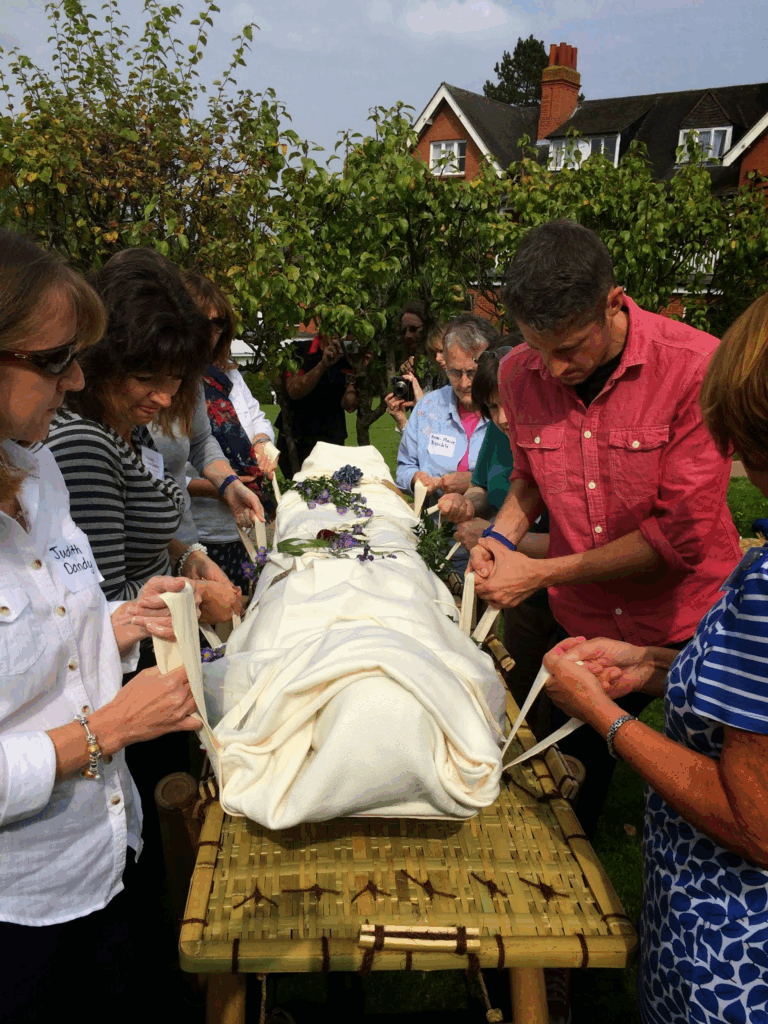
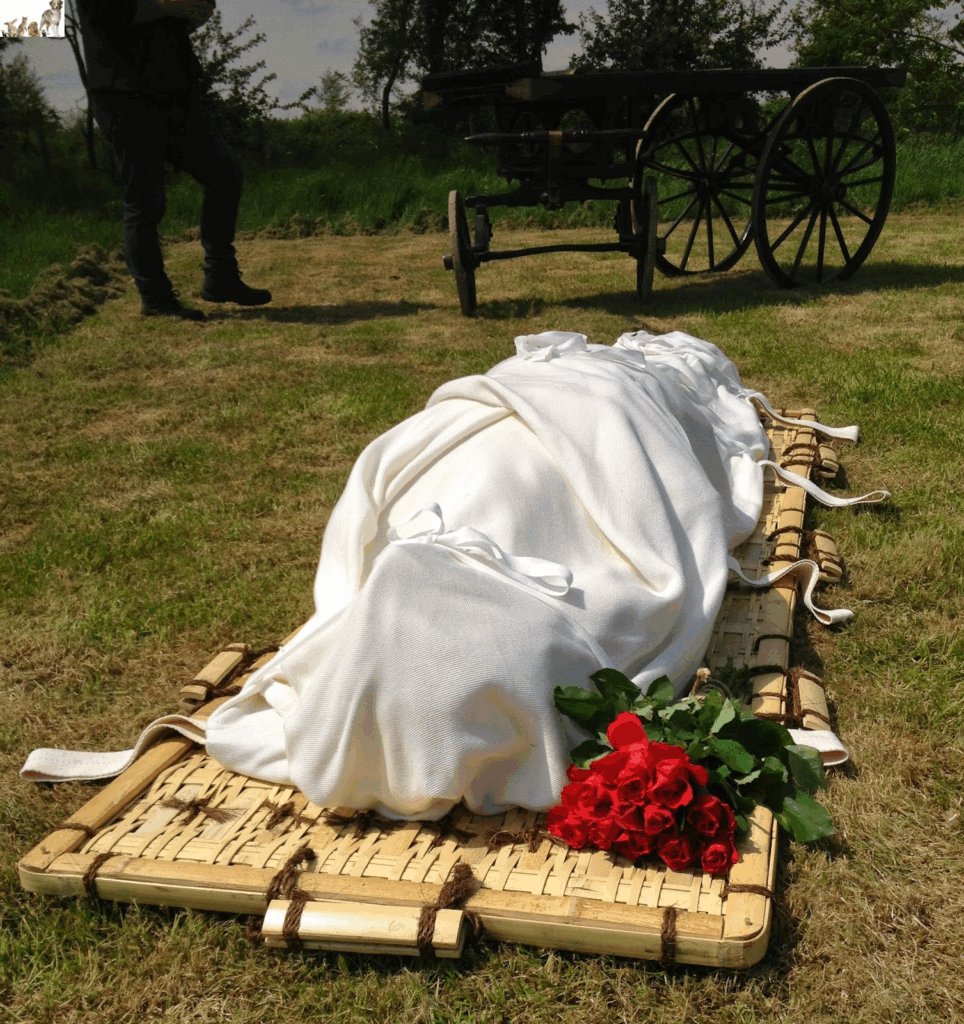
July 8th, 2025Because natural burial grounds eschew gasoline-powered engines and heavy machinery, most green burial grounds transport the casket or shrouded body to the gravesite on a platform or cart known as a bier. (See photos below)
In green burials, transporting and lowering a shrouded body can be a deeply personal and participatory part of the ceremony. Many cemeteries use simple, wheeled vehicles—such as retrofitted golf carts, wagons, or trailers—to carry both shrouded and casketed bodies to the gravesite. Some families prefer a more hands-on approach, choosing a processional with pallbearers who carry the casket on their shoulders or use a shrouding board with built-in handles to carry the body to the grave.
Lowering the body varies by cemetery and depends on the equipment available and the level of family involvement. While some cemeteries use machinery, such as hydraulic lifts or excavators, others hand-dig graves and offer families the opportunity to lower the body themselves using ropes, straps, or a shrouding board. In some cases, families may even request to dig the grave themselves. Because green burial encourages meaningful family participation, operators should be ready to support this with appropriate tools and clear guidance.
To manage safety and liability, cemeteries typically provide guidelines and require families to sign waivers if they wish to assist in digging or lowering the body. These measures help ensure a respectful, safe, and empowering experience for all involved.
What Is a “Green” Casket?
July 8th, 2025A green casket can be any biodegradable container suitable for holding a body. According to Green Burial Council standards, it should be made from natural or recycled plant, animal or unfired earthen materials and contain no plastic, fiberboard, or metal. (Necessary hardware and fasteners are exempt from this requirement as long as they are not made of brass or chrome.) Some materials commonly used for green caskets include:
- Bamboo
- Rattan
- Hemp
- Organic wool or felt
- Organic cotton
- Seagrass
- Banana leaf
- Teak
- Willow
- Reclaimed, unfinished softwood
- Recycled cardboard
Keep in mind, however, that some biodegradable caskets may come with a rather large carbon footprint because the materials are grown far from where they are made. Bamboo, for example, is plentiful and sustainable since it grows at a rate of about 3-10 centimeters a day. But the vast majority of bamboo used in the U.S. is grown in China and, to a lesser extent, South America. Thus, even if you buy a bamboo coffin made by hand by local artisans, the carbon cost of getting it to the manufacturer in the U.S. may be quite high.
Cork, too, is an extremely sustainable resource. It is actually the bark of the cork oak tree, which can be stripped from the tree every 9-10 years without damaging its health. However, almost all cork used in the manufacture of coffins (and coasters and wine stoppers) comes from oaks grown in forests in Portugal and Spain, with a lesser amount coming from Morocco, Algeria, Tunisia, Italy and France. All of this raw material must be transported from the point of origin to the site where the coffin will be made and then shipped to your location, which can increase its carbon footprint a great deal.
This is not to say that wicker, cork, and bamboo caskets are not “green” in the strict sense of the word. But if you are opting for green burial because it is friendly to the environment, choosing a casket made from locally sourced pine or recycled cardboard might be a better choice.
Creating your own burial shroud or casket—or sourcing one from a local artisan—is a meaningful and eco-friendly option. Just be sure to check with your funeral or burial provider about size, durability, and handling requirements (like built-in handles or fit for transport and burial). Review the GBC’s product standards to ensure your design supports environmental goals. For handcrafted options, explore the Funeral Artisans Collective. Funeral providers are legally required to accept appropriate, outside products. For legal guidance on their responsibility to you as a consumer, see the Federal Trade Commission’s Consumer Advice page.
Ultimately, green burial products are designed to return the body gently to the earth while honoring both the deceased and the environment. Before purchasing or selecting any products, it’s a good idea to check with the burial ground or funeral provider to ensure they meet specific logistical and site requirements.
Sources
Funerary Artisans Collective. https://www.funeraryartisanscollective.org/
“The FTC Funeral Rule”. Federal Trade Commission. https://consumer.ftc.gov/articles/ftc-funeral-rule
“Our Standards”. Green Burial Council. https://www.greenburialcouncil.org/our_standards.html
How Can I Raise Awareness About Green Burials in My Community?
July 8th, 2025Raising awareness about green burials in your community can be a great way to promote honoring the memory of loved ones in a meaningful manner while also advocating for environmental sustainability. You can advocate for green burials among individuals in your community or focus directly on outreach to local cemeteries, depending on the outcome you are aiming to achieve. For example, if the goal is to encourage local cemeteries to adopt green burial practices, advocating to funeral directors and contacting those local cemeteries is often an appropriate place to start. However, if the goal is to educate the public about the alternative of green burials and their environmental impact, it may be preferable to focus on raising awareness among various groups and organizations in your community instead.
One way that you can educate the general public about green burials is to start with personal outreach. Many people simply aren’t aware that this option exists or lack clarity regarding how it affects the burial process. This can include hosting an informal gathering or facilitating a discussion group with informative materials and topics. Social media can be used to organize these interactions and to get more people interested. Over time, this can expand into a larger community outreach by contacting environmental organizations for partnerships or speech opportunities to promote awareness. Reaching out to nature centers, non-profit organizations, conservation groups, and similar organizations can help to increase the overall reach of your advocacy efforts.
If you have a local paper or similar media entity, reaching out to them offers the potential to reach a larger audience regarding the importance of green burials. Local newspapers, TV stations, or radio stations can all be potential platforms to share your message and raise awareness. Some environmental and conservation groups have blogs or similar communications shared online and may be willing to share your perspective and materials about green burials. You can also develop infographics, brochures, flyers, or other resources that can be shared virtually and in person to help others understand more about green burials at a glance.
Sources
“Outreach Tools”. Green Burial Council. https://www.greenburialcouncil.org/outreach_tools.html
“Green Burials Bring Awareness to Environmental Concerns”. U.S. News. https://www.usnews.com/news/articles/2016-03-04/green-burials-bring-awareness-to-environmental-concerns
“‘Green burials’ can change our relationship with death — and help the Earth”. The Washington Post. https://www.washingtonpost.com/outlook/green-burials-can-change-our-relationship-with-death–and-help-the-earth/2021/12/16/85137994-5de5-11ec-bda6-25c1f558dd09_story.html
How Can I Find a Natural or Conservation Burial Ground in My Area?
July 8th, 2025If you’re looking for a natural cemetery, the Green Burial Council (GBC) is one of the best places to start. The GBC maintains a trusted directory of certified providers across North America and Canada, including natural burial grounds, conservation burial grounds, and hybrid cemeteries. This directory is specifically designed to help individuals and families locate environmentally responsible burial options that align with their values.
While other directories exist, many have expanded their listings to include cemeteries that may or may not be certified by the GBC. Due to limited access and a growing demand, these listings can be helpful when you don’t have the ability to advocate for new options in your area and are trying to find access to natural burial. Still, the GBC’s directory stands out by offering verified information and clear distinctions between types of green burial providers, making your search easier and more reliable. In addition to the GBC directory, you can also reach out to local funeral homes. With increasing interest in sustainable end-of-life options, many funeral directors are becoming familiar with nearby cemeteries that support natural burial practices. If you are only interested in conservation burial, you can visit the Conservation Burial Alliance’s page.
Once you’ve identified a few options, take time to explore what each burial ground and funeral home offers. Natural burial grounds may have specific guidelines regarding burial containers, grave markers, or the types of items that can be brought to the site. Funeral homes may not allow for public visitation without embalming, accommodate more natural methods, or know much about the option. Because some directories are independently managed, it’s always a good idea to confirm details directly with the burial grounds and funeral home. Whenever possible, visiting in person or calling ahead can help ensure that the site aligns with your personal values and expectations.
Sources
“Interactive GBC Provider Maps”. Green Burial Council. https://www.greenburialcouncil.org/gbc_provider_maps.html
“Green Burial Cemeteries in the US and Canada”. New Hampshire Funeral Resources & Education. https://www.nhfuneral.org/green-burial-cemeteries-in-the-us-and-canada.html
“Conservation Burial Grounds”. Conservation Burial Alliance. https://www.conservationburialalliance.org/cemetery-contact-information.html
“National Cemetery Administration”. U.S Department of Veteran Affairs. https://www.cem.va.gov/green-burial/#:~:text=There%20are%20currently%20three%20VA,national%20cemeteries%20in%20the%20future
“The Natural Burial Cemetery Guide”. Green Burial Naturally. https://www.greenburialnaturally.org/
“Green Burial Directory”. US Funerals Online. https://www.us-funerals.com/green-burial-directory/
“Find AGF Providers and Green Cemeteries”. A Greener Funeral. https://www.agreenerfuneral.org/providers/
Can I Hold a Green Burial on Private Property?
July 8th, 2025You may be able to arrange a green burial on private property owned by yourself, by friends, or by relatives, depending on where you live. While there are no federal regulations regarding home burials, various states and municipalities may restrict the practice or impose restrictions on how it can be done. In California, Indiana, and Washington, for example, burials are permitted only in an established cemetery.
You may be able to apply for a special permit, but the process can be long and onerous and you may well need to hire an attorney to deal with the legal issues that arise. In Alabama, Illinois, Iowa, Louisiana, Michigan, Nebraska, and New York, you may be able to bury your loved one on your own property, but you must hire a funeral director to oversee the process and ensure that you comply with local laws. Other states allow private home burials, but local ordinances may limit the conditions under which you can bury a person on privately owned land (for instance, the location of the proposed site in relation to other homes or groundwater). Because of these complexities, it’s best to plan for a home burial far in advance.
Keep in mind, too, that having one or more people buried on your property may impact its resale value should you ever decide to move. (In most states, you need to disclose this to prospective buyers along with a survey indicating exactly where the body or bodies are). What’s more, if you move, family and friends may one day be unable to visit the grave. However, you may be able to negotiate an easement with your buyer to allow visitation in the future.
Sources
“How You Can Be Buried on Your Own Property in All 50 States”. Rome Monuments. https://www.romemonuments.com/home-burials
What Are the Three Types of Green Burial Sites?
July 8th, 2025All green burial sites are similar, but not the same. The Green Burial Council designates three levels of green burial sites, each of which has slightly different requirements and characteristics. They are:
- Hybrid grounds: Hybrid burial grounds are a mix of traditional cemetery and green burial site. In a hybrid burial ground, a portion of the land is set aside for unembalmed bodies and biodegradable caskets or shrouds. The cemetery must agree not to require concrete liners in the area designated as a green burial site.
- Natural burial grounds: A natural burial ground does not accept embalmed bodies and only allows biodegradable materials to be buried in the ground. Concrete vaults and grave liners are prohibited. Additionally, the owners of the cemetery must agree to maintain a “natural appearance” at the site, using native plants and materials.
- Conservation burial grounds: These burial sites meet all the criteria of a natural burial ground, but they also further land conservation by maintaining the site in its natural state. These sites are typically run by an independent conservation organization, such as a land trust, that holds a conservation easement or deed that guarantees long-term stewardship of the land. Much of the funding received from conducting burials goes towards maintaining the land, thus conservation burial sites can be a useful tool in furthering the cause of land conservation in perpetuity.
Generally speaking, however, most natural cemeteries and conservation burial grounds look very much alike. Because they seek to preserve the natural ecosystem, there are no lush, manicured lawns or professionally landscaped grounds. Instead, the landscape typically consists of native plants, trees and shrubs. Graves are usually marked with a plain wooden plaque, unpolished stone or a native plant or tree. In fact, some natural and conservation burial sites prohibit grave markers entirely and mark gravesites using GPS coordinates and an RFID chip instead.
Hybrid burial sites, on the other hand, may look more like a conventional cemetery, and may use electric or gas-powered equipment to maintain the grounds. Some of the graves will be marked with traditional headstones, and the landscaping may include lawns and non-native plants and trees.
Where Can a Green Burial Take Place?
July 8th, 2025There are no laws in any state in the U.S. that prohibit natural burial. Unembalmed bodies may be buried at any cemetery, and most cemeteries allow the use of a plain wooden casket or other biodegradable container for burial. However, nearly all conventional cemeteries require the use of cement grave liners or vaults, which prevent the casket from coming in contact with the ground. These liners serve multiple purposes, including:
- protecting the casket from damage caused by heavy machinery and equipment
- preventing the digging of other graves placed closely together
- to allow for more plots in a smaller area, and
- to help with ground subsidence
However, the use of concrete is discouraged by the Green Burial Council due to the environmental harms associated with manufacturing, such as the production of CO2 and depletion of valuable natural resources. Additionally, it reduces these resources for a one-time burial rather than utilizing them more sustainably.
The preferred depth for burial, according to the Green Burial Council, is 3.5-4 feet, which maintains the natural “smell barrier” while allowing the body to come into contact with the top layers of the soil, where the majority of microbial activity occurs. Burial depth at conventional cemeteries varies greatly by state, as laws primarily pertain to how much soil is on top of the grave rather than the depth of the grave itself.
For these reasons, a green burial should take place at a natural cemetery, a hybrid cemetery or a conservation burial ground where concrete grave liners and vaults are not required. It may also be possible to bury a person without a vault or grave liner in some municipal cemeteries across the United States. In no state is a grave liner or vault required by law, this is a cemetery rule and can be avoided. Ask if your cemetery will allow burial without a vault, especially rural cemeteries where these rules often do not exist. Although their numbers are growing, access to these options is still expanding in many parts of the country—and with growing interest and demand, availability is likely to continue improving.
To locate a green cemetery in your area, check the Green Burial Council’s website for certified and non-certified cemeteries across the U.S and Canada. Be aware that laws pertaining to burial can vary if you choose a cemetery outside of your home state. We recommend checking with your local chapter of the Funeral Consumer Alliance to find out more about which laws are applicable.
Sources
“New Hampshire Funeral Resources & Education”. https://www.nhfuneral.org/
“Funeral Consumers Alliance”. https://funerals.org/
“Legal Burial Requirements by State”. New Hampshire Funeral Resources and Education. https://www.nhfuneral.org/legal-requirements-by-state.html
“Cemeteries”. Green Burial Council. https://www.greenburialcouncil.org/cemeteries.html
Before Death: Securing Your Wish for Green or Natural Burial
January 12th, 2026Green burial, also known as natural burial, is becoming an increasingly popular disposition option. As a method of burial which uses no chemicals, preserves the natural landscape, and buries the body simply– in a shroud, biodegradable casket, or neither– it is appealing to those who are environmentally-conscious. However, it remains unknown to many people, and has yet to be a widespread occurrence. If you have your heart set on green burial, it is worthwhile to take some time to plan ahead. We have developed a set of steps to help you ensure your wishes are followed, beginning with communicating your special choice to your friends and family.
What should I do if I want to be have a green burial or natural burial? What steps can I take before death? What should I tell my family and friends? How can I ensure my natural burial wishes will be carried out? We provide these suggestions for securing your wish for green or natural burial.
Things to Know:
- It’s a good idea to talk about your wishes for green or natural burial with family and friends as early as possible.
- Think about leaving a written plan with loved ones or including your wishes in a legal document.
- You might want to consider having a home funeral in addition to a natural burial.
- It is possible to set aside funds for your burial in a Totten Trust, also known as a payable on death account.
- Prepaying for burial services is the only absolute way to ensure your wish for natural burial is carried out.
Step 1: Let you family and closest friends know that green burial, or natural burial, is what you want.
Discuss your reasons for choosing natural burial over other options. Explain that the natural burial process does not involve traditional caskets, tombstones, or embalming. Make sure that your power of attorney for health care or next of kin is in agreement with your decision; this person should be prepared to locate and ensure the viability of natural burial products and natural burial sites. They should also be ready to resist the pressure by funeral service providers to purchase burial products not in accordance with your wishes, such as vaults or embalming services. In most cases, these products are not required by law. Consider contacting the Green Burial Council, a non-profit green burial advocacy and accreditation organization, to assist you in better understanding your options. For more information, see our article on Choosing Green Burial or Natural Burial.
Step 2: Let your family and closest friends know if you have chosen a burial location.
If you want a natural burial in a biodegradable casket in a “green” or “woodland” cemetery, you can locate a site closest to your home through the Green Burial Council. Note that if your chosen green burial site is out of state or will require the shipping or long term transport of the body, some states may require that your remains be embalmed. Kansas, for example, requires that a body be embalmed if disposition will not occur within 24 hours of death. These laws vary considerably. You may wish to consider purchasing Joshua Slocum’s book, Final Rights: Reclaiming the American Way of Death, in order to educate yourself on your state’s after-death laws. Note that you may also have options for rural burial on land owned by family or friends.
Step 3: You may want to conduct a home funeral in addition to having a natural burial.
A home funeral can be a healing, comforting experience for the loved ones affected by a loss. Laws governing home funerals differ greatly by state. Consider contacting a home funeral consultant, which is essentially a home funeral planner, near you. For more information, see SevenPonds’ article on Planning a Home Funeral.
Step 4: Leave written plans detailing your final preferences, or include your wishes in a durable power of attorney.
It is important that your family and friends understand your final preferences and your motivations for choosing them. To eliminate confusion, we recommend developing a written plan detailing your wishes and feelings in regard to celebration, disposition, and commemoration. Be as specific as possible — include your choices on burial container, type of service, type of disposition, etc. You can also include your wishes in your advance directives, and designate a person to carry out your wishes. For more information, you can reference our articles on Preplanning a Funeral or Memorial Service.
Step 5: Consider setting aside funds for your cremation in a Totten Trust, also called a “payable on death” account.
With a Totten Trust, easily established through a bank, the account holder can set aside a certain amount of funds to be released directly to a beneficiary following the account holder’s death, bypassing probate court. However, Totten Trusts are not available in every state, and some states will levy an estate tax before the funds are transferred. Note that technically, prepaying for service is the only way to definitively ensure your wish for natural burial will be carried out.
Step 6: Record your wishes for green burial in your will or living trust.
Some states recognize your authorization for cremation in a will or living trust. However, these documents are not accessible until after your death and, in many states, upon your death. Your closest relative, next of kin, or power of attorney for health care will be the one to make the final disposition decisions. If this person was not previously aware of your choices, he or she may fail to follow your wishes. That is why it is so important to discuss your choice for natural burial with your family before your death. If you have any reason to believe friends and family will not carry out your wishes for natural burial, you can secure your wishes through a prepaid plan.
For more information:
The Green Burial Council, 888-966-3330
Funeral Consumers Alliance, 802-865-8300
Before Death: Securing Your Wish for Green or Natural Burial
August 7th, 2025Green burial, also known as natural burial, is becoming an increasingly popular disposition option. As a method of burial which uses no toxic chemicals, preserves the natural landscape, and buries the body simply– in a shroud, biodegradable casket, or neither– it is appealing to those who are environmentally-conscious. However, it’s not a conventional option in the funeral industry today. If you have your heart set on green burial, it is worthwhile to take some time to plan ahead. We have developed a set of steps to help you ensure your wishes are followed, beginning with communicating your choice to your friends and family.
What should I do if I want a natural burial? What steps can I take before death? What should I tell my family and friends? How can I ensure my natural burial wishes will be carried out? We provide these suggestions for securing your wish for green or natural burial.
Things to Know:
- It’s a good idea to talk about your wishes for green or natural burial with family and friends as early as possible.
- Think about leaving a written plan with loved ones or including your wishes in a legal document.
- You might want to consider having a home funeral in addition to a natural burial.
- It is possible to set aside funds for your burial in a Totten Trust, also known as a payable on death account.
- Prepaying for burial services is the only absolute way to ensure your wish for natural burial is carried out.
Step 1: Let your family and closest friends know that green burial, is what you want.
Discuss your reasons for choosing natural burial over other options. Explain that the natural burial does not involve conventional caskets, vaults , or embalming. Make sure that your legal representative after death is in agreement with your decision; this person should be prepared to locate and ensure the viability of natural burial products and natural burial sites. They should also be ready to educate funeral service providers who may not know much about this option, such as excluding vaults and embalming services. In most cases, these products are not required by law. Consider contacting the Green Burial Council, a non-profit green burial advocacy and accreditation organization, to assist you in better understanding your options. For more information, see our article on Choosing Green Burial or Natural Burial.
Step 2: Let your family and closest friends know if you have chosen a burial location or if you have a funeral planning declaration.
If you want a natural burial , you can find a site close to your home through the Green Burial Council. Note that if your chosen green burial site is out of state or will require the shipping or long-term transport of the body, some states may require that your remains be embalmed. Alabama, for example, requires that a body be embalmed if transportation occurs across state lines. These laws vary considerably. You may wish to consider purchasing Joshua Slocum’s book, Final Rights: Reclaiming the American Way of Death, in order to educate yourself on your state’s after-death laws. Note that you may also have options for rural burial on land owned by family or friends.
Step 3: You may want to conduct a home funeral in addition to having a natural burial.
A home funeral can be a healing, comforting experience for the loved ones affected by a loss. Laws governing home funerals differ greatly by state. Consider contacting a home funeral consultant, which is essentially a home funeral planner, near you. For more information, see SevenPonds’ article on Planning a Home Funeral.
Step 4: Leave written plans detailing your final preferences, or include your wishes in a durable power of attorney and funeral planning declaration.
It is important that your family and friends understand your final preferences and your motivations for choosing them. To eliminate confusion, we recommend developing a written plan detailing your wishes and feelings in regard to celebration, disposition, and commemoration. Be as specific as possible — include your choices on burial container, type of service, type of disposition, etc. You can also include your wishes in your advance directives, and designate a person to carry out your wishes. For more information, you can reference our articles on Preplanning a Funeral or Memorial Service.
Step 5: Consider setting aside funds for your cremation in a Totten Trust, also called a “payable on death” account.
With a Totten Trust, easily established through a bank, the account holder can set aside a certain amount of funds to be released directly to a beneficiary following the account holder’s death, bypassing probate court. However, Totten Trusts are not available in every state, and some states will levee an estate tax before the funds are transferred. For more information, see Prepaying for Services. Note that technically, prepaying for service is the only way to definitively ensure your wish for natural burial will be carried out.
Step 6: Record your wishes for green burial in your will or living trust.
Some states recognize your authorization for cremation in a will or living trust. However, these documents are not accessible until after your death and, in many states, upon your death. Your closest relative, next of kin, legal after death representative will be the one to make the final disposition decisions. If this person was not previously aware of your choices, he or she may fail to follow your wishes. That is why it is so important to discuss your choice for natural burial with your family before your death. If you have any reason to believe friends and family will not carry out your wishes for natural burial, you can secure your wishes through a prepaid plan and funeral planning declaration.
For more information:
The Green Burial Council, 888-966-3330
Funeral Consumers Alliance, 802-865-8300
New Hampshire Funeral Resources and Education https://www.nhfuneral.org/legal-requirements-by-state.html
Before Death: Choosing Green or Natural Burial
August 7th, 2025Today, it is more common for people to question the environmental impact of conventional funerals. That impact includes toxic chemicals used in embalming, caskets made of precious materials like exotic hardwoods and metals, and tombstones that permanently alter the landscape-avoidable things that jeopardize worker health and local ecosystems. But there are alternatives. Natural, or green burial, which seeks to mitigate the environmental impact of death, has recently been growing in popularity.
What is green burial? How are green funeral services different from conventional funeral services? Is green burial more environmentally friendly? How much does green burial cost? What laws govern funeral services? In collaboration with the Green Burial Council, this section of SevenPonds seeks to answer any questions you might have on green funeral services.
Things to Know:
- Not all green burial sites are the same. Some sites attempt to preserve the land in its natural state, but others do not. Some guarantee the land is preserved in perpetuity, but others do not.
- With green burial, the body is typically buried in a shroud of natural materials, or in a decomposing container, such as a wicker casket or pine box.
- If you are interested in conducting a home funeral, many state laws allow the family to keep the deceased at home before green burial. Research your local laws fully before solidifying your plans.
- You may be able to arrange for green burial on privately owned land if you plan well in advance.
- Be aware that not all products sold as “natural” or “green,” necessarily are. The word “natural,” after all, has no legal definition. Currently, the Green Burial Council offers the most widespread and comprehensive certification program and education surrounding the topic.
What is green burial?
Many Americans had their first look at green burial, also called natural burial, in 2005, when the HBO drama series Six Feet Under concluded with the death of funeral home owner Nate Fisher. Nate’s unembalmed body was buried in a shroud on a plot of land in a nature preserve. The Green Burial Council defines green burial as an environmental burial, employing “minimal environmental impact,” “legitimate ecological aims,” and a “conservation of natural resources.”
How common is green burial?
While green burial has only recently become more widely discussed, the practice of embalming, a keystone of conventional funerals, did not begin until the American Civil War. The families of soldiers, killed far from home, agreed that the bodies be preserved and returned to them in a more viewable state. Before then, all Americans had a green burial, free of toxic embalming chemicals. Many populations have never adopted embalming. For example, Orthodox Jews and Muslims have practiced burial without embalming for thousands of years.
Though only a small number of Americans today opt for green burial, the practice has been gaining in popularity. In an AARP online poll, 45% of participants indicated they would choose green burial over traditional burial or cremation when given the choice. As of November 1, 2024, there are 470 green burial cemeteries in the United States and Canada, and we can expect that number to increase in years to come. Although it’s possible to bury an unembalmed body in a casket at a traditional cemetery, a truly environmentally sound burial should take place at a site specifically designated for green burial. Some people have even been able to negotiate county and state laws to arrange for green burial on privately owned land. To find an operating green burial site or a green burial site under development, you can visit the Green Burial Council.
Are all green burial sites the same?
The Green Burial Council distinguishes three levels of green burial sites, at varied levels of conservation strictness:
- Hybrid burial grounds can refer to a section of an otherwise traditional burial cemetery that has been designated for green burials of unembalmed bodies and caskets or shrouds.
- Natural burial grounds are exclusively green burial sites, and are required to adopt a number of policies to minimize waste and conserve energy. Natural burial grounds prohibit the burial of bodies embalmed with toxic chemicals, and caskets made from non-organic plant material, as well as the use of cement or metal vaults or traditional grave markers.
- Conservation burial sites, the strictest green burial classification. They are established in partnership with an independent conservation organization, such as a land trust, or the land includes deed restrictions, double protecting the land from development via conservation and burial law. The land is thoughtfully stewarded with conservation practices to maintain its inherent, natural value. For more information, see the Green Burial Council’s Burial Grounds Standards.
What is the process for green burial?
Make sure that you have a green burial site in your area, though some people are willing to drive hundreds of miles to have a green burial. You can also find a funeral home with a refrigeration unit, willing to refrigerate and transport the body, without embalming it. A funeral may be held at home before the body is transported to the burial site. Alternatively, a memorial service or life celebration may be held long after the body is buried. For more information, see the SevenPonds discussions on Preplanning a Funeral or Memorial Service or Planning a Funeral or Memorial Service.
In a green burial, the body is buried in a shroud of natural materials or a decomposable container, such as a wicker coffin or pine box. At natural burial grounds, the burial location may be marked with an engraved natural fieldstone or quarried stone. However, conservation burial grounds, where the natural integrity of the land is preserved, often do not allow permanent markers. Instead, conservation burial sites use GPS systems, survey pins, and mapping to locate gravesites, protecting the land in its natural state.
What should I expect of a green burial service or ceremony?
Green burials are often the most engaging burial option. Some green cemeteries allow mourners and participants to involve themselves in nearly every level of the process if they wish, transporting the body, bearing the body from the coach to the grave, lowering it into the grave, and digging and filling the grave, with stipulations to ensure the participants’ safety. For some people, this is one of the most welcoming aspects of green burial — it can be a loving, personalized way to say goodbye.
What if I want to conduct a home funeral?
Home funerals are a natural precursor to green burial, and some families find them highly soothing and therapeutic. Home funerals, in which the service is conducted at home, with the body present and the decedent’s loved ones conducting the after-death care, are best suited for deaths that occur in the home. But if the death occurred in a hospital, in most cases, the family can still request that the body be transported to their home.
At the time of death, the family of the deceased obtains the death certificate and necessary supplies for preparing and cooling the body, typically with dry ice, before transporting it directly to a green burial site. Only eight states- Connecticut, Illinois, Indiana, Louisiana, Michigan, Nebraska, New Jersey, and New York- require the involvement of a funeral director in the death process. It is legal to care for your own dead with home-based after-death care in 43 states, including California. However, such laws can vary considerably and are sometimes even contradictory. For more information, see the National Home Funeral Alliance for their national support directory, their free home funeral guide, and state-by-state list of laws that need to be followed, or read SevenPonds’ discussions on Preplanning a Home Funeral or Planning a Home Funeral.
Why does natural or green burial have a low impact?
Green burial is environmentally sound because the body returns naturally to the earth. Many green burial sites also preserve land where native plants and animal life flourish. Conservationists claim that green burial, especially burial on conservation burial sites, can be a valuable land conservation tool. Green burial does not include toxic embalming chemicals, unsustainably harvested hardwoods, concrete grave-liners, or vaults. Nor does green burial cause the same fossil fuel consumption and harmful emissions associated with cremation.
How much does green burial cost?
Green funerals can cost less, the same, or even more than conventional funerals; it all depends on the services and merchandise you choose. However, it can be highly cost-effective; caskets can cost as little as $500, and burial shrouds even less than that. Green burial bypasses many additional expenses such as embalming, limousines, vaults, headstone carving, and chapel services in the funeral home. But, of course, prices vary widely according to the type of green burial site, the geographic location, and the services provided. Sometimes, green burial can even be more expensive than conventional services. For example, conservation burial grounds seek to perpetually maintain their site in its natural state, and therefore may require higher fees for ongoing preservation. For more information, see SevenPonds’ article on Options for Green Burial.
Are there any special considerations?
The same state laws that govern conventional funerals and cemeteries apply to green ones. As with any death-related purchase, you should select your providers with care. It is best to preplan to secure your wishes, and those wishes are even more secure if the finances are protected for this purpose. However, be thoughtful about how your funeral services will be paid. There are many options for securing your finances for your funeral plans, not just the ones that the funeral industry provides you.
To ensure the site will be maintained in the future to the highest environmental standard, try to select a burial preserve or green cemetery with a perpetual care fund and that is certified with the Green Burial Council.
Most green burials occur within 2-3 days due to the body’s decomposition. If you choose to bypass a funeral home, you can preserve the body yourself by using cooling methods to mimic refrigeration. If you choose to use a funeral home, make sure they have a refrigeration unit. In some cases, funeral home operators may not be willing to keep a body refrigerated until transportation for green burial. If a funeral provider insists the body must be embalmed, be sure to know your rights, as protected by the Federal Trade Commission’s Funeral Rule.
What about green burial on private property?
You may be able to arrange for a green burial on private property owned by yourself, by friends, or by relatives. However, you must be sure to follow all local regulations and begin the planning process well in advance. Generally, states do not have laws governing burial on private property. As a result, decisions are often left to counties and towns. Most will allow for private property burial, but each area has slightly different requirements. Often, creating a survey or map of your property is necessary to provide notice to future owners. It is a good idea to begin by speaking with your local county planning department. Back to top ↑
What makes a green burial product, service, or business really “green”?
Unfortunately, not all products marketed as “green” or “natural” actually are as environmentally sound as you may be led to believe. With the public’s growing interest in environmental impact and green burial, many in the funeral industry see this as an untapped market, and they are rushing to cash in, even though their products may not necessarily meet the standards they purport to represent. Remember that “natural” has no legal definition, which is why you see it plastered across the packaging of so many decidedly synthetic foodstuffs. Just because vaults are made of concrete, and concrete contains natural materials like rock and sand, this does not mean that burying it underground causes no harm to the environment. Cement, the key component in concrete, is associated with high emissions rates during manufacturing.
Today, the only organization that offers research-based certification of after-death products and services is the Green Burial Council. You can read about their standards here. If you see the Green Burial Council logo, then this product, funeral home, or cemetery has been certified by their standards. If you do not see this seal, you may request that the seller prove their environmental claims, or you may contact the Green Burial Council directly by visiting their website, calling or emailing- www.greenburialcouncil.org; info@greenburialcouncil.org. Back to top ↑
For more information:
The Green Burial Council
www.greenburialcouncil.org
Funeral Consumers Alliance
www.funerals.org
National Home Funeral Alliance
https://www.homefuneralalliance.org
Additional Resources from the GBC
https://www.greenburialcouncil.org/books_blogs_articles_videos.html
Grave Matters: A Journey Through the Modern Funeral Industry to a Natural Way of Burial by Mark Harris
www.amazon.com/Grave-Matters-Journey-Through-Industry/dp/0743277686
Going Out Green: One Man’s Adventure Planning His Own Natural Burial by Bob Butz
www.amazon.com/Going-Out-Green-Adventure-Planning/dp/0981870813
After Death: Options for Green Burial
August 7th, 2025There is a growing awareness of the high environmental impact of some of our most common burial practices. The unnatural process of embalming introduces a host of harmful chemicals into the earth, treated and polished tombstones resist bio-degradation, and traditional caskets are made specifically catering to permanency. In effect, our cemeteries become natural dead zones where life will ever have little chance of flourishing. Green burial, thusly, is emerging as a welcome alternative.
What is green burial? How do you conduct a green funeral? Are there green cemeteries, and what kind of cemetery should you look for? This section of SevenPonds will help to answer your questions about this important new death servicing option.
Things to Know:
- A green burial promotes the growth of native trees, shrubs, and wildlife.
- Most green cemeteries encourage the use of environmentally friendly coffins made from cardboard or wicker. A simple cotton shroud is another option.
- An unembalmed body may be buried in most traditional cemeteries, though most green cemeteries specifically prohibit the burial of embalmed bodies.
- You have the right to plan and hold a memorial service or a green funeral without employing a funeral home.
- Unfortunately, not all services, products, and cemeteries that purport themselves to be “green,” are in practice as environmentally sound as they say. Currently the Green Burial Council is the only organization that offers environmental impact accreditation to after-death providers. Check to see if a product, service, or cemetery has been approved by The Green Burial Council. If it hasn’t been, consider contacting an independent third party.
What is green burial?
A green burial is an environmental alternative to a standard burial, intended to minimize the environmental impacts of death and conserve natural resources. In a green burial an unembalmed body decomposes naturally in the earth, and a biodegradable green casket or cloth body shroud takes the place of a traditional coffin. Green burials can take place in traditional cemeteries, specially designated green cemeteries, or even on private land. For more information, see Choosing Green Burial.
Why have a green burial?
Nature takes its course in a green burial. Green burial strives to avoid intrusion into its surroundings; herbicides and pesticides are not used at green cemeteries, vaults or tombstones do not alter the landscape. Green burial is environmentally friendly and will help to preserve natural spaces throughout the United States.
What kind of cemetery should I look for?
There are three different green cemetery classifications: “hybrid burial grounds,” traditional cemeteries that reserve space for green burials, “natural burial grounds,” which exclusively conduct green burials and enforce a wide array of environmental restrictions, and “conservation burial grounds,” which are, basically, natural preserves — a conservation organization works in close partnership with the green burial staff to safeguard native wildlife and plant life. For more information, see Choosing Green Burial. Most “traditional” cemeteries, on the other hand, have few or no trees and have severely damaged their grounds through continued use of herbicides and pesticides.
Current legislation protects green cemeteries from future development, and a conservation easement ensures that future owners of the grounds cannot make changes that deviate from the strictures of a green cemetery.
What’s needed for a green burial?
First and foremost, the surviving loved ones need to understand laws and processes. For arrangements, such as a home funeral or body transportation, they should research state and local laws thoroughly. For the green burial itself, they’ll need a biodegradable casket or a body shroud and an arrangement with a green cemetery or traditional cemetery. Green burials can also be conducted on private land, though laws are highly varied by municipality. SevenPonds highly encourages significant prior research.
Is embalming required by law?
No state in America requires embalming by law, except in a very few select cases, such as when the death was caused by an infectious disease or if the body is to be transported across state lines. In fact, most green cemeteries prohibit the practice of embalming.
What is a green coffin?
Traditional coffins are the antithesis of “green”: The cheaper ones are usually made of plastic and fiberboard, and the glue used for fiberboard is a pollutant that often contains formaldehyde; more expensive, traditional caskets are often so well constructed that they will not decompose.
A “green” coffin, suitable for a “green” cemetery, on the other hand, is natural, biodegradable, and produced in a sustainable way that conforms to fair trade practices. A green coffin can be made of wicker, bamboo, or even cardboard. You can also use a cloth (natural fiber) shroud, which can be purchased far in advance, and are far more easily stored than caskets. This is common practice in many parts of the world, but be sure to research the effects of rigor mortis when you consider using a shroud, or be sure that the shroud you choose incorporates ease of transport extras such as wood panel-lining and handles. Remember that refrigeration or storage of the body (in your home with dry ice or in a rented cold space) must also be considered.
Choosing the appropriate disposition container is an important step in the green burial process, significantly lessening the environmental impact of death. If you are unsure about choosing a casket, consult the Green Burial Council’s products standard’s page, or consider getting in touch with them yourself.
Is there anything else I need to remember when conducting a green burial?
The same state laws that govern traditional cemeteries apply to green cemeteries, but as with any death-related purchases, you should select your provider with care; It is always good to preplan, but exercise caution if you choose to prepay, as many consumers fall prey to scams and exorbitant pricing schemes this way. You may wish to have a home funeral, a memorial service, or a life celebration. See our articles on Planning a Home Funeraland Planning a Funeral or Memorial Service for more information. If you are planning a funeral or memorial service at the last minute, you might consider hiring an event planner to assist you.
Also, be sure to have any environmentally harmful objects (such as tooth fillings, pacemakers, and other implants) removed prior to burial.
How do I know if a service, product, or cemetery really is “green”?
Unfortunately, not all products marketed as “green” or “natural” are actually as environmentally sound as you may be led to believe. With the public’s growing interest in environmental impact and green burial, many in the funeral industry see this as an untapped market. They are rushing to cash in, even though their products may not necessarily meet the standards they purport to represent. Remember that “natural” has no legal definition, which is why you see it plastered across the packaging of so many decidedly synthetic food stuffs. Just because vaults are made of cement, and cement is a “natural” material, does not mean that burying it underground causes no harm to the surrounding habitat. Today, the only organization that offers after-death green or natural verification is the Green Council, and you can read about their standards here. If you see the Green Burial accreditation seal, than this product, service, or cemetery has been certified green by their investigators. If you do not see this seal, you may request that the seller proffer a third party verifier. You may get in touch with the Green Burial Council yourself, and ask them if they have the products, services, or cemetery in question listed.
Where can I find green cemeteries in the United States?
You can find providers who have been approved by the Green Burial Council by checking out their website. We have compiled a rudimentary list of green cemeteries throughout the country:
GreenSprings Natural Cemetery—93 acres in New York, opened in 2006.
www.naturalburial.org
Forever Fernwood—32 acres in California, opened in 2004.
www.foreverfernwood.com
Glendale Memorial Nature Preserve— Memorial Ecosystems has 350 acres in Florida. Opened in 2002.
www.glendalenaturepreserve.org
Ramsey Creek Preserve—Memorial Ecosystems has 32 acres in South Carolina. Opened in 1996.
www.memorialecosystems.com
White Eagle Memorial Preserve—20-acre cemetery is set within 1,300 wild acres.
www.naturalburialground.com
Foxfield Preserve—43 acres in Ohio
www.foxfieldpreserve.org
Honey Creek Woodlands – Georgia
www.honeycreekwoodlands.com
Green Burial: Explore Trusted Resources
July 8th, 2025Organizations
Green Burial Council
https://www.greenburialcouncil.org/partner_organizations.html
Conservation Burial Alliance
https://www.conservationburialalliance.org
Veterans Association Green Burial Options
https://www.cem.va.gov/green-burial
Experts
Joe Sehee
https://www.greenburialcouncil.org/history.html
Lee Webster
Kimberley and Dr. Billy Campbell
https://www.memorialecosystems.com/ramsey_creek_preserve_history.html
Amy Cunningham
https://www.fittingtributefunerals.com/meet-the-funeral-director
Elizabeth Fournier
https://www.thegreenreaper.org
Bob Prout
Emily Miller
https://www.coloradoburialpreserve.com/in-the-news
Sam Perry
https://academics.siu.edu/health-professions/mortuary-science/faculty/perry-sam.php
Michelle Acciavatti
https://www.cemetery.eco/about
Holly Blue Hawkins – Last Respects Consulting
Located in Aptos, California, Holly Blue Hawkins is a cemetery management educator, natural deathcare advocate and green burial consultant. She has expertise in natural death care and Tahara and is available for a free consultation by phone or, if you’re in the Santa Cruz area, for home consultations and assistance with natural death care, home funerals and more.
You can reach Holly at (831) 588-3040 or by filling out a contact form on her website, Last Respects Consulting
Books
https://www.greenburialcouncil.org/books_blogs_articles_videos.html